
Amazon affiliate links - we earn a commission.Affiliate disclosure

Buying guide · 13 min read · Updated 2026-11-07

Best Heat Press Machines (2026)

Six heat press machines compared by platen size, swing-away versus clamshell design, pressure control and automation, with notes for crafters and small shops.

James MillerBy James MillerLead Machine Editor6 machines comparedSpec-sheet verified
Best Heat Press Machines

At a glance

Our top picks

Side by side

Spec comparison

MachinePlaten sizeDesignHeating
HTVRONT Auto Heat Press 2, 15x15, adjustable pressureBest OverallHTVRONT Auto Heat Press 2, 15x15, adjustable pressure15 x 15 inchesAutomatic, hands-freeDual-tube with NTC thermistor
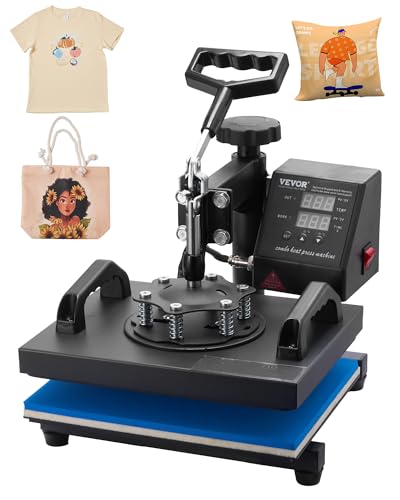
VEVOR 8-in-1 swing-away press, 15x15, with attachmentsBest Multi-UseVEVOR 8-in-1 swing-away press, 15x15, with attachments15 x 15 inches360 degree swing-awayDouble-tube
VEVOR 5-in-1 swing-away press, 12x15Best Mid-Size Multi-UseVEVOR 5-in-1 swing-away press, 12x1512 x 15 inches360 degree swing-awayn/a
VEVOR 12x10 clamshell press, digitalBest Value ClamshellVEVOR 12x10 clamshell press, digital12 x 10 inchesClamshellThicker heating tubes
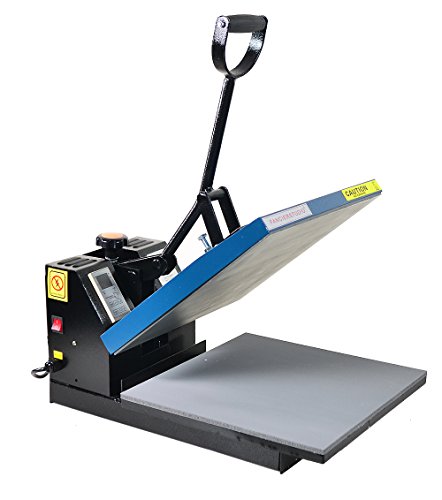
Fancierstudio digital heat press, 15x15, 1800 WBest Temperature RangeFancierstudio digital heat press, 15x15, 1800 W15 x 15 inchesn/an/a
Delclynee 16x24 slide-out heat press, 12.25 inch drawerBest Large FormatDelclynee 16x24 slide-out heat press, 12.25 inch drawer16 x 24 inchesClamshell with slide-out lower platenn/a

A heat press delivers three controlled variables to a transfer: temperature, time and pressure. Heat activates the adhesive or dye, time lets it bond, and even pressure drives it into the fibers. Weakness in any of the three shows up as peeling vinyl, ghosting or patchy color.

The main design choice is how the heated platen meets the garment. Clamshells hinge open like a mouth and take little space, swing-aways pivot the platen aside for better clearance and more even pressure, and automatic presses close and release by themselves to remove human variation.

Before you buy

6 Criteria to Look For Before Buying a Heat Press Machine

  1. 01

    Platen size

    A platen should be larger than the biggest design you press, with a margin. The VEVOR 12 by 10 limits you to small designs, the 15 by 15 models handle adult shirts, and the Delclynee 16 by 24 handles oversized prints. Buying bigger than you need is cheaper than buying twice. A hot platen also needs margin around the design so the edge of the heating plate does not press the edge of the transfer carrier, which can leave a faint box on the fabric. Measure the largest blank you plan to press, including the garment's printable area, before you decide on a size class.

  2. 02

    Clamshell, swing-away or slide-out

    Clamshells are compact and fast, swing-aways give clearance and more even pressure, and the Delclynee slide-out puts the garment on an extended lower platen. The right choice depends on thick items, bench space and safety. Beginners often prefer swing-away or slide-out designs. The practical question is where your hands go: with a clamshell, you reach under a hot upper plate, with a swing-away you work in the open, and with a slide-out you load outside the heat zone. Think about children and pets in the room, because a hot platen is a burn hazard for much longer than the press takes to cool.

  3. 03

    Pressure control

    Insufficient pressure is a leading cause of peeling transfers. The HTVRONT Auto Heat Press 2 offers adjustable pressure, and the manual presses rely on a knob or handle. Check pressure with a test sheet each time garment thickness changes.

  4. 04

    Heating system and power

    Heating tubes and wattage determine how evenly the platen heats and how fast it recovers. The Fancierstudio lists 1800 watts, and the HTVRONT uses dual-tube heating with an NTC thermistor. Even heat across the platen matters more than a high maximum temperature.

  5. 05

    Automation

    Auto close and release remove timing errors and keep both hands free. The HTVRONT presses automate that step. Manual presses are cheaper but need your attention at every press. Over a batch of fifty shirts, small timing differences add up to visibly different results, and the auto press removes that variation. For a few shirts a month, a manual press and a kitchen timer are fine, and the money saved buys transfers and blanks instead.

  6. 06

    Attachments and versatility

    The VEVOR 8-in-1 and 5-in-1 add hat, cap, mug and plate platens. They add range at the cost of swap time. If you press mugs often, a dedicated mug press is faster.

Detailed reviews

The 6 best heat press machines, explained

01
HTVRONT Auto Heat Press 2, 15x15, adjustable pressure
15x15 platenAuto releaseAdjustable pressureDual-tube heat
Check price on Amazon
Best for: Crafters who want consistent results with less manual effort.

The Auto Heat Press 2 attacks the usual weak points of manual presses. Pressure is adjustable, which the maker pitches as a fix for the insufficient pressure that plagues cheap presses, and the press closes and releases automatically so the dwell time is the same every time.

Heating comes from a dual-tube engine with an NTC thermistor for temperature sensing, and the platen height is increased to accept thicker items. Compared with the first-generation HTVRONT in the lineup it adds the pressure adjustment, and compared with the VEVOR swing-away it removes the arm effort and the guesswork.

Automation changes your routine: load the garment, set temperature and time, then let the machine close and release while you prepare the next piece. Keep the platen clean with a damp cloth when cool, always use a protective sheet over the transfer and give the press space around it so heat can dissipate. Check pressure with a test pass on scrap fabric each time you change garment thickness. The practical test of any press is the peel test: press a transfer on a scrap tee, let it cool, then pull a corner. If it lifts, raise pressure or time before blaming the vinyl. Because the press closes itself, keep your hands, cables and loose sleeves out of the arc, and never leave a hot platen closed on a garment. Wait for the platen to reach temperature before the first press of the day, since the first transfer on a cold machine is the one that fails.

What works

  • Adjustable pressure fixes the uneven-pressure problem
  • Automatic close and release give repeatable dwell times
  • Dual-tube heating with thermistor sensing
  • Extra platen height for thicker items

Watch out for

  • Higher tier than the manual presses here
  • Needs a stable table and mains power in a clear spot

Spec sheet

Platen size
15 x 15 inches
Design
Automatic, hands-free
Pressure
Adjustable
Heating
Dual-tube with NTC thermistor
Height
Increased clearance
02
VEVOR 8-in-1 swing-away press, 15x15, with attachments
15x15 platen360 swing-away8-in-1Digital display
Check price on Amazon
Best for: Hobbyists who want shirts, mugs and hats from one press.

The 8-in-1 is a swing-away press with accessory platens for hats, caps, mugs and plates. A 360 degree swing-away arm moves the heated platen clear of the work, which gives access to thick garments and even pressure, and the double-tube heating is described as better than single-tube designs.

Its selling point is range: one press covers T-shirts, hats and mugs. Compared with the Auto Heat Press 2, it is manual and slower but handles round and curved items that a flat auto press cannot. Compared with the 5-in-1 VEVOR, it has a larger flat platen and more attachments.

Swapping attachments is the chore. Keep the extras in a labeled box, let the press cool before changing a platen and test each attachment on a spare item, since pressure and time differ between a shirt and a mug. Clean the Teflon-coated surface and keep the digital controller away from moisture. For mugs, use a wrap to hold the sublimation sheet tight and press at the time the mug maker lists, because a short press leaves pale color and a long one ghosts. Hats need a curved platen and a cap form so the crown is supported; pressing a hat flat creases the front panel. Store the attachments upright so the silicone pads do not flatten, and wipe them after every session.

What works

  • Swing-away arm gives clearance and even pressure
  • Attachments for hats, caps, mugs and plates
  • Double-tube heating
  • Digital display for temperature and time

Watch out for

  • Manual operation needs effort for each press
  • Attachment swapping takes time

Spec sheet

Platen size
15 x 15 inches
Design
360 degree swing-away
Attachments
Hat, cap, mug and plate
Heating
Double-tube
Control
Digital display
03
VEVOR 5-in-1 swing-away press, 12x15
12x15 platen5 accessoriesTeflon coatedSwing-away
Check price on Amazon
Best for: Everyday shirt and hat work at a middle platen size.

This is the 12 by 15 inch sibling of the 8-in-1, with five accessories and a Teflon-coated platen. The maker pitches the size as fitting most pressing jobs without paying for the extra area, and it can handle banners, blankets, hoodies, shirts, mugs, cups, hats and caps.

The swing-away pivots the platen aside, so thick hoodies and blankets slide in easily. Compared with the 15 by 15 model it presses a smaller area, which suits most adult shirt designs but not oversized prints. Compared with the Delclynee large format it is a more generic design.

Treat the attachments as a convenience rather than a production setup. Use a Teflon sheet or parchment over transfers, let the platen cool before cleaning and recheck pressure for each item. A press this size should live on a sturdy table with a clear arc for the arm. Before the first real job, press a plain tee with no transfer for a few seconds to remove moisture, because damp cotton makes vinyl lift. Use a pressing pillow inside hoodies to push seams and zippers below the platen, and swing the arm back the moment the timer sounds so heat does not scorch the shirt.

What works

  • Twelve by fifteen inch platen fits most designs
  • Five accessories included
  • Teflon-coated platen
  • Swing-away clearance for thick items

Watch out for

  • Smaller than a 15 by 15 platen for large prints
  • Manual operation

Spec sheet

Platen size
12 x 15 inches
Design
360 degree swing-away
Accessories
5 attachments
Coating
Teflon
Uses
Shirts, banners, blankets, mugs, hats
04
VEVOR 12x10 clamshell press, digital
12x10 platenClamshellLong handleLowest tier
Check price on Amazon
Best for: Small flat projects at the lowest price tier.

The 12 by 10 clamshell is the lowest-tier press in the lineup and the simplest. It opens like a mouth, takes little bench space and has a long arm handle with a non-slip rubber grip.

Clamshell design means the platen swings down from above, so you reach under a hot plate to place a garment. It is fast and compact, but pressure on thick garments is less even than on a swing-away. Compared with the 12 by 15 swing-away it presses a smaller area, but it is cheaper and easier to store.

Use it for small, flat jobs: tote bags, pillowcases, baby clothes and small shirt designs. Keep a clearance of several inches in front of the handle, keep fingers away from the platen edge and let it cool before putting it away. Because the lower pad is thin on a budget clamshell, slide a folded towel or a pressing pillow under a garment with a zipper or thick seam so the platen does not bridge the ridge and leave an unpressed stripe. Check the heat with a test strip before the first real press, and lift the handle straight up at the end of the time instead of letting it spring open, which can slip the transfer.

What works

  • Lowest price tier in this lineup
  • Compact clamshell design
  • Long handle with non-slip grip
  • Thicker heating tubes

Watch out for

  • Smaller 12 by 10 inch platen
  • Less even pressure on thick items

Spec sheet

Platen size
12 x 10 inches
Design
Clamshell
Handle
Long arm, non-slip grip
Heating
Thicker heating tubes
Position
Lowest price tier here
05
Fancierstudio digital heat press, 15x15, 1800 W
15x15 platen1800 W0-699 F0-999 s
Check price on Amazon
Best for: Sublimation and rhinestone work that needs a wide range.

Fancierstudio lists 1800 watts on 110 volts, a temperature range of 0 to 699 degrees F and a time range up to 999 seconds on a 15 by 15 inch platen. The ranges are wide, and most jobs use a narrow part of them.

Power matters for recovery: a higher wattage heats the platen faster after each press and holds the setpoint better in a cool room. Against the VEVOR clamshell it has a bigger platen and more power, and compared with the HTVRONT it is a conventional manual press without automation.

The wide range is not a license to run hot. Use the temperatures the transfer maker recommends, check the platen with an infrared thermometer if you press at scale, and keep a protective sheet between platen and design. A heavy press needs a firm table. Sublimation, which turns dye into gas that bonds with polyester, wants a specific temperature and a coated or light polyester blank, while heat transfer vinyl on cotton wants lower heat. Keep a log of the settings that worked for each blank and transfer pair, because a temperature that scorches one blank leaves another pale, and the press cannot tell the difference. Rhinestone sheets need firm, even pressure.

What works

  • 1800 watts for fast recovery
  • Wide temperature and time ranges
  • Fifteen by fifteen inch platen
  • Includes a heat press sheet

Watch out for

  • Manual operation
  • Dated design compared with the auto presses

Spec sheet

Platen size
15 x 15 inches
Power
1800 watts, 110 volts
Temperature range
0 to 699 degrees F
Time range
0 to 999 seconds
Use
Sublimation, rhinestone, shirts
06
Delclynee 16x24 slide-out heat press, 12.25 inch drawer
16x24 platenSlide-out lower platen12.25 inch travel110 V
Check price on Amazon
Best for: Large prints and small shops pressing oversized designs.

The Delclynee 16 by 24 inch is the large-format press in this guide, built for oversized transfers. Its lower platen slides out up to 12.25 inches like a drawer, which puts the garment away from the hot plate while you position it.

The slide-out drawer addresses the safety flaw of clamshells, since you place the shirt on an extended lower platen and slide it into the press. A fitted cover protects the silicone pad. Compared with the 15 by 15 slide-out in the same family it adds area, which suits adult-size and youth-size prints and large banners.

Large presses need space and a stable bench. Check that your outlet supports the load, keep the platen clean and use a protective sheet over transfers. Practice the slide motion with an empty press first so it becomes a smooth routine. Large-format pressing is as much about layout as heat: use a ruler and a crease line to center the design, press from the center outward when the transfer is long and check the corners of the platen for cooler spots with an infrared thermometer. A press this wide can have edge zones that run cooler than the center, so keep important parts of a design away from the extreme corners.

What works

  • Sixteen by twenty-four inch platen for oversized prints
  • Slide-out lower platen keeps hands away from heat
  • Lower pad cover protects the silicone
  • 110 volt operation

Watch out for

  • Largest footprint in the lineup
  • Highest tier among the presses here

Spec sheet

Platen size
16 x 24 inches
Design
Clamshell with slide-out lower platen
Slide travel
12.25 inches
Voltage
110 volts
Extra
Fitted lower pad cover

Spec sheet decoder

What the numbers on the box really mean

The specs manufacturers lead with, translated into what they tell you about real-world performance.

Platen size

The heated area in inches. The design must fit inside with a margin.

Watch forThe lineup spans 12 x 10, 12 x 15, 15 x 15 and 16 x 24 inches.

Wattage

Heating power. Higher wattage recovers temperature faster between presses.

Watch forThe Fancierstudio lists 1800 watts.

Dual-tube heating

Two heating elements spread heat across the platen more evenly than one.

Watch forThe HTVRONT and VEVOR 8-in-1 list dual or double-tube heating.

Swing-away

The heated platen pivots aside, giving clearance and even pressure.

Watch forThe VEVOR 8-in-1 and 5-in-1 are swing-away.

Slide-out lower platen

The bottom plate extends like a drawer so you load the garment away from heat.

Watch forThe Delclynee models list 12.25 inches of travel.

Methodology

How We Evaluated These Heat Press Machines

Pressure and heat

We compared how each design delivers pressure and heat: adjustable pressure on the HTVRONT, swing-away arms on the VEVOR models and 1800 watts on the Fancierstudio.

Safety and handling

We weighed clamshell reach-under risk against the slide-out and swing-away designs.

Platen coverage

We matched platen sizes, 12 x 10 to 16 x 24 inches, to common projects.

Versatility

We counted attachments on the 8-in-1 and 5-in-1 presses and considered the swap effort.

Value across tiers

We placed each press by price tier, from the VEVOR clamshell at the bottom to the Delclynee large format at the top.

Decision guide

How to Choose the Right Heat Press Machines

By Project

SituationPickWhy
Consistent shirt runsHTVRONT Auto Heat Press 2Auto release and adjustable pressure
Shirts, hats and mugsVEVOR 8-in-1Attachments for each
Everyday mid-sizeVEVOR 5-in-1 12x15Fits most designs
Small flat itemsVEVOR 12x10 clamshellLowest tier
Sublimation and rhinestonesFancierstudio 15x151800 W, wide range
Oversized printsDelclynee 16x24Large platen

By Budget

TierPickWhy
Lowest tierVEVOR 12x10 clamshellCompact
Low tierVEVOR 5-in-1 12x15Swing-away
Low-middle tierFancierstudio 15x15Wide range
Middle tierVEVOR 8-in-115x15 with attachments
Upper tierHTVRONT Auto Heat Press 2Automation
Top tierDelclynee 16x24Large format

Manual vs Automatic

Manual

The VEVOR and Fancierstudio presses rely on you to close, time and open. They cost less and suit occasional use.

Automatic

The HTVRONT Auto Heat Press 2 closes and releases itself with adjustable pressure, which suits repeat production.

Choose manual for occasional crafts; choose automatic for weekly runs.

Design Type

PreferencePickWhy
Swing-awayVEVOR 8-in-1360 degree arm
ClamshellVEVOR 12x10Compact
Slide-outDelclynee 16x24Safe loading
AutomaticHTVRONT Auto Heat Press 2Hands-free

For Selling Shirts Specifically

Look for

Even pressure, repeatable timing and a platen big enough for adult shirt designs. Speed of loading decides how many you press per hour.

In this comparison

The HTVRONT Auto Heat Press 2 gives repeatable timing, and the Delclynee 16x24 gives the largest print area.

When to Spend More

Spend more if

You press weekly or sell: the HTVRONT or the Delclynee.

Save if

You press a few items a month. The VEVOR 12x10 or 5-in-1 is enough.

Ownership

Maintenance schedule

The upkeep that decides whether this machine lasts two seasons or ten.

TaskIntervalWhy it matters
Clean the platen when coolAfter each sessionAdhesive residue transfers to the next garment. Use a damp cloth only when cool.
Use a protective sheetEvery pressTeflon or parchment protects the platen and the design.
Check pressureWhen garment thickness changesUneven pressure causes peeling. Test on scrap.
Inspect cord and plugMonthlyA damaged cord on a high-wattage press is a fire risk.
Keep the lower pad cleanAfter sessionsDirty pads mark fabric. A cover protects the silicone.

FAQ

Frequently Asked Questions

Is a clamshell or swing-away better?

Clamshells are compact and quick, swing-aways give clearance and more even pressure. For thick items, swing-away is safer.

What platen size do I need?

One larger than your biggest design. Fifteen by fifteen suits adult shirts.

Do I need a protective sheet?

Yes. A Teflon sheet or parchment protects the platen and the transfer.

Can I press mugs on these?

Only with a mug attachment, such as those on the VEVOR 8-in-1. A flat platen cannot press a curved mug.

Why does my vinyl peel after washing?

Usually low pressure, wrong time or temperature. Test pressure and follow the transfer maker's settings.

Are automatic presses worth it?

If you press often, yes. The HTVRONT removes timing errors and frees your hands.

Bottom line

The short version

Browse more heat press machineson Amazon →
James Miller, Lead Machine Editor

About the author

James Miller

Lead Machine Editor, MachineFanatic

James Miller leads MachineFanatic's buying guides, turning spec sheets, manuals and owner feedback into clear verdicts on power tools, outdoor power equipment, shop machines and kitchen machines.

More from James →

Keep reading

Related guides