
Amazon affiliate links - we earn a commission.Affiliate disclosure

Buying guide · 14 min read · Updated 2026-11-07

Best Mini Cultivators (2026)

Six mini cultivators compared across gas, corded and battery power, with tilling width, weight, engine type and upkeep notes for small gardens.

James MillerBy James MillerLead Machine Editor6 machines comparedSpec-sheet verified
Best Mini Cultivators

At a glance

Our top picks

Side by side

Spec comparison

Small cultivators exist for the places a full-size tiller cannot go: between rows, around shrubs, inside raised frames and along narrow borders. They are light enough to lift with one hand and narrow enough to leave plants undisturbed.

Power comes in three forms here, a small gas engine, an outlet cord, or a battery. Each suits a different garden, and the differences in weight, noise and upkeep are bigger than the differences in how well they dig.

Before you buy

6 Criteria to Look For Before Buying a Mini Cultivator

  1. 01

    Power source choice

    Gas minis like the Earthquake MC440 and GardenTrax pair strong torque with fuel, oil and storage care. Corded minis such as the Westinghouse are light and need no fuel, but tie you to an outlet. Cordless units like the OGORI and GARDTECH are free of cords and engines, but limited by battery. Pick the power source that matches how far from the house you work. A garden twenty paces from an outdoor outlet makes a corded machine entirely practical, while an allotment across the village makes a cord pointless and a gas engine attractive. Think also about who else will use it: a spouse or a neighbour will manage a switch and a battery more happily than a recoil starter and a choke.

  2. 02

    Two-cycle versus four-cycle

    A four-cycle engine, as in the MC440 and the 40cc GardenTrax, runs on straight gasoline, burns cleaner and is quieter. A two-cycle like the 33cc GardenTrax needs premix and is louder and smokier. Four-cycle machines need oil changes instead, so the upkeep is different but not necessarily lighter. A two-cycle engine can be tilted at any angle without starving of oil, because the oil rides in the fuel, while a four-cycle sump can starve if the machine is held too steeply. That is why the vertical-shaft design of the 40cc GardenTrax was built with a lubrication structure meant to cope with working angles.

  3. 03

    Working width

    Mini cultivators cut from about 4 inches for the GARDTECH up to 16 inches for the adjustable GardenTrax. A narrow head suits borders and planters, while a 13 or 16 inch head suits vegetable rows. Choose the width you will use most, and avoid paying for a width you will not need. Measure the gap between your rows, because a head wider than the row tears up the neighbouring plants. A tool set to its narrow position also cuts a narrower strip per pass, so adjustable models are a compromise that works best if you value a single tool for several beds.

  4. 04

    Weight and carry

    The Westinghouse weighs only 9.9 pounds, while gas machines weigh considerably more. A cultivator you can carry up a step or lift over a raised bed gets used. Weight matters more in a small garden where you are lifting the machine more than rolling it. Hold the weight at arm's length, because that is how you will carry it over a bed edge, and a few pounds feel like many more when lifted repeatedly. Gas models also hold fuel that sloshes, so carry them upright and never tip them with a full tank.

  5. 05

    Depth and soil type

    The 40cc GardenTrax reaches 8 inches, the OGORI 6.3 inches and the GARDTECH only 4. Deeper cultivators suit vegetables, while shallow ones suit surface weeding. Firm or rocky soil needs gas torque, and light potting soil is fine for a corded or cordless machine.

  6. 06

    Storage and upkeep

    Gas engines need fuel stabiliser, a clean air filter and an annual oil change. Electric units need only a wipe and a dry shed. If you cultivate a few times a year, the lower upkeep of a corded or cordless machine is often worth more than the extra torque.

Detailed reviews

The 6 best mini cultivators, explained

01
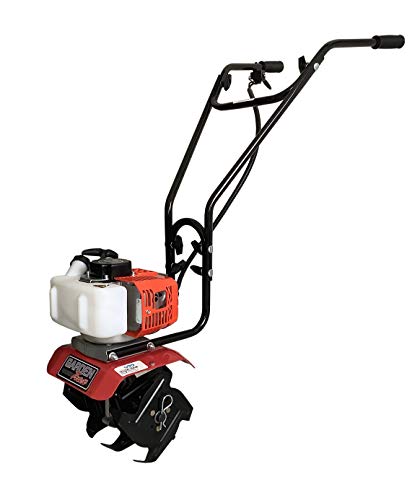
Earthquake MC440 40cc 4-Cycle Mini Cultivator
40cc 4-cycleNo fuel mixingStand-up startingQuieter engine
Check price on Amazon
Best for: A gardener who wants gas power without mixing two-stroke fuel.

The MC440 uses a 40cc four-cycle engine, which means you pour straight gasoline in one hole and oil in another instead of mixing fuel. A four-cycle engine also runs quieter than a two-cycle and burns cleaner, so it is more pleasant to use on a Saturday morning.

Stand-up starting lets you pull the cord from behind the handlebars rather than bending over the machine, a useful design detail for anyone with a back that complains. The air filter design is intended to keep fine dust out, which matters in a machine that spends its life in loose soil. Against the GardenTrax 33cc two-cycle it is quieter and cleaner, though it is a little heavier.

Change the oil each season, clean the air filter regularly and keep the fuel fresh, since stale gasoline is the usual reason a small engine will not start in spring. Drain or stabilise the fuel before storage.

What works

  • Four-cycle engine runs on straight gasoline
  • Stand-up starting saves the back
  • Quieter than a two-cycle machine
  • Dust-resistant air filter design

Watch out for

  • Needs oil changes and fuel care
  • Heavier than electric and cordless minis

Spec sheet

Engine
40cc four-cycle Viper
Fuel
Gasoline only, no oil mix
Starting
Stand-up from the handlebars
Air filter
Dust-resistant design
Class
Gas mini cultivator
02
GardenTrax 40cc 4-Cycle Mini Cultivator, 6 Forged Tines, 7/13/16 In.
40cc 4-cycle6 forged tines7/13/16 in. widths8 in. depth
Check price on Amazon
Best for: A gardener whose beds range from narrow borders to a 16 inch vegetable plot.

The GardenTrax uses a vertical-shaft four-cycle engine, a design whose lubrication structure is meant to avoid oil starvation at working angles. It carries six forged steel tines at 250 rpm, and the width adjusts to 7, 13 or 16 inches, so one machine can work a flower bed, a vegetable row or an open plot.

Variable width is the reason it ranks above the fixed-width minis: you swap the outer tines to fit the job. The cost is complexity, since switching widths takes a few minutes and tools. It matches the MC440 on engine type, but its 250 rpm tine speed is slower, which favours torque over a fine finish.

After each session, brush off soil and check the tine bolts, and run the oil level check before every start. Store with the fuel drained.

What works

  • Three width settings from 7 to 16 inches
  • Six forged steel tines
  • Four-cycle vertical shaft engine
  • Maximum depth of 8 inches

Watch out for

  • Changing width takes time and tools
  • Heavier than corded and cordless minis

Spec sheet

Engine
40cc four-cycle, vertical shaft
Tines
Six forged steel
Tine speed
250 rpm
Width settings
7, 13 or 16 inch
Maximum depth
8 inch
03
Westinghouse 6-Inch 2.5-Amp Corded Mini Tiller Cultivator
2.5 amp motor6.3 in. width9.9 lb4 steel blades
Check price on Amazon
Best for: Flower beds and weeding where a light cord-powered tool is enough.

The Westinghouse weighs just 9.9 pounds and cultivates a 6.3 inch strip with four steel blades at up to 300 rpm. A 2.5 amp motor is small enough to run from any outlet with a light extension cord, and the machine is light enough to use with one hand for short stretches.

Its narrow width is perfect for flower beds and between rows, and it will not damage nearby plants. The compromise is power: this is a loosening and weeding tool, not a tiller, and it will bog down in firm soil. Against the cordless OGORI it needs a cord but never runs out of charge.

Keep the cord behind you, check the blades for tangled roots and string, and wipe the housing clean. It is the best candidate for someone who weeds more than they dig.

What works

  • Only 9.9 pounds
  • 6.3 inch width fits tight beds
  • Runs from any outlet at 2.5 amps
  • No batteries or fuel

Watch out for

  • Too weak for firm soil
  • Cord limits the working area

Spec sheet

Motor
2.5 amp, 120V
Speed
Up to 300 rpm
Cultivating width
6.3 inch
Weight
9.9 lb
Blades
Four heavy-duty steel
04
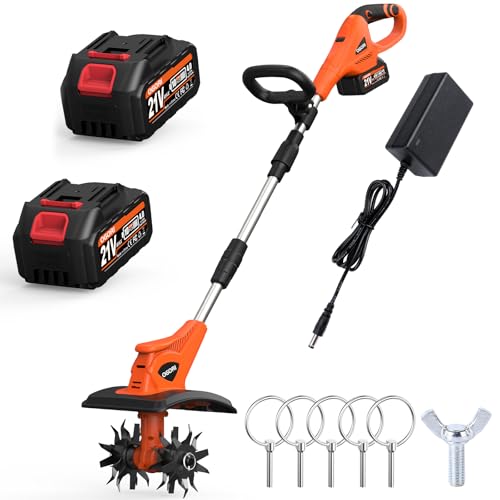
OGORI Cordless Mini Cultivator, 9 x 6.3 Inch, 2x4.0Ah
Cordless9 in. width6.3 in. depth2 x 4.0 Ah
Check price on Amazon
Best for: Raised beds and borders where a cord would be a nuisance.

The OGORI is a cordless mini cultivator with a 9 inch width and a 6.3 inch depth, powered by two 4.0 Ah lithium batteries for an 8.0 Ah total. Four tines carry a total of twelve blades, which is the maker's way of describing a dense cutting head.

Cordless operation means no cord and no engine to start, and it is a good fit for tight spaces around shrubs and raised beds. The batteries are the limiting factor, since runtime depends on soil and a depleted pack ends the session. Against the Westinghouse it covers a wider strip and goes deeper, but costs more and needs charging.

Charge both batteries before the weekend, keep the tines clear and store the batteries indoors. It suits owners who want freedom from cords without a gas engine.

What works

  • Cordless with two 4.0 Ah batteries
  • 9 inch width and 6.3 inch depth
  • No fuel or oil to manage
  • Light enough for tight spaces

Watch out for

  • Runtime ends the job when the batteries drain
  • Less torque than a gas mini

Spec sheet

Tilling width
9 inch
Tilling depth
6.3 inch
Tines
Four steel tines with twelve blades
Batteries
Two 4.0 Ah, 8.0 Ah total
Use
Tight spaces
05
GardenTrax 33cc 2-Cycle Mini Cultivator, Worm-Drive
33cc 2-cycleWorm-drive gearboxSmooth runningGas powered
Check price on Amazon
Best for: A budget gas cultivator for small plots, for owners comfortable with premix fuel.

The 33cc GardenTrax is the lowest-cost gas option, with a two-cycle engine and a heavy-duty worm drive. The worm gearbox is what keeps the machine from bouncing and jumping as the tines bite, which is a common complaint with cheap tillers.

It needs mixed fuel, which makes it more demanding than the four-cycle MC440: you must measure oil into gasoline, and the engine is louder and smokier. The upside is lighter weight and a lower price. It is aimed at breaking ground in a small plot, and the worm drive helps keep it steady.

Use fresh premix, run the engine dry or stabilise the fuel before storage, and clean the air filter after each session. It rewards the owner who is comfortable with small engines.

What works

  • Worm drive keeps the tines steady
  • Lowest cost gas option here
  • Light two-cycle engine
  • Handles small plots of new ground

Watch out for

  • Requires mixed fuel and a louder engine
  • More maintenance than electric machines

Spec sheet

Engine
33cc two-cycle
Transmission
Heavy-duty worm drive
Fuel
Mixed gas and oil
Class
Gas mini cultivator
Design aim
No bouncing, breaks virgin ground
06
GARDTECH Cordless Hand Tiller, 4 In. Width and Depth, 2x2.0Ah
4 in. width and depth235 rpm2 x 2.0 Ah65Mn steel tines
Check price on Amazon
Best for: Pots, planters and narrow gaps between established plants.

The GARDTECH is a pocket-sized cordless tiller that works a 4 inch wide, 4 inch deep strip with four hardened 65Mn steel tines at 235 rpm. It comes with two 2.0 Ah batteries, and the maker claims up to 120 minutes of use.

It is the smallest machine here by a wide margin and the one that feels most like a hand tool. It is perfect for pots, planters and the gaps between plants, and a poor choice for any large bed. Compared with the OGORI it loses width and depth but gains handling.

Because the batteries are small, charge them fully and expect shorter use in compacted soil. Clear tangled roots from the tines before storing.

What works

  • Very small and light
  • Hardened 65Mn steel tines
  • Two 2.0 Ah batteries included
  • Claims up to 120 minutes of use

Watch out for

  • Only 4 inches wide and deep
  • Not suited to open ground

Spec sheet

Tilling width
4 inch
Tilling depth
4 inch
Tine speed
235 rpm
Batteries
Two 2.0 Ah
Tines
Four hardened 65Mn steel

Spec sheet decoder

What the numbers on the box really mean

The specs manufacturers lead with, translated into what they tell you about real-world performance.

Engine displacement

The size of a gas engine in cubic centimetres. Larger engines produce more torque.

Watch forThe MC440 and GardenTrax 4-cycle are 40cc, the other GardenTrax 33cc.

Two-cycle or four-cycle

Two-cycle needs premix fuel, four-cycle takes plain gasoline and has an oil sump.

Watch forThe 33cc GardenTrax is a two-cycle, the MC440 a four-cycle.

Tine speed

Revolutions per minute of the tines. Slower speeds give more torque.

Watch forThe Westinghouse reaches 300 rpm, the GardenTrax 4-cycle 250, the GARDTECH 235.

Tilling width

The strip of soil worked in one pass.

Watch forThe GARDTECH is 4 inches and the adjustable GardenTrax 7, 13 or 16.

Battery capacity

Amp-hours of the pack, which govern runtime.

Watch forThe OGORI has two 4.0 Ah batteries and the GARDTECH two 2.0 Ah.

Methodology

How We Evaluated These Mini Cultivators

Power and torque

We compared engine sizes, motor ratings and tine speeds. The 40cc four-cycle gas machines lead, with the 33cc two-cycle next and the electric units best for loosened soil.

Working width

We weighed widths from 4 to 16 inches against typical garden jobs. The adjustable GardenTrax scores best for flexibility.

Weight and handling

We favoured machines light enough to lift into a bed. The 9.9 pound Westinghouse leads, and the gas machines lag.

Ownership burden

We counted fuel, oil, air filters and batteries as upkeep. The corded and cordless units score highest for low maintenance.

Fit for small spaces

We judged how well each machine works around plants and in tight beds. The narrow Westinghouse and GARDTECH lead here.

Decision guide

How to Choose the Right Mini Cultivators

By Garden Type

SituationPickWhy
Small vegetable plot, gas wantedEarthquake MC440Four-cycle, stand-up starting
Beds from narrow to wideGardenTrax 40cc 4-cycleAdjustable 7, 13 or 16 inches
Flower beds near an outletWestinghouse 6-inchLight corded unit
Raised beds, no cordOGORI cordless9 inch width and 8.0 Ah
Pots and plantersGARDTECH hand tiller4 inch head

By Budget

TierPickWhy
LowestGARDTECH cordlessCheapest and smallest
LowWestinghouse 6-inchSimple corded design
Lower midGardenTrax 33cc 2-cycleCheapest gas engine
MidOGORI cordlessTwo batteries and a 9 inch head
UpperEarthquake MC440 or GardenTrax 40ccFour-cycle engines

Gas vs Electric vs Cordless

Gas

The Earthquake MC440 and GardenTrax models give the most torque and run as long as you have fuel. They cost more in upkeep, noise and storage care.

Electric and cordless

The Westinghouse, OGORI and GARDTECH are quiet, light and clean. They suit loosened beds and weeding but not firm ground.

Gas for breaking small plots, electric for annual bed care. Many gardeners end up owning one of each: a gas machine for the spring dig-over and a light electric tool for summer weeding, and the second tool pays for itself in the hours it saves hauling a heavier machine out of the shed.

By Soil Condition

SoilPickWhy
Firm or new groundGardenTrax 40cc 4-cycleTorque and 8 inch depth
Moderate garden soilEarthquake MC440Engine power without bounce
Loose amended bedsOGORI cordlessEnough power and no cord
Surface weedingWestinghouse 6-inchLight blades

For a Small Home Garden Specifically

Look for

Look for light weight, a width that fits your beds and a power source that suits your storage. A small garden is used a few times a season, so low upkeep matters.

In this comparison

The OGORI cordless and Westinghouse corded machines are the practical choices, and the Earthquake MC440 is the pick if you need real torque.

When to Spend More

Spend more if

Spend more if you break new ground each year; the four-cycle MC440 or adjustable GardenTrax is worth it. Their engines last longer than cheap two-cycle ones. A four-cycle engine that runs on plain gasoline is also easier to live with over years, because there is no premix to measure and no oily smoke across the yard. The extra cost is spread over many seasons, which is the honest way to look at any engine.

Save if

Save if you only weed and loosen. The Westinghouse or GARDTECH costs far less and weighs almost nothing.

Ownership

Maintenance schedule

The upkeep that decides whether this machine lasts two seasons or ten.

TaskIntervalWhy it matters
Check oil level (four-cycle gas)Before each useA low sump damages a small engine quickly. Check on level ground.
Use fresh fuelEach seasonStale gasoline gums the carburetor. Stabilise the fuel or run the engine dry before storage. Ethanol in pump gasoline absorbs water and leaves varnish in a tiny carburetor jet within weeks, so use fuel from a fresh can and add stabiliser if the engine will sit. If it will not start after winter, empty the tank and replace the fuel before replacing any parts.
Clean the air filterEvery few usesFine soil dust chokes small engines. Tap out a foam filter and replace it when worn.
Clean and charge batteriesOff seasonStore cordless packs half charged in a cool place.
Inspect tines and bladesEach seasonTangled roots and wire wrap around the shaft. Remove them with the power off. On a gas machine, disconnect the spark plug lead first, and on a battery unit take out the pack, since an accidental start with your hand near the tines is the most common serious injury with these tools. Wear sturdy shoes and keep children and pets away while tilling.

FAQ

Frequently Asked Questions

What is a mini cultivator good for?

It loosens soil, removes weeds and mixes in compost in small beds. It is not a tiller and will not break hard ground quickly.

Gas or electric for a small garden?

Electric and cordless units are lighter, quieter and low-maintenance, so they suit most small gardens. Gas suits firm soil or locations far from an outlet.

How do I start a small gas engine?

Prime it according to the manual, set the choke and pull the cord steadily. Stand-up starting on the MC440 makes this easier on the back.

Can a mini cultivator break new ground?

Only slowly and with gas power. A 40cc machine can do a small plot over several passes, while corded and cordless minis are not designed for it.

How wide should I go?

Match the head to your beds. Under 10 inches for borders and planters, 13 to 16 inches for vegetable rows.

How do I store it for winter?

Drain or stabilise the fuel in gas models, charge batteries to half and store them indoors, and wipe soil off the tines.

Bottom line

The short version

Browse more mini cultivatorson Amazon →
James Miller, Lead Machine Editor

About the author

James Miller

Lead Machine Editor, MachineFanatic

James Miller leads MachineFanatic's buying guides, turning spec sheets, manuals and owner feedback into clear verdicts on power tools, outdoor power equipment, shop machines and kitchen machines.

More from James →

Keep reading

Related guides