
Amazon affiliate links - we earn a commission.Affiliate disclosure

Buying guide · 13 min read · Updated 2026-11-07

Best Perfect Aire Dehumidifiers (2026)

Four PerfectAire dehumidifiers from 22 to 140 pints compared by flat panel design, timer and pump options, so you can match one to a home or a job site.

James MillerBy James MillerLead Machine Editor4 machines comparedSpec-sheet verified
Best Perfect Aire Dehumidifiers

At a glance

Our top picks

Side by side

Spec comparison

MachineRated capacityCoverageBest spaceDrain
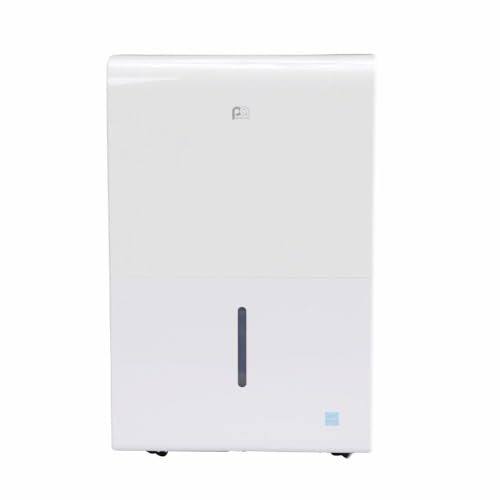
PerfectAire 2PFDP50 50-Pint Flat Panel Dehumidifier, 4,500 Sq FtBest OverallPerfectAire 2PFDP50 50-Pint Flat Panel Dehumidifier, 4,500 Sq Ft50 pints per dayUp to 4,500 sq ftn/an/a
PerfectAire 152608 35-Pint Flat Panel Dehumidifier, 3,000 Sq FtBest ValuePerfectAire 152608 35-Pint Flat Panel Dehumidifier, 3,000 Sq Ft35 pints per dayUp to 3,000 sq ftMid-size basement or large roomn/a
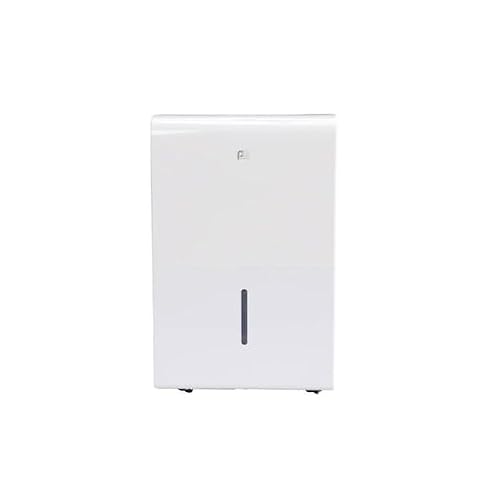
PerfectAire 22-Pint Energy Star Dehumidifier, 115VBest for Small SpacesPerfectAire 22-Pint Energy Star Dehumidifier, 115V22 pints per dayn/aBasement, garage, laundry roomThreaded hookup, hose not included
PerfectAire Damp2Dry 140-Pint Commercial Dehumidifier with PumpBest for RestorationPerfectAire Damp2Dry 140-Pint Commercial Dehumidifier with Pump140 pints per dayn/an/aEjector pump with 20 ft hose

A slim cabinet changes where a dehumidifier can live. When a unit is shallow enough to slide between a water heater and a wall, it stays in service all year instead of being dragged out and put away each season.

The right choice balances that footprint against capacity and drainage. A household unit, a larger flat panel and a heavy commercial machine each answer a different question, and mixing them up wastes either space or money.

Before you buy

6 Criteria to Look For Before Buying a Perfect Aire Dehumidifier

  1. 01

    Pick the capacity step

    The household PerfectAire units come in 22, 35 and 50 pint steps, rated for roughly small rooms, 3,000 square feet and 4,500 square feet. A laundry room suits the 22-pint, a mid-size basement the 35-pint and a large basement the 50-pint. If the room smells musty, go one step up so the unit cycles off between wet spells. The coverage labels also assume open floor, so a basement chopped into rooms by closed doors behaves like several small spaces, and a single unit in one room leaves the rest of the floor damp.

  2. 02

    Cabinet shape and clearance

    The flat panel models are shallow, with the 50-pint measuring 15.5 inches tall and 11 inches deep. A narrow body fits beside a furnace or a water heater. Leave a few inches of clearance at the intake, because a blocked grille makes a good machine look weak. A narrow cabinet also means a lighter, smaller condensing surface than a boxy unit of the same rating, so the slim design suits a space that needs a quiet, steady machine more than one that needs maximum raw removal.

  3. 03

    Drain arrangement

    The 22-pint has a threaded hookup but no hose, the 140-pint includes a 20 foot ejector pump hose and the 50-pint offers a continuous mode. Decide how the water leaves before you order. A unit that fills its bucket and stops is the same as an unplugged unit. For a basement you visit rarely, a continuous drain into a floor drain is worth the small effort, and for a laundry room with a sink above the machine a short hose may be all you need.

  4. 04

    Timer and fan control

    The 50-pint lists a timer and continuous mode and the 35-pint lists a two-speed fan. These help you run the machine at the cheap or quiet hours. They matter less than getting the size right. A timer is most useful if your electricity price changes by the hour or if you want the machine quiet while you sleep, and continuous mode is best used for a few days, not for a whole season.

  5. 05

    Household versus commercial

    The Damp2Dry at 140 pints is a different class from the 22, 35 and 50 pint models. It is built for floods and job sites, with a rugged housing and a pump. Buying it for a mildly damp basement wastes power and makes noise you will not enjoy. The exception is a space with real water damage, where drying quickly protects framing and finishes and the extra capacity pays for itself.

  6. 06

    Energy cost across a season

    The 22-pint carries Energy Star certification, and sizing the other units correctly matters as much as any badge. A machine that cycles off uses less power than one running flat out. Run any unit on a schedule when you can. Setting the target near 45 percent rather than the lowest option avoids a compressor that never stops, and a cheap hygrometer in the far corner tells you whether the whole room is following the setpoint.

Detailed reviews

The 4 best perfect aire dehumidifiers, explained

01
PerfectAire 2PFDP50 50-Pint Flat Panel Dehumidifier, 4,500 Sq Ft
50 pints per day15.5 x 11 in bodyTimerContinuous mode
Check price on Amazon
Best for: Large basements where floor space is tight.

This is the PerfectAire to buy for a typical large basement. Its flat panel cabinet stands only 15.5 inches high and 11 inches deep, so it slips into a corner or alongside a furnace where a boxy 50-pint unit would stick out. The listing rates it for up to 4,500 square feet and highlights quiet operation, which suits a basement that doubles as a living area.

Controls include a timer and a continuous mode. The timer lets you run the machine on a schedule and the continuous mode keeps it going without a humidistat cycle, which is useful for a drying push after a damp spell. Against the 35-pint it adds fifteen pints and a larger rated area, and against the commercial 140-pint it trades raw capacity for a quieter, smaller body.

Ownership is simple. Wash the filter on a regular schedule, give the intake a few inches of clearance and use a drain hose if you cannot empty the bucket daily. The slim body makes it easy to pull out for annual coil cleaning, which is the habit that keeps a flat panel running as well in year three as in year one. A narrow body can tip more easily than a wide one, so set it on level concrete and keep the cord clear of foot traffic.

What works

  • Slim 15.5 by 11 inch body fits tight corners
  • 4,500 square foot listing for 50-pint capacity
  • Timer and continuous mode for flexible running
  • Quiet operation noted in the listing

Watch out for

  • No built-in pump listed
  • A narrow cabinet holds a smaller bucket than a boxy unit

Spec sheet

Rated capacity
50 pints per day
Coverage
Up to 4,500 sq ft
Height and depth
15.5 in by 11.0 in
Control
Timer and continuous mode
Noise
Quiet operation noted
02
PerfectAire 152608 35-Pint Flat Panel Dehumidifier, 3,000 Sq Ft
35 pints per dayFlat panel2-speed fanUp to 3,000 sq ft
Check price on Amazon
Best for: Mid-size basements and large rooms with moderate dampness.

The 35-pint flat panel is the middle step and the sensible match for a mid-size room. It lists 3,000 square feet and a two-speed fan, which lets you run slower for quiet and faster for a pull-down after a wet spell.

The listing is spare on features, so the value is in the basics: a compressor unit with a slim cabinet and two fan speeds. Compared with the 22-pint it adds thirteen pints and a bigger area, and against the 50-pint it gives up fifteen pints for a lower relative cost.

In a space with a steady but moderate problem it cycles off between wet spells and uses less power. In a wet unfinished basement it will run nonstop, and you should step up. Keep the filter clean and the intake clear, and verify the reading with a separate hygrometer. The two fan speeds give a real choice: low overnight keeps noise down while it holds a setpoint, and high after laundry day or a rainstorm pulls the room back quickly. Because the listing lists few details, read the manual for the humidistat range and the defrost behavior before you rely on it in a cool basement.

What works

  • Two-speed fan balances noise and speed
  • Rated for up to 3,000 square feet
  • Slim flat panel cabinet
  • Lower cost than the 50-pint

Watch out for

  • Sparse feature list in the listing
  • Underpowered for a wet unfinished basement

Spec sheet

Rated capacity
35 pints per day
Coverage
Up to 3,000 sq ft
Fan
2-speed
Cabinet
Flat panel
Best space
Mid-size basement or large room
03
PerfectAire 22-Pint Energy Star Dehumidifier, 115V
22 pints per dayEnergy StarThreaded drain hookup16.5 in tall
Check price on Amazon
Best for: Laundry rooms, garages and small basements.

The 22-pint is the smallest PerfectAire and carries Energy Star certification. The listing rates it for basements, garages and laundry rooms and notes a direct-to-drain threaded hookup, though the hose is not included, so budget for a standard hose.

Under the current federal test of 65F and 60% RH, a 22-pint rating is respectable, roughly an older 30-pint label, which is why the listing mentions both numbers. It is still a smaller coil and bucket than the 35-pint, so keep it for a closed room or a modest laundry space.

At 16.5 inches tall it is easy to tuck and easy to carry. Use the threaded hookup with a hose if you cannot empty the bucket, and clean the filter monthly. A standard garden-style hose with the right thread is the usual choice, but check the fitting before you buy because thread types differ, and run the hose with a steady downward slope so water does not pool and slow the drain.

What works

  • Energy Star certified
  • Threaded hookup for continuous drain
  • Compact 16.5 inch height
  • Respectable rating under the newer federal test

Watch out for

  • Drain hose is not included
  • Too small for an open basement

Spec sheet

Rated capacity
22 pints per day
Efficiency
Energy Star certified
Drain
Threaded hookup, hose not included
Height
16.5 in
Best space
Basement, garage, laundry room
04
PerfectAire Damp2Dry 140-Pint Commercial Dehumidifier with Pump
140 pints per day20 ft pump hosePoly housingTelescoping handle
Check price on Amazon
Best for: Flooded spaces and restoration jobs.

The Damp2Dry is the odd one out: a commercial unit aimed at floods and job sites. It lists 140 pints of daily removal, a rugged polyethylene housing with a telescoping metal handle and an ejector pump with a 20 foot hose and quick-connect fittings for automatic drainage.

The low grain performance mentioned in the listing refers to its ability to keep pulling moisture from air that is already fairly dry, which matters when you want to finish drying a space instead of just holding it. Against the household flat panels it is far larger, louder and more powerful.

For a home, it is overkill unless water has actually entered. It makes sense for a flooded basement, a restoration job or a large damp garage. Plan the pump discharge, check the circuit and expect a loud machine. A quick-connect fitting makes it simple to disconnect the hose and move the unit between rooms during a drying job, and the telescoping handle is meant to be used like a luggage handle so you can tip and roll it without bending. After a job, drain the pump, rinse the filter and store it dry so the next call-out starts clean.

What works

  • 140-pint rating for heavy moisture loads
  • Ejector pump with 20 ft hose and quick connects
  • Rugged polyethylene housing with telescoping handle
  • Low grain performance for final drying

Watch out for

  • Far more machine than a normal home needs
  • Louder and heavier than the flat panel units

Spec sheet

Rated capacity
140 pints per day
Drain
Ejector pump with 20 ft hose
Housing
Durable polyethylene
Handle
Telescoping metal
Performance
Low grain operation

Spec sheet decoder

What the numbers on the box really mean

The specs manufacturers lead with, translated into what they tell you about real-world performance.

Flat panel

A shallow cabinet that stands tall and narrow rather than boxy. It trades bucket depth for a smaller footprint.

Watch forThe 50-pint is 15.5 inches tall and 11 inches deep.

Pint rating

A daily removal figure that only means something alongside its test conditions. The current US test is at 65F and 60% RH.

Watch forThe 22, 35, 50 and 140 pint steps cover very different jobs.

Ejector pump

A built-in pump that pushes condensate through a hose to a drain. It handles drains above the machine.

Watch forThe 140-pint includes a 20 foot hose with quick-connect fittings.

Low grain performance

The ability to keep removing moisture from already dry air. It matters for finishing a drying job.

Watch forListed on the commercial 140-pint.

Continuous mode

A setting that runs the unit without cycling on a humidistat. It is useful for a drying push.

Watch forListed on the 50-pint.

Methodology

How We Evaluated These Perfect Aire Dehumidifiers

Capacity ladder

We compared the 22, 35, 50 and 140 pint steps and how they map to rooms and jobs. The wide gap between the smallest and largest steps covers jobs from a basement to a workshop. We treated ratings as spec sheet figures, not measurements. We also checked whether the gap between steps is large enough to matter, since the move from 22 to 35 pints changes how a laundry room or small basement behaves far more than a few extra pints would.

Footprint

We looked at cabinet dimensions, especially the 15.5 by 11 inch body of the 50-pint. A slim body scored well for tight basements. The bulky commercial housing scored lower for home use. We also considered how easily a narrow cabinet can be pulled out for cleaning, since a machine that is hard to move tends to skip its yearly coil service.

Drainage

We compared threaded hookups, continuous modes and the ejector pump on the 140-pint. A pump with a long hose scored highest for awkward layouts. A hose not included was noted as an added cost. We also gave credit to quick-connect fittings, because a leak at a clumsy hose joint is the most common household failure with a pumped unit.

Controls

We assessed the timer and continuous mode on the 50-pint and the two-speed fan on the 35-pint. Useful controls scored well, while sparse listings scored lower for transparency. Where a listing gave little detail, we noted it as a reason to read the manual before relying on a feature.

Value and class

We compared relative price tiers across household and commercial units. The 22-pint sits at the low end and the Damp2Dry at the top. The best value is the smallest unit that handles the job.

Decision guide

How to Choose the Right Perfect Aire Dehumidifiers

By Space

SituationPickWhy
Laundry room or garagePerfectAire 22-PintEnergy Star with a threaded hookup
Mid-size basementPerfectAire 35-Pint3,000 square feet and a two-speed fan
Large basement, tight floor spacePerfectAire 50-Pint Flat Panel15.5 by 11 inch body, 4,500 square feet
Flooded basementPerfectAire Damp2Dry 140-PintCommercial capacity with a 20 ft pump hose
Basement used as living spacePerfectAire 50-Pint Flat PanelQuiet operation noted

By Budget

TierPickWhy
LowestPerfectAire 22-PintEntry household unit
Low to middlePerfectAire 35-PintValue for mid-size rooms
Upper middlePerfectAire 50-Pint Flat PanelLarge capacity in a slim body
HighestPerfectAire Damp2Dry 140-PintCommercial capacity

Household vs Commercial

Household (22, 35, 50 Pint)

Quieter, smaller and cheaper to run, with slim cabinets that fit tight spaces. They suit a normal damp basement. They lack a built-in pump.

Commercial (Damp2Dry 140-Pint)

Heavy capacity, a rugged housing and a 20 foot pump hose. It suits floods and job sites. It is loud and heavy for a living space.

Choose household for steady dampness and commercial for water damage.

Drain Convenience

PreferencePickWhy
Hose into a floor drainPerfectAire 22-PintThreaded hookup
Pump to a distant drainPerfectAire Damp2Dry 140-Pint20 ft ejector hose
Run on a schedulePerfectAire 50-Pint Flat PanelTimer and continuous mode
Quiet and simplePerfectAire 35-PintTwo-speed fan

For Tight Basements Specifically

Look for

A shallow cabinet, a drain you can reach and a capacity that matches the dampness. Leave a few inches of clearance at the intake.

In this comparison

The 50-Pint Flat Panel is the best fit at 15.5 by 11 inches, with the 35-Pint for a smaller space.

When to Spend More

Spend more if

Water has entered or the space is large. The Damp2Dry earns its cost for restoration, and the 50-Pint for a large basement.

Save if

The room is a laundry space or a small basement. The 22-Pint or 35-Pint cover it for less.

Ownership

Maintenance schedule

The upkeep that decides whether this machine lasts two seasons or ten.

TaskIntervalWhy it matters
Wash the filterEvery 2 to 4 weeksA dirty filter starves the coil of air, and a starved coil is the one that frosts over. Rinse and dry it fully before reinstalling.
Empty and rinse the bucketWeeklyStale water grows slime that smells. A rinse with mild soap and a thorough dry stops it.
Check the hose or pumpEvery 3 monthsKinks and sediment cause overflow, and a pump idle for months can stick. Pour water through and watch the flow.
Vacuum the coilOnce a yearLint on the coil reduces heat transfer and is the usual reason for slow drying by the third summer. Unplug first.
Inspect the cord and housingEach seasonHeavy units stress cords and handles, and the commercial housing takes knocks. Replace damage before it fails.

FAQ

Frequently Asked Questions

Which PerfectAire size do I need?

A laundry room or garage suits the 22-pint, a mid-size basement suits the 35-pint and a large basement suits the 50-pint. If the room smells musty, go one step up so the unit cycles off.

What is a flat panel dehumidifier?

It is a slim, tall cabinet that fits into tight spots. The 50-pint measures 15.5 inches tall and 11 inches deep. The trade-off is a narrower bucket, which fills sooner in a damp room, so a hose or a regular emptying habit matters more with this shape than with a boxy unit.

Do I need the commercial model for a basement?

Only if water has entered or the space is large and wet. A normal damp basement is better served by the 35 or 50 pint household units, which are quieter and cheaper to run.

Does the 22-pint include a drain hose?

No. It has a threaded hookup, but the hose is not included, so budget for a standard hose if you want continuous drain.

How long will one last?

Compressor dehumidifiers commonly last 5 to 10 years, and a commercial housing built for job sites tends to outlast a household shell if it is stored dry and the pump is flushed after each use. Cleaning the filter and coil and choosing the right size are the main levers.

What humidity should I target?

Plan on 40 to 50 percent for living space. Air held above 60 percent lets mold and musty odors build, while under 30 percent it dries throats and wood. Since the panel reads the air at the machine, a hygrometer in the far corner shows the true room average.

Bottom line

The short version

Browse more perfect aire dehumidifierson Amazon →
James Miller, Lead Machine Editor

About the author

James Miller

Lead Machine Editor, MachineFanatic

James Miller leads MachineFanatic's buying guides, turning spec sheets, manuals and owner feedback into clear verdicts on power tools, outdoor power equipment, shop machines and kitchen machines.

More from James →

Keep reading

Related guides