



Amazon affiliate links - we earn a commission.Affiliate disclosure

Buying guide · 12 min read · Updated 2026-11-13

Best Power Station for Home Backup (2026)

Six power stations from 1024Wh to 3840Wh sized for home outages, compared on usable watt-hours, startup surge, idle draw, transfer switching and recharge time.

James MillerBy James MillerLead Machine Editor6 machines comparedSpec-sheet verified
Best Power Station for Home Backup

At a glance

Our top picks

Side by side

Spec comparison

MachineCapacityAC outputUse
Jackery HomePower 3600 Plus 3584Wh Power StationBest OverallJackery HomePower 3600 Plus 3584Wh Power Station3584Wh LFP, expandable to 21kWh3600W, 7200W in parallelPumps, heaters and whole-circuit backup
Anker SOLIX S2000 2010Wh LFP Power StationBest Efficiency PickAnker SOLIX S2000 2010Wh LFP Power Station2010Wh LFP1500Wn/a
EcoFlow DELTA 3 Max 2048Wh 2400W Power StationBest High-Output Mid-SizeEcoFlow DELTA 3 Max 2048Wh 2400W Power Station2048Wh LFP2400W, 3400W in X-Boost modeHome backup and outdoor
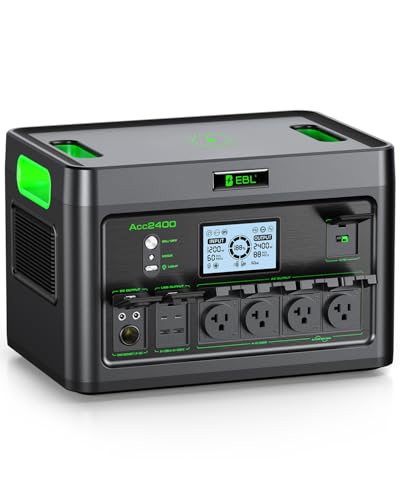
EBL 2400W 1843Wh LiFePO4 Power StationBest Value for CapacityEBL 2400W 1843Wh LiFePO4 Power Station1843.2Wh LiFePO42400Wn/a
BLUETTI Elite 400 3840Wh Power Station with Two 200W PanelsBest Complete Solar KitBLUETTI Elite 400 3840Wh Power Station with Two 200W Panels3840Wh2600W, 3900W power liftingRefrigerator to power tools
Anker SOLIX C1000 Gen 2 1024Wh Power StationBest ValueAnker SOLIX C1000 Gen 2 1024Wh Power Station1024Wh LiFePO42000W, 3000W peakn/a

Home backup is where a power station stops being a camping accessory and becomes part of the house. The questions change: how many hours of refrigerator, how much startup surge for a well pump or furnace blower, and how will it connect to the loads without an extension-cord tangle.

A realistic plan picks the few circuits that matter and sizes the station to them. This guide compares six units on that basis, from a station that keeps a refrigerator and Wi-Fi alive to ones that approach a small house battery.

Before you buy

6 Criteria to Look For Before Buying a Power Station for Home Backup

  1. 01

    Hours of backup you actually need

    A refrigerator averages 50 to 100 watts over a day, so 1024Wh on the Anker C1000 lasts roughly 8 to 16 hours, 2010Wh on the S2000 about a day or more and 3584Wh on the Jackery well beyond. Define the outage length first, then work backward to watt-hours. Add a margin of 20 percent, because real outages tend to run longer than forecasts and cold weather reduces battery capacity.

  2. 02

    Startup surge for pumps and compressors

    A well pump or sump pump can draw several times its running watts at start. The Jackery's 3600W output handles this, the Delta 3 Max's 2400W covers many pumps and the Anker S2000's 1500W may not. Read the motor's nameplate.

  3. 03

    Idle draw of the inverter

    The Anker S2000 lists a 6W idle draw. A bigger inverter burning 30W idle spends 720Wh a day doing nothing. Turn the AC output off when not needed.

  4. 04

    Transfer switching and safe connection

    A manual transfer switch lets the Jackery or any large station feed selected house circuits without back-feeding the utility. Use a qualified electrician. Plugging a station into a wall outlet to power the house is dangerous.

  5. 05

    UPS switchover time

    The Delta 3 Max transfers in under 10ms and the EBL in 0.1 seconds. Faster switching keeps computers running, while slower switching is fine for a refrigerator. Match the speed to the sensitive loads.

  6. 06

    Recharge between outages

    The Anker C1000 refills in 49 minutes and the Delta 3 Max reaches 80 percent in 1.13 hours, but the Elite 400's two 200W panels take a day or more. Back-to-back storms demand fast recharge.

Detailed reviews

The 6 best power station for home backup, explained

01
Jackery HomePower 3600 Plus 3584Wh Power Station
3584Wh LFP3600W output7200W in parallelMTS ready
Check price on Amazon
Best for: Homes that want whole-circuit backup with pumps, heaters and a refrigerator.

Powering well pumps, heaters and furnace blowers means surviving startup spikes of several thousand watts, and a 3600 watt inverter with a 7200 watt parallel option is built for it. The HomePower 3600 Plus stores 3584 watt-hours in LFP cells that the maker says withstand 302 degrees Fahrenheit thanks to a high-temperature ceramic separator, and it can be expanded up to 21 kilowatt-hours.

Its plug-and-play design is aimed at pairing with a manual transfer switch, so selected house circuits run from the station without a cord to every appliance. Compared with the 2048Wh EcoFlow Delta 3 Max it carries more energy and the same class of output, and against the 1024Wh Anker C1000 it holds more than three times the storage. That scale is what lets it handle a refrigerator, a sump pump and lights for a day.

Have a qualified electrician install the transfer switch, because back-feeding the grid is dangerous to utility workers. Keep the unit in a dry, temperature-stable spot, test it twice a year under load and keep its charge near the middle of its range when idle.

What works

  • 3600W output with a 7200W parallel option
  • Plug-and-play pairing with a manual transfer switch
  • Expandable up to 21 kilowatt-hours
  • High-temperature ceramic separator cell design

Watch out for

  • Very heavy and needs a fixed location
  • Highest outlay in the group
  • Transfer switch installation needs an electrician

Spec sheet

Capacity
3584Wh LFP, expandable to 21kWh
AC output
3600W, 7200W in parallel
Cell design
High-temperature ceramic membrane cells
Home integration
Plug-and-play with a manual transfer switch
Use
Pumps, heaters and whole-circuit backup
02
Anker SOLIX S2000 2010Wh LFP Power Station
2010Wh LFP1500W output6W idle draw10,000 cycles
Check price on Amazon
Best for: Outage plans centered on a refrigerator, router and lights over many hours.

Idle draw is the figure that decides whether a station can nurse a refrigerator through a long outage, and the Anker S2000 lists just 6 watts. Many large inverters burn a few dozen watts doing nothing, which over a day wastes a large share of the battery. The maker quotes up to 35 hours of refrigerator backup from 2010 watt-hours, a claim that depends on the fridge's own draw but is plausible with that low overhead.

The LFP cells are rated at 10,000 cycles, which the maker equates to a 15 year lifespan, and the unit is described as 30 percent smaller and 25 percent lighter than the previous generation of 2kWh stations. At 1500 watts it cannot run a well pump with a large startup surge, and next to the 3600W Jackery it is a far smaller machine, but it is the efficient choice for a refrigerator, router and lights.

Treat it as a long-haul unit for essentials. Keep the load list short, use USB-C for devices where you can and recharge it before the next storm. Store near mid-charge if the season is quiet.

What works

  • 6W idle draw preserves energy for a refrigerator
  • 10,000 stated cycles on LFP cells
  • Smaller and lighter than earlier 2kWh stations
  • Stated up to 35 hours of refrigerator backup

Watch out for

  • 1500W cannot start large pumps or run heaters
  • Less output than the 2400W EcoFlow
  • Premium outlay for the capacity

Spec sheet

Capacity
2010Wh LFP
AC output
1500W
Idle draw
6W
Cycle life
10,000 stated, about 15 years
Fridge backup
Up to 35 hours stated
03
EcoFlow DELTA 3 Max 2048Wh 2400W Power Station
2048Wh LFP2400W output3400W X-Boost10ms transfer
Check price on Amazon
Best for: Homes needing 2400W for a microwave or heater plus fast recharge between outages.

X-Boost mode is the trick that makes the Delta 3 Max useful for appliances above its 2400 watt rating: it reduces output voltage so resistive heaters and similar loads can draw up to 3400 watts, though motors and electronics should stay on normal output. The unit stores 2048 watt-hours in LFP cells and charges to 80 percent in 1.13 hours using EcoFlow's fast-charge technology.

Under 10 milliseconds of transfer time suits it to a router, a computer or a medical device where a dropped outlet matters. Against the 2010Wh Anker S2000 it offers a stronger inverter at the cost of higher idle consumption, and against the 3584Wh Jackery it is smaller but easier to move. It is the best mid-size option when the load includes a microwave or a space heater.

Check the idle draw in the manual and switch the AC output off when nothing needs it. Keep it indoors during extreme weather and consider adding an expansion battery later if the home plan grows.

What works

  • 2400W output with 3400W X-Boost for resistive loads
  • 0 to 80 percent charge in 1.13 hours
  • Transfers in under 10ms for electronics
  • LFP cells with an expandable ecosystem

Watch out for

  • Higher idle draw than the Anker S2000
  • X-Boost mode only suits resistive loads
  • Heavy for a 2kWh unit

Spec sheet

Capacity
2048Wh LFP
AC output
2400W, 3400W in X-Boost mode
Recharge
0 to 80 percent in 1.13 hours
Transfer time
Under 10 milliseconds
Use
Home backup and outdoor
04
EBL 2400W 1843Wh LiFePO4 Power Station
1843.2Wh LiFePO42400W output0.1s emergency mode12 devices
Check price on Amazon
Best for: Budget-conscious households wanting 1.8kWh and 2400W for a refrigerator and electronics.

A 0.1 second emergency power mode is the EBL's pitch for home use, switching to battery during a blackout quickly enough to protect computers and files. It offers 1843.2 watt-hours of LiFePO4 capacity and 2400 watts of output at a more modest price than the big-name stations, and it can charge or power up to twelve devices at once.

The 0.1 second figure is slower than the 10 millisecond claims of the EcoFlow and Jackery units, so a computer may still reset where the faster switches would hold, but for a refrigerator and lights it is irrelevant. Compared with the 2048Wh EcoFlow it has a bit less energy and a slower switch, and against the 1024Wh Anker it has nearly double the storage.

Brand support is the point to weigh. Check the warranty and the app experience, test the emergency mode with a lamp before you depend on it, and keep the unit charged. For an outage plan on a budget it is an interesting option. If you rely on it during a real outage, label which outlet feeds the refrigerator so nobody unplugs it by accident.

What works

  • 1843.2Wh and 2400W at a modest outlay
  • Emergency mode switches in 0.1 seconds
  • Powers up to twelve devices at once
  • LiFePO4 cells for long cycle life

Watch out for

  • Switchover is slower than 10ms rivals
  • Less established brand and support
  • Heavy and bulky for its capacity

Spec sheet

Capacity
1843.2Wh LiFePO4
AC output
2400W
Emergency mode
Switches to backup in 0.1 seconds
Devices
Up to 12 at once
Target use
Home backup and camping
05
BLUETTI Elite 400 3840Wh Power Station with Two 200W Panels
3840Wh2600W output3900W surgeTrolley and panels
Check price on Amazon
Best for: Households that want the battery, panels and a rolling trolley in one purchase.

A trolley and two bundled 200 watt solar panels turn this BLUETTI into a complete backup kit rather than just a battery. It stores 3840 watt-hours with a 2600 watt output that surges to 3900 watts, and its easy-roll trolley system moves a very heavy case without lifting. The listing pitches it for everything from refrigerators to power tools.

With 3840Wh it holds more energy than the 3584Wh Jackery, but with a lower 2600W output, so it handles a refrigerator, lights and a microwave but not a heavy pump and heater at once. Two 200 watt panels recharge it slowly, around a day or more of good sun, so for fast recharge you still rely on the wall or a generator.

The kit is a good fit for someone who wants solar from day one. Place the panels where they get unshaded sun, run the cable with care and keep the station off a wet floor. Store near mid-charge and keep it dry.

What works

  • 3840Wh capacity with a 2600W output
  • Two 200W solar panels included
  • Easy-roll trolley makes moving it manageable
  • 3900W surge covers many startup spikes

Watch out for

  • 400 watts of panels recharge it slowly
  • Highest weight in the lineup without a trolley
  • 2600W is less than the Jackery's 3600W

Spec sheet

Capacity
3840Wh
AC output
2600W, 3900W power lifting
Solar
Two 200W panels included
Mobility
Easy-roll trolley system
Use
Refrigerator to power tools
06
Anker SOLIX C1000 Gen 2 1024Wh Power Station
1024Wh LiFePO42000W output49 min recharge10 ports
Check price on Amazon
Best for: Apartments and short-outage plans that need a refrigerator and electronics covered.

Forty-nine minutes to a full charge makes the C1000 Gen 2 the best answer for short, frequent outages where a station needs to be ready again quickly. It stores 1024 watt-hours and delivers 2000 watts, enough to carry a refrigerator, a router and a lamp for most of a night, with ten ports for phones and laptops.

It is also the smallest and cheapest unit here, which makes it a sensible first step into home backup. Compared with the 2048Wh Delta 3 Max it has half the energy and less output, and compared with the 3584Wh Jackery it is a compact device for apartments and short outages. A refrigerator may not need more than a few hundred watts continuously, so the inverter has headroom.

Plan on moving it to the load rather than the reverse, use short heavy extension cords and keep it charged. If outages in your area last longer than a night, consider something bigger. A short extension cord run to the refrigerator, rather than a long daisy chain, keeps voltage drop low and the setup simple during stressful storm nights.

What works

  • Full recharge in 49 minutes between outages
  • 2000W output with ten ports
  • Smallest and lowest-cost unit in the group
  • LiFePO4 cells for long cycle life

Watch out for

  • 1024Wh gives only about a night of refrigerator use
  • Cannot run heavy pumps or heaters for long
  • Output is lower than the 2400W units

Spec sheet

Capacity
1024Wh LiFePO4
AC output
2000W, 3000W peak
Recharge
Full in 49 minutes
Ports
Ten
Class
Compact home and RV backup

Spec sheet decoder

What the numbers on the box really mean

The specs manufacturers lead with, translated into what they tell you about real-world performance.

Usable watt-hours

The energy you can really draw, after inverter losses of roughly 15 percent. Runtime is watt-hours times about 0.85 divided by load watts.

Watch forThe Jackery's 3584Wh is far above the Anker C1000's 1024Wh.

Idle draw

The power the inverter uses with nothing plugged in. It decides how long a refrigerator can run.

Watch forThe Anker S2000 states 6W.

X-Boost or power lifting

A mode that lowers output voltage to run resistive loads above the rated watts. It does not suit motors.

Watch forThe Delta 3 Max lists 3400W in X-Boost and the Elite 400 lists 3900W.

Transfer time

How fast the station moves to battery on grid loss. Ten milliseconds or less holds most electronics.

Watch forThe Delta 3 Max is under 10ms and the EBL lists 0.1s.

Cycle life

How many full cycles the cells last. Home backup stations cycle rarely, so calendar life matters too.

Watch forThe Anker S2000 states 10,000 cycles and about 15 years.

Methodology

How We Evaluated These Power Station for Home Backup

Backup runtime

We compared watt-hours with typical refrigerator and router loads. The 3584Wh Jackery and 3840Wh BLUETTI lead, and the 1024Wh Anker covers a night.

Startup handling

We compared continuous and peak ratings with pump and compressor starts. The Jackery's 3600W and the Delta 3 Max's 2400W score best.

Efficiency

Idle draw and standby behavior were weighed. The Anker S2000's 6W stands out.

Home integration

Transfer switch compatibility and parallel options matter for real home backup. The Jackery's MTS pairing and expansion lead.

Ownership realism

Weight, support and recharge options came from spec sheets and owner feedback patterns. Established brands earned credit for warranty reach.

Decision guide

How to Choose the Right Power Station for Home Backup

By Outage Length

SituationPickWhy
A night, refrigerator and Wi-FiAnker SOLIX C1000 Gen 21024Wh and 2000W
A day, refrigerator and lightsAnker SOLIX S20002010Wh with 6W idle draw
A day with a microwave or heaterEcoFlow DELTA 3 Max2400W with X-Boost
Multi-day with pumps and heatersJackery HomePower 3600 Plus3584Wh and 3600W

By Budget

TierPickWhy
Lowest outlayAnker SOLIX C1000 Gen 2Smallest unit that covers a refrigerator
MiddleEBL 2400W1843Wh at a modest outlay
HigherEcoFlow DELTA 3 MaxHigh output and fast recharge
HighestJackery HomePower 3600 PlusWhole-circuit capacity

Plug-In vs Transfer Switch

Plug-in

The Anker C1000, EBL and Delta 3 Max power appliances through their outlets and extension cords. It is simple, but you move cords to each load.

Transfer switch

The Jackery HomePower 3600 Plus pairs with a manual transfer switch so selected circuits run in place. It costs more and needs an electrician.

Choose plug-in for a refrigerator and electronics and a transfer switch for pumps and house circuits.

Battery Efficiency

PreferencePickWhy
Lowest idle drawAnker SOLIX S20006W idle
Fast transfer for electronicsEcoFlow DELTA 3 MaxUnder 10ms
Solar includedBLUETTI Elite 400Two 200W panels bundled

For Sump Pump and Well Pump Backup Specifically

Look for

An inverter that starts a motor, a continuous rating comfortably above the pump's running watts and enough watt-hours for the hours of storm. Check the pump's startup draw.

In this comparison

The Jackery 3600 Plus handles large pumps, and the Delta 3 Max's 2400W suits most sump pumps.

When to Spend More

Spend more if

Outages last days or you have a well pump. The Jackery 3600 Plus and Elite 400 provide the energy.

Save if

Outages are brief and you only need a refrigerator and Wi-Fi. The Anker C1000 is enough.

Ownership

Maintenance schedule

The upkeep that decides whether this machine lasts two seasons or ten.

TaskIntervalWhy it matters
Test under loadTwice a yearA station that has never run a real load can fail when needed. Run a lamp and a fan for an hour.
Keep mid-range chargeDuring storageAbout 40 to 60 percent charge reduces cell stress. Top up before storm season.
Avoid heat and freezingAlwaysHeat degrades cells and freezing blocks charging. Store indoors.
Check cords and switchYearlyWorn extension cords overheat. A transfer switch should be inspected by an electrician.
Update firmwareYearlyApp updates improve charge limits and fix bugs.

FAQ

Frequently Asked Questions

How much power station capacity do I need for a home outage?

A refrigerator uses around 1000Wh a day and a router and lights add a few hundred more. A 2000Wh unit covers one day, while 3500Wh or more covers longer outages or pumps.

Can a power station run my whole house?

Not normally. It can run selected circuits through a transfer switch, such as a refrigerator, lights and a pump, but not a full-house load with air conditioning or electric heat. Anything with a large compressor or a heating element should be left off the plan unless the station is rated for it.

Is it safe to plug a power station into a wall outlet?

No. That can back-feed the grid and endanger utility workers. Use a manual transfer switch installed by a qualified electrician.

Are LFP batteries better for home backup?

Yes. They tolerate heat and long storage better and last thousands of cycles. The Jackery, Anker and EcoFlow units here use LFP cells.

Should I add solar panels?

If outages are long, yes. Panels recharge the station during the day, but check the unit's solar input limit and the panel voltage range.

Can it run a refrigerator and a sump pump together?

Only on a large station. The pump's startup draw and the refrigerator's compressor together need an inverter with several thousand watts of surge.

Bottom line

The short version

Browse more power station for home backupon Amazon →
James Miller, Lead Machine Editor

About the author

James Miller

Lead Machine Editor, MachineFanatic

James Miller leads MachineFanatic's buying guides, turning spec sheets, manuals and owner feedback into clear verdicts on power tools, outdoor power equipment, shop machines and kitchen machines.

More from James →

Keep reading

Related guides