
Amazon affiliate links - we earn a commission.Affiliate disclosure

Buying guide · 12 min read · Updated 2026-11-07

Best Power Stations Under $1000 (2026)

Seven portable power stations under $1000 in the 1kWh class, compared by rated watts, surge, recharge speed, UPS switchover and battery cycle life.

James MillerBy James MillerLead Machine Editor7 machines comparedSpec-sheet verified
Best Power Stations Under $1000

At a glance

Our top picks

Side by side

Spec comparison

A power station is a battery, an inverter and a charger in one box, and the useful question is always the same: how many watts can it deliver at once, and how many hours can it keep delivering them. The battery sets the runtime and the inverter sets the ceiling.

This class sits in the middle of the market, large enough for a fridge and a router during an outage and small enough to carry to a campsite. Listing prices move, and the $1000 cap reflects prices when this guide was updated on 2026-11-07.

Before you buy

6 Criteria to Look For Before Buying a Power Station Under $1000

  1. 01

    Rated watts versus surge

    Rated continuous watts is the real limit, and surge only covers a brief startup. The EcoFlow Delta 3 Classic lists 1800W rated with 3600W surge, while the GRECELL lists 1000W with 2000W peak. Motor loads can need two to three times running watts at startup, so a fridge compressor fits a 1000W unit but a power tool may not.

  2. 02

    Watt-hours decide runtime

    Runtime is roughly capacity times 0.8 to 0.85 divided by load. A 1024Wh unit such as the DJI Power 1000 V2 delivers about 820 to 870Wh, so an 800W load lasts about an hour and a 100W load about eight. Buyers often pair a big inverter with a small tank and are surprised by the short run.

  3. 03

    UPS switchover for home use

    A UPS-class switchover keeps a PC or router running when the grid drops. The EcoFlow lists under 10 ms, the Bluetti lists 10 ms and both Jackery models list 10 ms, while the GRECELL and Dabbsson state none. If you want it for a desk, do not assume it exists.

  4. 04

    LiFePO4 cycle life

    Lithium iron phosphate cells give far more cycles than standard lithium-ion and tolerate heat better. The Jackery HomePower rates 6,000 plus cycles and the GRECELL 2000 plus. Ratings are the maker's figures, but a higher number tends to track a more conservative pack.

  5. 05

    Recharge speed and path

    The DJI reaches 80 percent in 37 minutes and the EcoFlow and Bluetti in about 45, while the Jackery Explorer takes 50 minutes to full. Solar input varies, and the Dabbsson accepts 600W. Match panel voltage and connector to the input limits before buying panels.

  6. 06

    Standby draw and storage

    An enabled AC inverter burns power with no load, so switch it off when unused. Store at roughly 40 to 60 percent charge and top up every few months. Do not charge below freezing or leave it in a hot car.

Detailed reviews

The 7 best power stations under $1000, explained

01
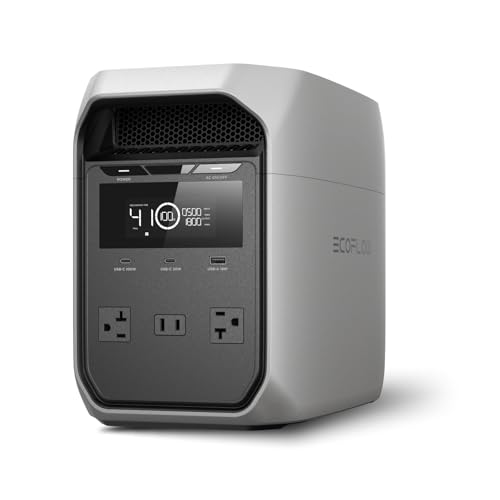
EcoFlow Delta 3 Classic 1024Wh, 1800W AC, UPS switchover
1024Wh1800W AC3600W surgeUnder 10ms UPS
Check price on Amazon
Best for: Home backup for a fridge and router plus short high-watt bursts.

The Delta 3 Classic pairs a 1024Wh battery with an 1800W inverter and a 3600W surge figure, which is the best balance of tank and pipe in this lineup. Its X-Stream wall charging takes it from empty to 80 percent in about 45 minutes, and a UPS switchover under 10 ms keeps a PC or router running when the grid drops. The 100W USB-C port can charge a laptop without the inverter.

Against the Bluetti Elite 100 V2 it matches the rating and charge time on paper, and against the Jackery Explorer 1000 v2 it has 300W more continuous output. At 1800W it can run a kettle or a microwave for short bursts, but a 1024Wh tank empties in roughly half an hour at that load. For a fridge and a router it lasts many hours.

Ownership is mostly about storage and charging habits. Keep it at a partial charge when idle, switch the AC output off when unused so the inverter does not burn standby power, and match any solar panel to the input limits before you buy one.

What works

  • 1800W rated output with a 3600W surge figure
  • 0 to 80 percent charge in about 45 minutes
  • UPS switchover under 10 ms protects PCs
  • 100W USB-C charges laptops without the inverter

Watch out for

  • 1024Wh tank empties fast at full 1800W load
  • Heavy for hand carrying over distance
  • Solar input limits need checking before panel purchase

Spec sheet

Capacity
1024Wh
AC output
1800W, 3600W surge
AC recharge
0 to 80% in 45 min
UPS switchover
Under 10 ms
USB-C
100W
02
Bluetti Elite 100 V2 1024Wh, 1800W AC, 10 ms UPS
1024Wh1800W AC2700W power lifting10 ms UPS
Check price on Amazon
Best for: Home backup where a smaller body matters.

The Elite 100 V2 uses the same 1024Wh and 1800W pairing as the EcoFlow, with a 2700W Power Lifting mode that lets it run some heating loads at reduced output. The maker says it is 35 percent smaller than its earlier design, and a 1200W TurboBoost wall charge reaches 80 percent in roughly 45 minutes. A 10 ms UPS switchover keeps a router and PC alive through brief outages.

Against the EcoFlow it trades the 3600W surge figure for a 2700W lifting mode, which behaves differently, because lifting reduces output voltage or power to fit a heating load rather than delivering true surge. That is useful for a kettle but not for a motor start. It is the better fit if you care about footprint.

Ownership centers on the same lithium iron phosphate chemistry as the others. Expect a long cycle life, store it partly charged, and keep it out of hot cars and freezing garages.

What works

  • 1800W rated with a 2700W Power Lifting mode
  • 1200W TurboBoost wall charge to 80 percent in about 45 minutes
  • Built-in 10 ms UPS switchover for routers and PCs
  • Smaller body than the maker's earlier design

Watch out for

  • Power Lifting is not true motor surge
  • Same 1024Wh tank empties fast at full load
  • Weight still limits carrying distance

Spec sheet

Capacity
1024Wh
AC output
1800W rated
Power lifting
2700W
AC recharge
1200W TurboBoost, 80% in about 45 min
UPS switchover
10 ms built in
03
DJI Power 1000 V2 1024Wh LFP, 37 minute charge to 80%
1024Wh LFP2600W listed output80% in 37 minCompact body
Check price on Amazon
Best for: Camping and van use where recharge time matters.

The DJI Power 1000 V2 leads this lineup on recharge speed, reaching 80 percent in 37 minutes from the wall, with a 1024Wh LFP battery and a headline output of 2600W. It uses a smart battery management system and a sub-nano coating on the electronics for protection. The compact body is its other selling point.

The 2600W headline is the highest number in the guide, but read the listing for how it is delivered, because the EcoFlow and Bluetti state 1800W rated plus surge or lifting figures. Against both it recharges faster and is likely to be the better camp and van companion. For a router and fridge backup the EcoFlow also offers a stated UPS switchover.

Ownership is routine: partial charge storage, AC output off when idle, and care with solar input matching. Treat the 2600W as a ceiling for brief loads, not a constant rating.

What works

  • 0 to 80 percent charge in 37 minutes
  • 1024Wh LFP battery with smart BMS
  • Highest headline output in the guide
  • Compact body for its capacity

Watch out for

  • Headline output needs checking against rated output
  • No stated UPS switchover in the feature text
  • Short on documented port detail

Spec sheet

Capacity
1024Wh LFP
Listed output
2600W
Recharge
0 to 80% in 37 min
Battery chemistry
Lithium iron phosphate
Protection
Smart BMS, sub-nano coating
04
Jackery Explorer 1000 v2 1024Wh, 1500W, 3000W peak
1024Wh LiFePO41500W AC3000W peak10 ms UPS
Check price on Amazon
Best for: Sensitive electronics, camping and light home backup.

The Explorer 1000 v2 offers 1500W with a 3000W peak, two pure sine AC outlets, two USB-C ports, one USB-A and a car port. It charges from 0 to 100 percent in 50 minutes, and a 10 ms UPS switchover covers short outages. The layout is straightforward and the pure sine output suits sensitive electronics.

Against the EcoFlow it gives up 300W of continuous output and 600W of surge, and against the DJI it recharges more slowly to 80 percent but promises a full charge in 50 minutes. It is the better pick for laptops, cameras and a router than for tools.

Ownership is simple with a mainstream brand and a familiar app. Keep the output off when idle and store it partly charged.

What works

  • Pure sine AC output for sensitive devices
  • 0 to 100 percent charge in 50 minutes
  • 10 ms UPS switchover
  • Two USB-C ports plus a car port

Watch out for

  • 1500W is 300W below the EcoFlow and Bluetti
  • Lower surge figure than the 3600W EcoFlow
  • Smaller port count than budget picks

Spec sheet

Capacity
1024Wh LiFePO4
AC output
1500W, 3000W peak
Recharge
0 to 100% in 50 min
UPS switchover
10 ms
Ports
2 USB-C, 1 USB-A, 1 DC car, 2 pure sine AC
05
Jackery HomePower 1000 v2 1024Wh, 1500W, 10 ms UPS
1024Wh1500W6,000+ cycles3kV surge shield
Check price on Amazon
Best for: Whole-year home backup for networking gear and a PC.

The HomePower 1000 v2 is a home-backup unit with a 10 ms UPS switchover, 3,000V surge resistance with a lightning shield, and a LiFePO4 battery rated for 6,000 plus cycles. The maker quotes a 16 year lifespan, which is a rated figure and not a promise. The target is a router, a modem and a PC that must stay up.

Against the Explorer 1000 v2 it is the home-oriented sibling with the surge shield and the cycle claim. Against the EcoFlow it gives up 300W of output but states a far longer cycle rating. It suits a desk or a closet more than a campsite.

Ownership favors it, since fewer cycles used means a longer life. Keep it plugged in as the maker describes, check the surge shield wiring and store it at partial charge if you unplug it for months.

What works

  • Rated for 6,000 plus charge cycles
  • 3,000V surge shield with lightning protection
  • 10 ms UPS switchover for routers and PCs
  • LiFePO4 chemistry tolerates heat well

Watch out for

  • 1500W is below the 1800W units
  • Aimed at home use, less camp-friendly
  • Lifespan figures are rated, not guaranteed

Spec sheet

Capacity
1024Wh
AC output
1500W
Cycle life
6,000+ cycles
UPS switchover
10 ms
Surge protection
3,000V with lightning shield
06
Dabbsson 1000L 1008Wh semi-solid LiFePO4, 1200W AC
1008Wh1200W AC1600W boostSemi-solid LiFePO4
Check price on Amazon
Best for: Buyers who want generous solar input and moderate output.

The Dabbsson 1000L uses semi-solid LiFePO4 cells and says the chemistry gives 1.3 times the runtime of a standard pack. It delivers 1200W with a 1600W boost, a 100W USB-C port and a wall recharge to 80 percent in 50 minutes. It can take up to 600W of solar input.

Against the EcoFlow it has 600W less continuous output but accepts solar generously. The runtime claim is the maker's, and a larger pack still gives the same 1008Wh. Treat it as a mid-power camping and backup unit.

Ownership is similar to other LiFePO4 units, though semi-solid cells are newer and have less track record. Store it partly charged and keep it dry.

What works

  • 600W solar input accepts large panels
  • 1200W output with a 1600W boost
  • 80 percent wall charge in 50 minutes
  • 100W USB-C port

Watch out for

  • Semi-solid cells have a shorter track record
  • Runtime claim is the maker's own figure
  • 600W less continuous output than the EcoFlow

Spec sheet

Capacity
1008Wh
AC output
1200W, 1600W with boost
USB-C
100W
Recharge
80% in 50 minutes from wall
Solar input
600W
07
GRECELL 999Wh power station, 1000W, 10 ports, 17 lb
999Wh1000W AC2000W peak17 lb body
Check price on Amazon
Best for: Camping and small tool use at a low price tier.

The GRECELL packs 999Wh into a 17 lb frame with 1000W continuous, a 2000W peak and ten ports including two AC outlets and a 60W USB-C. It uses an automotive-grade battery rated for 2000 plus cycles and a 10 year lifespan. The port count makes it a charging hub for a camp or a workshop.

Against the EcoFlow it has 800W less rated output and half the surge. Against the Dabbsson it has a similar tank but a lower boost. It is the value pick for phones, laptops, lights and small tools at a low price tier.

Ownership is basic: keep it partly charged in storage, run the inverter only when needed and do not push it near the 1000W limit for long. It lacks the stated UPS switchover of the premium units.

What works

  • 999Wh in a 17 lb body
  • Ten ports including 60W USB-C
  • 2000 plus cycle battery rating
  • Lowest price tier among 1kWh class units

Watch out for

  • 1000W rated is 800W below the EcoFlow
  • No stated UPS switchover
  • Cycle rating trails the Jackery HomePower

Spec sheet

Capacity
999Wh
AC output
1000W, 2000W peak
Ports
10 including 2 AC and 60W USB-C
Weight
17 lb
Cycle life
2000+ cycles

Spec sheet decoder

What the numbers on the box really mean

The specs manufacturers lead with, translated into what they tell you about real-world performance.

Wh

Watt-hours measure stored energy, the tank. Divide usable Wh by load watts for runtime.

Watch forThe Dabbsson lists 1008Wh and the GRECELL 999Wh, both about the same tank as the 1024Wh units.

Rated W vs surge W

Rated is what the inverter can deliver continuously. Surge covers a brief startup spike.

Watch forThe DJI lists a 2600W headline, so check how it is delivered against the EcoFlow 1800W.

UPS switchover

The time the unit takes to switch to battery when grid power drops. Ten milliseconds or less keeps most PCs running.

Watch forThe EcoFlow and Bluetti list it, while the GRECELL does not.

Power Lifting

A mode that runs heating loads at reduced output to fit the inverter. It is not true motor surge.

Watch forThe Bluetti lists 2700W lifting beside 1800W rated.

Cycle rating

The number of full charge cycles before capacity drops to a stated level. LiFePO4 gives thousands.

Watch forThe Jackery HomePower lists 6,000 plus and the GRECELL lists 2000 plus.

Methodology

How We Evaluated These Power Stations Under $1000

Rated output

We evaluated each listing for rated continuous watts before surge. The EcoFlow and Bluetti at 1800W led, followed by the Jackery pair at 1500W. Units with only headline numbers, like the DJI at 2600W, were scored with a note.

Tank and runtime

We compared watt-hours and worked out realistic runtime at common loads. Every unit here sits near 1000Wh, so the difference is the inverter. The Dabbsson at 1008Wh and GRECELL at 999Wh match the others.

Backup behavior

We checked for stated UPS switchover and surge protection. The EcoFlow, Bluetti and both Jackery units list it, and the HomePower adds a 3kV shield. We treated missing claims as not present.

Recharge and solar

We looked at wall recharge time and solar input from the spec sheet. The DJI at 37 minutes led on speed, and the Dabbsson at 600W led on solar intake.

Cycle life and upkeep

We read cycle ratings and storage guidance from owner feedback patterns and the spec sheet. LiFePO4 units were credited, with the Jackery HomePower at 6,000 plus on top.

Decision guide

How to Choose the Right Power Stations Under $1000

By Use Case

Match the load to the rated output.

SituationPickWhy
Fridge and router backupEcoFlow Delta 3 ClassicUPS switchover and 1800W
PC and network at a deskJackery HomePower 1000 v2UPS, surge shield, cycle life
Van or camp with fast chargeDJI Power 1000 V237 minute wall charge
Compact home backupBluetti Elite 100 V21800W with Power Lifting
Phones, lights and small toolsGRECELL 999WhTen ports, low price tier
Big solar panelsDabbsson 1000L600W solar input

By Budget

Tiers are relative within the cap.

Budget tierPickWhy
Cheapest in the lineupGRECELL 999WhLowest tier with a 1kWh tank
LowDabbsson 1000LSolar-friendly mid-power unit
MiddleDJI Power 1000 V2Fast charge
Upper-middleEcoFlow Delta 3 ClassicStrongest overall
Top of the capJackery HomePower 1000 v2Home backup features

Camp vs Home Backup

Camp and van

The DJI Power 1000 V2, GRECELL and Dabbsson suit portable use with fast recharge, many ports and solar input. They matter when you recharge from panels or a car.

Home backup

The EcoFlow Delta 3 Classic, Bluetti Elite 100 V2 and Jackery HomePower list UPS switchover. They keep a router and PC alive through an outage.

Camp buyers pick DJI or GRECELL. Home buyers pick the EcoFlow or the Jackery HomePower.

Rated Output Tiers

PreferencePickWhy
Kettle or microwave in burstsEcoFlow Delta 3 Classic1800W rated
Lighter tools and appliancesJackery Explorer 1000 v21500W with pure sine
Moderate loads and solarDabbsson 1000L1200W with 1600W boost
Phones and laptops onlyGRECELL 999Wh1000W is enough
Highest headline outputDJI Power 1000 V22600W listed, check delivery

For Home Outages Specifically

Look for

Look for a stated UPS switchover, enough rated watts for a fridge, and a battery that tolerates a partial charge in storage. Heating loads exceed this class.

In this comparison

The EcoFlow Delta 3 Classic is the best fit, with 1800W and under 10 ms switchover. The Jackery HomePower adds a surge shield for networking gear.

When to Spend More

Spend more if

Spend more if you need to run a space heater, a well pump or a fridge through a multi-day outage. This class tops out near 1800W and 1024Wh, so larger systems are the next step.

Save if

Save if you mostly charge phones and laptops. The GRECELL covers them with ten ports at the lowest tier in the lineup.

Ownership

Maintenance schedule

The upkeep that decides whether this machine lasts two seasons or ten.

TaskIntervalWhy it matters
Store at partial chargeEvery 3 months top upA pack held full or empty ages faster. Aim for 40 to 60 percent.
Switch off AC when idleAfter each useAn enabled inverter burns standby power. Turn it off to keep the charge.
Check cables and portsEvery 6 monthsLoose ports and frayed cords cause heat. Inspect before long loads.
Match solar inputBefore each new panelVoltage and connector mismatches cause no charge. Check the input limits.
Keep out of heat and frostAlwaysDo not charge below freezing or leave it in a hot car.

FAQ

Frequently Asked Questions

EcoFlow Delta 3 Classic or Bluetti Elite 100 V2?

Both pair 1024Wh with 1800W and a UPS switchover. The EcoFlow lists a 3600W surge and the Bluetti a smaller body with 2700W Power Lifting. Pick on size and surge needs.

Is under $1000 enough for a good power station?

Yes for a fridge, router and small appliances. This class holds about 1000Wh, which is hours for light loads and under an hour for heating loads.

How long will a 1024Wh unit run my fridge?

A fridge averages far below its compressor rating, so several hours to about a day is typical. Measure the real draw with a plug-in watt meter.

Do I need LiFePO4?

Prefer it. LiFePO4 gives thousands of cycles and tolerates heat better than standard lithium-ion, though it is heavier.

Can I run a space heater on this class?

Not for long. Heaters draw 1500W and drain a 1024Wh tank in under an hour, and some exceed the rated output.

Does a 2600W headline mean it runs 2600W?

Not necessarily. Check whether it is rated continuous or a boost figure, and size loads to the continuous number.

Bottom line

The short version

Browse more power stations under $1000on Amazon →
James Miller, Lead Machine Editor

About the author

James Miller

Lead Machine Editor, MachineFanatic

James Miller leads MachineFanatic's buying guides, turning spec sheets, manuals and owner feedback into clear verdicts on power tools, outdoor power equipment, shop machines and kitchen machines.

More from James →

Keep reading

Related guides