
Amazon affiliate links - we earn a commission.Affiliate disclosure

Buying guide · 13 min read · Updated 2026-11-07

Best Quiet Tower Fans (2026)

Six quiet tower fans compared on decibel ratings, DC motors, sleep modes and air speed, for bedrooms and offices where noise matters most.

James MillerBy James MillerLead Machine Editor6 machines comparedSpec-sheet verified
Best Quiet Tower Fans

At a glance

Our top picks

Side by side

Spec comparison

Fan noise comes from two places: the motor and the moving air. A motor hum is the easy part to fix with better engineering, but air noise rises quickly with speed, and no tower fan avoids it at full power.

That is why a quiet fan is really a fan that is quiet where you use it. A model rated near the threshold of hearing on its lowest setting may still be loud at the top end, so this guide reads the sound figures alongside what each fan offers at the speeds people actually choose for sleeping.

Before you buy

6 Criteria to Look For Before Buying a Quiet Tower Fan

  1. 01

    Decibels at your speed

    A noise rating is usually taken at the lowest setting, so 28 dB on the DREO and Levoit towers describes the quietest they can be, not how they sound at medium. The Levoit desk fan publishes a range, 20 to 43 dB across its speeds, which is the honest way to state it. Ask what the fan sounds like at the speed you will actually use.

  2. 02

    Why DC motors help

    Brushless DC motors, as in the Levoit and the upgraded DREO models, run cooler and quieter and offer many fine speed steps. The finer steps matter because the quiet end of a fan is where a one-step change can swing the sound level. A fan with four speeds can jump from silent to audible in one press.

  3. 03

    Air speed versus reach

    A quieter fan often has lower air speed, because airflow noise climbs quickly. The Levoit desk tower quotes 23 ft/s while the floor towers quote 26 to 28 ft/s. If the fan sits an arm's length away, 23 ft/s is plenty. For a bed across the room you need the faster floor towers. The sensible approach is to measure the distance from fan to pillow first. Within about an arm's length a gentle 23 ft/s breeze at low speed feels perfectly adequate, while at four or five paces the same breeze fades before it arrives and you will push a floor tower to a higher, noisier setting that cancels the benefit of a quiet motor.

  4. 04

    Sleep and Auto modes

    A sleep mode that steps the speed down over the night keeps you cool at the start and quiet at the end. The DREO 28 ft/s model offers Sleep and Auto modes, and the 4-speed DREO offers an 8 hour timer. A timer is a simple way to avoid noise after you have fallen asleep. Many people sleep better with a little steady sound, so a fan that stays on at its lowest setting all night can be a feature rather than a flaw. The decision is personal, and a fan that offers both a timer and a continuous low setting suits either sleeper.

  5. 05

    Vibration and placement

    A fan on a hard floor transmits vibration, which turns a quiet motor into a buzz. A tall tower on an uneven surface also rattles. A rubber mat or a firm level spot often does more for noise than a small difference in motor rating.

  6. 06

    Dust and noise creep

    A fan gets louder as dust builds on the impeller and grille. Quiet fans are more affected because their margins are thin. Vacuum the intake monthly and wipe the slot, or a fan that was quiet in spring will be noisy by autumn. A good habit is to clean it on the day you pull it out for the season and again halfway through, and to treat any new tick or rattle as a hint that something is loose or clogged. Most noise complaints from owners are maintenance problems that a ten-minute clean cures.

Detailed reviews

The 6 best quiet tower fans, explained

01
Levoit 20 dB Quiet Desk Tower Fan, 23 ft/s, 5 Speeds
20 to 43 dB range23 ft/s5 speeds3 angles
Check price on Amazon
Best for: A desk or bedside table where silence matters more than reach.

The Levoit is a compact tabletop tower with a brushless DC motor and a rated noise range of 20 to 43 dB across its five speeds. At the bottom of that range it is among the quietest fans of any shape, and a soft carrying handle lets you move it from desk to nightstand.

Its VortexAir design gives a quoted 23 ft/s, lower than the 28 ft/s of the taller DREO and Levoit floor towers, so it is a personal fan rather than a room fan. Three angle settings let you tilt the airflow toward your face or torso instead of relying on a wide sweep. Compared with the DREO TurboSilent it trades reach for near-silence.

Because it plugs in rather than running from a battery, it needs an outlet within reach. Keep the intake grille dusted and the base level, since a small fan on a lumpy surface will rattle. It is the right tool for a desk or a bedside table, and the wrong one for cooling a whole living room.

What works

  • Noise range starts at 20 dB on the lowest speed
  • Brushless DC motor with five speeds
  • Three tilt angles aim the airflow
  • Carrying handle makes it portable

Watch out for

  • 23 ft/s is a personal rather than room airflow
  • Needs a nearby outlet

Spec sheet

Noise range
20 to 43 dB across speeds
Air speed
23 ft/s
Speeds
Five
Tilt angles
Three
Design
Tabletop with carrying handle
02
DREO 26 ft/s TurboSilent Tower Fan, 90 Degree Sweep, 5 Speeds
28 dB quiet26 ft/s5 speeds4 modes
Check price on Amazon
Best for: A bedroom where a full-height tower is welcome and quiet running is the priority.

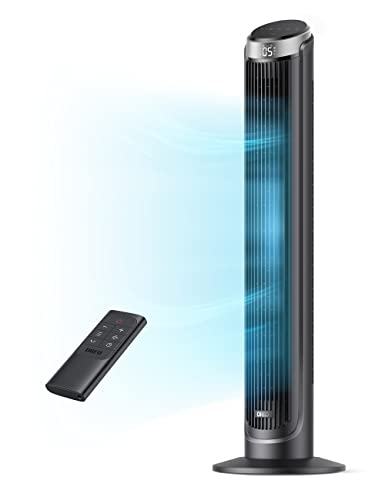
The DREO TurboSilent is a full-height floor tower rated near 28 dB, with five speeds, four modes and a 90 degree sweep. TurboSilent is the maker's name for the motor and airflow tuning that cuts noise, and a remote handles the settings from bed.

It reaches 26 ft/s, enough to reach across a bedroom, and that is a good balance between reach and sound. It sits a notch below the 28 ft/s DC-motor DREO models in air speed, and that is the price of the extra quiet. Four modes let you move from a steady breeze to a sleep or natural setting.

A floor tower needs floor space and a level base. Clean the grille monthly, because a dusty intake is the commonest reason a quiet fan gets louder. Check that the remote batteries are fresh before a hot night.

What works

  • About 28 dB at quiet settings
  • 26 ft/s reaches across a bedroom
  • Four modes and a remote
  • 90 degree sweep covers the bed

Watch out for

  • Lower air speed than the 28 ft/s DREO models
  • Floor tower needs more space than a desk fan

Spec sheet

Noise
About 28 dB
Air speed
26 ft/s
Speeds
Five
Oscillation
90 degrees
Modes
Four, with remote
03
DREO 28 ft/s Tower Fan, Brushless DC, 8 Speeds, 4 Modes
28 ft/sBrushless DC8 speedsAuto mode
Check price on Amazon
Best for: A bedroom fan that must be powerful by day and quiet at night.

This DREO pairs an upgraded brushless DC motor with an algorithmically shaped impeller, a design aimed at reducing the blade-pass whine that makes many fans annoying. It offers eight speeds and four modes, including Auto, which adjusts to room conditions, and Sleep, which steps the fan down overnight.

Air speed reaches 28 ft/s, so it moves more air than the TurboSilent model, and the extra speed steps give finer control at low settings where noise is lowest. The cost is a higher price and a more complex control layout.

Because it relies on electronics for its modes, keep the control panel dry and the vents clear. Dust the grille monthly. It is the better choice if you want one fan to serve both a hot afternoon and a quiet night.

What works

  • 28 ft/s air speed from a DC motor
  • Eight speeds allow fine low-noise tuning
  • Auto and Sleep modes
  • Impeller shaped to reduce whine

Watch out for

  • More complex controls than basic fans
  • Costs more than the TurboSilent model

Spec sheet

Air speed
28 ft/s
Motor
Upgraded brushless DC
Speeds
Eight
Modes
Normal, Natural, Sleep, Auto
Oscillation
90 degrees
04
DREO 26 ft/s Tower Fan, 4 Speeds, 3 Modes, 8H Timer, 28 dB
28 dB26 ft/s4 speeds8H timer
Check price on Amazon
Best for: A bedroom or nursery where simple controls and low noise matter.

This DREO powers a 90 degree oscillating tower with four speeds, three modes and an 8 hour timer, rated about 28 dB. The maker says its airflow can reach up to 33 feet, and the hypersilent tuning keeps the motor from adding noise on top of the airflow.

It is the simpler sibling of the 8-speed model: fewer speed steps and fewer modes, at a lower price. Four speeds are enough for most people, because the difference between each is meaningful rather than fine. The 8 hour timer fits a night's sleep.

Clean the intake every month and keep the base on a flat floor. It is a fine pick for a spare bedroom or a child's room.

What works

  • About 28 dB on quiet settings
  • 8 hour timer covers a night
  • Four speeds and three modes
  • 90 degree sweep with 26 ft/s airflow

Watch out for

  • Fewer speed steps than DC-motor siblings
  • Fewer modes than the pricier DREO fans

Spec sheet

Noise
About 28 dB
Air speed
26 ft/s
Speeds
Four
Modes
Three
Timer
8 hours
05
DREO Smart Tower Fan, 40 to 45 Inch Adjustable Height, 9 Speeds
40 to 45 in. height9 speeds28 ft/sDC motor
Check price on Amazon
Best for: A tall bed or a room where the fan must be aimed higher.

The height of this DREO tower adjusts between 40 and 45 inches with a foot pedal, a one-step mechanism that raises or lowers the head without tools. Nine speeds, four modes and a DC motor sit behind it, with app and timer control for scheduling.

The height adjustment is useful when the fan must clear a high bed or a piece of furniture, and it lets you aim the airflow higher for a seated user. It matches the other 28 ft/s DREO towers on air speed.

The telescoping mechanism is one more part that can loosen, so check the joint when you assemble it and after moving the fan. Dust the intake monthly.

What works

  • Pedal adjusts the height from 40 to 45 inches
  • Nine speeds from a DC motor
  • 28 ft/s air speed
  • App and timer control

Watch out for

  • Adjustment joint adds a part that can loosen
  • Smart features add complexity

Spec sheet

Height
40 to 45 inch adjustable
Speeds
Nine
Air speed
28 ft/s
Motor
DC
Adjustment
Foot pedal
06
Honeywell QuietSet HYF290B Whole Room Oscillating Tower Fan
QuietSet speedsWhole-room towerRemote nests in fanOscillating
Check price on Amazon
Best for: A buyer who values a familiar brand and simple controls.

The Honeywell QuietSet is a classic whole-room oscillating tower with a remote that nests in the back of the housing so it does not wander off. The QuietSet name refers to its set of low-noise speed settings, and it is sold as a bedroom and living-room fan.

The maker's data in the listing did not state decibel figures or air speed, so this is the one fan here where the numbers must be checked against the current spec sheet. Its advantage is a familiar brand and simple controls, and its disadvantage is that it likely uses an AC motor with fewer steps than the DREO DC models.

Keep the remote in its slot and dust the grille regularly. It suits buyers who want a recognisable name and a straightforward fan.

What works

  • Remote nests in the fan housing
  • Familiar brand with simple controls
  • Whole-room oscillating design
  • QuietSet low-noise settings

Watch out for

  • Noise and air speed figures are not stated in the listing data
  • Likely fewer speed steps than DC-motor rivals

Spec sheet

Model
HYF290B
Style
Oscillating tower
Control
Remote that nests in the housing
Color
Black
Use
Bedrooms and living rooms

Spec sheet decoder

What the numbers on the box really mean

The specs manufacturers lead with, translated into what they tell you about real-world performance.

Noise (dB)

Sound level at the lowest speed, measured by the maker at a set distance. Small differences are audible at the quiet end.

Watch forThe Levoit desk fan is rated 20 to 43 dB, the DREO towers about 28 dB.

Air speed

How fast air leaves the fan, in feet per second.

Watch forThe Levoit desk fan reaches 23 ft/s, the DREO models 26 to 28 ft/s.

Brushless DC motor

A motor with no brushes, quieter and finer in speed control.

Watch forMost DREO models and both Levoit fans use DC motors.

Sleep mode

A setting that gradually lowers fan speed during the night.

Watch forThe DREO 8-speed model lists Sleep; the Honeywell lists QuietSet settings.

Timer

An automatic shutoff after a set period.

Watch forThe DREO 4-speed fan has an 8 hour timer.

Methodology

How We Evaluated These Quiet Tower Fans

Noise at quiet settings

We compared published decibel figures and motor types. The Levoit desk fan at 20 dB and the DREO towers at about 28 dB lead.

Reach and airflow

We balanced quiet against air speed. The 28 ft/s DREO models have the most reach, and the 23 ft/s Levoit the least.

Modes and fine control

We favoured fans with sleep modes and many speed steps, since fine steps keep the fan at the quietest effective setting.

Placement flexibility

We considered height, tilt and portability. The adjustable DREO and tabletop Levoit offer the most options.

Data completeness

We noted where listings state noise and air speed. The Honeywell listing did not, so we flagged it for checking.

Decision guide

How to Choose the Right Quiet Tower Fans

By Quiet Priority

SituationPickWhy
Absolute quietest, at arm's lengthLevoit 20 dB desk tower20 dB at its lowest setting
Quiet and reaches a bed across the roomDREO TurboSilent 26 ft/sAbout 28 dB with 26 ft/s
Strongest airflow that is still quietDREO 28 ft/s DCEight speeds and sleep mode
Simple bedroom fanDREO 4-speed 8H timerFour speeds, 28 dB
Tall bed or raised placementDREO adjustable height40 to 45 inch pedal adjustment

By Budget

TierPickWhy
LowestDREO 4-speed 8H timerSimple and quiet for little
Low to midHoneywell QuietSetFamiliar brand and remote
MidDREO TurboSilentQuiet floor tower with remote
Upper midLevoit desk towerLowest noise range
TopDREO 8-speed DC or adjustable heightFinest control and most features

Desk Tower vs Floor Tower

Desk tower

The Levoit sits within arm's length and is rated down to 20 dB. It suits a desk or a nightstand but cannot cool a whole room.

Floor tower

The DREO and Honeywell towers stand on the floor and push 26 to 28 ft/s across a room. They are louder than a desk fan but reach a bed or a sofa.

Choose the desk tower for personal use, the floor tower for rooms.

By Control Preference

PreferencePickWhy
Sleep mode and AutoDREO 28 ft/s DCNormal, Natural, Sleep and Auto
Remote that stays with the fanHoneywell QuietSetRemote nests in the housing
App and scheduleDREO adjustable heightSmart control and timer
Tilt rather than sweepLevoit desk towerThree angle settings

For Sleeping Specifically

Look for

Look for noise ratings near 28 dB or lower, a sleep mode or timer, and a dimmable display. Run the fan one speed lower than your first instinct and aim it so that it crosses your body, not your face.

In this comparison

The DREO 28 ft/s DC model has Sleep and Auto, the 4-speed DREO has the 8 hour timer, and the Levoit desk tower is the quietest at the bedside.

When to Spend More

Spend more if

Spend more if you are a light sleeper or work in a quiet room; the DC-motor DREO and Levoit models offer finer low-speed steps that keep noise lower. The extra money buys control rather than power: eight or nine steps at the bottom of the range mean you can park the fan at the quietest speed that still keeps you comfortable. Light sleepers notice the difference within the first night, and it is the one upgrade here that a buyer rarely regrets.

Save if

Save if the fan runs for white noise anyway. The 4-speed DREO is quiet enough for most people.

Ownership

Maintenance schedule

The upkeep that decides whether this machine lasts two seasons or ten.

TaskIntervalWhy it matters
Vacuum the intakeMonthlyDust raises noise and cuts airflow. A soft brush clears the grille without scratching.
Wipe the outlet slotEvery few monthsThe impeller collects dust that you cannot see. A damp cloth on a long handle reaches it.
Place on a mat if it buzzesWhen installingVibration through a hard floor turns a quiet motor into a hum. A rubber pad stops it. Tall towers on carpet usually stay quiet, but on tile, wood or laminate the base acts like a drum skin. A square of thick rubber, a folded towel or a yoga mat under the base is a free fix, and it also stops the fan from creeping across a smooth floor as it oscillates.
Replace remote batteriesYearlyA dead remote forces you to leave bed. Keep spares nearby.
Check the base and jointsEach seasonA loose base or height joint rattles. Tighten screws before the hot season.

FAQ

Frequently Asked Questions

How quiet can a tower fan be?

At its lowest speed the best are around 20 to 28 dB, close to a whisper. At full speed all of them are louder, so run the fan one step lower than you think you need.

Are DC motors really quieter?

They run cooler, offer finer speed steps and avoid some of the hum of AC motors. The airflow noise at high speed is similar, so the benefit shows up at low and medium settings.

Which is better for sleeping, a desk fan or a tower?

A desk tower such as the Levoit is the quietest option within arm's length. A floor tower reaches farther but is louder, so choose by distance to the bed.

Why does my quiet fan get louder over time?

Dust builds on the impeller and grille, and a loose base starts to rattle. Clean the intake and check the base before blaming the motor.

Does oscillation add noise?

A little, from the oscillation motor. Most buyers do not notice it, but switch it off if you can hear it in a silent room.

Is a smart fan worth it?

App control helps with schedules and remote use, but the quiet comes from the motor, not the app. A remote and a timer do most of the job.

Bottom line

The short version

Browse more quiet tower fanson Amazon →
James Miller, Lead Machine Editor

About the author

James Miller

Lead Machine Editor, MachineFanatic

James Miller leads MachineFanatic's buying guides, turning spec sheets, manuals and owner feedback into clear verdicts on power tools, outdoor power equipment, shop machines and kitchen machines.

More from James →

Keep reading

Related guides