



A 12 amp motor drives the blade at up to 2,900 strokes per minute, enough to chew through a 2x4 with nails or a 1-1/2 inch pipe without slowing. The keyless lever-action clamp swaps blades in seconds, and four clamp positions let you rotate the blade 90 degrees for flush cuts against a wall or floor. A variable-speed trigger controls the start, which matters because a saw that jumps to full speed can skip off a curved pipe.
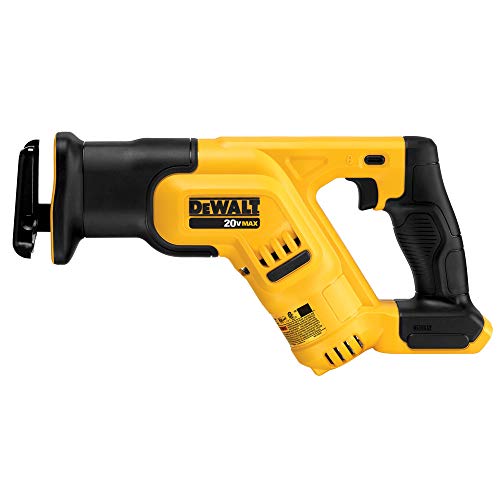
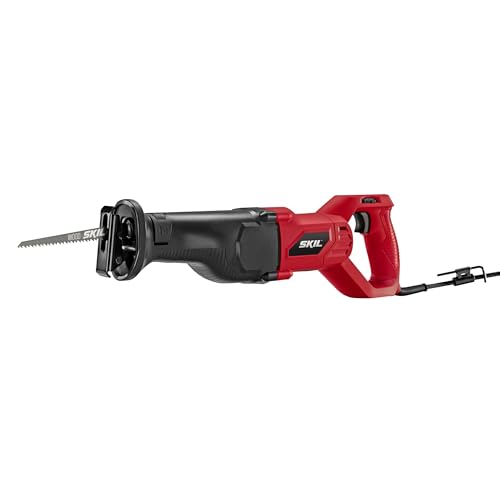
The tradeoff is the cord. Compared with the DEWALT DCS380B at 3,000 strokes per minute, the corded saw holds its power without a battery fade, but it needs an outlet and an extension cord. Against the SKIL 9206-02 at 7.5 amps, the DEWALT has nearly 60 percent more motor capacity, which shows in thick or wet lumber. If you do remodeling and tear-out, it is the saw that keeps working.
Ownership: the blade clamp collects dust, so blow it out occasionally. Change blades as soon as the cut slows, because a dull blade heats the motor. Check the brushes after heavy use, and use a blade matched to the job, with fewer teeth for wood and more teeth for metal. A practical tip for any corded saw is to clamp the work or brace it against a stud, because an unsupported board vibrates and chatters the blade in a way that both dulls it and tires your hands.
What works
- 12 amp motor holds speed through nails and thick lumber
- Four-position clamp allows flush cuts against walls
- Keyless lever swaps blades in seconds
- No battery to fade during long sessions
Watch out for
- Needs an outlet or a heavy extension cord
- Heavier than the compact cordless saws
- Vibration is higher than orbital-damped saws
Spec sheet
- Motor
- 12 amp corded
- Speed
- 2,900 strokes per minute
- Blade clamp
- Keyless lever, 4 positions
- Control
- Variable speed trigger
- Class
- Heavy-duty corded