
Amazon affiliate links - we earn a commission.Affiliate disclosure

Buying guide · 11 min read · Updated 2026-11-13

Best Ryobi Leaf Vacuums (2026)

Four Ryobi blower vacuum mulchers compared: the 40V HP 600 CFM, the 40V Vac Attack, the 18V ONE+ HP blow-vac and a 3000W wired unit.

James MillerBy James MillerLead Machine Editor4 machines comparedSpec-sheet verified
Best Ryobi Leaf Vacuums

At a glance

Our top picks

Side by side

Spec comparison

MachinePlatformAir speedListingModel
Ryobi 40V HP Blower Mulcher Vacuum 600 CFM 100 MPHBest OverallRyobi 40V HP Blower Mulcher Vacuum 600 CFM 100 MPH40V HP brushless100 MPHTool only with lawn and leaf bagn/a
Ryobi 40V Vac Attack RY40405BTL Leaf Vacuum MulcherBest for Existing 40V OwnersRyobi 40V Vac Attack RY40405BTL Leaf Vacuum Mulcher40Vn/aTool onlyRY40405BTL
Ryobi ONE+ 18V HP Brushless Blow-Vac OBV18Best 18V PickRyobi ONE+ 18V HP Brushless Blow-Vac OBV1818V ONE+n/aBattery and charger excludedOBV18
Ryobi RBV3000CESV 3000W Wired Blower Vac Grinder 45LBest Wired Multi-ToolRyobi RBV3000CESV 3000W Wired Blower Vac Grinder 45Ln/a375 km/h (about 233 MPH)n/aRBV3000CESV

Leaf vacuums built into a blower body are a compromise on purpose. A single tube swaps between blowing, sucking and shredding, so you get three tools in one housing, but you also inherit the weakest link of each function: a blower with less reach, a vacuum with less capacity and a shredder with a smaller throat.

The honest way to shop is by the job you actually do. If you mostly blow, these are an expensive way to buy a blower. If you mostly collect and want to shrink the pile, they earn their keep, and what matters is bag size, the shredding ratio and how quickly you can switch modes.

Before you buy

6 Criteria to Look For Before Buying a Ryobi Leaf Vacuum

  1. 01

    Decide how much you will actually vacuum

    A blower vacuum pays for itself only if you collect leaves regularly. If you blow them under hedges or onto a pile, a plain blower is lighter and stronger. A vacuum mode shines on small lots, near flower beds and for compost. Be honest about whether you will swap modes, because a tool that stays in blower mode all season is an expensive way to blow. Conversion is also a chore: you fit the vacuum tube, attach the bag and swap back afterwards. If the process takes more than a minute, most owners stop doing it, so favour a single-tube design like the 40V HP model.

  2. 02

    Check CFM and speed together

    The 40V HP model lists 600 CFM and 100 MPH, and the wired Ryobi lists roughly 233 MPH. Vacuum performance depends on the same airflow that drives the blower, so a big CFM helps. A low speed at 100 MPH favours collecting over lifting, so do not expect a pavement scraper. Be wary of any listing that omits both figures, as the Vac Attack and the OBV18 do. Missing data does not mean a bad tool, but it does mean you are buying on faith, and a call to the seller before you order is cheap insurance.

  3. 03

    Mulch ratio and bag size

    The wired RBV3000CESV lists a 16:1 grinding ratio and a 45 litre bag. A higher ratio means fewer bags to empty, but the number is a best case for dry leaves. A larger bag means fewer stops, but a full one is heavy to carry. For cordless models the listing quotes no ratio, so check the product page before you buy. As a rule of thumb, a ratio around 10:1 to 16:1 is typical of consumer machines, and the real figure with damp leaves will be lower. Ask whether the shredder is a metal blade or a plastic one, since that decides how long it survives acorns and small twigs.

  4. 04

    Battery platform and size

    The 40V HP and Vac Attack models use the 40V platform, and the OBV18 uses the 18V ONE+ system. Vacuuming draws more current than blowing, so a small pack runs flat fast. For the 40V HP model, a 6.0Ah pack is a sensible minimum. Check that your batteries are the right family before buying a bare tool. Ryobi sells the same HP label on different platforms, and a pack from the wrong family will not fit. If you have to buy a pack, buy the largest you can afford, since you will use it on other tools as well.

  5. 05

    Impeller and shredding hardware

    Leaf vacuums pass material through the impeller, so its material and design matter. Metal impellers tolerate sticks and acorns better than plastic. Even the best impeller will fail if you feed it branches. Keep a pair of gloves and a small rake for pulling twigs out of a pile before you vacuum, and watch for stones and nuts, which chip blades quickly. Check the listing for the impeller type, and avoid feeding anything thicker than a pencil.

  6. 06

    Weight when full

    A vacuum is heaviest when the bag is full and the battery is on, which is also when you are most tired. A bag of damp leaves can weigh several kilograms. If you have back problems, choose a model with support wheels like the wired RBV3000CESV or empty the bag more often. A bag that is half full is easier to carry and easier on the motor than one that is stuffed to the top.

Detailed reviews

The 4 best ryobi leaf vacuums, explained

01
Ryobi 40V HP Blower Mulcher Vacuum 600 CFM 100 MPH
600 CFM100 MPH40V HPLeaf bag
Check price on Amazon
Best for: Quarter to half acre lots where you want to collect and mulch leaves.

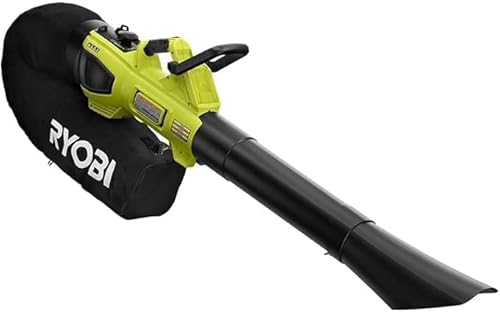
This 40V HP model is the full-size cordless leaf vacuum in the Ryobi range, and it lists 600 CFM and 100 MPH from a jet fan design. The single tube covers blowing, vacuuming and mulching, which means you do not change parts to switch modes. The maker says the 40V HP technology gives twice the power for gas-like performance, which is a marketing line, but the airflow figure supports the claim that it is a serious tool.

The listing includes a lawn and leaf bag but not a battery or charger. Against the 18V OBV18, it has far more air, and against the Vac Attack it adds a bag and a clear published airflow figure. The 100 MPH rating is modest next to a dedicated blower, so it is better at collecting than at lifting stuck leaves.

Because a vacuum draws more power than a blower in practice, the battery empties faster in vacuum mode. A 6.0Ah or larger 40V pack is the right partner. Empty the bag before it packs tight, clear the impeller of stuck leaves with the battery removed and store the tool dry. Use the shorter, lighter tube setup for the first pass over a pile and only add reach when you need it, since a long tube magnifies the weight at the hand.

What works

  • 600 CFM and 100 MPH from a jet fan
  • Single tube for blow, vacuum and mulch
  • Lawn and leaf bag included
  • 40V HP brushless power

Watch out for

  • Battery and charger sold separately
  • Vacuum mode empties a pack quickly

Spec sheet

Platform
40V HP brushless
Airflow
600 CFM
Air speed
100 MPH
Design
Single tube for all three modes
Listing
Tool only with lawn and leaf bag
02
Ryobi 40V Vac Attack RY40405BTL Leaf Vacuum Mulcher
40VVacuum mulcherTool onlyVac Attack
Check price on Amazon
Best for: 40V owners who only need a collecting and mulching tool.

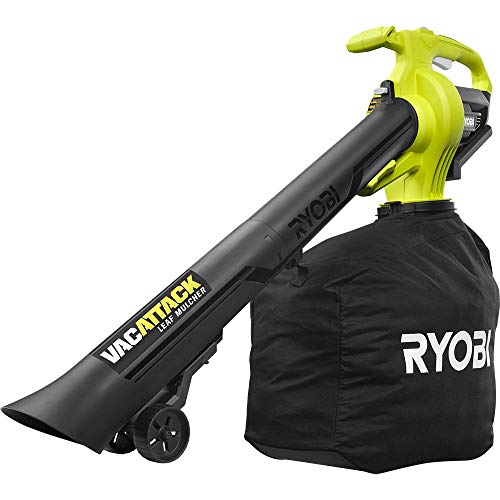
The Vac Attack is Ryobi's dedicated cordless leaf vacuum and mulcher on the 40V platform. The listing carries almost no specification detail, so I will not quote airflow or mulch ratios. What the name and category tell you is that this is a vacuum-first tool, built for collecting leaves into a bag and reducing them as they go.

Compared with the 600 CFM blower, mulcher and vacuum, it is a more specialised machine. If you already own 40V packs and mostly want to collect, it makes sense. If you also want a blower, the multi-function model is the more flexible buy.

Because the listing is thin, ask the seller exactly what is included, in particular the bag and tube. A bare tool needs a battery and charger. Clean the impeller and bag after use, and keep the intake clear of sticks. Because the listing is so thin, it is worth waiting for a fuller spec sheet or asking Ryobi support for the airflow and bag volume before committing.

What works

  • Dedicated vacuum and mulcher design
  • Works with the 40V Ryobi battery family
  • Cordless freedom in a collecting tool
  • Cleaner pile-down than a plain blower

Watch out for

  • Listing gives no performance figures
  • Bare tool needs a battery and charger

Spec sheet

Model
RY40405BTL
Platform
40V
Function
Leaf vacuum and mulcher
Listing
Tool only
Listing data
No airflow figures given
03
Ryobi ONE+ 18V HP Brushless Blow-Vac OBV18
18V ONE+HP brushlessTurboVariable speed
Check price on Amazon
Best for: Small yards and patios for 18V ONE+ owners.

The OBV18 is the compact blow-vac in the 18V ONE+ range, built around an HP brushless motor. It has variable speed control and a turbo mode for blowing and vacuuming tough jobs. The listing gives no CFM or MPH figures, so I will not guess.

Its place in this guide is as the small-yard tool: it blows and vacuums on a battery most ONE+ owners already have. It does not list mulching in the details here, so treat it as a blower with a collection mode rather than a full mulcher. Against the 40V HP unit, it is smaller in every way.

Because it is a bare tool, it only makes sense for an existing ONE+ household. A 4.0Ah pack suits it best. Empty the collection bag regularly and wipe the intake after dusty jobs.

What works

  • HP brushless motor on a compact body
  • Turbo mode and variable speed
  • Shares the large ONE+ battery family
  • Blows and vacuums with one tool

Watch out for

  • No airflow figures on the listing
  • Battery and charger sold separately

Spec sheet

Model
OBV18
Platform
18V ONE+
Motor
HP brushless
Modes
Blow and vacuum
Listing
Battery and charger excluded
04
Ryobi RBV3000CESV 3000W Wired Blower Vac Grinder 45L
3000W375 km/h45L bag16:1 grinding
Check price on Amazon
Best for: Buyers on 230V supply who want a powerful wired blower vac grinder.

The RBV3000CESV is a wired 3000W blower, vacuum and grinder sold mainly in markets that use 230V power. It lists an air speed of up to about 375 km/h, which converts to roughly 233 MPH, a 45 litre bag and a 16:1 grinding ratio. It has support wheels and a micro-honeycomb GripZone handle designed for comfort.

The transition between functions is described as quick. A 16:1 ratio means sixteen bags of leaves become one, a handy number for composting and for cutting the cost of disposal. Compared with the cordless models, it never runs flat, but it needs a nearby outlet and a compatible voltage.

Buyers in North America should check carefully that the unit is rated for their mains supply, since this is a 230V design that will not work on a standard 120V outlet without a transformer. Treat it as a niche option and read the listing before buying. If you do buy it, a licensed electrician or the manufacturer can tell you the right adapter, and you should never force a plug into an outlet that is not designed for it. Empty the bag often and unplug before clearing jams, and never run it with wet hands or in standing water.

What works

  • 3000W motor with constant power
  • 16:1 grinding ratio shrinks leaf volume
  • 45 litre bag with support wheels
  • Quick change between functions

Watch out for

  • 230V rating is unsuitable for many outlets
  • Tethered to a cord

Spec sheet

Model
RBV3000CESV
Power
3000W wired
Air speed
375 km/h (about 233 MPH)
Bag
45 litres
Grinding ratio
16:1

Spec sheet decoder

What the numbers on the box really mean

The specs manufacturers lead with, translated into what they tell you about real-world performance.

Mulch ratio (16:1)

How much the leaf volume shrinks. A 16:1 ratio means sixteen bags of leaves become one.

Watch forThe figure is a best case for dry leaves and falls with wet ones.

Jet fan

A fan design that moves air in a fast, narrow stream. The 40V HP model uses it to reach 600 CFM.

Watch forIt tends to be noisier than an axial design.

HP brushless

Ryobi's high-performance brushless motor line. It runs cooler and delivers more power for the same battery.

Watch forThe label appears on both 18V and 40V tools, so check the platform.

Watts (3000W)

The electrical power of a wired motor. Higher watts mean more power but also more current.

Watch forThe RBV3000CESV is a 230V design and needs the right supply.

Tool only

A listing for the machine alone, with no battery or charger.

Watch forThe 40V HP model comes with a bag but not a battery, so check the box contents.

Methodology

How We Evaluated These Ryobi Leaf Vacuums

Collecting ability and capacity

We looked at the airflow and bag figures on each listing. The 40V HP model's 600 CFM and the wired unit's 45 litre bag stand out, while two listings give no airflow data at all. We treated missing data as a reason for caution and not as a ranking penalty or bonus, so the order here reflects what can be shown and not what might be true.

Mulching capability

We considered stated grinding ratios and design. Only the wired RBV3000CESV gives a number, 16:1, so it is the only model where we can compare volume reduction.

Platform and cost

We counted the battery as part of the cost, since three of the four listings are bare tools. The platform you already own often decides which model is cheapest. A household with a shelf of 18V batteries should look hard at the OBV18, and one with 40V mowers should not buy anything else.

Honest data gaps

Where the Vac Attack and OBV18 listings give no figures, we said so plainly. We did not fill gaps with guesses, and we steered readers to confirm details with the seller. This matters for a tool category where the difference between a bag that holds a few litres and one that holds forty-five is the difference between an enjoyable chore and an annoying one.

Regional suitability

Based on the spec sheet and owner feedback patterns, we flagged that the wired unit is a 230V design. A tool that cannot use your outlet is not a good tool for you, whatever its wattage.

Decision guide

How to Choose the Right Ryobi Leaf Vacuums

By Yard Size

SituationPickWhy
Patio and small yardOBV18Compact 18V blow-vac
Quarter acre, collect leaves40V HP 600 CFMSingle tube and bag
Half acre, existing 40V packsVac AttackDedicated vacuum mulcher
Yard with 230V powerRBV3000CESV3000W with 16:1 grinding

By Budget

TierPickWhy
Cheapest if you own ONE+ packsOBV18Bare tool on a shared platform
Mid rangeVac AttackBare 40V tool
Upper mid40V HP 600 CFMBag included, bare of battery
No battery costRBV3000CESVWired, but needs 230V

Cordless vs Wired

Cordless

The 40V HP, Vac Attack and OBV18. Freedom to roam, but vacuum mode drains packs fast.

Wired

The RBV3000CESV. Constant 3000W power and a 16:1 ratio, but a cord and a 230V requirement.

Choose cordless if your outlets do not reach, or you are on 120V; wired only on a compatible supply.

Blow More vs Collect More

PreferencePickWhy
Mostly blowing40V HP 600 CFMJet fan and single tube
Mostly collectingVac AttackVacuum-first design
Light jobs and patiosOBV18Turbo and variable speed
Heavy mulchingRBV3000CESV16:1 grinding

For Wet Leaves Specifically

Look for

A strong impeller and a large battery. Wet leaves clog bags and impellers, so suction and shredder strength matter more than speed.

In this comparison

The 40V HP 600 CFM model has the most airflow, and the wired unit has the strongest motor. All of them clog on soaked leaves, so wait for a dry spell.

When to Spend More

Spend more if

You compost, collect leaves each week or have a large lot. The 40V HP model and a big pack are worth it.

Save if

You only collect a few bags a season. The OBV18 on a pack you own is plenty.

Ownership

Maintenance schedule

The upkeep that decides whether this machine lasts two seasons or ten.

TaskIntervalWhy it matters
Empty the bagAfter every sessionA packed bag cuts suction and strains the motor. Shake it out and let it dry fully before storage so it does not rot or smell.
Clear the impellerAfter each useStuck leaves and twigs wrap around the impeller. Remove the battery or unplug the tool before reaching in.
Store batteries partly chargedWinter storageLithium packs for the 40V and 18V models age fastest stored full or empty. Keep them indoors, and let a warm pack cool before charging it so the cells are not stressed.
Inspect the bag for tearsEach seasonA torn bag leaks dust and leaf bits. Replace it so the mulch ends up where you want it and not on your trousers.
Check the cord on wired modelsEach seasonA nicked cord is the main failure point of the RBV3000CESV. Replace it rather than taping it.

FAQ

Frequently Asked Questions

Which Ryobi leaf vacuum is best for most people?

The 40V HP 600 CFM blower, mulcher and vacuum is the best all-round pick. It lists 600 CFM and 100 MPH, has a single tube for all three modes and includes a leaf bag.

Does the OBV18 mulch leaves?

The listing describes blowing and vacuuming, and does not mention mulching. Treat it as a blower with a collection mode and confirm details with the seller. It is a compact tool, so the bag and tube are smaller than on the 40V models, and it suits tidy jobs under a tree rather than a whole lawn of leaves.

Do these include batteries?

The 40V HP, Vac Attack and OBV18 listings are tool-only, so you must buy a battery and charger separately. The wired RBV3000CESV needs none.

Can I use the RBV3000CESV in North America?

It is a 230V design. A standard 120V outlet will not run it properly, so check the voltage and the plug before buying.

How much does mulching reduce leaf volume?

The wired model lists 16:1, meaning sixteen bags become one for dry leaves. Cordless models do not state a ratio on these listings.

Are leaf vacuums better than blowers?

They do different jobs. A vacuum collects and shrinks leaves, while a blower moves them. If your property has a compost pile or a leaf bin, a vacuum cuts the volume dramatically and saves trips to the curb. If your lot has open lawn and a place to leave the leaves, a plain blower is the faster tool. For a small tidy yard a vacuum is handy, but for a big lot a blower is faster.

Bottom line

The short version

Browse more ryobi leaf vacuumson Amazon →
James Miller, Lead Machine Editor

About the author

James Miller

Lead Machine Editor, MachineFanatic

James Miller leads MachineFanatic's buying guides, turning spec sheets, manuals and owner feedback into clear verdicts on power tools, outdoor power equipment, shop machines and kitchen machines.

More from James →

Keep reading

Related guides