
Amazon affiliate links - we earn a commission.Affiliate disclosure

Buying guide · 14 min read · Updated 2026-11-09

Best SDS-Plus Rotary Hammers Under $300 (2026)

Five SDS-plus rotary hammers at or under $300 from Makita, Bosch, DEWALT and ENEACRO, compared on joules, vibration control and battery platform.

James MillerBy James MillerLead Machine Editor5 machines comparedSpec-sheet verified
Best SDS-Plus Rotary Hammers Under $300

At a glance

Our top picks

Side by side

Spec comparison

An SDS-plus rotary hammer drives its bit with a piston-driven striker rather than ratcheting cams, which is why it can cut concrete that stalls an ordinary drill. At this level the interesting shift is that name-brand tools enter the picture, and the choice becomes engineering polish versus raw joules.

This guide explains what the upper end of a modest budget buys in a rotary hammer, how vibration control and kickback protection change a long day, and where ratings mislead. The picks are listed above, with the reviews below. Listing prices move, and the cap reflects prices when this guide was updated.

Before you buy

6 Criteria to Look For Before Buying a SDS-Plus Rotary Hammer Under $300

  1. 01

    Impact energy in joules

    Joules measure how hard the piston strikes the bit, and they predict speed in concrete better than amps. The ENEACRO claims 7 joules, the Bosch GBH2-28L about 3.3, the Makita 2.9 and the DEWALT DCH273B 2.1. Many buyers assume a higher figure always wins, but a lower-joule tool with better vibration control can be more productive over a full day. Always check which unit a listing quotes, since 2.4 ft-lbs and 3.3 joules describe the same blow and the larger-looking number is not automatically the stronger tool.

  2. 02

    Vibration control technology

    Every hammer blow sends shock into your hands, and prolonged exposure causes fatigue and numbness. The Makita HR2641 uses AVT counterbalancing, and the DEWALT DCH273B uses SHOCKS. Budget machines usually rely on a rubber handle only. If you drill for more than an hour at a stretch, pay for real vibration control. A rule of thumb from tradespeople is to take a five minute break every thirty minutes of continuous hammering, and a machine with real damping stretches that interval noticeably.

  3. 03

    Kickback protection

    When a bit binds, the tool body wants to spin. The Bosch GBH2-28L has a sensor that stops the motor, and the ENEACRO has a clutch that slips. Neither feature appears on every machine at this price. Reinforced slabs make this protection essential. On a slab with unknown rebar, pick the Bosch for its sensor before you pick any machine for its joule claim.

  4. 04

    Corded or cordless

    Corded SDS hammers deliver steady output without battery limits, while cordless models give mobility. The DEWALT 2.6 joule model matches corded energy for short sessions, but a compact battery empties quickly. Buyers should count how many holes a pack delivers before deciding. If your work involves a roof or scaffolding, count the extra pounds of a corded tool plus its extension cord, not just the body weight on the spec sheet.

  5. 05

    Chuck capacity and bit size

    SDS-plus handles bits up to about 1 inch for most work, and some machines list 1-1/4 inch capacity. The Bosch lists 1-1/8 inch, the ENEACRO 1-1/4. Larger holes need SDS-max tools. Matching capacity to the largest anchor you will drill avoids a tool that struggles. A bit larger than the tool's rated capacity will bog the motor, so pair the tool with the anchor sizes you really use.

  6. 06

    Parts and service

    Chucks, dust caps and cords wear out. Makita, Bosch and DEWALT have widespread service centers, while lesser-known brands may rely on mail-in support. For a tool you plan to use for years, parts access is part of the price. Ask also whether replacement carbide bits are cheap, since SDS-plus bits are a standard shank and fit every machine here.

Detailed reviews

The 5 best sds-plus rotary hammers under $300, explained

01
Makita HR2641 1 Inch AVT SDS-Plus D-Handle Rotary Hammer
8 amp motor2.9J impactAVT vibration controlD-handle
Check price on Amazon
Best for: Contractors and serious DIYers who drill anchors all day and value low vibration.

Anti-Vibration Technology means a small internal counterweight moves opposite to the piston, cancelling much of the shock that would otherwise reach your hands. A damper spring in the housing absorbs more of the remainder. That engineering is the reason this machine is easier to run for a full day than lower-priced tools that quote higher joule ratings.

At 2.9 joules it hits slightly softer than the ENEACRO's claimed 7 joules, and it will not chisel as aggressively. In return it holds up better to daily use, and the D-handle layout puts the weight right behind the bit for straight, controlled drilling. For anchors in concrete up to 1 inch, it is a sensible tool that drills quickly without punishing your wrists.

Ownership is where the Makita pays back. Parts and service are widely available, and a quality chuck and dust cap keep dust out of the piston chamber. Grease the bit shank before each use, change the lubricating grease at the intervals in the manual, and replace the dust boot when it cracks. Keep the case for storage, since a sealed case protects the selector from concrete grit.

What works

  • AVT counterweight cancels much of the felt vibration
  • D-handle balance gives straight, controlled drilling
  • Established brand with widely available parts and service
  • 2.9 joule piston suits anchors up to 1 inch

Watch out for

  • Lower rated impact energy than the 7 joule ENEACRO
  • Corded design limits use on remote sites
  • Not suited to heavy chiseling for hours

Spec sheet

Motor
8 amp corded
Impact energy
2.1 ft-lbs, 2.9 joules
Capacity
1 inch bits
Vibration
AVT counterbalance
Handle
D-handle
02
Bosch GBH2-28L 8.5 Amp 1-1/8 Inch SDS-Plus Bulldog Xtreme Max
8.5 amp motor2.4 ft-lbs impactKickBack Control1-1/8 inch capacity
Check price on Amazon
Best for: Anyone drilling into rebar-reinforced concrete who wants sensor-based kickback protection.

KickBack Control uses a sensor that detects sudden rotation of the tool body and shuts the motor off, which is the answer to the most common injury with rotary hammers: a bit that binds on rebar and spins the housing against your wrist. A safety feature like that is rare at this price, and it can matter more than any joule rating. The 8.5 amp motor delivers 2.4 ft-lbs of impact energy, about 3.3 joules, which is slightly more than the Makita.

The tradeoff is balance and feel. The Bosch is a D-handle machine, and it lacks the Makita's counterweight system, so more vibration reaches your hands on a long job. Its 1-1/8 inch capacity is the largest of the corded machines here besides the ENEACRO. If you drill into reinforced concrete often, the sensor is worth more than extra impact.

Ownership: keep the sensor housing clear of dust and do not remove the side handle, since the sensor assumes you are holding the tool correctly. Use clean bits with a thin coat of grease, and check the cord strain relief regularly. Bosch parts are easy to find, which helps if the chuck wears.

What works

  • KickBack Control sensor stops rotation when a bit binds
  • About 3.3 joules is the second-highest of the name-brand corded tools
  • 1-1/8 inch capacity handles larger anchor holes
  • Bulldog Xtreme Max series is a proven design

Watch out for

  • Less vibration damping than the Makita AVT system
  • Heavier than the compact cordless machines
  • Corded design limits reach

Spec sheet

Motor
8.5 amp corded
Impact energy
2.4 ft-lbs, about 3.3 joules
Capacity
1-1/8 inch
Safety
KickBack Control sensor
Series
Bulldog Xtreme Max
03
ENEACRO 12.5 Amp 7J 1-1/4 Inch SDS-Plus Rotary Hammer
12.5 amp motor7J impactSafety clutch3 functions
Check price on Amazon
Best for: DIYers who want maximum impact energy for concrete and light demolition.

The 7 joule rating is more than double the Makita's 2.9 joules, and it comes from a 12.5 amp motor that is simply larger. In concrete, this means the carbide tip fractures more material per blow and holes in cured slab go quicker. Three modes, drill only, hammer drill and chisel, cover most jobs, and a safety clutch slips when a bit binds.

Compare it with the Makita HR2641 and the pattern is clear: raw force versus refinement. The ENEACRO delivers more power for the cost, but it has less vibration engineering and a less proven service network, so fatigue arrives sooner. For a homeowner doing a weekend of concrete anchors or tile removal, it is a strong tool; for a tradesperson drilling for hours, the Makita is calmer.

Ownership: joule ratings on lesser-known brands are best read as peak lab values, so expect sustained output to be somewhat lower. Grease the shank, keep the vents clear and replace worn chisels. If the clutch starts to slip without a bind, stop and inspect it, because that signals wear.

What works

  • Highest impact rating in this roundup at 7 joules
  • Safety clutch protects against bit binding
  • Adjustable handle reduces strain on the wrist
  • 1-1/4 inch capacity handles large anchor holes

Watch out for

  • Less vibration engineering than the Makita
  • Service network is less established than the name brands
  • Heavy for overhead work

Spec sheet

Motor
12.5 amp corded
Impact energy
7 joules
Capacity
1-1/4 inch
Modes
Drill, hammer drill, chisel
Safety
Safety clutch and adjustable handle
04
DEWALT 20V MAX 1 Inch D-Handle Cordless SDS-Plus Rotary Hammer, 2.6J
20V MAX2.6J mechanismBrushless1 inch D-handle
Check price on Amazon
Best for: 20V MAX owners who want cordless freedom for anchors and light concrete work.

A brushless motor and electronics that hold speed through the whole stroke let this cordless hammer approach the output of a corded machine. The 2.6 joule mechanism sits close to the Makita's 2.9, which means cordless freedom with only a small drop in piston energy. A D-handle layout makes straight drilling easy.

The tradeoff is power source and cost of ownership. It needs 20V MAX batteries, and a good hammer drilling session drains a compact pack quickly, so a second pack is the first accessory to add. Versus the DCH273B, it is stronger by about half a joule. Versus the corded machines, it gives up sustained output for mobility.

Ownership: check what the listing includes, because bare tools need batteries. Keep batteries cool during heavy drilling, since hammer work heats cells. Use the DEWALT chuck dust cover, and grease the shank regularly. If you already own 20V MAX packs, the platform value is high.

What works

  • 2.6 joule mechanism approaches corded performance
  • Brushless motor extends runtime and life
  • D-handle layout gives straight, controlled drilling
  • Works with the broad 20V MAX battery family

Watch out for

  • Batteries drain quickly under heavy hammer work
  • Packaging may not include batteries or a charger
  • Costs more to run than a corded machine

Spec sheet

Platform
DEWALT 20V MAX
Impact energy
2.6 joules
Capacity
1 inch
Motor
Brushless
Handle
D-handle
05
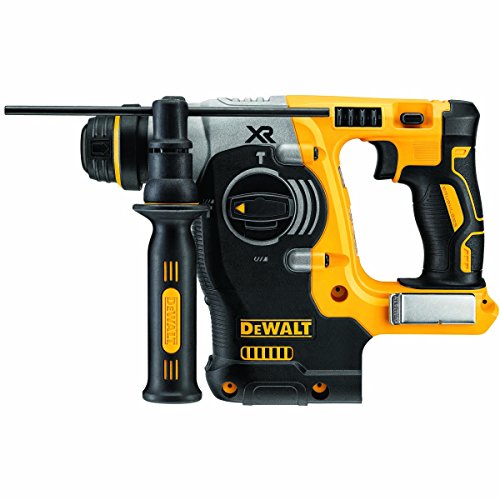
DEWALT DCH273B 20V MAX SDS-Plus Rotary Hammer (Bare Tool)
20V MAX2.1J impact3 modesShocks vibration control
Check price on Amazon
Best for: Installers and 20V MAX owners who set anchors in brick and block, not heavy concrete.

SHOCKS is DEWALT's active vibration control system, in which a counterweight cancels part of the felt shock, and it appears here on the lightest-hitting machine in the roundup. The 2.1 joule impact energy suits holes in brick, block and light concrete. Three application modes cover drilling, hammer drilling and chiseling.

It is lighter than the corded machines and easier to carry up a ladder. The cost is energy: 2.1 joules is less than the Makita's 2.9 and well under the ENEACRO's 7, so large holes in cured concrete go slowly. It is a good fit for installers who set anchors all day in softer masonry.

Ownership: the bare tool listing means batteries and a charger are separate. If you own 20V MAX packs, this is an efficient add-on. Store it in a case, grease the shank, and swap batteries before they overheat.

What works

  • SHOCKS control reduces felt vibration
  • Lightest-hitting machine suits overhead and ladder work
  • Three modes cover drilling, hammering and chiseling
  • Works with the 20V MAX battery family

Watch out for

  • Lowest impact energy at 2.1 joules
  • Bare tool means batteries cost extra
  • Slow in cured concrete with larger bits

Spec sheet

Platform
DEWALT 20V MAX
Impact energy
2.1 joules
Modes
3 application modes
Vibration
SHOCKS active control
Package
Bare tool only

Spec sheet decoder

What the numbers on the box really mean

The specs manufacturers lead with, translated into what they tell you about real-world performance.

Joules

Joules measure energy per blow, converted from ft-lbs by multiplying by about 1.36. It describes the piston's strike, not the motor's electrical draw.

Watch forThe ENEACRO's 7 joules is a claimed peak, and lesser brands often quote peak lab figures.

ft-lbs of impact energy

This is the same measurement in imperial units. 2.4 ft-lbs equals about 3.3 joules.

Watch forThe Bosch's 2.4 ft-lbs sounds smaller than 7 joules but is a different unit, so convert before comparing.

AVT and SHOCKS

These are brand names for internal counterweight systems that cancel shock. They reduce what your hands feel, not what the bit delivers.

Watch forRubber handle grips alone are not the same as an active counterweight.

Bare tool

A bare tool ships without battery or charger. It is only a bargain if you already own the platform.

Watch forThe DEWALT DCH273B is a bare tool listing.

SDS-plus capacity

SDS-plus uses a 10 mm shank with slots that let the bit float. Practical drilling limit is about 1 inch for most users.

Watch forA claim of 1-1/4 inch capacity is a maximum, and slower than a smaller hole.

Methodology

How We Evaluated These SDS-Plus Rotary Hammers Under $300

Impact energy

We converted ft-lbs to joules so the Bosch, Makita, DEWALT and ENEACRO could be compared. The ENEACRO leads on claims, and the DEWALT DCH273B is lowest. Ownership detail matters here: concrete dust is abrasive, so a machine that seals its chuck well will outlast one that does not.

Vibration and safety

We looked at AVT, SHOCKS, KickBack Control and clutches. Machines with both vibration and kickback features ranked higher. The practical lesson is that safety hardware and vibration hardware are separate features, and only some machines have both.

Power source

We split corded from cordless, and checked whether cordless listings include batteries. Cordless options were judged on platform value. Treat any lab-style rating as an upper bound for planning job time.

Brand support

We weighed parts and service access, since chucks and cords wear. Name brands scored higher. Brand support is easy to overlook until a chuck wears out in year three.

Relative value

We used price tiers to see what extra spending adds. Higher tiers bring better vibration control and brand support. The extra spend is mostly engineering you feel at hour six, not hour one.

Decision guide

How to Choose the Right SDS-Plus Rotary Hammers Under $300

By Job Type

SituationPickWhy
All-day anchor drillingMakita HR2641AVT vibration control
Rebar-reinforced concreteBosch GBH2-28LKickBack Control sensor
Maximum concrete and light demolitionENEACRO 12.5 Amp7 joules
Cordless anchors on a ladderDEWALT 20V MAX 2.6JBrushless and mobile
Brick and block installsDEWALT DCH273BLight and low vibration

By Budget

TierPickWhy
LowestENEACRO 12.5 AmpMost joules for the cost
Low-middleDEWALT DCH273BBare tool for 20V owners
MiddleBosch GBH2-28LSensor kickback protection
Upper-middleMakita HR2641Premium vibration control
Upper, cordlessDEWALT 20V MAX 2.6JBrushless cordless power

Corded vs Cordless

Corded

Steady output and no battery limit. The Makita HR2641, Bosch GBH2-28L and ENEACRO fall in this group. They suit long sessions.

Cordless

Mobility and no extension cords, but compact batteries drain under hammer work. The two DEWALT models fall here. They suit anchors on ladders.

Choose corded for long sessions and cordless if you already own 20V MAX packs.

By Safety Feature

ConcernPickWhy
Bit binds on rebarBosch GBH2-28LSensor stops the motor
Hand fatigueMakita HR2641AVT
Clutch protectionENEACRO 12.5 AmpSafety clutch
Ladder workDEWALT DCH273BLight body and SHOCKS
General cordless useDEWALT 20V MAX 2.6JElectronics hold speed

For Setting Concrete Anchors Specifically

Look for

Anchors need clean, consistent holes and steady depth. Look for variable speed, a depth rod and enough energy for 3/8 to 3/4 inch holes.

In this comparison

The Makita HR2641 is the calm choice for hundreds of anchors, and the Bosch GBH2-28L adds kickback protection. The ENEACRO is fastest for single large holes.

When to Spend More

Spend more if

You drill for hours daily or larger than 1 inch. The Makita HR2641 shows where refinement begins, and an SDS-max tool is the next step.

Save if

You drill a few anchors a month. The ENEACRO 12.5 Amp or DEWALT DCH273B covers that.

Ownership

Maintenance schedule

The upkeep that decides whether this machine lasts two seasons or ten.

TaskIntervalWhy it matters
Grease the bit shankBefore each useA thin film prevents wear on the chuck pockets and piston coupling. Dry shanks wear fast. Use SDS grease, not general-purpose grease.
Clean the dust capAfter each concrete sessionDust enters the chuck and causes wear. A cracked cap lets it reach the piston. Replace it before dust gets past the chuck.
Replace gearbox greasePer the manual, often yearly with heavy useHammer mechanisms heat grease. Old grease thins and causes wear. Do this at a service center if the manual calls for it.
Inspect the cordBefore each jobFrayed cords overheat and shock. Replace at the first sign of damage. Check near the plug and the housing entry.
Store batteries coolBetween jobsHeat from hammering shortens cell life. Store at partial charge. Never charge a hot pack right after drilling.

FAQ

Frequently Asked Questions

Is an SDS-plus tool better than a hammer drill?

For concrete, yes. A piston mechanism strikes harder than cams. For wood and steel, a regular drill is better. Cam-style hammer drills still make sense for occasional brick anchors, but any regular concrete work favors SDS-plus.

How many joules do I need?

For anchors up to 1/2 inch, about 2 joules is enough. For larger holes and light demolition, 3 joules or more helps. The Makita HR2641 at 2.9 is a good middle. Beyond 1 inch holes, step up to SDS-max rather than stretching an SDS-plus tool.

Do name brands cost more?

Yes, but you get vibration control and service. Lesser brands give more joules for the cost. Choose based on hours of use. A tool you use ten hours a month deserves better support than one you use ten minutes a month.

Is cordless as powerful as corded?

Close in energy, but battery capacity limits sessions. A 2.6 joule cordless matches a mid corded tool for short jobs. Carry a spare pack and let hot batteries cool before charging.

Can I use SDS-max bits?

No. SDS-plus and SDS-max shanks are different sizes. Check the shank before buying bits.

Do I need a side handle?

Yes. Always use the side handle for control. Never remove it. A bit that grabs can twist the tool out of one hand with surprising force.

Bottom line

The short version

Browse more sds-plus rotary hammers under $300on Amazon →
James Miller, Lead Machine Editor

About the author

James Miller

Lead Machine Editor, MachineFanatic

James Miller leads MachineFanatic's buying guides, turning spec sheets, manuals and owner feedback into clear verdicts on power tools, outdoor power equipment, shop machines and kitchen machines.

More from James →

Keep reading

Related guides