
Amazon affiliate links - we earn a commission.Affiliate disclosure

Buying guide · 12 min read · Updated 2026-11-07

Best Tilt-Head Stand Mixers (2026)

Six tilt-head stand mixers compared by hinge design, bowl size, motor rating and included beaters, from a 3.2 quart mini to a 7.4 quart family model.

James MillerBy James MillerLead Machine Editor6 machines comparedSpec-sheet verified
Best Tilt-Head Stand Mixers

At a glance

Our top picks

Side by side

Spec comparison

A tilt-head mixer hinges its whole head upward so the bowl and beater are open to the hand. That single design choice explains most of what owners like and dislike: the bowl is effortless to reach and scrape, and the head is also the part that has to resist every pushback from a thick batter.

The category runs from palm-sized mixers meant for one cake to near-commercial 7 quart machines. What separates them is how rigidly the hinge locks, how far the beater reaches into the bowl and how the motor is rated. The lineup below sorts them by those details.

Before you buy

6 Criteria to Look For Before Buying a Tilt-Head Stand Mixer

  1. 01

    Hinge and latch design

    On a tilt-head the head is the load path, so the hinge and latch decide how it handles thick batter. The KitchenAid Artisan locks a metal head, while the Aucma's ABS housing flexes more. Open the head and check for slop before you rely on it for cookie dough.

  2. 02

    Bowl size you will really use

    The 3.2 quart Kitchen in the Box handles one cake, the Artisan's 5 quarts handles double batches, and the VEVOR's 7.4 quarts is for parties. A bigger bowl costs counter space and wastes batter at the bottom if your batches are small.

  3. 03

    Motor rating in context

    The Aucma lists 660 watts, the VEVOR 500 and the bella STIR 500, but wattage is not torque. Compare each against its housing: a heavy metal body like the Artisan holds up better than a light ABS one at the same rating.

  4. 04

    Speed ladder

    The Martha Stewart and bella STIR offer 12 speeds, the Artisan 10, and the Aucma only 6. If you add flour by the spoon, more low steps matter more than a high top speed.

  5. 05

    Beater reach and clearance

    A planetary beater that leaves a gap above the bowl floor will not mix the bottom. Many tilt-heads, including the Artisan, have a screw adjustment. Check the beater-to-bowl gap on day one.

  6. 06

    Parts and long-term support

    The Artisan has a deep aftermarket for beaters, bowls and gears, while newer brands such as VEVOR and Aucma have less. If you expect to run the mixer for a decade, favor the brand where you can still buy parts.

Detailed reviews

The 6 best tilt-head stand mixers, explained

01
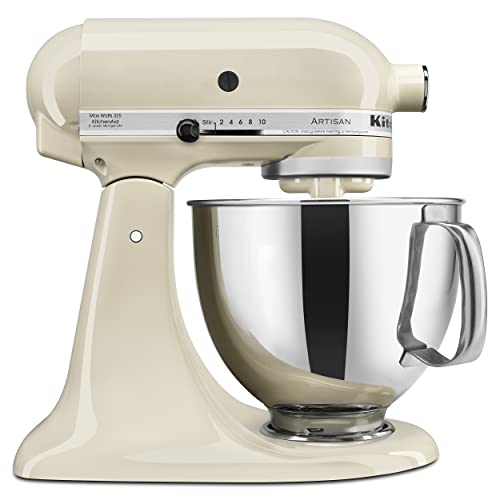
KitchenAid Artisan KSM150PS 5-Qt Tilt-Head Mixer
5 qt bowl10 speedsMetal buildPouring shield
Check price on Amazon
Best for: Cooks who want the proven reference design in a tilt-head.

The Artisan defines the tilt-head category. A hinged head carries a motor above the bowl, and the planetary beater traces 59 touchpoints around the bowl wall as it orbits. The all-metal body gives it enough mass to stay planted at medium speed, and a latch locks the head down once you lower it.

Its closest rival in this lineup is the Martha Stewart 5.3 quart, which offers two more speeds and a silicone-edge beater for a similar footprint. The Artisan counters with a body built from metal rather than plastic and a larger body of owner experience, which shows in how easy it is to find replacement beaters and bowls years later.

The pouring shield rides on the bowl rim and keeps the first moments of a flour addition from clouding the kitchen. For upkeep, use the adjustment screw under the head to reset the beater-to-bowl clearance if you see a ring of unmixed batter, and wipe the hinge area where flour collects. The 5 quart bowl is generous for cake and cookie work but stays within one-loaf territory for bread.

What works

  • All-metal body gives stable mixing at medium speed
  • Planetary action reaches 59 points around the bowl
  • Pouring shield limits flour spray
  • Replacement parts and beaters are easy to find

Watch out for

  • Hinged head limits stiff dough to one or two loaves
  • Heavier than the plastic-bodied budget picks

Spec sheet

Bowl
5 quart stainless
Speeds
10
Body
Metal construction
Bowl contact
59 touchpoints
Cookie batch
About nine dozen
02
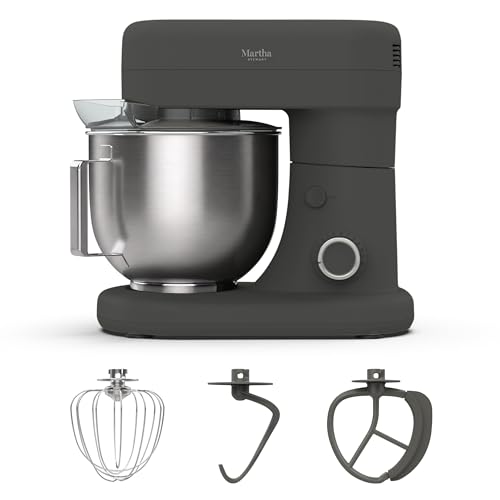
Martha Stewart 5.3-Qt 12-Speed Tilt-Head Mixer
5.3 qt bowl12 speedsSilicone-edge beaterStainless whisk
Check price on Amazon
Best for: Cookie and cake bakers who cream butter often.

Martha Stewart's mixer leans on a flat beater with a silicone edge that wipes the bowl wall as it orbits. That cuts the number of times you stop to scrape when creaming butter and sugar, and it is the clearest design difference between this mixer and the other tilt-heads here. The 5.3 quart stainless bowl and 12 speeds put it in the same class as the Artisan.

Twelve speeds give a finer ladder than the Artisan's ten, which helps at the slow end when you are adding flour. Compared with the bella STIR in this lineup, which also offers 12 speeds, the Martha Stewart adds a stainless whisk and a dough hook, so the box is more complete for a first-time mixer buyer.

The silicone edge is a wear part, so inspect it for tears and wash it by hand. Because the head is hinged, keep bread dough to one loaf at low speed, and wipe the latch area after each session. If you notice any rattle in the head during a long run, tighten the head hardware before it loosens further.

What works

  • Silicone-edge beater reduces scraping stops
  • 12 speeds give a gentle start
  • Stainless whisk and hook included
  • 5.3 quart bowl suits double cake batches

Watch out for

  • Silicone edge wears out and needs replacing
  • Single-loaf limit on bread dough

Spec sheet

Bowl
5.3 quart stainless
Speeds
12
Beater
Silicone-edge flat
Whisk
Stainless steel
Extras
Dough hook included
03
Aucma 6.5-Qt 660W Tilt-Head Stand Mixer
6.5 qt bowl660 watt6 speedsCopper motor
Check price on Amazon
Best for: Large-batch bakers who want a big bowl without the top price.

Aucma stretches bowl size and motor rating past what the entry-priced tilt-heads usually offer. A 6.5 quart stainless bowl, a 660 watt copper motor and an ABS housing make it the biggest and most powerful of the budget-minded units here. Six speeds are tuned for the tasks the three included tools perform, according to the listing.

Six speeds are fewer than the 12 on the Martha Stewart or bella STIR, so there is less room to fine-tune a slow start. In exchange you get capacity: the 6.5 quart bowl is a full quart and a half larger than the Artisan's, which matters when you double a recipe for a party. The ABS housing is lighter than the Artisan's metal, so it can creep at high speed.

The tilt-head design lets you swap the beater easily, but the ABS body does not damp vibration the way die-cast metal does. Keep dough batches modest, run kneading at low speed and wipe the head after each use. Replacement parts are less certain than for the major brands, so check availability before you rely on it long term.

What works

  • 6.5 quart bowl is the largest of the moderate picks
  • 660 watt copper motor adds headroom
  • Dough hook, whip and beater included
  • Tilt-head makes bowl swaps easy

Watch out for

  • Six speeds limit slow-start control
  • ABS housing is lighter and can creep at speed
  • Parts support is less established

Spec sheet

Bowl
6.5 quart stainless
Motor
660 watt copper
Speeds
6
Housing
ABS
Includes
Hook, whip, beater
04
VEVOR 7.4-Qt 500W Tilt-Head Dough Mixer
7.4 qt bowl500 watt6 speeds + pulseSUS304 bowl
Check price on Amazon
Best for: Family bakers who want a very large bowl and pulse control.

VEVOR sells this as a dough-oriented tilt-head, with a 7.4 quart SUS304 stainless bowl, a 500 watt motor and a pulse setting beside six speeds. The knob control keeps operation simple, and the large bowl is aimed at family gatherings and batch baking rather than one-off cakes.

Against the Aucma, the VEVOR trades 160 watts for an even bigger bowl and adds pulse, which lets you give a stiff dough short bursts rather than a continuous run. That makes the pulse useful when the dough starts to climb the hook. It is still a hinged head, so the same bread limit applies: one or two loaves at low speed.

SUS304 is a standard grade of stainless steel and resists staining, which helps for acidic or long-fermented doughs. Keep the splash guard clean, wipe the head, and do not let the bowl run empty under the hook. Heavier use deserves a look at the hinge latch every few months.

What works

  • 7.4 quart bowl is the largest in this guide
  • Pulse function suits short kneading bursts
  • SUS304 stainless bowl resists staining
  • Simple knob control

Watch out for

  • 500 watt rating is lower than the Aucma
  • Few speed steps for fine control
  • Long-term durability data is thin

Spec sheet

Bowl
7.4 quart SUS304
Motor
500 watt
Speeds
6 plus pulse
Control
Simple knob
Includes
Splash guard, accessories
05
bella STIR 5.3-Qt 12-Speed Tilt-Head Mixer
5.3 qt bowl500 watt listed12 speedsSoft-touch dial
Check price on Amazon
Best for: Cooks who value a gentle speed ladder and a colorful body.

The bella STIR is a mid-size tilt-head with a 12 speed ladder and a soft-touch speed control designed to make gradual speed changes. The feature list gives a 500 watt motor and full-coverage planetary action, so each pass reaches around the whole bowl. It comes in several colors, which is a real selling point on a counter that stays in view.

The soft-touch control is the practical difference from the Martha Stewart: it aims at smoother transitions and less splatter when you move from stir to mix. The Martha Stewart gives you a silicone-edge beater and a stainless whisk, so the choice comes down to the control feel versus the attachments in the box.

Upkeep is simple. Wipe the dial and the head after each use, hand wash the beater, and avoid stuffing the 5.3 quart bowl past what the hook can pull. Treat the head hinge as the part to watch and keep bread dough to one loaf. Check the listing carefully, since the title shows more than one wattage figure and the feature list is the one to rely on.

What works

  • 12 speeds with soft-touch control
  • Planetary action covers the entire bowl
  • Several color options
  • 5.3 quart bowl suits most recipes

Watch out for

  • Conflicting wattage figures on the listing
  • Hinged head limits bread dough
  • Brand has less heavy-baking history

Spec sheet

Bowl
5.3 quart
Motor
500 watt listed
Speeds
12
Action
Planetary
Control
Soft-touch speed dial
06
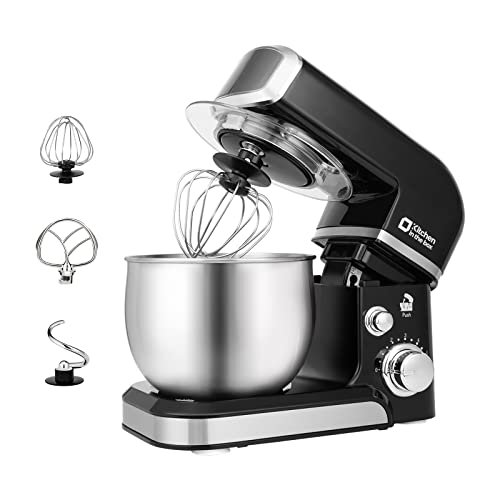
Kitchen in the Box 3.2-Qt 6-Speed Tilt-Head Mixer
3.2 qt bowl6 speedsUnder 7 lbAnti-slip feet
Check price on Amazon
Best for: Single bakers and small kitchens that need a compact mixer.

This is the smallest machine in the guide and a deliberate one. At under 7 pounds and about 12.9 by 7 by 10.2 inches, it can live in a cabinet, and four anti-slip suction feet grip the counter. The 3.2 quart stainless bowl is built for a first-time baker making one cake or a small batch of cookies.

Six speeds and a tilt-head are enough for batter, whipped cream and soft dough in small amounts. Against the 5 quart Artisan, it is not a competitor so much as a different purchase: you give up bowl volume and metal mass in return for storage and a low outlay. The maker lists dough as suitable, but a stiff dough will overwhelm a bowl this small.

Because the body is light, the suction feet only help when the counter is clean and smooth, so wipe them occasionally. Keep batches within the small bowl and run at the lower speeds for dough. The stainless bowl and beater clean easily, and the compact body leaves little to maintain beyond wiping the head.

What works

  • Under 7 lb and cabinet-friendly
  • Anti-slip suction feet steady the base
  • Stainless bowl cleans easily
  • Tilt-head gives easy beater access

Watch out for

  • 3.2 quart bowl limits batch size
  • Light body can creep at speed
  • Poor match for stiff bread dough

Spec sheet

Bowl
3.2 quart stainless
Weight
Under 7 lb
Size
12.9 x 7 x 10.2 inch
Speeds
6
Feet
4 anti-slip suckers

Spec sheet decoder

What the numbers on the box really mean

The specs manufacturers lead with, translated into what they tell you about real-world performance.

Tilt-head

The head hinges back so you can reach the bowl. It is easier to use than a bowl-lift but flexes more under heavy load.

Watch forAll six picks tilt, so compare hinge quality: the Artisan uses a metal body, while the Aucma uses ABS.

Quart rating

Total bowl volume. Practical dough capacity is lower.

Watch forThe VEVOR's 7.4 quarts and the Kitchen in the Box's 3.2 quarts are very different machines.

Watts

Electrical input to the motor, not the torque delivered to the beater.

Watch forThe Aucma lists 660 watts while the VEVOR lists 500, yet housing and gearing matter as much.

Planetary action

The beater orbits the bowl while spinning the other way, covering the bowl in one pass.

Watch forThe bella STIR, Martha Stewart and Artisan all use it, but clearance adjustment varies.

Pulse

A momentary full-speed burst while the control is held.

Watch forThe VEVOR offers it for short dough bursts, which most tilt-head rivals lack.

Methodology

How We Evaluated These Tilt-Head Stand Mixers

Hinge rigidity and body material

We sorted the lineup by whether the body is metal or ABS and how the head locks. The Artisan ranks above the lighter ABS units for load handling.

Bowl size and batch fit

We compared quart ratings across the lineup, from the 3.2 quart Kitchen in the Box to the 7.4 quart VEVOR, and matched each to a buyer.

Control and speed steps

Speed counts and extras like pulse or soft-touch dials were reviewed. The 12 speed units earn credit for fine control.

Included tools

We checked what comes in the box: whisk, hook, beater, splash guard. The Martha Stewart's stainless whisk and silicone beater set it ahead of bare-bones kits.

Support and track record

Brand history and parts availability were weighed. The KitchenAid Artisan leads, with the newer brands scoring lower on long-term support.

Decision guide

How to Choose the Right Tilt-Head Stand Mixers

By Batch Size

SituationPickWhy
One cake or small cookie batchKitchen in the Box 3.2-QtSmall bowl, low weight
Standard family bakingKitchenAid Artisan5 quart bowl and metal build
Double batches and partiesAucma 6.5-QtLarger bowl and 660 watt motor
Largest bowl in the classVEVOR 7.4-Qt7.4 quart SUS304 bowl

By Budget

TierPickWhy
Lowest outlayKitchen in the Box 3.2-QtSmall and simple
Value large bowlAucma 6.5-QtBig bowl and motor for the money
Mid tier styledbella STIR 5.3-Qt12 speeds and color choices
Established referenceKitchenAid ArtisanMetal body and parts support

Metal Body vs ABS Housing

Metal body

The Artisan's all-metal frame adds mass and damps vibration, so it stays put at medium speed and lasts longer under load.

ABS housing

The Aucma and similar units use molded housings that cost less and weigh less, but flex more and can creep on the counter.

Pick the Artisan if you bake often; pick the Aucma if capacity matters more than build.

By Speed Control

SituationPickWhy
Finest slow-start controlMartha Stewart 5.3-Qt12 speeds and silicone beater
Smooth soft-touch dialbella STIR 5.3-QtGradual speed transitions
Short bursts on stiff doughVEVOR 7.4-QtPulse function
Few steps but simpleAucma 6.5-QtSix speeds, easy operation

For Cookie Dough Specifically

Look for

A flat beater that reaches the bowl wall, a motor that does not stall on cold butter, and a head that does not rock. Silicone-edge beaters reduce scraping.

In this comparison

The Martha Stewart's silicone-edge beater is built for creaming, and the Artisan's metal body handles dense cookie dough steadily.

When to Spend More

Spend more if

You want a mixer that lasts ten years and have parts support, as with the KitchenAid Artisan.

Save if

You bake occasionally. The Kitchen in the Box 3.2-Qt or the Aucma 6.5-Qt cover light use for less.

Ownership

Maintenance schedule

The upkeep that decides whether this machine lasts two seasons or ten.

TaskIntervalWhy it matters
Wipe the hinge and latchAfter each useFlour packs the hinge and makes the latch stiff. A dry cloth keeps the head moving freely.
Reset beater clearanceEvery six monthsA beater that no longer reaches the bowl floor leaves unmixed batter. Adjust the screw if the model has one.
Hand wash silicone edgesAfter each useDishwasher heat shortens the life of silicone-edge beaters. Inspect for tears.
Check suction feetMonthlyDust reduces grip on compact models like the Kitchen in the Box. Wipe them and the counter.
Inspect the cordTwice a yearCords near a busy counter wear. Replace a frayed cord before use.

FAQ

Frequently Asked Questions

Is a tilt-head or a bowl-lift mixer better?

A tilt-head is easier to use and suits cakes, cookies and one loaf of bread. A bowl-lift handles stiff dough and larger batches with less flex.

Can a tilt-head knead bread dough?

Yes, one or two loaves at low speed. Pushing a tilt-head past that strains the hinge and the motor.

Do more watts mean a better mixer?

Not by themselves. The 660 watt Aucma and the 5 quart Artisan are different classes, and housing and gearing decide dough performance.

Are plastic-bodied mixers durable?

They can be, with modest use and small batches. Metal bodies resist vibration better and age more gracefully under heavy kneading, which is why the Artisan outlasts lighter ABS units. Start flour additions at the lowest speed and use the splash guard to keep the counter clean.

Should I buy the biggest bowl available?

Not automatically. A 7.4 quart VEVOR bowl leaves small batches spread thin, and the beater may not reach a thin layer of batter at the bottom. Match the bowl to the recipes you bake most, then add a size step for occasional doubling.

What should I check when the mixer arrives?

Lower the head and look for a gap between the beater and the bowl floor, about the thickness of a coin. Lock the head and press down lightly to feel for play. Run it empty at low speed and listen for scraping or rattles before your first batch.

Bottom line

The short version

Browse more tilt-head stand mixerson Amazon →
James Miller, Lead Machine Editor

About the author

James Miller

Lead Machine Editor, MachineFanatic

James Miller leads MachineFanatic's buying guides, turning spec sheets, manuals and owner feedback into clear verdicts on power tools, outdoor power equipment, shop machines and kitchen machines.

More from James →

Keep reading

Related guides