
Amazon affiliate links - we earn a commission.Affiliate disclosure

Buying guide · 14 min read · Updated 2026-11-25

Best Transfer Switches Under $300 (2026)

Five generator and solar transfer switches that list for under $300, from a 15A plug-in unit to a 200A manual switch, with a look at ratings and code limits.

James MillerBy James MillerLead Machine Editor5 machines comparedSpec-sheet verified
Best Transfer Switches Under $300

At a glance

Our top picks

Side by side

Spec comparison

A transfer switch has one safety job: it makes sure that a generator or inverter can feed your wiring only when the utility is disconnected. Without that isolation, power can flow backward into the grid and injure a line worker, and it can also destroy your equipment.

At this price, most options are generic dual-power modules for DIN rail mounting, small plug-in units and one manual switch box. They differ in amperage, in how they detect a power failure and in how much of the home they can serve. We ranked them on stated protection, ratings and clarity of purpose. Prices move, and the $300 cap reflects listing prices when this guide was updated.

Before you buy

6 Criteria to Look For Before Buying a Transfer Switch Under $300

  1. 01

    Single appliance or whole house

    A 15 amp plug-in switch serves one appliance at about 1,800 watts. A 63 amp module serves a sub-panel. A 200 amp switch serves a whole service. Choose the smallest device that covers the circuits you want to run, because a bigger switch than the generator needs only adds cost and installation work. List the circuits you want first: a fridge, a furnace blower, a sump pump and a few lights are a typical set. Then add up their running watts and the starting surge of the motors among them, because a refrigerator compressor and a well pump can each need two to three times their running load to start. That total decides the generator, and the generator decides the switch, so work in that order rather than starting with the switch.

  2. 02

    Manual or automatic

    A manual switch needs you to flip a handle, and it has no electronics to fail. An automatic switch senses an outage and changes over on its own, which is better for a cabin or a sump pump when you are away. Automatic units add complexity and a potential failure point. If you are home during outages, manual is simpler and cheaper. An automatic switch also needs a generator that can start itself or be started remotely, since the switch alone cannot start an engine. For a portable generator that you pull-start in the rain, a manual switch matches the way you will actually use it.

  3. 03

    Safety listing and code

    Generic DIN-rail modules often carry CE marks, which is a European standard. Many jurisdictions expect a UL or ETL listing for equipment tied to a house, and a permit and inspection for inlet boxes and transfer switches. Unlisted equipment can fail inspection and complicate an insurance claim. Ask your local authority and your electrician before you buy. Insurance companies can deny a claim for a fire traced to unpermitted or unlisted electrical work, which is a far bigger cost than the switch itself. A simple phone call to the building department often settles what is acceptable in a few minutes.

  4. 04

    Switching thresholds

    An automatic switch decides when to transfer from voltage windows. The GEYA lists 85 volts under and 145 over on a 110 volt supply. Knowing the thresholds lets you check that a generator stays inside them. A listing with no numbers leaves you guessing about when the switch will act. A wide window avoids nuisance switching but lets a poor source through, and a narrow window protects equipment but may bounce between sources. Match the window to the generator's regulation and to the sensitivity of your loads.

  5. 05

    Contact class and protection

    PC-class devices, like the Mini ATS G2R, carry and break normal loads but do not interrupt a fault, so a breaker or fuse must be upstream. A changeover switch is not a substitute for overcurrent protection. Check what is protected by what, and have the design reviewed. Also decide how neutrals and grounds are handled, since double-bonding a neutral can create dangerous currents on metal parts. These details belong to the installer, and they are the reason this work is regulated.

  6. 06

    Installation burden

    Plug-in units need nothing. DIN-rail modules need an enclosure, wiring and overcurrent protection. Service-level switches need an electrician, a permit and an inspection. The cost of the labor and permit often exceeds the cost of the switch, so budget for it. Also think about where the inlet box will go, since it must be outdoors, weather-rated and a safe distance from windows. A short run of heavy wire between the inlet and the switch keeps the voltage drop small.

Detailed reviews

The 5 best transfer switches under $300, explained

01
63A 110V automatic and manual dual power ATS, LED voltage display
63A110V 2-poleAuto and manualLED display
Check price on Amazon
Best for: Sub-panels and small off-grid cabins with a generator or inverter backup.

This dual-power module is rated for 63 amps at 110 volts on two poles and offers automatic and manual operation. It watches the primary source and switches to the backup when voltage leaves a safe window, and a bright LED display shows live voltages so you can see what the switch sees. Built-in over-voltage, under-voltage and over-current protection are listed, which is the minimum you want from an automatic switch.

Sixty-three amps at 110 volts is about 6,900 watts of capacity at the switch itself, but the real limit is the wire, the breaker and the generator behind it. A module like this is designed for DIN rail mounting inside an enclosure, and it serves a sub-panel or a dedicated circuit group, not a whole house service. It is built to a CE standard, which is European, so confirm whether it also carries the UL or ETL listing your inspector expects before you wire it into a house.

Set beside the 15A plug-in switch, it handles larger loads and publishes its limits, but it needs a proper installation. Use a licensed electrician, mount it in a suitable enclosure, label every circuit and test the transfer with the main disconnected. Keep a written load list and start large motor loads one at a time. If the generator ever sags below the under-voltage point, the switch can drop back to the grid or to nothing, so size the generator comfortably above the load. A voltage display makes that sag visible before it becomes a problem.

What works

  • Auto and manual modes
  • Stated over, under and over-current protection
  • Live LED voltage display
  • Handles a small sub-panel

Watch out for

  • CE listing may not satisfy US inspection
  • Needs enclosure and professional wiring

Spec sheet

Rating
63 amps, 110 volt, 2 pole
Modes
Automatic and manual
Protection
Over-voltage, under-voltage, over-current
Display
LED real-time voltage readout
Certification
CE listed on the listing
02
AC120V 15A plug-in automatic transfer switch, NEMA 5-15
120V 15APlug-inAuto transferWeatherproof shell
Check price on Amazon
Best for: Single appliances such as a fridge or sump pump on a generator or inverter.

This switch has a plug and a receptacle, so it needs no wiring. It switches an appliance between two sources, for example utility power and an inverter or generator, and automatically changes over when the primary fails. A 15 amp, 120 volt rating means about 1,800 watts, enough for a fridge, a freezer, a furnace blower or a sump pump.

The plastic shell is described as waterproof and moisture-proof for indoor or outdoor use. The simplicity is the appeal: there is no panel work and no permit headache for a single appliance. It also limits what the switch can do, and it cannot serve a whole house or a large load.

Measured against the 63A module, it is far more modest but safer for a beginner to use. Use a short heavy cord on the generator side, never overload the circuit and do not daisy-chain extension cords. Test the changeover periodically with a lamp. Remember that the appliance will drop out for a moment during the transfer, so a computer without a battery backup will restart. Label the unit clearly so a family member knows what it does in an outage.

What works

  • Plug and play, no wiring
  • Automatic changeover between sources
  • Weatherproof plastic shell
  • Safe for single appliances

Watch out for

  • Only about 1,800 watts
  • Cannot serve a panel or a whole house

Spec sheet

Rating
120 volt, 15 amp
Plugs
NEMA 5-15P and 5-15R
Inputs
Utility or shore power, inverter or generator
Shell
Plastic, waterproof, moisture-proof
Use
Indoor or outdoor
03
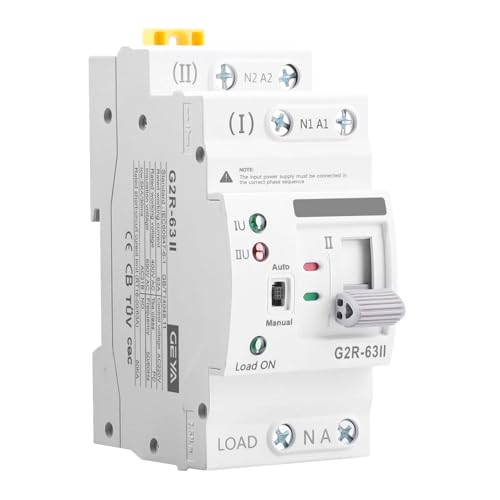
63A 110V Mini ATS G2R, 2 pole, automatic and manual, DIN rail
63A110V 2-poleAuto and manualDIN rail
Check price on Amazon
Best for: Solar-plus-grid cabinets assembled by someone who can wire a sub-panel.

The Mini ATS G2R is a PC-class, low-frequency changeover switch intended for dual power supplies such as grid and solar or grid and generator. Its two-position selector lets you choose automatic or manual mode, and the 63 amp, 110 volt two-pole rating matches common single-phase residential circuits in North America. DIN rail mounting suits it for a small enclosure.

PC-class refers to a switching class where the device can carry and break the load but is not rated to break a fault, which is why a breaker or fuse must sit upstream. That distinction matters for safety: a PC-class module is a changeover device, not a protective device. It works best in a solar or off-grid cabinet where its role is to pick between two sources.

Against the first 63A module, it offers a similar rating without the stated voltage display. Treat it as a building block for a designer or an electrician rather than a retrofit for a homeowner. Label everything, fit proper overcurrent protection and confirm that your jurisdiction accepts it.

What works

  • Automatic or manual selector
  • 63 amp 110 volt two-pole rating
  • DIN rail mounting for a tidy cabinet
  • Suits solar and generator changeover

Watch out for

  • PC-class, not a protective device
  • Needs upstream breakers and professional wiring

Spec sheet

Rating
63 amps, 110 volt, 2 pole
Class
PC-class low-frequency transfer
Modes
Automatic or manual selector
Mounting
DIN rail
Use
Solar, grid, generator changeover
04
GEYA Mini ATS, auto and manual, over and under voltage switching
Mini ATSAuto/manual85V under, 145V over50/60 Hz
Check price on Amazon
Best for: Installers who want published switching thresholds.

GEYA publishes the voltage windows for its mini ATS: on a 110 volt supply it treats 85 volts as undervoltage and returns at 95 volts, and it treats 145 volts as overvoltage and returns at 130 volts, with a tolerance of about five volts. Publishing those numbers is the most useful thing a listing can do, because it tells you exactly when the unit will switch.

The switch tests whether the normal supply or the backup supply is healthy and transfers when the normal supply becomes abnormal, so the backup works immediately and power continues. It serves grid-to-solar and grid-to-generator setups at 50 or 60 hertz.

Next to the other modules, the difference is transparency. As with any DIN-rail ATS, it is a component and not a complete installation: it needs correct breakers, a proper enclosure and wiring by a qualified person. Confirm that the generator output is clean enough to stay inside the window. Mount it away from heat sources and keep the cover on, since small modules have exposed terminals that should never be touched while live. Photograph the finished wiring for your records.

What works

  • Published under and over voltage thresholds
  • Automatic and manual operation
  • Works at 50 and 60 Hz
  • Compact mini ATS format

Watch out for

  • A component, not a complete installation
  • Rating details beyond voltage are limited

Spec sheet

Type
Mini automatic transfer switch
Under-voltage (110V)
Trips at 85V, recovers at 95V
Over-voltage (110V)
Trips at 145V, recovers at 130V
Frequency
50 and 60 Hz
Use
Grid to solar or generator
05
200A manual generator transfer switch, 120/240V double throw
200A120/240VManual48,000W label
Check price on Amazon
Best for: Whole-house backup on a portable generator, installed by an electrician.

This is a manual, double-throw safety switch rated for 200 amps at 120/240 volts, which makes it a service-level device. A handle moves the load between the utility and the generator, and the two positions cannot be on at once, so backfeed is impossible when it is used correctly. The product page says it uses aluminum connections and has no electronic components, which suits a part that may sit unused for years.

The enclosure is galvanized steel with a protective coating and a thicker 1.5 millimeter shell. A 48,000 watt label reflects the full service capacity, but the real limit is your generator, since a portable unit of 5,000 to 10,000 watts is the realistic source behind it.

A service-level switch is not a weekend DIY project. It ties into the main panel and typically needs a licensed electrician, a permit and an inspection. Next to the smaller modules in this list, it is the one that can serve a whole house. Check for a UL or ETL listing before buying, since unlisted switches may fail inspection or insurance requirements.

What works

  • 200 amp service-level rating
  • Manual and mechanically simple
  • No electronics to fail
  • Heavy galvanized enclosure

Watch out for

  • Requires electrician and permit
  • Listing certification must be confirmed

Spec sheet

Rating
200 amps, 120/240 volt
Type
Manual double throw
Capacity label
48,000 watts
Contacts
Aluminum connections, no electronics
Enclosure
Galvanized steel, protective coating

Spec sheet decoder

What the numbers on the box really mean

The specs manufacturers lead with, translated into what they tell you about real-world performance.

Amp rating

The maximum current the switch contacts can carry. It must exceed the largest load.

Watch forThe units here range from 15 to 200 amps.

Pole count

How many conductors it switches. A 2-pole 110 volt unit switches line and neutral.

Watch forThe 63A modules are 2-pole; the 200A is a 120/240 volt double throw.

PC-class

A switch that carries and breaks loads but not faults. It needs upstream protection.

Watch forThe Mini ATS G2R lists PC-class.

Transfer thresholds

The voltage points where an automatic switch changes source.

Watch forThe GEYA lists 85 V under and 145 V over for 110 V.

Certification

Safety listing such as UL, ETL or CE. Inspectors usually want UL or ETL.

Watch forThe 63A module lists CE.

Methodology

How We Evaluated These Transfer Switches Under $300

Clarity of rating

We prioritized listings that publish amps, poles and voltage thresholds. The GEYA's published windows and the 63A module's protection list scored well. Vague listings lost points.

Scope and safety

Each switch was matched to the job it can really do. The 15A plug-in stays within appliance duty, while the 200A switch is service-level. Claims beyond a device's class were discounted.

Certification honesty

We noted which listings mention a recognised safety mark. CE on the 63A module was flagged as not equal to UL for many US inspections. No listing was given credit it did not state.

Installation difficulty

Plug-in, DIN-rail and service-level installs were compared. The 15A unit scored on simplicity. The 200A switch was flagged for the professional work it needs.

Cap compliance

Every switch was verified under the $300 cap at the time of writing. We left out three-phase units that do not suit homes. Notes rely on the spec sheet and owner feedback patterns.

Decision guide

How to Choose the Right Transfer Switches Under $300

By Scope

SituationPickWhy
One fridge or sump pump15A plug-in ATSNo wiring
Small sub-panel with display63A 110V ATSLED voltage readout
Solar cabinet changeoverMini ATS G2RPC-class selector
Installer wanting thresholdsGEYA Mini ATSPublished 85 V and 145 V
Whole house on a portable200A manual switchService-level rating

By Budget

TierPickWhy
Lowest in this list15A plug-in ATSSimplest device
Lower middleGEYA Mini ATSBasic mini module
MiddleMini ATS G2R63 amp class
Upper middle63A 110V ATSDisplay and protection
Top of the cap200A manual switchWhole-house capacity

Manual vs Automatic

Manual (200A switch)

No electronics, a handle you move yourself and clear backfeed prevention. It needs you home during an outage.

Automatic (63A modules, 15A plug-in, mini ATS)

Switches on its own when a source fails. It adds components that can fail.

Choose manual for a house and automatic for an unattended cabin or a single pump.

Installation Skill

PreferencePickWhy
No electrician15A plug-in ATSPlug and play
Electrician and enclosure63A 110V ATSDIN-rail module
Panel integration200A manual switchService-level work
Solar designerMini ATS G2RComponent for custom cabinets

For Medical or Critical Loads Specifically

Look for

A listed device, a clear transfer threshold and professional installation. Critical loads should not depend on an unlisted import.

In this comparison

The 15A plug-in unit suits a single device, and the 200A manual switch suits a whole home. Have an electrician confirm the choice.

When to Spend More

Spend more if

You want a UL-listed automatic switch, a service-rated ATS or a unit with a monitored generator start. Those start at a higher cap.

Save if

You back up a single appliance. The plug-in unit covers it.

Ownership

Maintenance schedule

The upkeep that decides whether this machine lasts two seasons or ten.

TaskIntervalWhy it matters
Test the transferEvery few monthsA switch that has never operated may stick. Testing proves it works.
Inspect terminals and wiringAnnuallyHeat cycles loosen connections. Loose terminals cause hot spots.
Check the enclosureAnnuallyMoisture and insects damage contacts. A sealed box protects them.
Review the load listWhen adding appliancesNew loads can exceed the generator. A written list prevents overloads.
Exercise the generatorMonthlyA switch is only as good as its source. A monthly run keeps the generator ready.

FAQ

Frequently Asked Questions

Why do I need a transfer switch?

To stop generator power from flowing backward into the utility lines, which endangers line workers and can destroy equipment. It also keeps the house and generator isolated.

Is a CE-marked switch acceptable?

It depends on your jurisdiction. Many US authorities expect a UL or ETL listing, so check before you buy and ask your inspector.

Can I install the 200A switch myself?

Usually not. It ties into the main service, and many places require a licensed electrician, a permit and an inspection.

How big a switch do I need?

Size it above the largest load and match it to the generator's output and receptacle. A bigger switch than the generator can supply adds cost and no capability.

What is the difference between PC-class and a breaker?

A PC-class switch carries and breaks normal loads but not faults. A breaker interrupts a fault, so one must sit upstream.

Does the $300 cap change?

Listing prices move. The cap reflects prices when this guide was updated, so check the live listing.

Bottom line

The short version

Browse more transfer switches under $300on Amazon →
James Miller, Lead Machine Editor

About the author

James Miller

Lead Machine Editor, MachineFanatic

James Miller leads MachineFanatic's buying guides, turning spec sheets, manuals and owner feedback into clear verdicts on power tools, outdoor power equipment, shop machines and kitchen machines.

More from James →

Keep reading

Related guides