
Amazon affiliate links - we earn a commission.Affiliate disclosure

Buying guide · 12 min read · Updated 2026-11-15

Best Whole-House Humidifiers (2026)

AprilAire 500M, 600M, 700, 700M and 800 steam plus the DIGI MISTER duct unit compared by gallons per day, control type and install needs for furnace systems.

James MillerBy James MillerLead Machine Editor6 machines comparedSpec-sheet verified
Best Whole-House Humidifiers

At a glance

Our top picks

Side by side

Spec comparison

MachineModelOutputCoverageControlType
AprilAire 700 automatic fan-powered whole-house humidifierBest OverallAprilAire 700 automatic fan-powered whole-house humidifierAprilAire 70018 gallons per dayUp to 5,300 sq ft in tight homesAutomatic, indoor and outdoor sensorsn/a
AprilAire 700M manual fan-powered humidifierBest Fan-Powered ManualAprilAire 700M manual fan-powered humidifierAprilAire 700M18 gallons per dayUp to 5,300 sq ft in tight homesManual, single indoor sensorn/a
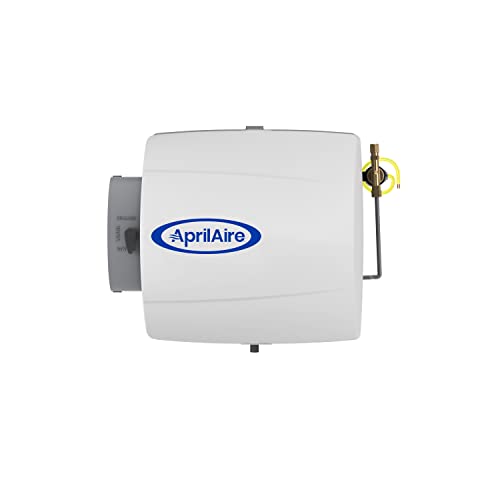
AprilAire 500M manual compact bypass humidifierBest EntryAprilAire 500M manual compact bypass humidifierAprilAire 500M12 gallons per dayUp to 3,600 sq ft in tight homesManual, single indoor sensorBypass, uses furnace airflow
AprilAire 600M manual high-output humidifierBest for Big HomesAprilAire 600M manual high-output humidifierAprilAire 600M17 gallons per dayUp to 5,000 sq ft in tight homesManual, single indoor sensorBypass, high output
AprilAire 800 automatic steam humidifierBest for Very Large HomesAprilAire 800 automatic steam humidifierAprilAire 800Six selectable levelsUp to 10,300 sq ft in tight homesAutomatic, dual sensorsSteam, electrode technology
DIGI MISTER duct-mount atomizing humidifierBest Alternative DesignDIGI MISTER duct-mount atomizing humidifiern/an/an/an/aDuct-mount atomizing mist

A whole-house humidifier connects to the furnace, the water line and a drain, then puts moisture into the air that the heating system already moves. The result is even humidity in every room with no tank to fill.

The catch is that the machine has to match the house and the furnace. Output, control type and how the unit gets air through the water panel decide whether the humidity really reaches the number you set.

Before you buy

6 Criteria to Look For Before Buying a Whole-House Humidifier

  1. 01

    Choose bypass, fan-powered or steam

    Bypass units like the 500M and 600M borrow furnace airflow and have no fan, which is cheapest but depends on the blower. A fan-powered unit like the 700 adds its own fan, and a steam unit like the 800 boils water and works with cool supply air. Match the type to your furnace and house size.

  2. 02

    Compare gallons per day on the same basis

    The 500M lists 12 gallons per day, the 600M 17 and the 700 18. Some brands quote higher figures at a hotter plenum temperature, and the usual rating basis is a stated temperature around 120 degrees Fahrenheit. Compare units on the same basis, and remember that real output depends on the house.

  3. 03

    Understand coverage numbers

    The 500M's 3,600 square feet and the 600M's 5,000 apply to tightly built homes. A leaky older house needs more output than its size suggests, and a very tight house needs less. Treat the coverage as a ceiling and check it against your construction. A house with new windows and sealed ducts holds moisture well, so a smaller unit does the job, while a drafty century-old house loses humidity as quickly as you add it. Count windows, check for gaps around doors and consider the ceiling height, since a tall open-plan house has more air to humidify than the floor area suggests.

  4. 04

    Pick manual or automatic

    A manual unit has one indoor sensor and you adjust it by season, while an automatic unit adds an outdoor sensor so the target drops as it gets colder. That limits window condensation without your help. Manual saves money, automatic saves attention. If you are the kind of person who adjusts the thermostat daily, a manual humidistat will not bother you, but if the unit lives in a basement and you forget it exists, the automatic model protects your windows and your woodwork from the consequences of a setting that no longer suits the weather.

  5. 05

    Check your heating system

    Evaporative units need warm supply air to evaporate water, so heat-pump homes with cooler supply air get less output. Steam units like the 800 solve that, at higher running cost. Ask your installer what your supply air temperature really is. Heat-pump systems often deliver air that is only mildly warm, and an evaporative panel in that stream may produce well under its rated output, so a number on the box is not a promise. A fan-powered unit helps with airflow but not with temperature, which is why steam enters the discussion for those homes.

  6. 06

    Budget for the panel and the water

    Water panels need replacement about once per heating season, hard water shortens their life and cleaning removes only surface scale. A drain line and a hot water supply give the best output. Count the yearly panel cost as part of ownership, not an afterthought. Installing the unit and swapping the panel are easiest in early fall, before the heating season starts and the furnace is already running, and a spare panel on the shelf means a mid-winter failure never leaves the house dry. If you have a water softener, feed the humidifier from the hot line before the softener where the installer allows it, since softened water can leave a slick residue on some panels.

Detailed reviews

The 6 best whole-house humidifiers, explained

01
AprilAire 700 automatic fan-powered whole-house humidifier
18 gal per dayUp to 5,300 sq ftFan poweredDual sensors
Check price on Amazon
Best for: Large homes with a forced-air furnace where output must not depend on the blower.

The 700 is the fan-powered member of the family. Bypass units borrow the furnace blower's airflow, so their output rises and falls with how hard the system pushes, but the 700 adds its own fan and works independently of that. Output is listed at 18 gallons per day, with coverage up to 5,300 square feet in tightly built homes.

The automatic version carries dual sensors, one indoors for relative humidity and one outdoors for temperature, so the target humidity drops as it gets colder, which limits window condensation. The tradeoff is cost and a more involved installation, since the fan needs power and the unit is larger. Against the 600 it moves more water and does not depend on the furnace blower, and against the 800 steam it has no boiler and no dedicated circuit.

Ownership is a water panel replaced about once per heating season, with hard water shortening its life. Installing and swapping the panel in fall is the easy way to keep it on schedule.

What works

  • Own fan makes output independent of the furnace blower
  • 18 gallons per day listed
  • Outdoor sensor lowers the target as it gets colder
  • Large coverage in tightly built homes

Watch out for

  • Needs power and a bigger installation
  • Water panel needs yearly replacement

Spec sheet

Model
AprilAire 700
Output
18 gallons per day
Coverage
Up to 5,300 sq ft in tight homes
Airflow
Own fan, not furnace blower
Control
Automatic, indoor and outdoor sensors
02
AprilAire 700M manual fan-powered humidifier
18 gal per dayManual humidistatFan powered5,300 sq ft listed
Check price on Amazon
Best for: Large homes where the owner is happy to adjust the humidistat by hand.

The 700M is the same fan-powered machine with a manual control instead of the automatic one. A single indoor sensor monitors relative humidity, and you adjust the setting as the weather changes, which is the main chore the automatic version removes.

It is the cheaper route to the same output and the same fan, which suits owners who do not mind turning a dial in November and again in January. The compromise is condensation: without an outdoor sensor, the setting stays where you left it as the temperature drops, and windows can fog. Against the 700 it gives up automatic adjustment in return for a lower price.

Expect to change the water panel every heating season and to turn the humidistat down on the coldest nights.

What works

  • Same 18 gallons per day and own fan as the 700
  • Simple manual humidistat
  • Lower cost than the automatic model
  • Fan makes output independent of the blower

Watch out for

  • Must be adjusted as the weather changes
  • Windows can fog if the setting is left too high

Spec sheet

Model
AprilAire 700M
Output
18 gallons per day
Coverage
Up to 5,300 sq ft in tight homes
Control
Manual, single indoor sensor
Airflow
Own fan
03
AprilAire 500M manual compact bypass humidifier
12 gal per day3,600 sq ft listedManual controlCompact
Check price on Amazon
Best for: Average-size homes with a forced-air furnace and a modest budget.

The 500M is the compact bypass unit and the entry point for an average house. It borrows the furnace blower's airflow to move air through a water panel, so it has no fan of its own and the lowest cost and noise of the family. Output is 12 gallons per day, listed for up to 3,600 square feet in tight homes.

A single indoor sensor gives manual control, so you adjust the setting through the season. The tradeoff is dependence on the blower: when the furnace is idle, no air moves through the panel, and in homes with a weak blower output suffers. Against the 600 it is smaller and lighter on water, and for a typical house that is plenty.

Change the panel once a season, set the damper to summer position in the warm months and keep the HVAC filter clean for airflow.

What works

  • Lowest cost and size in the AprilAire range
  • 12 gallons per day listed
  • No fan of its own to fail
  • Simple manual control

Watch out for

  • Output depends on the furnace blower
  • Manual setting needs seasonal adjusting

Spec sheet

Model
AprilAire 500M
Output
12 gallons per day
Coverage
Up to 3,600 sq ft in tight homes
Type
Bypass, uses furnace airflow
Control
Manual, single indoor sensor
04
AprilAire 600M manual high-output humidifier
17 gal per day5,000 sq ft listedManual controlBypass
Check price on Amazon
Best for: Larger homes with a strong furnace blower and a manual preference.

The 600M is a bypass unit with a larger water panel, delivering 17 gallons per day for up to 5,000 square feet in tightly built homes. It takes the same installation approach as the 500M but with more capacity.

The larger output is only as good as the blower behind it, because there is still no fan of its own. In a big house with a weak system it will fall short of its rating, which is where the fan-powered 700 earns its premium. It uses the same manual control as the 500M and 700M.

Plan for panel replacement each heating season and use hot water supply to the unit if you can, since that gives the best output.

What works

  • 17 gallons per day listed
  • Larger panel than the 500M
  • Same simple manual control
  • No extra fan to maintain

Watch out for

  • Output still depends on the blower
  • Manual control needs seasonal adjusting

Spec sheet

Model
AprilAire 600M
Output
17 gallons per day
Coverage
Up to 5,000 sq ft in tight homes
Type
Bypass, high output
Control
Manual, single indoor sensor
05
AprilAire 800 automatic steam humidifier
Steam electrodeUp to 10,300 sq ft6 output levelsDual sensors
Check price on Amazon
Best for: Very large homes and heat-pump systems.

The 800 is a steam humidifier: it boils water with electrodes and releases steam, so it does not rely on warm air passing through a panel. That makes it the right tool for very large homes and for heat-pump systems, where supply air is not warm enough for an evaporative unit to give full output.

Six output levels let you set capacity to the size of the house, and automatic control uses indoor and outdoor sensors. The costs are the electricity to boil water, a dedicated circuit and mineral scale inside the cylinder, which is a consumable you replace. There is no water panel, but there is a cylinder that needs service in hard water. Against the 700 it handles bigger homes and cooler supply air, at higher running cost.

Have it installed by someone who handles the electrical and plumbing work, and plan for periodic cylinder replacement. Because steam is hot, the distribution tube and mounting location matter, and a poor installation can drip condensate or spit water, so choose a qualified installer rather than relying on a general handyman. In very large homes it can also be a reliable partner for a fan-powered unit on another floor.

What works

  • Steam output does not need warm supply air
  • Six levels sized to the house
  • Automatic indoor and outdoor control
  • Up to 10,300 sq ft listed

Watch out for

  • Needs a dedicated circuit and boils water
  • Cylinder wears out in hard water

Spec sheet

Model
AprilAire 800
Type
Steam, electrode technology
Coverage
Up to 10,300 sq ft in tight homes
Output
Six selectable levels
Control
Automatic, dual sensors
06
DIGI MISTER duct-mount atomizing humidifier
Atomizing nozzles1 to 5 nozzlesCompact cutoutObservation window
Check price on Amazon
Best for: Homeowners who want adjustable capacity and no water panel.

The DIGI MISTER takes a different route: instead of a water panel, it sprays a fine mist from nozzles into the warm duct air. You change capacity by using one to five nozzles and by adjusting water pressure, and a patented compact design needs only a small cutout.

There is no wick to replace, and an observation window lets you check the mist visually. Atomizing nozzles can clog with minerals and need cleaning, and the system is less common, so installers and replacement parts are harder to find than for the main brand. Against the AprilAire bypass units it has fewer wearing parts but more fiddly setup.

Use softened or filtered water where you can, and check the nozzles at the start of the season. Because the water is atomized straight into the duct, deposits can build on the duct walls if the setting is too high, so keep the output modest and inspect the duct near the nozzles once a year. This is a system for owners who like tuning things, not for those who want a fit-and-forget panel.

What works

  • Capacity adjustable with 1 to 5 nozzles
  • No water panel to replace
  • Compact cutout for installation
  • Observation window shows mist status

Watch out for

  • Nozzles can clog with minerals
  • Less common, so parts and installers are scarcer

Spec sheet

Type
Duct-mount atomizing mist
Capacity
Adjusted by 1 to 5 nozzles
Install
Small cutout in the duct
Water
Pressure adjustable
Service
Observation window

Spec sheet decoder

What the numbers on the box really mean

The specs manufacturers lead with, translated into what they tell you about real-world performance.

Gallons per day

The maximum water the unit can evaporate in 24 hours at a stated condition. It is the best measure of output.

Watch forThe 500M's 12, 600M's 17 and 700's 18 are rated at a stated plenum temperature.

Bypass

The unit draws warm air from the plenum through a water panel and returns it, using the furnace blower.

Watch forOutput falls when the blower is off or weak.

Fan-powered

The unit has its own fan, so output does not depend on the furnace blower.

Watch forThe 700 and 700M need power for the fan.

Steam

Water is boiled by electrodes and released as steam. It needs electricity and a dedicated circuit.

Watch forThe 800 has no panel but has a cylinder that wears in hard water.

Automatic vs manual

Automatic units use an outdoor sensor to lower the humidity target as it gets colder.

Watch forA manual unit left at a high setting can fog windows on cold nights.

Methodology

How We Evaluated These Whole-House Humidifiers

Output and house fit

We compared gallons per day and listed coverage across the lineup. The 700's 18 and the 800's steam levels led, and the 500M's 12 suited average houses. Coverage was treated as a ceiling.

Airflow design

Bypass, fan-powered and steam designs were weighed against how well each copes with weak blowers and cool supply air. The 700 and 800 earned credit where the blower is the limit.

Controls

Manual and automatic controls were compared. The outdoor sensor on the 700 and 800 earned credit for limiting condensation. Manual models were rated on simplicity and price.

Ownership

Panel and cylinder replacement, drain needs and hard water effects were reviewed using owner feedback patterns. The DIGI MISTER lost points for nozzle clogging and scarcer parts.

Installation

We noted the plumbing, electrical and duct work needed. The bypass units were easiest, the fan-powered units added power, and the steam unit needed a dedicated circuit.

Decision guide

How to Choose the Right Whole-House Humidifiers

By House Size

SituationPickWhy
Average tight houseAprilAire 500M12 gallons per day listed for 3,600 sq ft
Larger house, strong blowerAprilAire 600M17 gallons per day for 5,000 sq ft
Large house, any blowerAprilAire 700Own fan and 18 gallons per day
Very large or heat-pump homeAprilAire 800 steamUp to 10,300 sq ft listed

By Budget

PriorityPickWhy
Lowest tierAprilAire 500MCompact bypass unit
Low to midAprilAire 600MMore output, same manual control
MidAprilAire 700MFan-powered with manual control
Highest tierAprilAire 800 steamSteam with six output levels

Bypass vs Fan-Powered

Bypass

The 500M and 600M have no fan and borrow the furnace blower. They cost less and make less noise, but output depends on the blower.

Fan-powered

The 700 and 700M add their own fan, so output does not depend on the furnace. They cost more and need power.

Choose bypass for a strong system and fan-powered where the blower is weak or the house is large.

Manual vs Automatic

PreferencePickWhy
Set it and forget itAprilAire 700Automatic with outdoor sensor
Adjust it myselfAprilAire 700MManual humidistat
Low cost and manualAprilAire 500MSingle indoor sensor
Adjustable capacityDIGI MISTER duct unit1 to 5 nozzles

For Heat-Pump Homes Specifically

Look for

A steam design that does not need warm supply air, or a fan-powered unit paired with an installer's confirmation of supply air temperature.

In this comparison

The AprilAire 800 steam works independent of supply air temperature, while evaporative units like the 500M give less output on cool air.

When to Spend More

Spend more if

The house is large, leaky or heated by a heat pump, which points to the 700 or 800.

Save if

The house is average and tight, where the 500M is enough.

Ownership

Maintenance schedule

The upkeep that decides whether this machine lasts two seasons or ten.

TaskIntervalWhy it matters
Replace the water panelOnce per heating seasonScale clogs the panel and cuts output. Hard water shortens its life.
Clean the drain and baseStart of seasonMineral deposits block the drain. A vinegar rinse keeps it clear.
Set the damper for summerEnd of seasonThe bypass damper should close in warm months. Turn off the water supply too.
Change the HVAC filterEvery one to three monthsA clogged filter reduces airflow and bypass output.
Service the steam cylinderAs the unit signalsMinerals coat the electrodes. Replace the cylinder when the unit prompts.

FAQ

Frequently Asked Questions

What is the difference between bypass and fan-powered?

A bypass unit uses the furnace blower and has no fan of its own. A fan-powered unit has its own fan, so output does not depend on the furnace.

What humidity should I set?

Typically 30 to 40 percent in winter. Higher causes window condensation and mold risk, especially on cold nights.

Do I need a drain line?

Yes for most units. Hot water supply and a drain give the best output and keep scale from sitting in the unit.

Will it work with a heat pump?

Evaporative units give less output on cool supply air. A steam unit like the 800 is designed for that case.

How often does the panel need replacing?

About once per heating season, sooner in hard water. Cleaning only removes surface scale.

Is a whole-house humidifier worth it?

In a house with dry winters and a forced-air system, yes, because it humidifies every room without a tank. Without ducts, a large console is the better choice.

Bottom line

The short version

Browse more whole-house humidifierson Amazon →
James Miller, Lead Machine Editor

About the author

James Miller

Lead Machine Editor, MachineFanatic

James Miller leads MachineFanatic's buying guides, turning spec sheets, manuals and owner feedback into clear verdicts on power tools, outdoor power equipment, shop machines and kitchen machines.

More from James →

Keep reading

Related guides