
What blade gap actually means
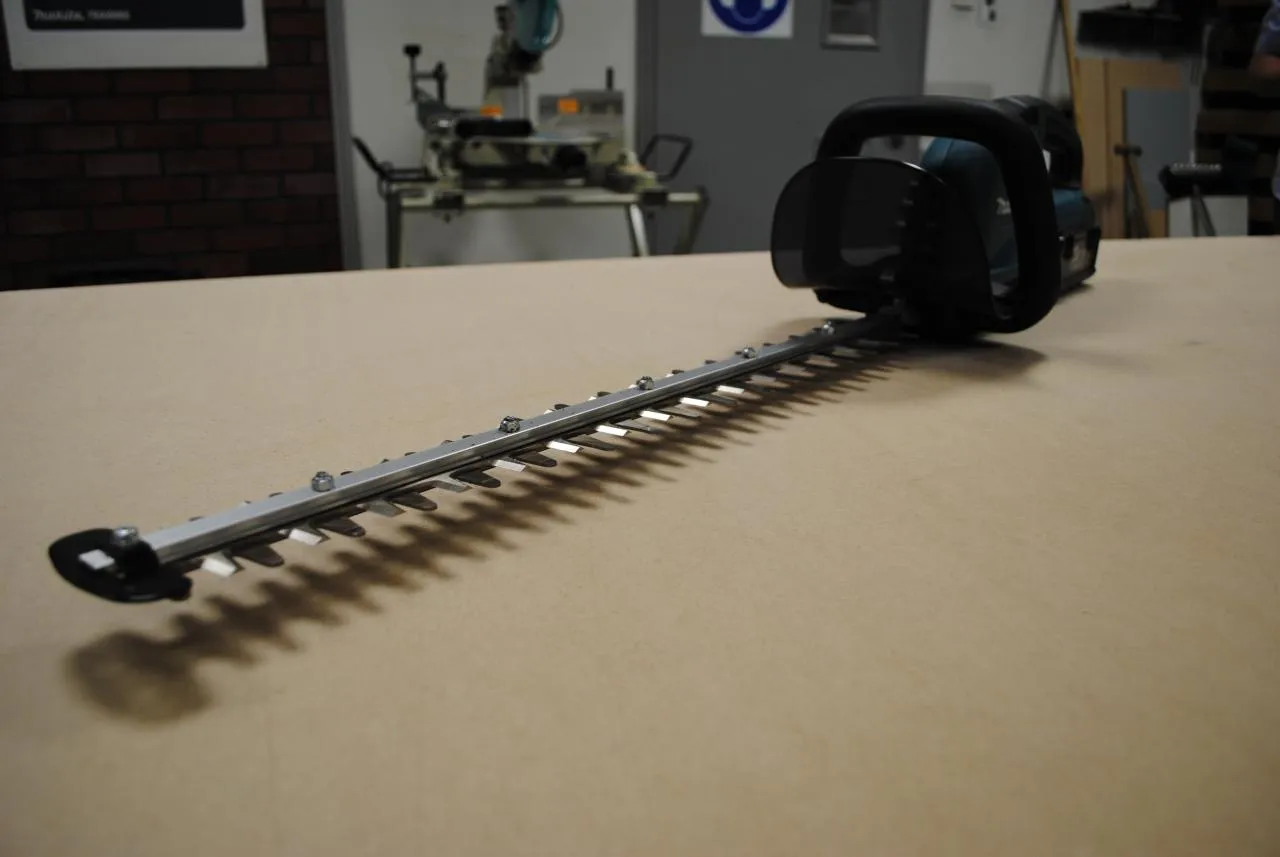
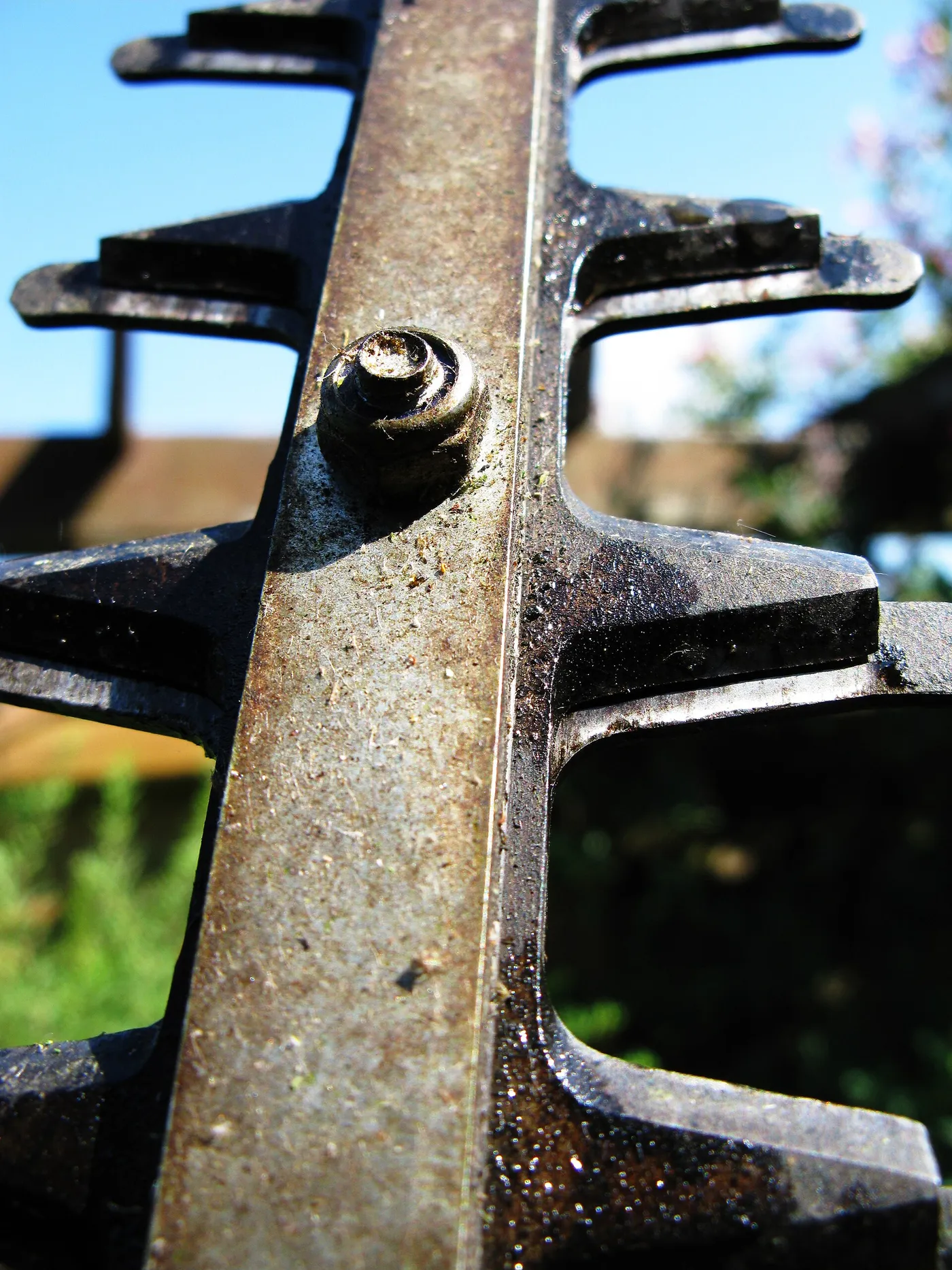
Look closely at the cutting bar of any hedge trimmer and you will see a row of teeth, each one a small hook with a gap in front of it. A stem has to slide into that gap before the moving blade closes over it. If the stem fits, it gets trapped between the two blades and sheared off. If it does not fit, the tooth simply bounces off the wood or shoves the branch sideways.
That opening is the blade gap, and it is the single number that decides how thick a branch the trimmer can cut. Manufacturers often print it on the box as "cutting capacity" or "tooth spacing," usually in inches or millimeters. It is easy to overlook because shoppers chase blade length and battery voltage instead, but gap is the spec that tells you what the machine can physically do to your hedge.
How the two blades cut
A hedge trimmer does not slice like a knife. It works more like a pair of scissors laid flat. One blade stays fixed while the other slides back and forth, or both slide in opposite directions on a dual action design. Each tooth carries a sharpened edge, and as the moving blade passes the fixed one, the two edges close and shear whatever stem is caught between them.
Because the cut happens at the tooth, the strength of the cut depends on three things: how sharp the edges are, how fast the blade moves, and how much of the stem is trapped when the edges meet. The gap controls the third factor. A narrow gap traps small stems cleanly but refuses thick ones. A wide gap swallows thicker wood, but it also lets small, flexible twigs slip through without a clean cut unless the blade is moving quickly.
Single action and dual action
On a single action trimmer, only one blade moves, and the other is a fixed comb. This design is simple and light, but it vibrates more because all the motion is on one side. A dual action trimmer moves both blades in opposite directions. That roughly halves the vibration for the same cutting speed and tends to cut more smoothly, which is why most mid-range and premium trimmers use it. Our comparison of single sided and double sided hedge trimmers covers the blade layout side of this choice, while this article stays on the gap itself.
Typical cutting capacity numbers
Published capacities cluster in a fairly narrow band. Homeowner electric and battery trimmers are commonly rated somewhere around 5/8 to 3/4 inch. Heavy professional gas trimmers go up to about 1 inch. Compact pole trimmers and small battery models often sit below that, closer to 1/2 inch. Rating methods differ between brands, so read capacity as a guide rather than a guarantee, and always check the spec sheet for your exact model.
| Trimmer class | Typical capacity | What it cuts well |
|---|---|---|
| Compact battery or corded | About 1/2 inch | New growth, boxwood, privet shaping |
| Standard homeowner battery | About 5/8 to 3/4 inch | Most mature hedges kept up each year |
| Heavy duty or gas | Up to about 1 inch | Overgrown hedges, thicker woody stems |
| Pole hedge trimmer | Often about 1/2 inch | Tall hedges, light shaping from the ground |
These are conservative ranges drawn from commonly published specifications. If your manual lists a different capacity, trust the manual.
Blade length is not capacity
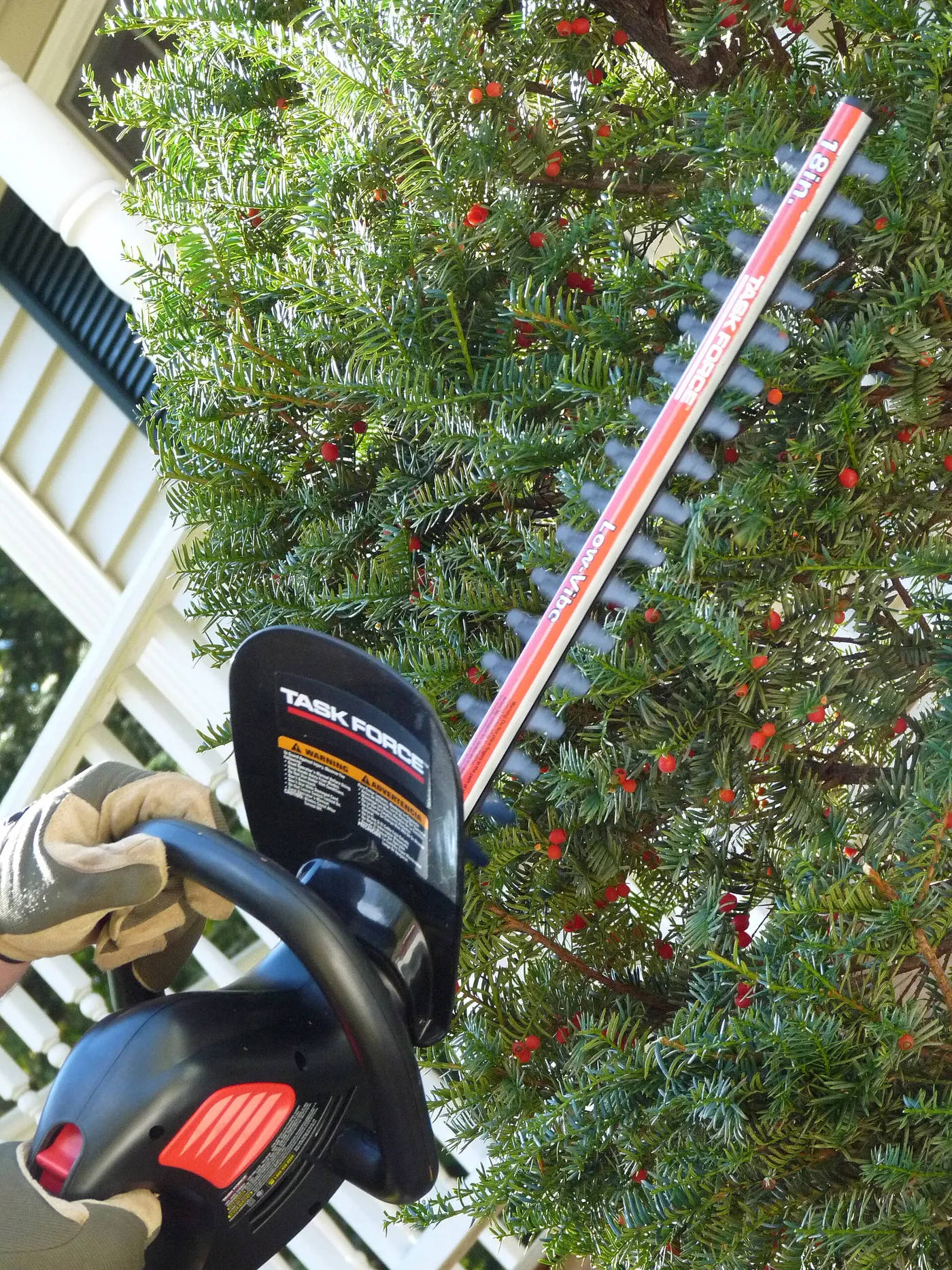
The most common misunderstanding in this category is that a longer blade cuts thicker branches. It does not. Blade length sets the width of each pass, so a 24 inch bar clears a wider strip of hedge than an 18 inch bar. The thickness of stem each tooth can handle is set by the tooth gap and the motor behind it.
A longer blade also makes a trimmer heavier at the tip, which tires your arms faster and makes precise shaping harder. For a short, formal hedge, a shorter blade gives you better control. For a long, straight run of privet, a longer bar saves time. Match the length to the shape of the job, then check the gap separately. If you are comparing models, our cordless hedge trimmer comparison lists length and capacity side by side for each pick.
Why thick stems push away instead of cutting
When you feed a branch too thick for the gap into the blade, the tooth hits the side of the wood and cannot hook around it. The moving blade then pushes the branch outward, away from the cutting edge, and the trimmer chatters or stalls. Pushing harder makes it worse, because the extra force only drives the stem further out of reach of the shearing action.
This is also why a trimmer jams more on a dense, overgrown hedge than on a tidy one. Inside a neglected hedge there are old woody stems that the machine was never designed for. The blade can chew leaves and thin tips all day, but a single thick branch can stall it and, with a battery model, pull the pack down quickly.
Strokes per minute: the other half of the equation
Gap tells you how thick a stem fits. Blade speed, measured in strokes per minute, tells you how cleanly the blade cuts the stems it can catch. A faster stroke rate shears leaves and flexible green shoots with less tearing, which gives a neater surface. A slower rate can leave ragged cuts and drag on soft growth, but it often pairs with higher torque, which helps on thicker stems.
This is a real trade, not a free upgrade. A trimmer that advertises very high strokes per minute may cut soft hedges beautifully but struggle with older wood, while a lower-speed, higher-torque trimmer may suit mixed hedges better. Manufacturers do not always list torque, so read the capacity figure and the blade type together rather than chasing a single big number.
| If your hedge is | Prioritize | Why |
|---|---|---|
| Soft, new growth, trimmed often | Higher stroke rate | Cleaner finish on flexible shoots |
| Mixed with some woody stems | Rated capacity of 3/4 inch or more | Gap and torque handle the thicker stems |
| Overgrown, neglected for years | Heavy duty gap, or loppers first | Old wood needs a different tool |
| Tall, out of reach | Pole trimmer with a pivoting head | Reach and angle matter more than gap |
Tooth profile and blade design
Gap is not the only thing that shapes how a blade behaves. The tooth profile, meaning how the teeth are ground and how far they extend, affects how aggressively the blade pulls in a stem. A tooth with a deep hook pulls a branch toward the shear point and holds it there. A shallow tooth can let a stem slip out sideways before the cut completes.
Some blades are laser cut and then ground for sharpness, others are stamped and finished. Both can cut well, but a poorly finished blade dulls quickly and demands more force. Look for a blade that the maker describes as hardened or diamond ground, and check whether it is a closed-tip design, which has a safer, rounded tip, or an open-tip design, which allows trimming into corners.
Teeth on one side or both
A single-sided blade has teeth on only one edge of the bar, which makes the other edge safer to rest against a wall or fence. A double-sided blade has teeth on both edges, so you can cut in both directions without turning the trimmer. Neither changes the gap, but double-sided blades expose more cutting edge, so the safety notes below matter more with them.
When the trimmer is the wrong tool
If a stem is thicker than your trimmer's rated gap, do not force it. Cut it with loppers or a pruning saw first, then finish the shape with the trimmer. A bypass lopper handles stems from about the thickness of a pencil up to more than an inch, depending on the handle length and the lopper's rating. A pruning saw takes anything a lopper cannot.
This is the technique that experienced gardeners use on an overgrown hedge. They do not try to make the trimmer do everything. They thin out the woody framework by hand, then let the trimmer shape the outer layer of soft growth. The result is faster, safer and much easier on the motor and battery.
Reading a hedge trimmer spec sheet
A spec sheet lists several numbers that look related but mean different things. Use this to decode them.
- Blade length: the cutting bar length in inches. It sets pass width, not capacity.
- Cutting capacity or tooth spacing: the gap, which sets the thickest stem. This is the number that matters most for woody hedges.
- Strokes per minute: how fast the blade moves, which affects cut quality on soft growth.
- Voltage and amp hours: the power source size. Higher voltage does not change the gap, but a stronger battery holds blade speed under load.
- Blade type: single or dual action, which affects vibration and smoothness.
- Weight: the whole machine, often listed without the battery. Add the battery for the real figure.
When two trimmers list the same capacity, the one with the stronger drivetrain and the better blade will hold up better on stems near the limit. If you want to compare real options by class, our guides to 40V cordless hedge trimmers and hedge trimmers sold with batteries and chargers show how capacity and length vary across lineups.
How the power source affects real capacity
A hedge trimmer's rated gap is what the blade can physically accept. Whether the machine actually cuts at that limit depends on motor torque and, on battery models, how well the pack holds voltage under load. A modest pack on a heavy hedge will sag and slow the blade, and a slow blade tears stems instead of shearing them.
If you often cut near the maximum capacity, choose a trimmer with a larger battery or a more powerful motor, not just a trimmer with a bigger number on the box. Gas models deliver steady torque without battery sag, but they are louder, heavier and need fuel and spark plug care. Corded electric models give constant power and are the lightest option, but the cord limits where you can cut.
| Power source | Torque under load | Trade-off |
|---|---|---|
| Corded electric | Steady | Cord limits reach and can be cut |
| Battery | Good, drops as the pack drains | Runtime and pack size matter |
| Gas | Strong and steady | Heavier, louder, needs fuel care |
Cutting technique that protects the blade
Technique shapes how long your blades stay sharp and how often the motor stalls. The aim is to let the blade do the work and keep it moving through soft growth while avoiding wood it cannot take.
- Start the trimmer in open air and let the blade reach full speed before it touches the hedge.
- Cut with the blade tilted slightly so the lower edge leads, and sweep in an arc rather than pushing straight in.
- Work from the bottom of the hedge upward on the sides, so the clippings fall away and you can see your line.
- Trim the top last, keeping the blade flat and using a string line to keep it level on formal hedges.
- If the blade slows or chatters, stop. Check for a thick stem and cut it with loppers instead.
- Clear leaf buildup from the blade as you work, because packed leaves cause drag.
Keep your hands and body clear of the blade path, and never cut above shoulder height with a hand-held trimmer. A pole trimmer is the correct tool for tall sections.
Blade care and why it changes real capacity
A dull blade behaves as though its gap were smaller. The teeth no longer shear cleanly, so stems that would normally cut pull and tear instead. Keeping the blade clean and lightly oiled preserves cutting performance for years.
- Clean after every use. Wipe sap and plant resin off the blade, because resin makes the blades stick and drag.
- Lubricate. Apply a light blade oil or the lubricant your maker recommends before and after use.
- Inspect. Look for chipped teeth, bent tips and loose blade bolts. A damaged tooth cuts poorly and can snag.
- Sharpen or replace. Some blades can be sharpened with a fine file following the original angle. Others are meant to be replaced. Check your manual.
- Store dry. Put the blade cover on and keep the trimmer out of damp spaces to prevent rust.
Before any blade work, remove the battery, unplug the cord or disconnect the spark plug wire on a gas unit so the trimmer cannot start.
Safety notes
A hedge trimmer blade is a fast, exposed cutting edge. Wear eye protection, sturdy gloves and long sleeves. Hold the trimmer with both hands on the handles and keep the blade away from your legs. Most trimmers have a blade brake that stops the blades quickly after you release the trigger, but you should never rely on it as your only protection.
Do not trim in wet conditions with an electric model, check the hedge for wires, hidden fences and bird nests before you start, and keep children and pets away. Follow the instructions in your own machine's manual for operation, maintenance and storage, since each model differs.
Matching gap and size to your hedge
Use the hedge you actually own as the guide, not the one you imagine. Measure its length, estimate how thick its woody stems are, and note how often you trim it.
| Your hedge | Gap you need | Blade length |
|---|---|---|
| Short boxwood border, trimmed twice a year | 1/2 inch is enough | 18 to 20 inches |
| Mature privet or laurel, trimmed yearly | 5/8 to 3/4 inch | 20 to 24 inches |
| Long run of leylandii or yew | 3/4 inch or more | 22 to 26 inches |
| Overgrown or neglected | Loppers first, then 3/4 inch | Choose for the shape |
| Tall hedge above head height | 1/2 inch on a pole trimmer | Pole length, not bar length |
If you are shopping on a budget, compare the capacity figure on entry-level options in our budget hedge trimmer guide against mid-range models in the next tier up, since capacity often rises with the price class.
Frequently Asked Questions
What is the blade gap on a hedge trimmer?
It is the opening between neighboring teeth on the blade. The stem has to fit into that opening before the blades can shear it. Manufacturers usually list it as cutting capacity or tooth spacing, and it is typically around 5/8 to 3/4 inch on homeowner models.
Does a longer blade cut thicker branches?
No. Blade length only sets how wide each pass is. Capacity is decided by the tooth gap and the motor torque behind it, so a long blade and a short blade with the same gap cut the same thickness.
Can I cut a branch thicker than the rated capacity if I push harder?
No, and you should not try. A stem thicker than the gap pushes out of the blade, which stalls the motor, strains a battery and can damage the teeth. Use loppers or a pruning saw for anything beyond the rating.
Is a higher stroke rate always better?
Not always. A high stroke rate gives a cleaner cut on soft, flexible growth, but a slower, higher-torque trimmer can handle thicker wood better. Choose based on whether your hedge is mostly soft shoots or mixed with woody stems.
How often should I clean and oil the blades?
Wipe off sap after each use and apply a light blade lubricant before and after trimming. Clean, lubricated blades stay sharper longer and behave closer to their rated capacity.
Are pole hedge trimmers weaker than hand-held ones?
They are often rated lower, commonly around 1/2 inch, because the weight and reach of the pole limit the motor size. They are the right choice for tall, soft growth, but not for thick wood.
Bottom line
Blade gap, not blade length, decides how thick a stem your hedge trimmer can cut. For most homeowners a rated capacity of roughly 5/8 to 3/4 inch is the practical target, and a heavy hedge with older wood calls for loppers and a saw before the trimmer comes out. Choose length for the shape of the hedge, choose gap and power for the thickness of its stems, keep the blade clean and lubricated, and never force a stem the gap cannot take.