
The blade question buyers rarely ask
Most hedge trimmer shopping starts with blade length and battery voltage. The detail that quietly changes how the tool feels is whether the blade has teeth on one edge or on both. It decides whether you can sweep back and forth in one continuous motion, how easy it is to trim a precise shape and how the tool behaves if you hit a thicker branch.
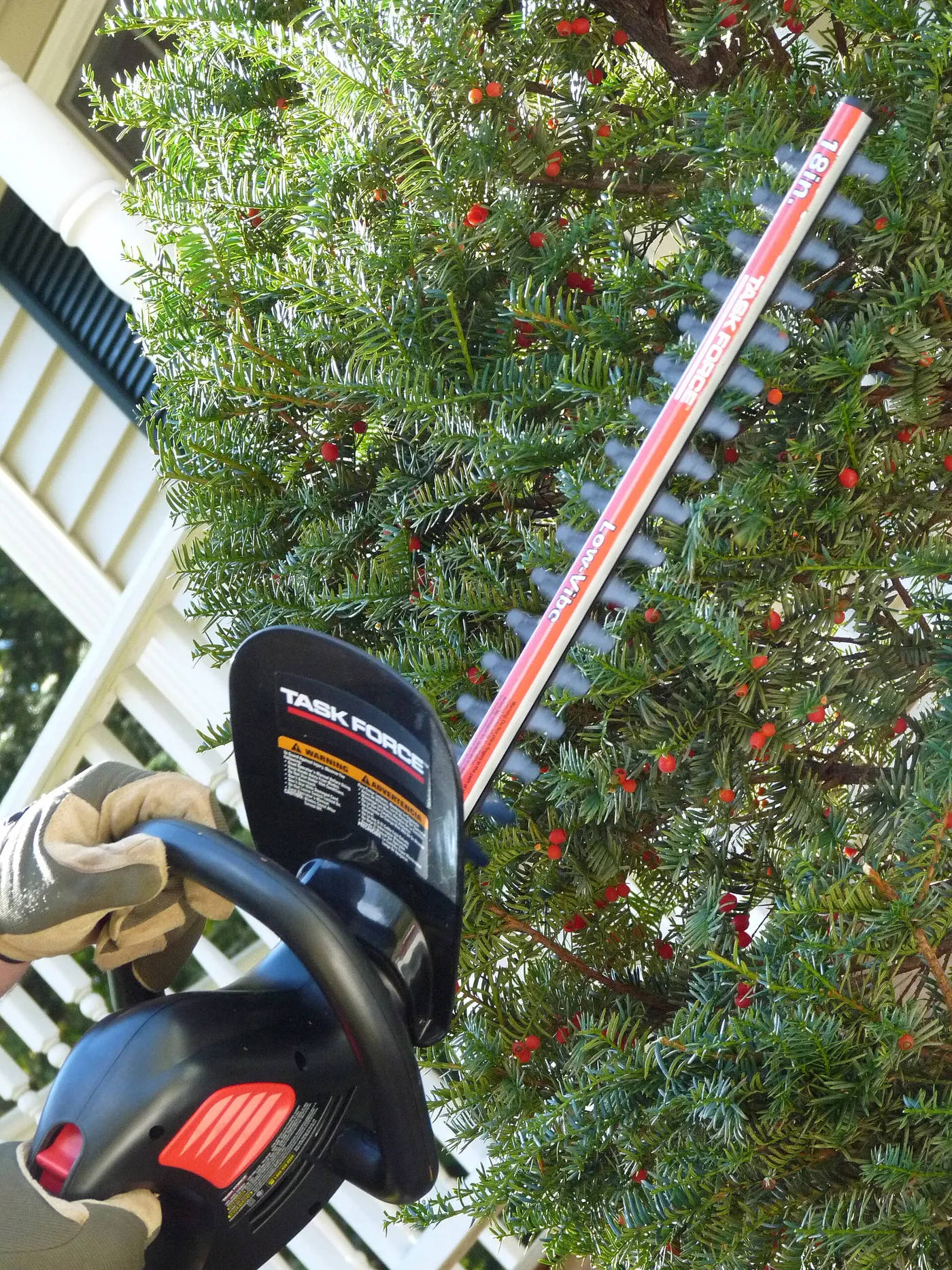
The difference is easy to see once you know to look for it. Turn a hedge trimmer on its side and look along the blade. A single-sided blade has a row of teeth on one edge and a smooth, flat spine along the other. A double-sided blade has teeth along both edges, and no flat spine. Everything else follows from that.
How hedge trimmer blades cut
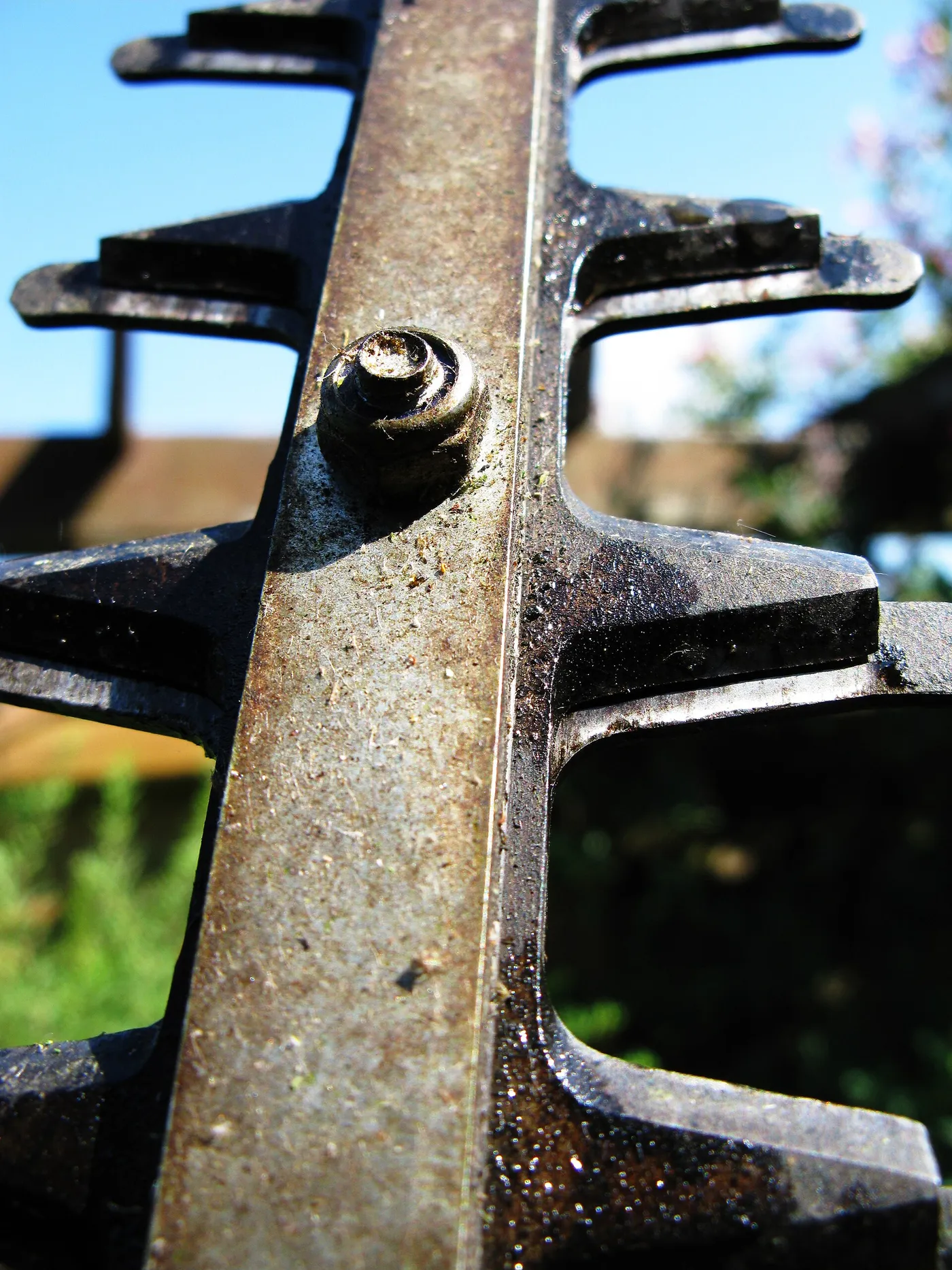
A hedge trimmer cuts with a scissor action. Two toothed blades slide against each other, and branches caught between the teeth are sheared. Normally one blade moves while the other stays still, which is called single-action, or both blades move in opposite directions, which is called dual-action. Dual-action blades reduce vibration, because the opposing motions cancel some of the shaking, and they tend to cut slightly faster and cleaner.
That is a separate spec from single-sided or double-sided, and it is worth keeping the two apart. The words describe where the teeth are, not how the blades move. A trimmer can be double-sided and single-action, or single-sided and dual-action, and the combination changes how it feels.
The gap between teeth sets the thickness of branch the trimmer can take. Wider spacing handles thicker stems, and narrow spacing leaves a smoother, finer cut on soft growth. Makers usually list a cutting capacity, a maximum branch diameter, in the specifications. Treat it as a ceiling rather than a recommendation.
Single-sided blades in detail
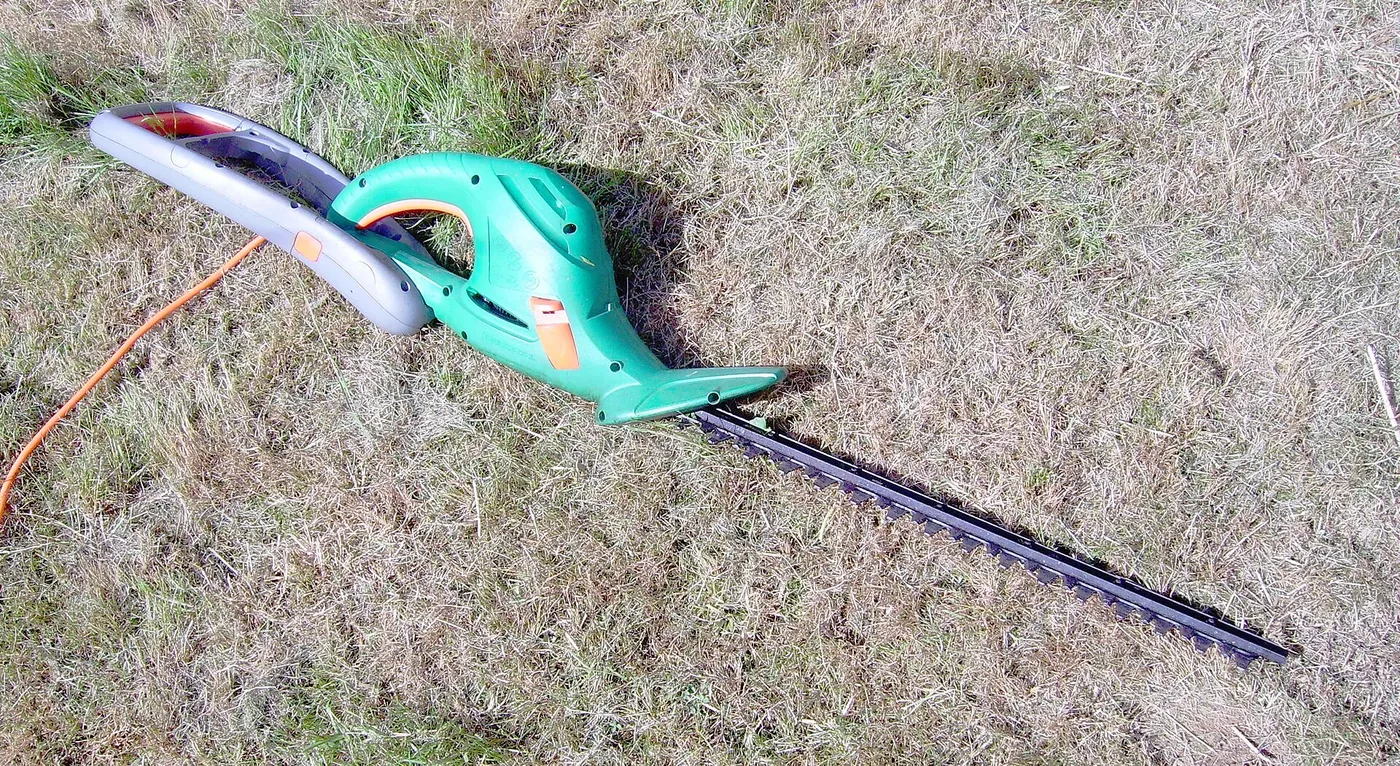
A single-sided blade has teeth on one edge only, with a flat, blunt back on the other. You hold the trimmer so the toothed edge faces the hedge, and you cut with sweeping strokes in one direction, usually pushing forward and across the face.
The flat back is the point of the design. It is safer to rest against the hedge, and it gives you a guide surface for shaping straight or curved lines. You can use it to hold the blade against a tight area or to press the trimmer down a side. It also lets you trim close to walls, fences and other obstacles with less risk of catching a branch on the wrong side.
Single-sided models are often lighter in the hand and sit better for fine control. They suit shaping boxwood, trimming small ornamental hedges, topiary and detail work around flower beds. The cost is speed. You can only cut on the forward stroke of the sweep, so on a large hedge you cover less ground per minute.
Double-sided blades in detail
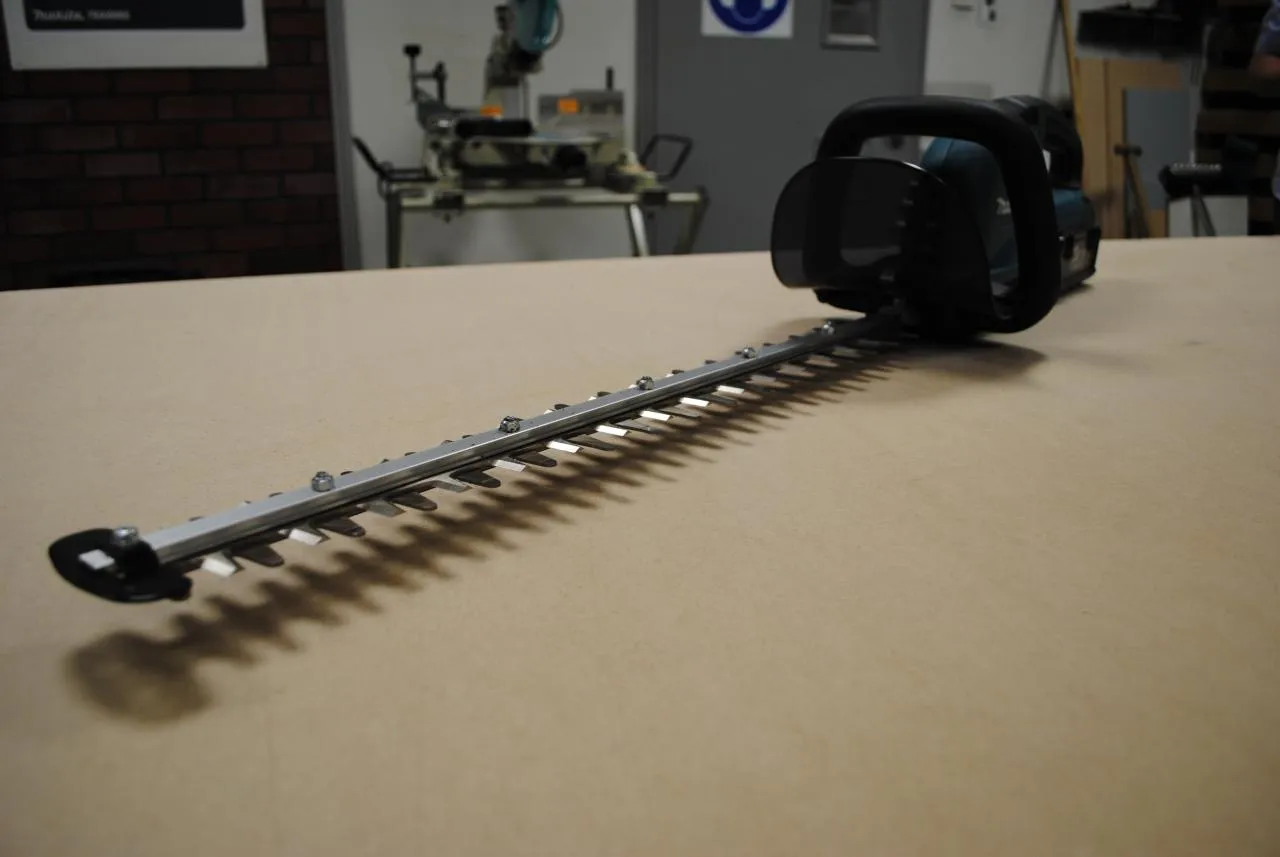
A double-sided blade has cutting teeth on both edges, so it cuts as you sweep in either direction. You can work back and forth without lifting or turning the blade over, and this doubles your useful cutting arc. On long, regular hedges it is noticeably faster.
Double-sided trimmers can cut on both the upstroke and the downstroke, which is useful when you trim the sides of a tall hedge. The tool does more work on each pass, so sessions are shorter and the shaping is quicker once you get a feel for the rhythm.
The cost is control and caution. With teeth on both edges there is no blunt back to rest against, so every edge is a cutting edge. That means more risk of snagging a branch on the wrong side, and a greater need to watch where the blade tip is. It also demands more attention near walls, cables, hands and legs, and many double-sided models are heavier because of the extra blade and housing.
Side by side
| Factor | Single-sided | Double-sided |
|---|---|---|
| Teeth | One edge | Both edges |
| Cutting direction | One stroke | Both strokes |
| Speed on large hedges | Slower | Faster |
| Control for shaping | Better | Needs more care |
| Safety margin | Blunt back as guide | Exposed teeth both sides |
| Typical weight | Often lighter | Often heavier |
| Best for | Topiary, small hedges, detail | Long, straight, regular hedges |
| Beginner friendliness | Higher | Moderate |
Match the blade to the hedge
The kind of hedge in front of you often settles the question. Dense, formal hedges of privet, laurel or conifer, long and flat on top, are classic double-sided territory because speed on straight runs pays off. Rounded, shaped or sculpted plants need finesse more than speed.
- Long straight boundary hedges: double-sided for speed along the flat top and sides.
- Small ornamental hedges and low borders: single-sided for control.
- Topiary and sculpted shapes: single-sided, ideally with a shorter blade.
- Tall hedges trimmed with a pole: check the head design, since many pole hedge trimmers use double-sided blades on a pivoting head.
- Mixed gardens with several hedge types: a double-sided trimmer with a medium blade length covers the most ground, or own both.
Our cordless hedge trimmer roundup notes blade configuration alongside length and battery size, so you can see which models fit which hedge.
How blade length interacts with the choice
Blade length changes how a single or double blade feels. A long blade, 24 inches or more, on a double-sided trimmer covers a wide swath with each pass, but it is heavier at arm’s length and harder to steer. A short blade of about 18 to 20 inches is lighter and gives better control for detailed work, and it suits single-sided models better.
The longer the blade, the more important it is to match the weight to your strength. A long, heavy, double-sided trimmer is fine for a short session on a low hedge and exhausting on a tall one. Holding it above shoulder height for long stretches strains your arms and shoulders, and it is where most cutting accidents happen.
If you have a mix of hedges, consider the trade-off: a medium length gives you a chance to handle most hedges without carrying more weight than you need.
Power source and weight
Hedge trimmers come as corded electric, battery and gas models. Battery trimmers are the most popular for homes, because they are lighter than gas, quiet and free of cords. Corded models are lightweight and cheap and are limited by cord length. Gas models give the most power for thick, overgrown hedges and cut for as long as there is fuel, at the cost of noise, vibration and upkeep.
Weight matters more for hedge trimming than for most tools, because you hold the trimmer extended in front of you, often overhead. Compare weights, not just power ratings. A lighter, single-sided battery trimmer can be a better tool than a heavy double-sided gas one for someone who trims for ten minutes at a time. If your budget is tight, our entry-level trimmer list and mid-price list show what each tier includes in terms of blade type and weight.
Safety features that matter more with double-sided blades
Because double-sided blades expose teeth on both edges, the safety features around them deserve more weight. Look for these.
- Two-handed switch: requires you to hold a front handle and a rear trigger at the same time, which keeps your hand away from the blade.
- Blade guard or shield: a protective bar around the front of the blade and a hand guard in front of the handle.
- Blade brake: stops the blade quickly when you release the trigger.
- Blade cover: a sheath for transport and storage.
- Rotating rear handle: lets you hold the trimmer at the best angle for the face you are cutting.
Cutting technique for each type
With a single-sided blade
Hold the toothed edge against the hedge and sweep in a smooth, steady arc, with the flat back facing away. Work from the bottom of the hedge upward on the sides, and keep the blade slightly angled so the hedge tapers slightly narrower at the top, which lets light reach the lower branches.
With a double-sided blade
Sweep back and forth in long arcs, overlapping each pass, and keep the blade flat to the hedge face. Cut the sides first from bottom to top, then the top last, working in sections. Keep both hands on the handles at all times, and watch the tip as you reach the end of a pass.
For either type, trim a little at a time, and stop and look at the hedge often. You can always remove more, and you cannot put it back.
Reach, obstacles and tight spots
Real hedges are rarely open and flat. They run beside walls, fences, gates, downpipes and flower beds, and they have thick stems at the base and fine growth at the top. Single-sided trimmers handle those tight spots better because the blunt back can rest against a wall or a post without catching it, and the blade tip is easier to place.
Double-sided trimmers need more space around the blade. The teeth on the far edge can snag on a fence wire, a wall plug or a cable if you swing carelessly. That does not make them unsuitable for hedges beside walls, but it asks for slower, more deliberate passes along the boundary, and a habit of checking behind the hedge before you start.
Reach is a separate matter. For tall hedges you can use an extended pole trimmer, which places a pivoting double-sided head at the end of a long shaft. That keeps your feet on the ground and avoids a ladder, though the tool is heavy at the end of a long lever, and sessions should be short.
Vibration, noise and fatigue
Vibration is the part of hedge trimming that makes your hands numb and your forearms ache. Gas trimmers vibrate the most, battery and corded models far less, and dual-action blades cut vibration further because the opposing blade motions cancel part of the shaking. If you have hand or wrist problems, prioritise dual-action blades, a low weight and a cushioned handle over blade configuration.
Noise is the other consideration. Battery trimmers are quiet enough to use without ear defenders for short sessions, though protection is wise for longer work. Gas models need hearing protection. Because hedge trimming involves long reaches, plan your session in short blocks, rest your arms between sections and avoid holding the tool overhead for more than a couple of minutes at a time.
When a hedge trimmer is the wrong tool
Hedge trimmers cut soft, green growth well and cut woody stems poorly. A stem thicker than the stated cutting capacity can jam the blades, stall the motor and in some cases damage the gearbox. If a hedge has gone wild, the right tool for thick branches is a pair of loppers, a pruning saw or a pole saw, and the hedge trimmer comes back in for the final shaping.
Signs that you have reached the limit include the motor slowing and groaning, the blades chewing instead of cutting, a jolt as the blade catches and ragged, torn ends on the branches. Stop at once, release the trigger, and cut the thick branch by hand. Forcing the trimmer shortens the life of the blades and the motor and raises the chance of a kickback.
Single-sided and double-sided models have the same limit here. The tooth gap and the motor decide what the trimmer can take, so check the maximum cutting diameter in the specification before you buy and treat it as a ceiling.
Before you start trimming
- Walk the hedge and look for hidden hazards such as wires, cables, wall fixings and thick stems.
- Check for nesting birds and follow your local wildlife rules, since trimming during nesting season may be restricted in some areas.
- Check the weather, and avoid trimming wet foliage or in strong wind.
- Check the blade is clean, lubricated and undamaged, and that the guard and handle are secure.
- Set up a tarp or sheet below the hedge to catch clippings and make cleanup faster.
- Wear eye protection, gloves, sturdy shoes and hearing protection if the tool is loud.
Blade care
Hedge trimmer blades need regular cleaning and lubrication. Wipe off sap and debris after each use, and apply a light blade oil or a spray lubricant to reduce friction and rust. Check the blade bolts for tightness, because loose bolts cause rough cutting and wear. Dull, nicked or bent blades tear branches instead of shearing them, so have the blade sharpened or replaced when it stops cutting cleanly.
Double-sided blades have twice the cutting edge to sharpen, which is a reason many owners send them for professional service. If you plan to sharpen at home, follow the manual and wear protection, or rely on a shop.
Storage and transport
Hedge trimmers are long, and the blade is the part that does the damage when something goes wrong. Always fit the blade cover before storing or carrying the tool, and store it hung on a wall hook or flat on a shelf out of reach of children. Carry it by the front handle with the blade pointing backward and the battery removed.
Single-sided models are a little easier to store and carry because the blunt back is not a cutting edge, though you should still treat the whole blade as sharp. Double-sided trimmers need extra care, since both edges are exposed, and a good blade sheath is worth looking for when you compare models.
A final practical tip: whichever blade you choose, keep a spare charged battery or a long extension cord ready before you start. A hedge trimmed in two sessions, with a visible change in height where you stopped, looks worse than one finished in a single run, and running out of power halfway along a boundary is the most common reason for that uneven result.
Which should you buy
| Your situation | Recommended blade |
|---|---|
| First hedge trimmer, small garden | Single-sided |
| Long boundary hedge several times a year | Double-sided |
| Shaping, topiary or box balls | Single-sided, short blade |
| Limited strength or grip | Light single-sided or a short double-sided model |
| Tall hedges on a pole system | Double-sided on a pole head |
| Mix of everything | Medium blade double-sided, or own two tools |
Hedge trimmers also come in multi-tool systems with interchangeable heads, similar to the combination kits we describe in our trimmer versus edger comparison. Those can include a hedge head on a pole, and the blade is usually double-sided.
Frequently Asked Questions
Is a double-sided hedge trimmer better?
It is faster on large, regular hedges because it cuts in both directions. It is not automatically better, since single-sided models offer more control and are often easier for beginners and for shaping.
Which is safer for beginners?
A single-sided trimmer, because the blunt back gives a safe guide surface and fewer exposed teeth. Safety also depends on the two-handed switch and the blade guard.
Does double-sided cut thicker branches?
Not necessarily. Branch capacity depends on the tooth gap and the motor, not on how many edges have teeth. Check the stated cutting capacity of the model.
Can I shape topiary with a double-sided trimmer?
You can, but it needs more care. A smaller single-sided trimmer or hand shears gives finer results on tight curves.
What does dual-action mean?
It means both blades move in opposite directions, which reduces vibration and can cut more smoothly. It is separate from single or double-sided teeth.
Bottom line
Choose double-sided blades when you have long, regular hedges and want speed, and choose single-sided blades when you want control for shaping and detail, or when you are new to hedge trimming. Pair the blade type with a sensible blade length, a weight you can hold at shoulder height and the safety features that keep your hands away from the teeth. If one tool must cover everything, a medium-length double-sided trimmer with dual-action blades and a good two-handed switch is the most versatile choice for most gardens.