
The difference is in power conversion
Both generator types begin with a combustion engine turning an alternator. The important difference is what happens to the electricity before it reaches the outlet. A conventional generator supplies alternator output through voltage regulation, while an inverter generator adds rectification and electronic inversion.
In a conventional design, engine speed and alternator frequency are closely linked. A typical two pole portable alternator operates near 3,600 rpm to produce 60 hertz power. The governor responds when load changes, but the engine generally remains near its required operating speed.
An inverter model allows the alternator to produce electricity that is converted to direct current. Power electronics then synthesize the required alternating current waveform and frequency. Because the inverter controls output frequency, the engine can slow when demand is light and accelerate as load increases.
| Characteristic | Inverter generator | Conventional generator |
|---|---|---|
| Power path | Alternator, rectifier, direct current bus, inverter, outlet | Engine driven alternator, regulation, outlet |
| Engine speed at light load | Can reduce speed on models with economy control | Usually remains near governed operating speed |
| Typical enclosure | Often enclosed with sound absorbing panels | Often open frame |
| Power quality | Usually low distortion and tightly controlled frequency | Depends on alternator, governor, regulator, and load |
| Large output availability | Available, but often heavier and more complex at high output | Common in larger portable classes |
| Parallel capability | Common on compatible models | Uncommon on consumer portable models |
Neither architecture is automatically better for every owner. The inverter advantage is strongest at partial load, where speed control, enclosure, and electronics work together. The conventional advantage appears when the priority is straightforward high output for motors, heaters, tools, or managed home backup.
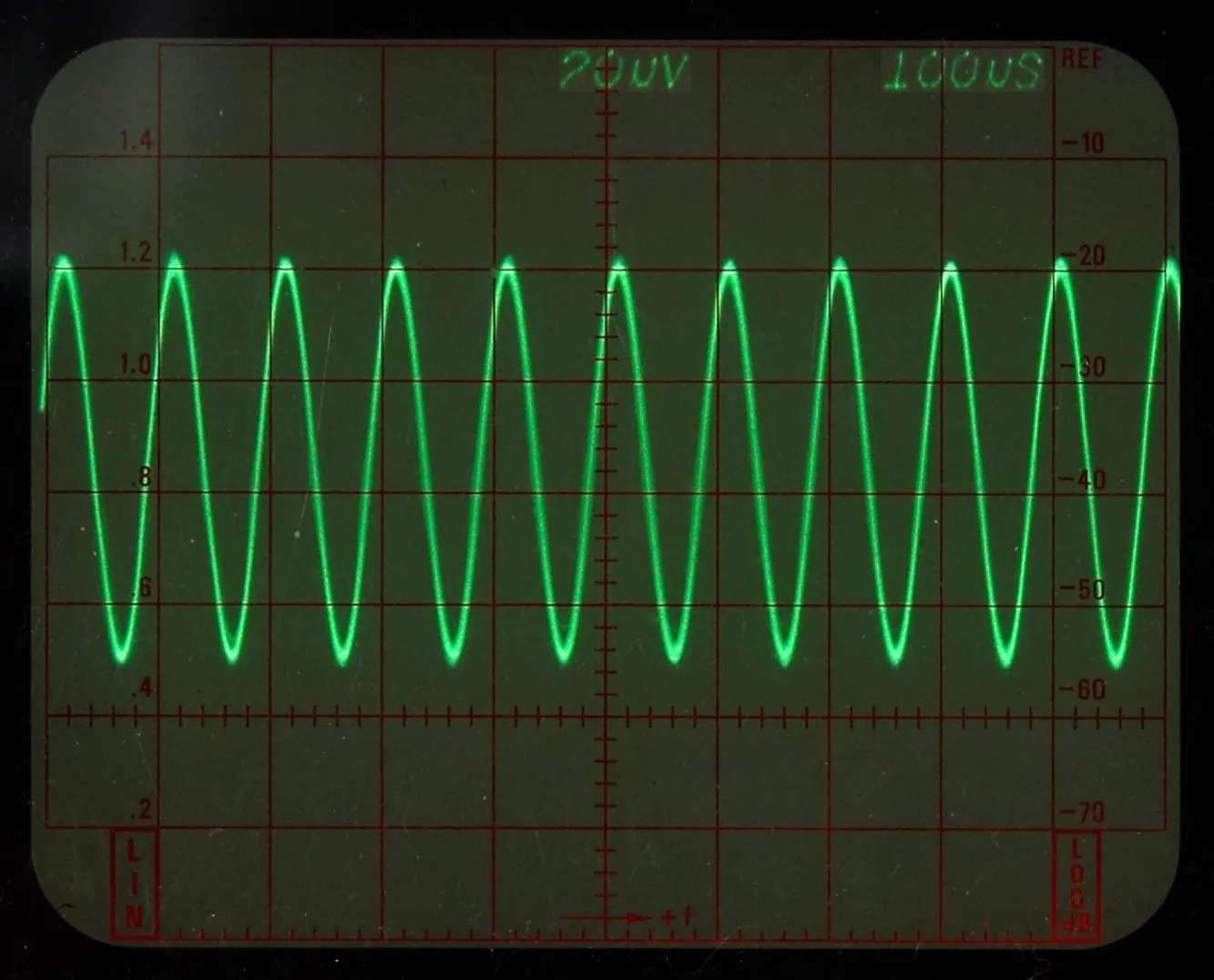
How an inverter generator builds AC power
The alternator inside an inverter generator does not have to send its raw waveform directly to connected equipment. Its output passes through a rectifier, which converts alternating current to direct current. Capacitors smooth the direct current bus before switching transistors reconstruct alternating current at the required voltage and frequency.
The inverter stage switches rapidly and uses electronic control to approximate a sine wave. Feedback circuits monitor output and adjust switching as loads change. This separates outlet frequency from exact engine speed, allowing the engine to follow power demand instead of maintaining one narrow speed under every condition.
This architecture also creates additional components and failure points. Heat sinks, cooling passages, control boards, sensors, rectifiers, and inverter modules must survive vibration, heat, dust, moisture, and overloads. A failed electronic module is generally less field repairable than a simple breaker, capacitor, or mechanical governor component.
Power electronics need cooling even when the engine is turning slowly. Keep intake and exhaust openings clear and follow the manual's clearance requirements. An inverter generator should not be enclosed in a homemade sound box because restricted cooling and trapped exhaust create both equipment and carbon monoxide hazards.
Why inverter generators are usually quieter
Variable engine speed is only part of the answer. At light load, economy control reduces rpm, combustion events, fan noise, and mechanical vibration. The generator becomes noticeably less intrusive than an engine operating continuously near full governed speed.
Most small inverter models also use a molded enclosure. Internal ducts guide cooling air, panels block direct sound paths, and rubber mounts isolate vibration. A conventional open frame machine exposes the engine, muffler, alternator, and cooling fan directly to the surrounding area.
Noise figures are easy to misuse. A decibel value has meaning only with the measurement distance, load level, operating mode, and test method. A number recorded at quarter load cannot be compared fairly with another machine measured at rated load or at a different distance.
Honda lists examples in the upper 40s to upper 50s dB(A) depending on model and load, but those values belong to specific machines and conditions. Treat manufacturer noise data as a model comparison tool, not a universal promise for every inverter generator.
Compare like with like: check distance and load percentage beside every noise figure. “Quiet” without a test condition is a marketing description, not a usable specification.
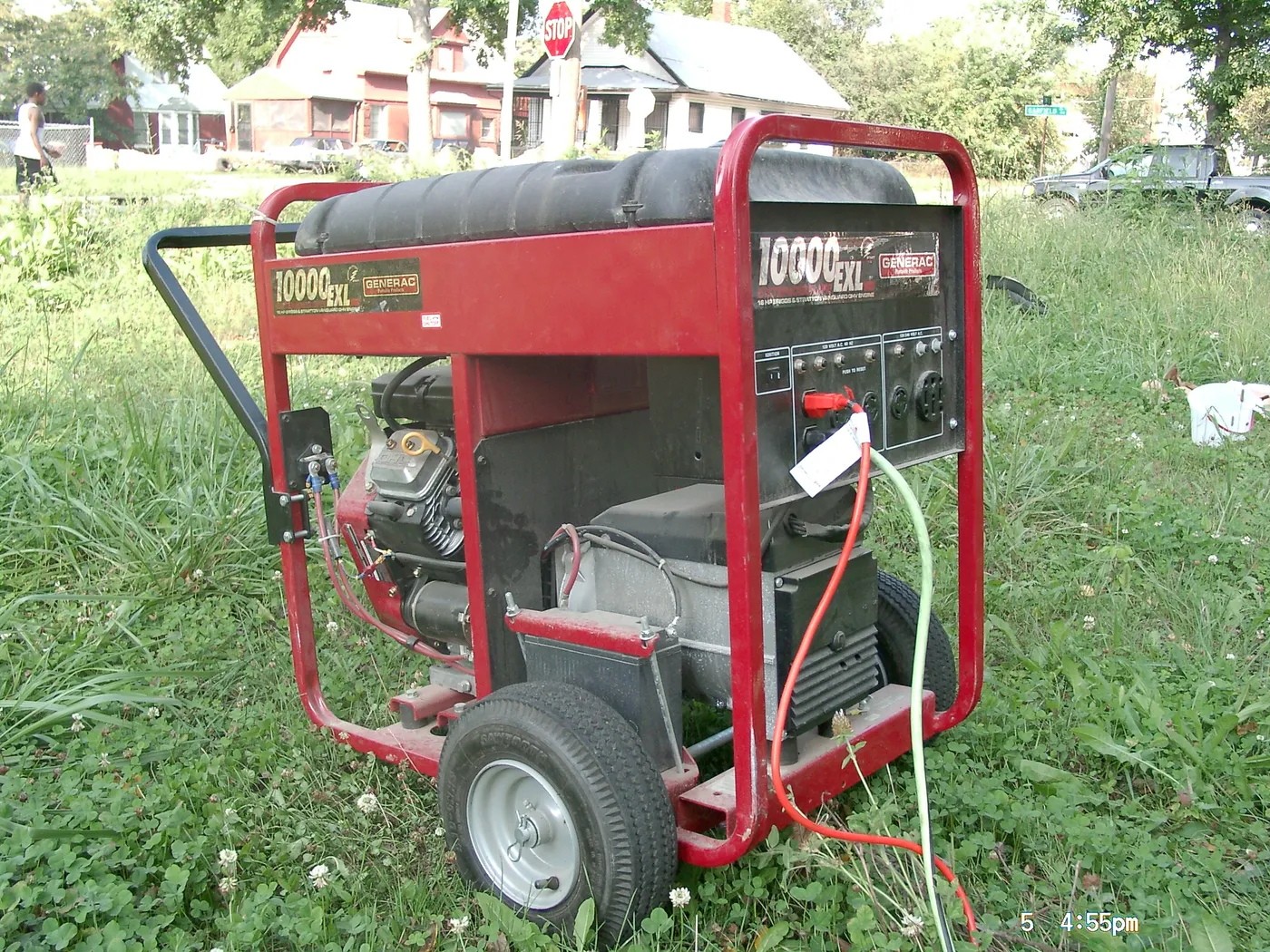
Fuel use at partial load
A generator engine consumes fuel just to keep itself running. When a conventional machine holds nearly the same speed for a small charger and a much larger load, the light load operating point can be inefficient. The engine still overcomes friction, drives its cooling fan, and moves air through the cylinder.
An inverter generator with economy control can reduce engine speed when electrical demand falls. Honda states that its Eco Throttle system can reduce fuel consumption by up to 40 percent under suitable conditions. That is a claim for the system and its operating envelope, not a fixed saving that applies to every load or brand.
At high load, the difference narrows because both engines must produce substantial mechanical power. An inverter machine cannot create energy through electronics. If the connected load approaches rated output, engine speed, heat, and fuel consumption rise accordingly.
Tank size can hide efficiency differences. A large conventional generator may run longer than a small inverter simply because it carries more fuel. Compare fuel quantity, runtime, and load percentage together. Our generator runtime guide explains why hours alone are incomplete.
Power quality without the marketing shortcut
Inverter generators are commonly chosen for laptops, televisions, battery chargers, modern appliances, and medical equipment because the electronic output stage usually produces low total harmonic distortion and stable frequency. Generac, for example, specifies less than 3 percent THD for certain inverter models.
That does not mean every conventional generator produces unsafe power. Alternator design, automatic voltage regulation, governor response, winding quality, and load all affect output. Some conventional machines publish low distortion specifications, while others provide no THD figure at all.
Power quality is also broader than THD. Voltage regulation, frequency stability, transient response, spikes, grounding, and connection quality can affect equipment. A surge protector does not convert a distorted waveform into a clean sine wave.
For the detailed electrical explanation, see generator THD and sensitive electronics. In this comparison, the practical conclusion is simpler: an inverter model provides a clearer documented path when sensitive electronics are a priority, but the individual specification still matters.
Output, weight, and portability
Small inverter generators are built around portability. A compact enclosure, integrated handle, and moderate output suit camping, tailgating, service work, and limited emergency loads. The owner can move the generator without a wheel kit and store it in less space.
As output increases, that advantage shrinks. A larger inverter generator needs a bigger engine, more cooling, heavier power electronics, larger conductors, and more fuel. High output enclosed models can be substantial machines with wheels and folding handles.
Conventional open frame generators commonly offer high running wattage, 120 and 240 volt outlets, and large fuel tanks. Their tubular frames protect components and provide lifting points. The open layout also makes routine access to the spark plug, carburetor, air filter, oil drain, and alternator easier.
Do not compare the weight of a small inverter with a conventional generator producing several times the power. Compare models that meet the same running load, starting load, voltage, and receptacle requirements. Only then does the portability difference describe a real buying decision.
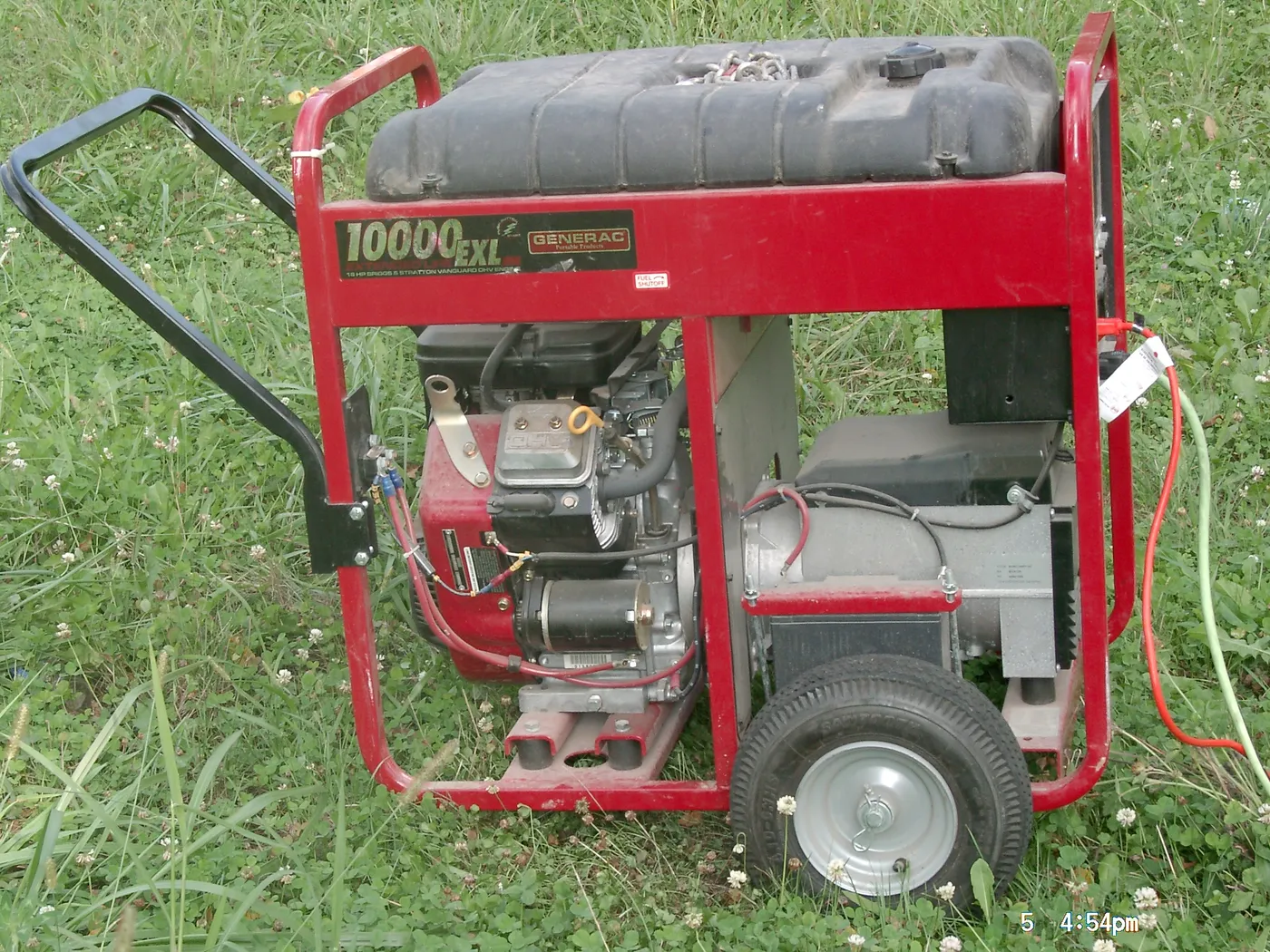
Parallel operation explained
Many inverter generators include parallel ports that allow two compatible units to feed a manufacturer approved parallel kit. The system synchronizes their inverter outputs and combines available capacity at the kit's receptacle. This can provide more power while preserving the option to carry or run only one unit.
Parallel capability is not universal. Two generators with similar voltage and wattage cannot be connected together merely because both have inverter technology. The manufacturer must identify compatible models, cables, connectors, and operating procedure.
The combined output may be limited by the parallel kit receptacle, breaker, cable, or generator firmware. It should not be assumed to equal every watt printed on both cases. Read the parallel kit and generator manuals as one system.
Two engines also mean two oil systems, spark plugs, air filters, fuel supplies, and maintenance schedules. Parallel operation adds flexibility, but it does not reduce ownership work. If high output is needed every time, one correctly sized machine may be simpler.
Which type fits home backup?
An inverter generator fits a home plan centered on refrigeration, electronics, lighting, communications, a furnace blower, and carefully managed appliances. Quiet operation and efficient partial load running matter during a long neighborhood outage. Larger inverter models can also provide 120 and 240 volt service for approved panel connections.
A conventional generator fits a plan that prioritizes high starting capacity, 240 volt pumps, shop tools, heaters, and broader circuit coverage. It may provide more continuous output in a simpler open frame package. Noise and light load fuel use become the tradeoffs.
Readers focused on quiet operation can compare the quiet inverter generator options. For a broader view of output classes and features, the best inverter generators guide is the better starting point.
Neither type should be selected from starting watts alone. Build the load list, identify motor surges, confirm voltage, and verify the connection. An inverter cannot compensate for insufficient wattage, and a high output conventional generator cannot compensate for an incompatible receptacle or unsafe installation.
RV and recreational use
Inverter generators dominate recreational use because neighboring campers care about noise and most RV loads vary throughout the day. The generator may carry a small battery charger for hours, then accelerate when a microwave or air conditioner operates.
An RV air conditioner can impose a difficult compressor surge. Confirm both running and starting requirements and check whether an approved soft starter is available for the specific unit. A generator with enough running watts can still fail to start the compressor.
Connector compatibility matters as much as wattage. Verify the RV service, generator receptacle, adapter arrangement, neutral and grounding guidance, and cord rating. Our inverter generator guide for RVs groups choices around those practical requirements.
Campground rules may impose quiet hours or prohibit generator operation during certain periods. A quieter machine does not override local rules. Battery storage can cover overnight electronics and ventilation when engines must be shut down.
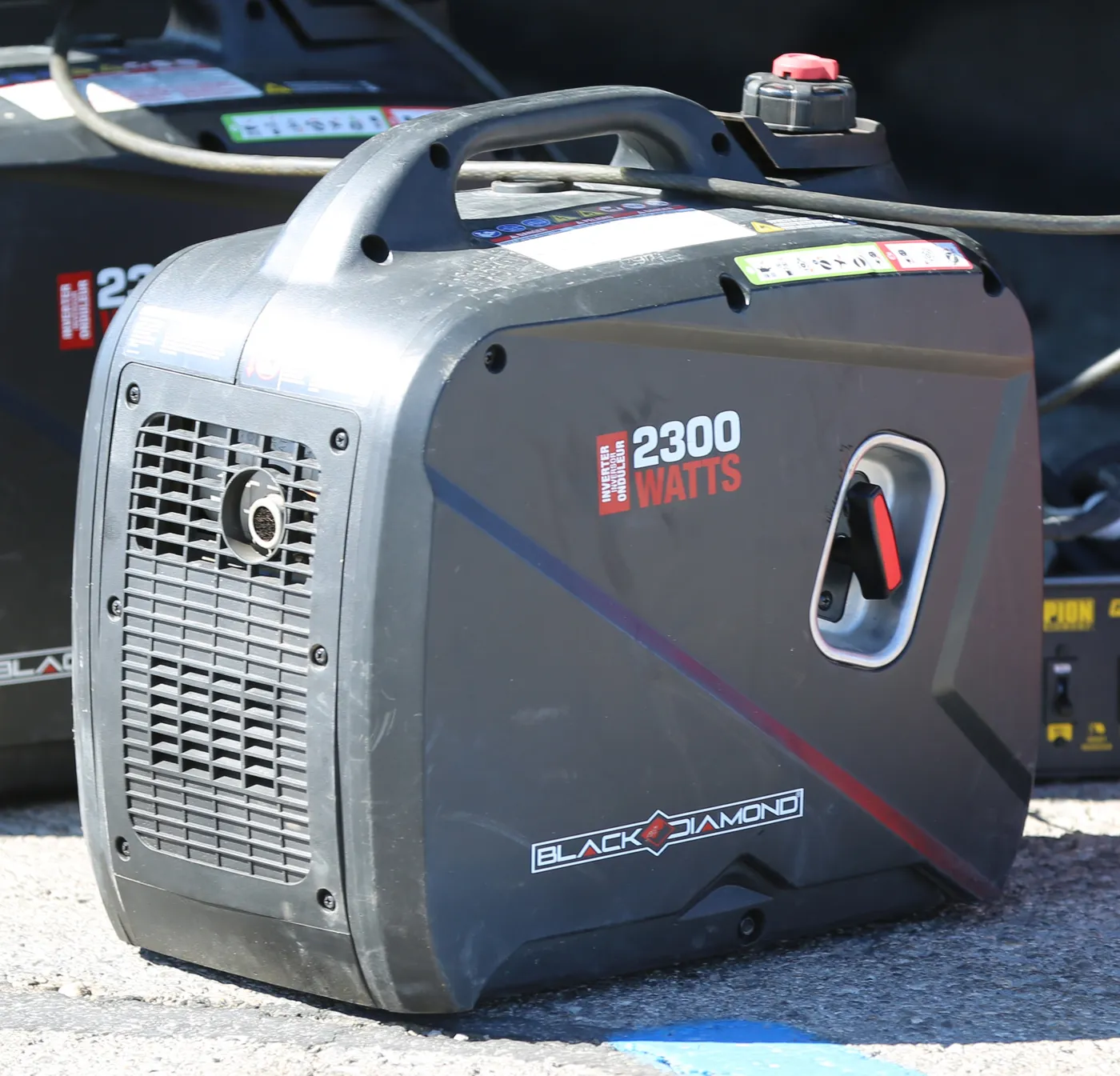
Maintenance and repair reality
Both designs use a small combustion engine that needs oil checks, oil changes, air filter service, spark plug inspection, fuel management, and periodic exercise. An inverter label does not remove carburetor problems caused by stale gasoline or storage with fuel left untreated.
Conventional open frame machines often provide easier physical access. Mechanical governors, capacitors, brushes on some alternators, breakers, and voltage regulators may be replaceable as separate parts. Service still requires proper diagnosis and electrical safety.
Inverter machines add control boards and power modules. These can be reliable, but diagnosis may require brand specific procedures, and replacement assemblies can be less repairable at component level. Enclosures also take time to remove and reinstall correctly.
Before buying, check local service availability, parts diagrams, warranty support, and manual quality. A generator kept for emergencies needs an exercise schedule and stored fuel plan regardless of architecture.
Safety applies to both designs
Both combustion generator types produce carbon monoxide. Operate them outdoors at least 20 feet from buildings with exhaust directed away from openings. Never use either design in a garage, shed, porch, carport, tent, or RV compartment unless the equipment and compartment were specifically engineered and approved for that installation.
Keep the generator dry while maintaining open airflow. Use outdoor rated cords sized for the current and distance. Shut the engine down and allow it to cool before refueling.
A home panel connection needs approved transfer equipment and a suitable inlet installed by a qualified electrician. Never backfeed through a household receptacle. Inverter output does not make an improvised connection safe.
The enclosure is not a safety enclosure: an inverter generator's plastic case reduces sound and directs cooling air. It does not contain carbon monoxide or make indoor operation acceptable.
A decision by use case
Choose an inverter for camping, RV charging, home electronics, neighborhood outages, and jobs where the machine spends long periods below half load. Its enclosure and speed control deliver their greatest value in those conditions.
Choose a conventional open frame machine for high output tools, pumps, resistance loads, and managed home backup when weight and noise are acceptable. Confirm power quality separately if electronic controls share the supply.
When both uses matter, compare a larger inverter with a conventional generator at the same running watts and voltage. The right answer comes from the load, operating hours, transport method, service access, and noise limit, not from category loyalty.
Check the owner manual before assuming economy mode, parallel operation, remote start, or 240 volt output is included. Those are model features rather than guarantees of the inverter category.
Frequently Asked Questions
Is an inverter generator always better?
No. It is often better for quiet partial load operation, portability, and sensitive electronics. A conventional generator may be the more practical choice for high output, 240 volt equipment, or demanding tools when noise and fuel use are secondary.
Do inverter generators produce pure sine wave power?
Many produce low distortion sine wave output, but “pure sine wave” is not a substitute for a measured specification. Check the manufacturer's THD, voltage regulation, and frequency data for the exact model.
Can an inverter generator run a refrigerator?
Yes, if its continuous and starting ratings cover the refrigerator and other connected loads. Compressor startup can be several times harder than normal operation, so running watts alone are insufficient.
Can I connect any two inverter generators in parallel?
No. Use only combinations, cables, and parallel kits approved by the manufacturer. Similar outlets or wattage labels do not establish electrical compatibility.
Why are conventional generators louder?
They commonly run near a fixed governed speed and use an open frame that exposes engine and cooling noise. Inverter models often combine variable speed control with an acoustic enclosure.
Do inverter generators use less fuel at full load?
Their strongest efficiency advantage appears at partial load, when the engine can slow. Near rated output, the engine must produce the required mechanical power, so the difference can narrow substantially.
Which type lasts longer?
Service life depends on engine quality, loading, cooling, maintenance, fuel care, and storage more than the category name. An overloaded premium inverter can fail sooner than a properly maintained conventional generator operating within its rating.
Bottom line
Choose an inverter generator when quiet operation, light load fuel economy, compact packaging, and documented low distortion power matter most. Choose a conventional generator when the priority is straightforward high output, 240 volt capability, accessible components, and demanding motor loads. Compare machines at the same usable output and voltage, then verify starting capacity, outlets, runtime conditions, service support, and safe operating requirements.