
Why a bigger pump can still give a weak shower
An RV owner replaces a small water pump with a model carrying a larger flow number, opens the shower, and hears the new pump cycle while the spray still feels disappointing. The pump may not be defective. Its label describes performance under particular test conditions, while the installed system includes narrow tubing, elbows, a filter, a water heater, check valves, a restrictive shower head, electrical wiring, and a finite fresh water tank. Every part changes the result at the fixture.
The two numbers most often used to describe an RV pump are gallons per minute and pounds per square inch. GPM measures flow rate. PSI measures pressure. They are related, but they are not interchangeable. A pump can move a high volume at low resistance and deliver less flow as system pressure rises. A fixture can feel forceful with modest flow if its nozzle concentrates the stream. Another fixture can pass more water yet feel soft because it spreads that water across a wide pattern.
Choosing well therefore means reading a pump curve and understanding the whole plumbing circuit. The goal is not maximum flow. It is stable delivery at the fixtures without exceeding the pressure limits of hoses, fittings, heater components, filters, or the RV manufacturer's plumbing design.
GPM is flow, not a promise at the faucet
Gallons per minute describes a volume of water passing a point during one minute. A pump advertised around three GPM is identifying a nominal or maximum flow class, but the exact meaning depends on the manufacturer's test method. Some ratings are measured with little discharge pressure. Real installed flow is lower when the pump must push against plumbing resistance and fixture backpressure.

Flow demand comes from open fixtures. One bathroom faucet may require modest water, while a shower and kitchen faucet used together ask for more. If combined demand exceeds what the pump can deliver at the system pressure, flow at each fixture falls. The user may see temperature changes as hot and cold proportions shift.
A higher pump flow can support multiple fixtures, refill an appliance faster, or reduce the sense that one faucet steals water from another. It also empties the fresh water tank faster when users leave fixtures open at the higher rate. For boondocking, conservation may be more important than maximum delivery.
The best 3 GPM RV water pumps guide is useful when that flow class matches an existing system. Treat the category as a shortlist, not evidence that every RV needs the same rate.
PSI is pressure and the system pushes back
PSI describes force per unit area. In an RV water system, pressure builds when the pump moves water into plumbing that resists flow. Closing every fixture creates high resistance, so a demand pump reaches its shutoff setting and stops. Opening a fixture lowers system pressure, causing the pump to restart at its switch threshold or vary speed if it uses electronic control.
Pressure is not something to maximize without limits. RV plumbing components have ratings. A pump with a shutoff pressure above what the system permits can stress fittings, cause leaks, make a water heater relief valve weep, or expose a weak connection. Check the RV manual and component markings before changing pressure class or adjusting a switch.
Pressure measured beside the pump may not equal pressure at a distant shower. Loss occurs through tubing, elevation change, small fittings, valves, filters, and fixtures. The loss rises with flow. This is why a static gauge reading with all faucets closed can look acceptable while pressure at the shower drops during use.
Pressure and flow change together
| Observation | Likely system meaning | What to check |
|---|---|---|
| Strong flow from one faucet, weak with two open | Combined demand exceeds delivery at operating pressure | Pump curve, restrictions, fixture flow, voltage |
| Good static pressure, poor shower flow | Restriction or pressure loss appears under flow | Filter, hose, shower head, valves, heater path |
| Rapid on and off cycling | Small demand sits near switch thresholds or system has little stored volume | Leaks, accumulator, switch setting, restricted fixture |
| Pump runs but no water arrives | Loss of prime, empty tank, air leak, blockage, or damaged pump | Tank level, inlet line, strainer, winterizing valve |
| Flow pulses at fixtures | Demand pump cycling or air and restriction affecting delivery | Accumulator charge, leaks, pump mounting, plumbing |
| Pump sounds slow and lights dim | Electrical voltage drop or overloaded circuit | Battery voltage, fuse, conductor, terminals, ground |
A pump curve is the best bridge between GPM and PSI. It plots the flow a pump can deliver at different discharge pressures. Flow generally declines as pressure rises. Compare pumps at the operating pressure the RV actually uses, not only at their maximum flow or maximum pressure endpoints.
The pressure switch controls demand pumps
Many RV pumps are positive displacement diaphragm pumps with a pressure switch. When a faucet opens, pressure falls to the switch cut in point and the motor starts. When the faucet closes, pressure rises to the shutoff point and the motor stops. This automatic behavior lets the plumbing remain pressurized without a pump running continuously.
A small water demand can make a fixed speed pump alternate rapidly between those thresholds. The result is pulsing flow and repeated motor starts. Some models use an internal bypass that lets a portion of water recirculate to smooth low demand. Variable speed pumps adjust motor output to follow demand and can maintain steadier pressure across multiple fixtures.
Do not adjust a pressure switch just to stop cycling unless the manufacturer provides a procedure. Raising shutoff pressure may exceed plumbing limits, and changing the relationship between bypass and switch settings can produce continuous running or unstable operation. Find the cause before changing calibration.
An accumulator can smooth small demands
An accumulator tank stores a small amount of pressurized water behind a flexible diaphragm or bladder. When a faucet opens briefly, stored water can supply the initial demand before the pump starts. That reduces cycling, softens pulses, and provides a small reserve while the pump transitions.
The air precharge must match the system instructions. An incorrect charge reduces usable volume and may make the tank ineffective. Check precharge with water pressure relieved and the pump off, following the accumulator manual. Never apply pressure beyond the tank rating.
An accumulator does not increase the pump's sustained flow. Once its stored water is used, the pump still must serve the open fixtures. It cannot correct a blocked filter, undersized inlet, low voltage, or pump that is too small for simultaneous demand.
Plumbing restrictions often set the real limit
The fresh water tank outlet and pump inlet must supply water without pulling excessive vacuum. A clogged inlet strainer, kinked hose, closed winterizing valve, loose fitting that admits air, or tank debris can starve the pump. Cavitation and air ingestion reduce delivery and can create noise.
On the discharge side, every narrow passage adds resistance. Filters can load with sediment. Check valves can stick. Faucet aerators collect mineral scale. Shower hoses kink. Water heater passages and mixing valves can restrict hot water more than cold. Diagnosing weak flow requires isolating these points rather than assuming the pump rating is wrong.
Pipe length and inside diameter matter. Pressure loss increases as flow rises, so plumbing that served a lower flow pump acceptably may become the bottleneck after an upgrade. Installing a larger pump without changing restrictive plumbing can add noise and electrical demand without delivering the expected fixture improvement.
Voltage at the pump affects water delivery
An RV pump is an electrical load. A nominal 12 volt pump needs adequate voltage at its terminals while running, not merely at the battery with the pump off. Long conductors, undersized wire, corroded terminals, a weak ground, a tired fuse holder, or a low battery can create voltage drop. The motor then runs slower, draws abnormally, heats, or fails to reach expected pressure and flow.
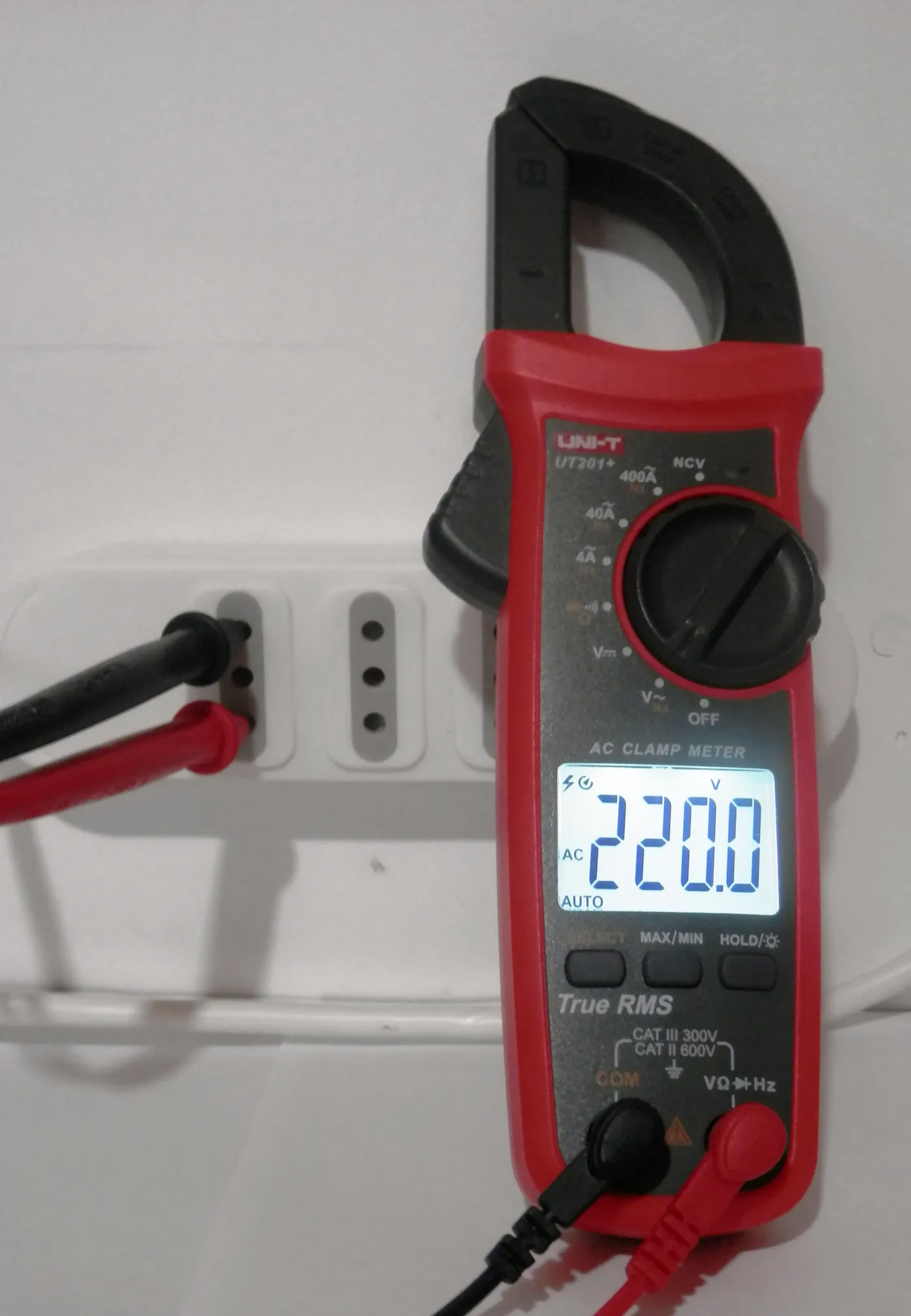
Measure voltage according to safe service procedures while the pump operates. Compare the reading with the pump manufacturer's acceptable range. Inspect both positive and negative paths. A clean positive terminal does not compensate for a poor ground connection.
System voltage must match the pump. A 12 volt pump belongs on a suitable 12 volt circuit, while a 24 volt model needs the intended 24 volt supply. The best 12V RV water pumps and best 24V RV water pumps roundups separate these electrical categories. A different voltage is not automatically stronger or more efficient for a given RV. It must fit the installed electrical architecture.
Some installations use an AC pump. That requires a shore supply, generator, or inverter with suitable continuous and startup capability. The best 110V RV water pumps guide addresses that category. An inverter powered pump also creates conversion losses and should be considered in the vehicle's energy plan.
Current draw and duty cycle belong in the power budget
A pump does not normally run all day. Its energy use depends on current while operating and the total minutes it runs. Higher water use increases both tank depletion and electrical consumption. Pressure, restrictions, voltage, and pump efficiency can change current draw.
For an energy budget, use the manufacturer's current specification and a realistic estimate of daily run time. Do not multiply pump watts by 24 hours as if it were continuous. Conversely, do not ignore motor startup or assume a nominal current is a fuse size. Overcurrent protection and conductor sizing follow the manufacturer and applicable electrical rules.
This article does not size the RV battery or solar array. The daily watt hour method belongs in how to size an RV solar system, where the pump becomes one line in the load list. For boondocking, water conservation and energy conservation often reinforce each other.
Noise can reveal installation problems
Diaphragm pumps create vibration. If the pump is fastened rigidly to a resonant wall or floor, the structure can amplify normal operation. Flexible inlet and outlet sections, approved vibration isolators, and secure pipe support help prevent the RV shell from acting like a speaker.
Noise that changes suddenly deserves investigation. Rattling can indicate a loose mount or plumbing contact. A high pitched sound may accompany starvation. Repeated clicking can reflect rapid cycling. A pump that continues after all fixtures close can indicate a leak, air on the inlet, a failed check valve, an open low point drain, or a pressure switch problem.
Do not wrap a pump in insulation to silence it. The motor may need cooling air, and enclosure changes can hide leaks. Follow clearance and mounting instructions.
How to match a pump to fixture demand
List the fixtures that may run together. A small camper used by one person may rarely need more than one fixture. A larger RV with a shower, toilet, kitchen sink, outside spray port, and several occupants can create overlapping demand. Decide which combination is realistic rather than adding every fixture at full flow.
Check the existing pump label, RV plumbing pressure limit, pipe size, electrical circuit, and space. If the existing system worked before a failure, a like for like replacement is usually the lowest risk starting point. If the goal is more flow, identify restrictions first and compare pump curves at the intended pressure.
Confirm physical details such as port size, port orientation, mounting footprint, priming capability, permitted mounting positions, dry run guidance, noise controls, and service access. Adapters can create restrictions or additional leak points. A pump that does not fit the compartment cleanly may be a poor upgrade regardless of its rating.
Finally, check support parts. A compatible strainer protects the inlet. Flexible approved plumbing sections reduce transmitted vibration. Correct fuse and wiring protect the electrical circuit. An accumulator may help low flow cycling when installed and charged correctly.
Consider how the RV is actually used across seasons. A family connected to campground water may prioritize steady simultaneous flow, while a solo boondocker may prefer modest fixture flow that preserves the fresh tank. Cold weather users need accessible plumbing that can be drained and winterized without leaving trapped water in the pump or strainer. Owners who travel on rough roads should inspect mounts, flexible connections, and terminals more often because vibration can loosen parts that remain stable in a parked installation. These operating details do not change the meaning of GPM or PSI, but they change which balance of flow, noise, current, and serviceability is most useful.
Troubleshooting weak or unstable flow
Start with the fresh water level and valve positions. Verify that the winterizing suction valve is returned to normal, low point drains are closed, and the tank vent is not obstructed. Inspect the inlet strainer and look for a kinked suction hose or loose fitting.
Open one cold fixture and observe the pump. Then compare a hot fixture. If cold flow is good and hot flow is poor, focus on the water heater, bypass valves, mixing valve, and hot line. If both are weak, examine the common inlet, pump, electrical supply, and main filter.
Check whether the problem occurs on the fresh tank pump, city water, or both. A problem present on both sources points toward shared downstream plumbing. A problem only on pump supply points toward the tank, inlet, pump, or its electrical circuit.
Leaks can be too small to see yet large enough to cause cycling. With all fixtures closed, listen for periodic starts and inspect the toilet valve, outside shower, water heater relief area, fittings, and hidden compartments. Stop and repair water intrusion promptly to protect the RV structure.
Water and electrical safety
Turn off electrical power and relieve water pressure before opening plumbing or servicing the pump. A pressurized line can spray water into electrical equipment. Disconnect shore power and isolate the relevant battery circuit according to the RV and component manuals.
Use potable water rated hoses, fittings, sealants, and components on the fresh water system. Keep pump wiring and connections protected from leaks. Replace heat damaged terminals, cracked hoses, and corroded fuse holders rather than hiding them.
Never increase switch pressure beyond the plumbing system rating. Do not substitute a larger fuse to stop nuisance opening. A fuse that operates may be signaling a stalled pump, short circuit, undersized circuit, damaged wiring, or incorrect protection. Diagnose the cause.
Frequently asked questions
Is higher GPM always better for an RV water pump?
No. Higher flow can help simultaneous fixtures, but the plumbing and electrical system must support it. It can increase water use, noise, current demand, and pressure loss through restrictive pipes. Match flow to realistic fixture demand.
What is the difference between pump pressure and flow?
Pressure describes force within the plumbing, while flow describes water volume delivered over time. As a pump works against greater pressure, its available flow generally falls. A pump curve shows this relationship.
Why does my RV water pump pulse at the faucet?
A fixed speed demand pump may cycle rapidly when a small fixture flow sits between its start and stop thresholds. A restriction, air, incorrect switch or bypass setting, or lack of accumulator volume can worsen pulsing.
Will an accumulator tank increase shower flow?
It can briefly supply stored water and smooth pressure, but it does not increase sustained pump capacity. Once its reserve is used, delivery returns to what the pump and plumbing can support.
Why does the pump run when no faucet is open?
Possible causes include a plumbing leak, toilet valve seepage, open drain, air leak on the inlet, failed check valve, or pressure switch problem. Repeated unexplained operation should be investigated promptly.
Can I replace a 12 volt pump with a 24 volt model?
Not directly. The pump voltage must match the intended supply and circuit design. Changing system voltage requires compatible equipment, wiring, protection, and controls. Choose a pump made for the RV electrical system.
Bottom line
GPM tells you how much water a pump can move, while PSI tells you how hard it pushes against the plumbing. Neither rating alone predicts the shower experience. Use the pump curve, confirm RV pressure limits, account for simultaneous fixtures, inspect restrictions, and verify running voltage at the pump. Choose a model that fits the existing electrical and plumbing architecture, then use correct mounting, filtration, wiring, protection, and leak control. The best pump is not the one with the largest label number. It is the one that delivers stable, safe flow throughout the real RV system on every trip.