
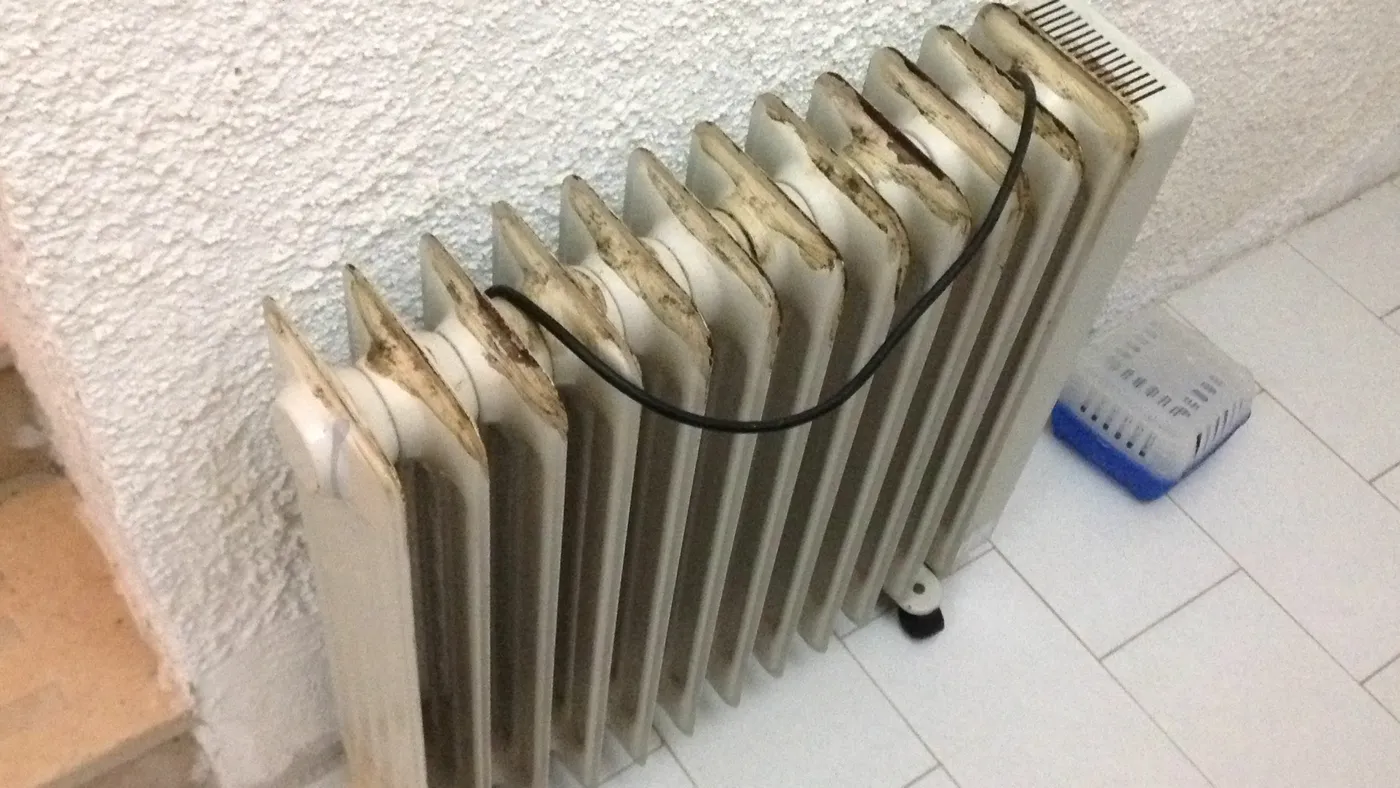
The tripped breaker that starts the question
It is a cold evening and you plug a space heater into a bedroom outlet. Twenty minutes later the room goes dark. The breaker has tripped, and the usual suspects are the heater, the circuit, or both. The next time you shop, you notice something odd: nearly every plug-in heater says the same thing, 1500 watts.
That sameness is not a coincidence or a marketing pact. It comes from how household circuits are built, and once you see the arithmetic you can pick a heater, and place it, without guessing.
Watts, amps and volts in one line
Electrical power in watts equals voltage times current in amps. A typical North American household outlet supplies about 120 volts. A heater that draws 12.5 amps at 120 volts uses 1500 watts, since 120 multiplied by 12.5 is 1500.
The wiring and the breaker are rated in amps, not watts. That is why the amp figure is what the circuit cares about, and the watt figure on the heater is what you use to estimate it. To convert, divide watts by 120 to get amps.
The 15 amp circuit
Many bedrooms, living rooms and hallways are wired on a circuit protected by a 15 amp breaker. In theory, 15 amps at 120 volts allows 1800 watts. But a space heater does not run for a minute. It runs for hours, and electrical practice treats a load that runs for hours as a continuous load.
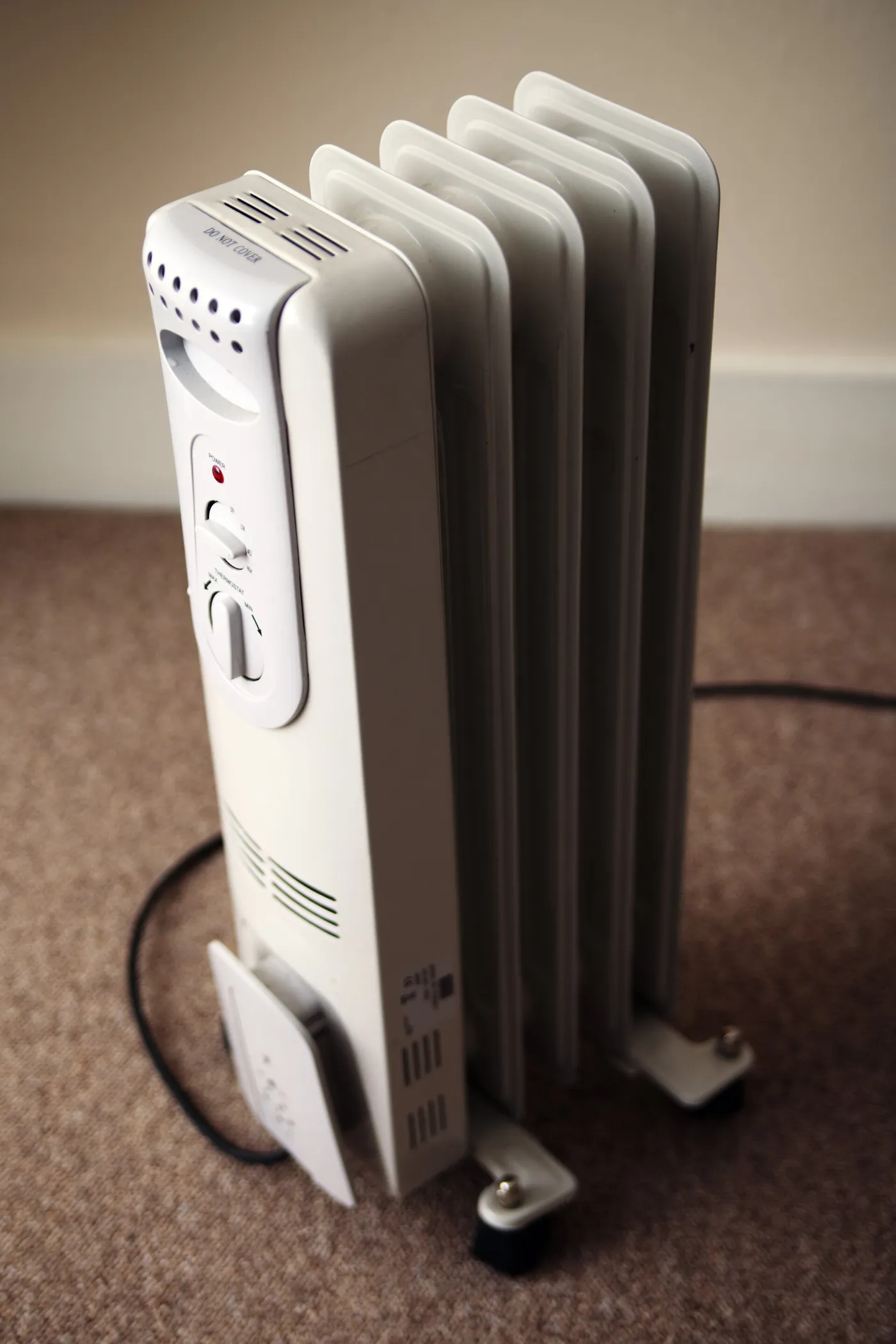
The common guideline for continuous loads is to use no more than about 80 percent of the breaker rating. Eighty percent of 15 amps is 12 amps, or about 1440 watts. A 1500 watt heater, drawing 12.5 amps, sits right at that edge. It is designed to use most of what a single outlet can deliver and not much more, which explains why heaters cluster at that rating.
Why nearly every heater is 1500 watts
A manufacturer wants the maximum heat that a normal outlet can safely support, because a stronger heater is a better selling point. The circuit sets the ceiling, so the market stacks up at the ceiling. A heater rated far above it would trip breakers in many homes and could overheat outlets and cords, and manufacturers avoid that for both safety and warranty reasons.
Smaller ratings exist for specific purposes. Compact personal heaters use less power, and many larger models offer a low setting, often around half of the maximum, so they can run on a shared circuit or save energy. The best 750W space heaters guide and the mini space heaters guide cover that lower-power end.
Watts to heat: all electric heaters are equal
An electric resistance heater converts essentially all the electricity it draws into heat in the room. That means a 1500 watt ceramic heater and a 1500 watt oil-filled heater put the same amount of energy into the air, about 5,100 BTU per hour, since one watt is roughly 3.41 BTU per hour. Marketing claims that one type produces more heat per watt are not physically credible for plug-in resistance heaters.
What differs is how the heat is delivered: how fast it feels warm, whether it warms the air or the objects and people, and how quietly it runs. That is the subject of our ceramic, infrared and oil-filled comparison. Wattage tells you how much heat. The heater type tells you what the heat feels like.
Common wattages and amps
| Heater power | Approximate current at 120 volts | Typical use |
|---|---|---|
| 400 to 750 watts | About 3.3 to 6.3 amps | Personal heaters, desk or foot warmers, low setting of larger units |
| 900 watts | About 7.5 amps | Medium setting of many heaters |
| 1500 watts | About 12.5 amps | Full power for a plug-in room heater |
If you add other devices on the same circuit, add their current to the heater's. A heater at 12.5 amps plus a vacuum cleaner or hair dryer on the same circuit exceeds even the full 15 amp rating, and the breaker will trip.
Finding what shares your circuit
Circuits do not map neatly to rooms. A single breaker may feed several outlets across two rooms and the hallway lights. Before you run a heater, find out what else is on the breaker. Switch it off at the panel, then see what loses power.
- Do not run a space heater on a circuit that also serves a refrigerator, a microwave or a computer you cannot afford to lose.
- Avoid plugging a heater into the same circuit as a vacuum, a hair dryer or a kettle.
- If the breaker trips repeatedly, treat it as a message, not a nuisance. Do not replace it with a larger breaker.
A tripped breaker is the system working as intended. A breaker that is bigger than the wiring can handle is a fire risk, and changing breakers should be done by a licensed electrician.
Cords, plugs and outlets
A heater draws steady current for hours, which heats the plug, the cord and the outlet contacts. A loose or worn outlet, a damaged plug or a thin extension cord can all overheat. Warm plugs are normal, but a plug that is too hot to touch is a warning sign.
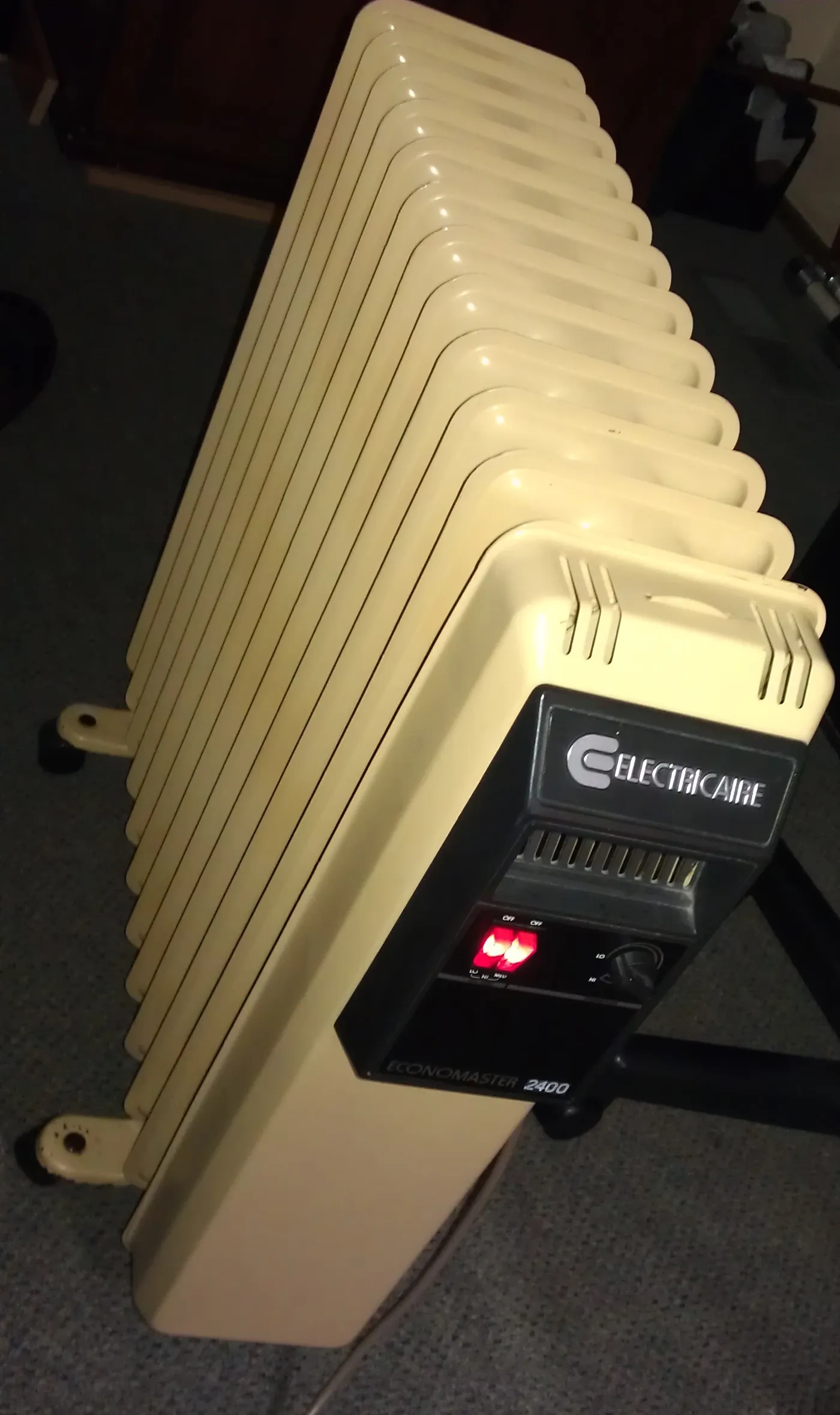
- Plug the heater directly into a wall outlet.
- Do not use a power strip or a multiple-outlet adapter.
- If you must use an extension cord, only use one that is rated for the heater's current and is as short as practical, and follow the heater's manual.
- Replace outlets that grip the plug loosely or show discoloration.
Many manufacturers explicitly prohibit extension cords and power strips for heaters. Follow the manual for your model.
Thermostats and why average power is lower
A heater with a thermostat does not draw its full wattage all the time. It cycles on and off to hold the set temperature, so over an hour the average power may be well below the rating. A well-sealed room reaches temperature quickly, and the heater then spends most of its time off.
That affects running cost but not the circuit, since the peak current while it is on is still the full 12.5 amps. Plan the circuit for the peak and estimate the running cost from the average.
Running cost in kilowatt hours
A 1500 watt heater uses 1.5 kilowatt hours of electricity for each hour it runs at full power. To estimate cost, multiply the hours by 1.5 and by your local rate per kilowatt hour, and reduce the number if the thermostat cycles. Electricity rates vary widely, so use the figure on your own bill.
It is also worth asking whether the heater is the right tool. A small heater that warms the person in a room is cheaper than a heater that warms the whole room, which is cheaper than heating a drafty space with the central system. Zone heating makes sense when you actually stay in one place.
Safety features that matter
- Tip-over switch: shuts the heater off if it falls.
- Overheat protection: cuts power if internal temperatures get too high.
- Safety certification: look for a mark from a recognized testing laboratory.
- Cool-touch housing: helpful around children and pets.
Keep a clear space around the heater, as the manual specifies, and never leave it running unattended in a way the manual forbids. Keep it away from bedding, curtains and furniture, and keep a working smoke alarm in the room.
Choosing the right wattage
A rough match depends on room size, insulation and the temperature rise you want. A small, well-insulated room needs less, and a large, drafty one may be beyond the ability of a single 1500 watt unit, no matter the brand. Two heaters on two separate circuits is the safe way to double the heat, not one oversized unit.
For shopping, see the best space heaters guide for current models, and the 1500W space heaters guide if you want the highest standard output. If your room is small or the circuit is shared, step down to a lower-watt option.
How a breaker actually works
A circuit breaker is a safety device that opens the circuit when current stays above its rating for too long. A thermal element reacts to sustained overcurrent by heating and bending, and a magnetic element reacts almost instantly to a sudden surge or short. A 15 amp breaker does not trip at exactly 15 amps instantly. It tolerates a modest overload for a period, and the larger the overload, the faster it trips.
That behavior explains a common experience. A heater plus a second appliance may run for a few minutes before the breaker trips, and the same combination can run for longer on a cool day. The wiring, the plug and the breaker all warm up under load, and sustained load is what the breaker is sensing. A breaker that trips after a long time is warning you that the load is too high for continuous use.
Adding up everything on the circuit
To check whether a second device fits, convert both loads to amps and add them. A hair dryer, a toaster, a kettle, a vacuum and a microwave each draw a large share of a circuit by themselves. Lamps, chargers and televisions draw much less. The sum, not each device alone, is what the breaker sees.
| Device on the same circuit | Effect with a full-power heater |
|---|---|
| Phone charger, lamp | Small, usually fine |
| Television or computer | Moderate, may be fine on a 20 amp circuit, risky on a 15 amp |
| Vacuum cleaner | Likely to trip the breaker |
| Hair dryer | Very likely to trip the breaker |
| Second space heater | Will overload the circuit |
The table is a rough guide, since each device's exact draw varies. Read the rating plate on the appliance to see its wattage or amps.
What changes on a 20 amp circuit
Some kitchens, garages and workshops are wired for 20 amps. A 20 amp circuit has thicker wiring and its outlets may have a different slot shape. The continuous load guideline of about 80 percent gives 16 amps, or 1920 watts. A 1500 watt heater fits more comfortably, and there is some room for another small load.
You should not assume a circuit is rated for 20 amps because it is in a garage. Check the breaker label and the wire gauge, or ask an electrician. A 20 amp breaker on thin wire is a hazard, so never swap breakers to get more capacity.
Higher voltage heaters
Some larger heaters, such as baseboard units, wall heaters and garage unit heaters, use a 240 volt circuit. At the higher voltage, the same power draws half the current, so a thick wire can serve a bigger heater. These units are normally hard-wired or plugged into a special outlet, and they need proper installation by a qualified person.
If your room needs more heat than a single plug-in heater can provide, a permanently installed unit is the proper route, and it is far better than stacking plug-in heaters on shared circuits.
Warning signs at the outlet
- A plug or outlet that is too hot to hold your hand on.
- Discolored or melted plastic around the plug or the faceplate.
- A burning smell when the heater runs.
- Flickering lights when the heater cycles on.
- A breaker that trips repeatedly under the same conditions.
If you notice any of these, stop using the heater on that outlet, unplug it and have the outlet and wiring inspected. Do not ignore a warm plug, because a poor connection generates heat that can damage the outlet and start a fire.
Reading the rating plate on your heater
Every heater carries a rating plate, usually on the back or the base. It lists the voltage, the wattage and often the current in amps. Use it to confirm the numbers in this article for your own unit, because some heaters are slightly below the usual maximum and some have several power steps listed separately.
If the plate lists amps and not watts, multiply by the voltage to get watts. A listing of 12.5 amps at 120 volts is the familiar 1500 watts. Write the figure next to the circuit label on your panel as a reminder of what can run together.
When one heater is not enough
If a 1500 watt unit cannot warm your room, the cure is rarely a bigger plug-in heater, because none exists for a standard outlet. Look at the room first. Seal drafts, close the door, hang thick curtains and use the heater in the smallest space you actually occupy. Each of those cuts the load before you add a watt.
If the room still needs more heat, use two heaters on two different circuits, or ask an electrician about a permanent solution. Do not run two high-power heaters on one circuit, and do not move a heater onto a thin extension cord to reach a second outlet on the same breaker. Heating a room with electricity is possible but costly, and an efficient, well-insulated space is the real answer.
Frequently Asked Questions
Why are most space heaters 1500 watts?
A standard 15 amp household circuit and the guidance for continuous loads set a practical ceiling near that level. Manufacturers build to the ceiling to give the most heat that an ordinary outlet can support.
Can I run a 1500 watt heater on a 15 amp circuit?
Yes, if it is the only significant load on that circuit. A 1500 watt heater draws about 12.5 amps, so adding other devices can exceed the circuit and trip the breaker.
Does a ceramic heater heat better than an oil-filled one at the same wattage?
No. Both convert essentially all their electricity to heat. They differ in how the heat is delivered and how quickly it feels warm, not in total heat output.
Can I use an extension cord with a space heater?
Many manufacturers advise against it, because heaters draw high current for long periods. If your manual allows one, use a short cord rated for the current, and never a power strip.
Should I put a bigger breaker in to stop it tripping?
No. The breaker protects the wiring, and a larger breaker on the same wires can let them overheat. Move the heater to a different circuit or use a lower setting, and consult an electrician.
How much does it cost to run a space heater?
Multiply its kilowatt rating by hours of use and by your electricity rate, then reduce the figure if the thermostat cycles. Check your own bill for the rate, since it varies by region.
Bottom line
Space heaters cluster at 1500 watts because that is about what a standard outlet circuit can feed for hours. Wattage sets the heat output, and it is the same for every resistance heater at that rating. Give the heater its own circuit, plug it straight into the wall, choose a lower setting or a smaller unit for shared circuits, and never fix a tripping breaker by upsizing it. Understand the numbers, and the box label stops being a mystery.