


Amazon affiliate links - we earn a commission.Affiliate disclosure

Buying guide · 14 min read · Updated 2026-11-13

Best 50 Amp Solar Generator for RV (2026)

Six large solar generators for a 50 amp RV coach, judged on 240V split phase support, parallel stacking, capacity and honest limits for two air conditioners.

James MillerBy James MillerLead Machine Editor6 machines comparedSpec-sheet verified
Best 50 Amp Solar Generator for RV

At a glance

Our top picks

Side by side

Spec comparison

MachineCapacityAC outputExpansion
Jackery Solar Generator 5000 Plus 5040Wh 120V/240VBest OverallJackery Solar Generator 5000 Plus 5040Wh 120V/240V5040Wh LiFePO47200W rated, 14,400W surgeup to 60kWh
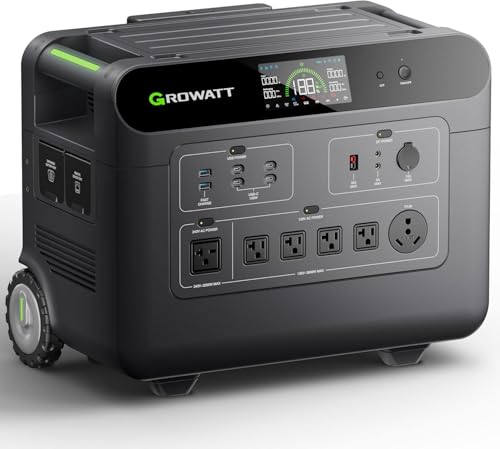
Growatt HELIOS 3600 3600Wh 240V/7200W with parallelBest Stackable ValueGrowatt HELIOS 3600 3600Wh 240V/7200W with parallel3600Wh LFP3600W, 240V/7200W with two unitsup to 36kWh
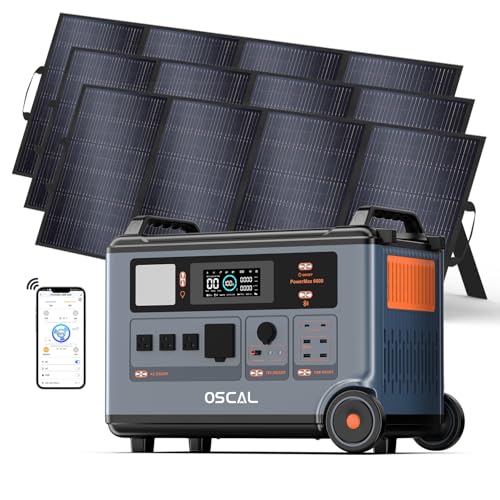
OSCAL PowerMax 6000 3600Wh with 3x400W panelsBest Surge for Dual A/COSCAL PowerMax 6000 3600Wh with 3x400W panels3600Wh6000W, 9000W surgen/a
EcoFlow DELTA Pro 3600Wh 3600W, expandable to 4500WBest Proven PlatformEcoFlow DELTA Pro 3600Wh 3600W, expandable to 4500W3600Wh LFP3600W, 4500W expandedExtra batteries available
Jackery HomePower 3600 Plus 3584Wh with 2x200W panelsBest Mid Size With PanelsJackery HomePower 3600 Plus 3584Wh with 2x200W panels3584Wh LFP3600W, 7200W in parallelup to 21kWh
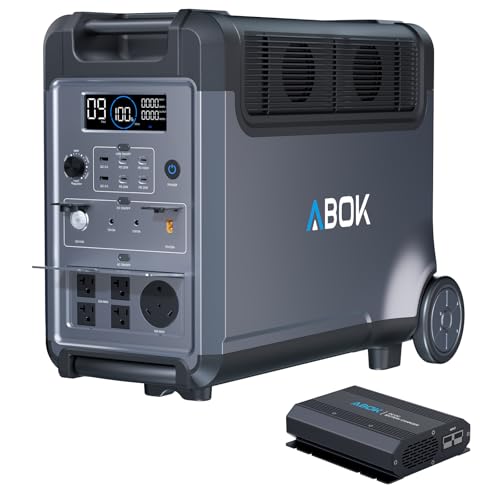
ABOK Ark3600 3840Wh with 500W alternator chargerBest Alternator ChargingABOK Ark3600 3840Wh with 500W alternator charger3840Wh LiFePO43600W rated, 4500W peakup to 11520Wh

The big inlet on a modern motorhome or fifth wheel is a split phase connection, not simply a bigger plug. It carries two live legs that feed separate halves of the coach, which is why a standard single outlet station cannot simply replace shore power the way it can on a smaller trailer.

A solar generator that suits this job needs 240 volt output or a way to pair two units, a pack large enough to cycle air conditioning, and fast ways to refill while parked or driving. The honest answer for most coaches is to run selected circuits, not every appliance at once.

Before you buy

6 Criteria to Look For Before Buying a 50 Amp Solar Generator for RV

  1. 01

    Understand split phase

    A 50 amp RV service is two 120V legs of up to 50A each, a 12,000W theoretical total. A single 120V station can feed only one leg. The Jackery 5000 Plus, OSCAL PowerMax 6000 and a paired HELIOS 3600 can supply 240V split phase, while the DELTA Pro and ABOK Ark3600 alone serve one leg.

  2. 02

    Never expect full shore power

    A 50 amp pedestal can supply two air conditioners, a microwave and a water heater at once. No portable battery here carries that for hours. A 5040Wh pack running 4kW lasts about an hour, so choose circuits, not the whole coach.

  3. 03

    Energy for air conditioning

    A 15,000 BTU roof unit cycles around 700 to 1,000W averaged in warm weather. The 5040Wh Jackery gives about 4,300Wh usable, around five hours for one unit. Two units halve that. Insulation, shade and a soft start module matter as much as battery size.

  4. 04

    Transfer switch integration

    Feeding a coach panel requires a listed transfer switch or relay that isolates shore power and the station. Back feeding the shore cord can energize the pedestal and injure people. The Jackery HomePower line and OSCAL advertise transfer switch pathways, but installation should be by a qualified electrician.

  5. 05

    Charging while moving

    A parked coach needs solar or shore power, but a moving one can use the engine. The ABOK includes a 500W alternator charger, which adds about 400Wh per hour at best. Compare this with the 2400W solar input of the OSCAL, which needs a big roof array.

  6. 06

    Weight and basement fit

    A 3.8kWh pack weighs well over 80 lb and a 5kWh cabinet is heavier. Check the coach's cargo carrying capacity and basement bay size before buying. Mounting in a bay near the axle improves handling more than mounting at the tail.

Detailed reviews

The 6 best 50 amp solar generator for rv, explained

01
Jackery Solar Generator 5000 Plus 5040Wh 120V/240V
5040Wh LiFePO47200W rated120V / 240V60kWh expandable
Check price on Amazon
Best for: Big coaches and fifth wheels that need real 240V and a long expansion path.

A 50 amp coach is wired for two 120V legs, and the 5000 Plus is the pick here because it outputs both 120V and 240V at a rating of 7200W. That is the level at which you can feed a transfer panel for the chosen circuits of a coach, such as the fridge, one air conditioner, the converter and the outlets, without paralleling two boxes. The 5040Wh base pack supports a stack up to 60kWh.

Its compromises are cost and bulk. It is the most expensive unit here and it is a floor cabinet, not a grab and go box. In a coach it needs a bolted shelf or a basement bay and a proper transfer switch installation. The bundled 2x200W panels are token for a pack this size, so for solar you must plan a roof array separately.

Ownership favors an electrician and a plan. Wire it through a listed transfer switch rather than back feeding any outlet, strap it for transit and keep the vents clear. Compared with the HELIOS 3600 pair, it is one machine with a service network behind it, and compared with the PowerMax 6000 it holds more energy at a lower surge number. For full time off grid living in a big coach it is the most coherent starting point.

What works

  • 7200W continuous on 120V and 240V
  • 5040Wh LiFePO4 starting pack
  • Expandable to 60kWh
  • Established brand and warranty

Watch out for

  • Highest cost in the guide
  • Bundled panels are small for the pack
  • Heavy, needs a fixed and strapped mount

Spec sheet

Capacity
5040Wh LiFePO4
AC output
7200W rated, 14,400W surge
Voltage
120V and 240V
Expansion
up to 60kWh
Included panels
2 x 200W
02
Growatt HELIOS 3600 3600Wh 240V/7200W with parallel
3600Wh LFP3600W each240V / 7200W paired36kWh expandable
Check price on Amazon
Best for: Coach owners who want 240V without a cabinet, by pairing two modest units.

Growatt's HELIOS 3600 takes a different route to 240V: buy two and pair them. Each unit is 3600W and 3600Wh of LFP, and a parallel connection of two gives 240V at 7200W, which is exactly what a coach with two air conditioners wants. Growatt lists expansion up to 36kWh, so the pack count can grow with your needs.

The tradeoff is that two units cost nearly as much as the Jackery 5000 Plus and take more space, though each half is more movable. A single HELIOS runs only 120V, so a 50 amp coach needs both for full split phase. The brand has less RV specific experience than Bluetti or Jackery, and its app and accessories are thinner.

Practical ownership means planning the pairing hardware, since a parallel kit and cables are required, and putting both units on a shelf with airflow. Check cable gauge at 7200W and store at a partial charge. It suits budget conscious owners who accept the learning curve in exchange for lower cost per kilowatt hour and the option to split units for other jobs.

What works

  • Two units pair to 240V at 7200W
  • 3600Wh LFP per unit
  • Expandable up to 36kWh
  • Each unit is easier to move than a cabinet

Watch out for

  • Single unit is 120V only
  • Pairing hardware adds cost
  • Less RV specific experience from the brand

Spec sheet

Capacity
3600Wh LFP
AC output
3600W, 240V/7200W with two units
Expansion
up to 36kWh
Target loads
Air conditioners, dryers, pumps
Routine use
Routers and lights up to 15 hours
03
OSCAL PowerMax 6000 3600Wh with 3x400W panels
3600Wh6000W / 9000W surgeSplit phase2400W solar
Check price on Amazon
Best for: Coaches with big start surges that can add battery packs over time.

OSCAL's PowerMax 6000 has the surge headroom for two roof air conditioners starting back to back, thanks to a 6000W inverter and a 9000W surge in a split phase design. With 2200W of AC input and 2400W of solar, it recharges in about 1.44 hours when you have a big array and a heavy circuit, which makes it useful for short stops with shore power.

Its pack is the catch. At 3600Wh, a 4kW load drains it in under an hour, so a coach with two air conditioners would need extra battery packs. By the listing, it expands to 57.6kWh, but each added pack adds cost. The brand sells the same unit under several names and panel bundles, so you should read the box contents carefully.

As a coach tool it works best as a power bridge for a short heavy load, such as a microwave and a coffee maker, or a start surge buffer. Mount it in a vented bay, keep the fans clear and use a transfer switch for panel integration. Reach for it when peak power matters more than hours of runtime.

What works

  • 6000W with 9000W surge for dual A/C starts
  • Split phase 120V and 240V
  • 2400W solar input
  • Full recharge in about 1.44 hours

Watch out for

  • 3600Wh runs a heavy load for under an hour
  • Expansion packs add substantial cost
  • Same unit sold under several names

Spec sheet

Capacity
3600Wh
AC output
6000W, 9000W surge
Voltage
120V and 240V split phase
Solar input
2400W
Charge
0 to 100% in about 1.44 hours
04
EcoFlow DELTA Pro 3600Wh 3600W, expandable to 4500W
3600Wh LFP3600W4500W expanded2.7 hr charge
Check price on Amazon
Best for: Owners who prefer a proven ecosystem and plan a selected circuits system.

DELTA Pro has the longest record of any large station, which counts in the RV world where accessories and wiring kits matter. The 3600W inverter can grow to 4500W with an extra unit, and a full charge in about 2.7 hours is competitive. The 3600Wh pack is a good fit for a coach that runs on selected circuits rather than the whole panel.

By default it is a 120V machine, so a full 50 amp coach would need a second unit and the maker's accessories to build 240V. It is also an older design than the HomePower line, with less emphasis on transfer switch integration. That means more reliance on third party guides and an electrician's judgment.

Ownership benefits from the ecosystem: replacement parts, owner forums and accessories are easy to find. Strap it down for road use, keep it away from the engine bay heat and check connectors twice a year. This is a sensible choice for an owner who values a proven platform and plans on a modest system, not a full coach.

What works

  • Long record and mature accessories
  • 3600Wh LFP pack
  • 2.7 hour full recharge
  • Output grows to 4500W with expansion

Watch out for

  • Single unit is 120V
  • Older design with less transfer switch focus
  • Heavy for a movable unit

Spec sheet

Capacity
3600Wh LFP
AC output
3600W, 4500W expanded
Charge
Full in about 2.7 hours
Expansion
Extra batteries available
Ecosystem
Mature accessory support
05
Jackery HomePower 3600 Plus 3584Wh with 2x200W panels
3584Wh LFP3600W AC7200W paralleled21kWh expandable
Check price on Amazon
Best for: Coach owners who want to start with one unit and pair a second later.

The HomePower 3600 Plus is the step below the 5000 Plus: 3584Wh and 3600W on 120V, paralleled to 7200W for 240V. Used alone it can power selected coach circuits, and with a second unit it feeds a split phase panel. Jackery lists expansion to 21kWh, and the cells are a ceramic membrane design intended to handle heat.

Its limit is simple: a single unit cannot feed a 50 amp coach panel. You need a pair, a parallel kit and a transfer switch, so the real cost rivals the 5000 Plus while energy is lower. The 2x200W panels provide about 240 to 320W of real harvest, so solar refill takes days.

In ownership it benefits from Jackery's service network and warranty clarity. Mount it on a strapped shelf, keep the vents free, and store it at partial charge in the off season. It is a sensible pick for someone who wants to start with one unit for the fridge and lights and add a second unit when the budget allows.

What works

  • Pairs to 7200W for 240V
  • 3584Wh LFP pack
  • Expandable to 21kWh
  • Strong brand service network

Watch out for

  • One unit cannot feed 240V alone
  • Pair cost rivals the 5000 Plus
  • Panels are small for the pack

Spec sheet

Capacity
3584Wh LFP
AC output
3600W, 7200W in parallel
Expansion
up to 21kWh
Included panels
2 x 200W
Cells
Ceramic membrane LFP
06
ABOK Ark3600 3840Wh with 500W alternator charger
3840Wh LiFePO43600W / 4500W peak500W alternator11.5kWh expandable
Check price on Amazon
Best for: Motorhome owners who want alternator charging and 3.8kWh for selected 120V loads.

The Ark3600 here comes with a 500W alternator charger, and that matters for a motorhome whose engine can top up the pack while you drive. The 3840Wh LiFePO4 pack with a 3600W inverter covers selected circuits, and expansion to 11.5kWh gives it a growth path. It is a 120V unit, so it feeds half of a split phase coach without an extra unit.

The peak here is rated 4500W, lower than the 7200W of other Ark3600 listings, so check the exact bundle. The brand is newer, with limited service history compared with Jackery or EcoFlow, and the 500W alternator charger is modest next to larger DC to DC chargers. It also lacks 240V output for the coach panel.

Ownership is about mounting and cabling. A 3.8kWh pack is heavy, so strap it, route the alternator lead with a proper fuse and keep the unit ventilated. This is a reasonable pick for a coach owner who mostly needs a house battery upgrade for selected 120V loads and wants alternator charging included.

What works

  • 500W alternator charger included
  • 3840Wh LiFePO4 pack
  • 3600W inverter for single leg loads
  • Expandable to 11.5kWh

Watch out for

  • 120V only, no 240V
  • Newer brand with limited service history
  • 500W alternator charger is modest

Spec sheet

Capacity
3840Wh LiFePO4
AC output
3600W rated, 4500W peak
Alternator charging
500W charger
Expansion
up to 11520Wh
Fast charge
About 3 hours

Spec sheet decoder

What the numbers on the box really mean

The specs manufacturers lead with, translated into what they tell you about real-world performance.

50 amp service

Two 120V legs, each up to 50A, giving 240V and up to 12,000W at the pedestal.

Watch forA single 120V station supplies only one leg.

Split phase

A pair of 120V legs 180 degrees apart that combine to 240V.

Watch forOSCAL and Jackery 5000 Plus list it directly.

Paralleled 7200W

Two 3600W units linked to supply 240V and double the output.

Watch forHELIOS 3600 and HomePower 3600 Plus pair this way.

Wh capacity

Stored energy, with about 85 percent usable as AC.

Watch for5040Wh Jackery, 3840Wh ABOK, 3600Wh HELIOS and PowerMax.

Alternator charge

A DC to DC charger that tops up the pack from the engine.

Watch forThe ABOK listing includes a 500W unit.

Methodology

How We Evaluated These 50 Amp Solar Generator for RV

240V capability

We checked which units output split phase directly, which require pairing and which are 120V only. The Jackery 5000 Plus and OSCAL are direct, the HELIOS 3600 and HomePower 3600 Plus pair.

Runtime for air conditioning

We applied 85 percent efficiency and an 800W average A/C load. The 5040Wh Jackery runs about 5 hours of one unit, the 3600Wh units about 3.8 hours.

Expansion path

We compared expansion limits, including 60kWh on the Jackery, 57.6kWh on the OSCAL, 36kWh on the HELIOS and 11.5kWh on the ABOK.

Charging flexibility

We reviewed AC input, solar input and alternator charging. OSCAL's 2400W solar and ABOK's 500W alternator charger scored on different strengths.

Support and installation

We weighed brand service reach and transfer switch support. Jackery and EcoFlow lead on support, while Growatt and ABOK are newer in this space.

Decision guide

How to Choose the Right 50 Amp Solar Generator for RV

By Coach Size

SituationPickWhy
Large coach, one A/C, selected circuitsJackery Solar Generator 5000 Plus7200W split phase with 5040Wh
Mid coach starting with one unitJackery HomePower 3600 PlusPairs later to 7200W
Budget path to 240VGrowatt HELIOS 3600Two units pair for 240V
Dual A/C start surgesOSCAL PowerMax 60006000W with 9000W surge
Single leg house battery upgradeABOK Ark3600Alternator charger and 3840Wh

By Budget

TierPickWhy
Lowest per unitABOK Ark36003840Wh at a lower tier, 120V only
Lower midGrowatt HELIOS 3600Pair for 240V at modest cost
MidOSCAL PowerMax 6000High surge, small pack
Upper midEcoFlow DELTA ProProven platform
HighestJackery Solar Generator 5000 PlusDirect 240V and long expansion

One Big Unit vs Two Paired Units

One big unit

The Jackery 5000 Plus and OSCAL PowerMax 6000 give 240V from one cabinet, with fewer cables to fail and one app. They are heavy and a single point of failure.

Two paired units

The HELIOS 3600 and HomePower 3600 Plus pair for 240V and can be split for other uses. Pairing hardware and cabling add cost and complexity.

Pick one unit for simplicity, and two paired units for flexibility and lower entry cost.

Charging Strategy

PreferencePickWhy
Charge while drivingABOK Ark3600500W alternator charger included
Large roof arrayOSCAL PowerMax 60002400W solar input
Quick shore power top upOSCAL PowerMax 6000Full in about 1.44 hours
Balanced AC chargeEcoFlow DELTA ProFull in about 2.7 hours
Standard panels bundledJackery HomePower 3600 Plus2x200W included

For Running Air Conditioning Specifically

Look for

High surge rating, 240V support if the A/C runs on a leg, and 5kWh or more of storage. A soft start module on each roof unit cuts the start surge by roughly half.

In this comparison

The Jackery 5000 Plus and OSCAL PowerMax 6000 carry the surge. The OSCAL has a smaller pack, so pair it with extra batteries for night cooling.

When to Spend More

Spend more if

You travel in hot climates or live full time. The Jackery 5000 Plus and OSCAL cost more but carry the surge and growth that a large coach needs.

Save if

You only need fridge, lights and electronics. A single ABOK Ark3600 or DELTA Pro covers selected 120V circuits at a lower tier.

Ownership

Maintenance schedule

The upkeep that decides whether this machine lasts two seasons or ten.

TaskIntervalWhy it matters
Inspect shore and inverter cablesEvery 6 monthsVibration loosens lugs and heats connections under 3kW loads.
Re-strap the mountBefore every tripA heavy pack that shifts in a hard stop can damage the bay and the unit.
Check transfer switch operationTwice a yearConfirm it isolates shore power and the station as designed.
Storage chargeMonthly in the off seasonKeep packs near 50 to 60 percent and avoid full discharge.
Clean ventsEvery 3 monthsRoad dust blocks airflow and raises temperature under load.

FAQ

Frequently Asked Questions

Can a solar generator run a 50 amp RV?

It can run chosen circuits, not the whole coach. A 5kWh pack running 4kW lasts about an hour. Use a transfer switch, prioritize the fridge, one air conditioner and the converter, and add batteries for longer runs.

Do I need 240V for a 50 amp RV?

A 50 amp coach has two 120V legs. You can power one leg from a 120V station, but the full panel needs 240V split phase or two paired units feeding both legs.

Can I plug my shore power cord into the generator?

Only into a station that has a matching outlet and a proper rating, and never in a way that back feeds a pedestal. A listed transfer switch is the safe path.

How many air conditioners can one unit run?

One roof unit with a soft start module on a 3600W unit, and two on a 7200W unit for short periods. Battery size limits how long, not inverter size alone.

Is solar enough to power an RV A/C?

Not alone. A 15,000 BTU unit averages about 800W, and a 1,000W roof array yields perhaps 600 to 800W at midday. Use panels to extend battery life, not to replace it.

Are different bundles of the same model separate machines?

No. Listings of the ABOK Ark3600 or Jackery units with different panels share the same station. Compare panel wattage and extras only.

Bottom line

The short version

Browse more 50 amp solar generator for rvon Amazon →
James Miller, Lead Machine Editor

About the author

James Miller

Lead Machine Editor, MachineFanatic

James Miller leads MachineFanatic's buying guides, turning spec sheets, manuals and owner feedback into clear verdicts on power tools, outdoor power equipment, shop machines and kitchen machines.

More from James →

Keep reading

Related guides