
Amazon affiliate links - we earn a commission.Affiliate disclosure

Buying guide · 12 min read · Updated 2026-11-07

Best Electric Tillers for Hard Soil (2026)

Six corded electric tillers ranked for compacted, dry and stony ground, with notes on amperage, clutches, tine layout and how to pre-treat hard soil.

James MillerBy James MillerLead Machine Editor6 machines comparedSpec-sheet verified
Best Electric Tillers for Hard Soil

At a glance

Our top picks

Side by side

Spec comparison

MachinePowerWidthDepthTines
LawnMaster TE1216M 12A 16 inch electric tiller, clutchBest Overall for Hard SoilLawnMaster TE1216M 12A 16 inch electric tiller, clutch12A corded16 inchesUp to 9 inchesn/a
RYOBI 16 inch 13.5A corded cultivator, 6 tinesBest All-RounderRYOBI 16 inch 13.5A corded cultivator, 6 tines13.5A corded16 inches8 inches6 steel
Earthwise TC70016EW 16 inch 13.5A tiller, fixed tinesBest Rigid HeadEarthwise TC70016EW 16 inch 13.5A tiller, fixed tines13.5A corded16 inches8 inchesFixed steel
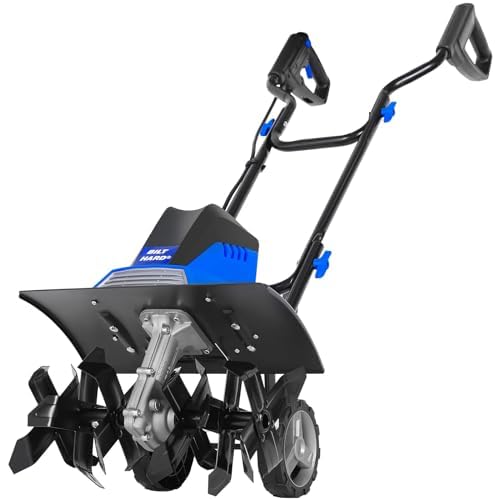
BILT HARD 16 inch 13.5A tiller, 6 tines, foldableBest Value 16 InchBILT HARD 16 inch 13.5A tiller, 6 tines, foldable13.5A corded16 inchesUp to 8.7 inches6, four angled each
IncwBo 12 inch 15A electric tiller, 4x4 steel tinesBest High-Amp Narrow HeadIncwBo 12 inch 15A electric tiller, 4x4 steel tines15A corded12 inchesUp to 8 inches4x4 steel, replaceable
EWORK 14 inch 10A corded rototiller, 7 inch depthBest Budget CordedEWORK 14 inch 10A corded rototiller, 7 inch depth10A corded14 inches7 inchesn/a

Hard soil defeats small electric tillers in two ways: the tines skip across the surface, and the motor bogs down when they finally bite. The cure is a combination of the right machine and some preparation of the ground.

This guide focuses on corded models, since sustained torque matters more than portability on compacted ground. Each pick is judged on how it handles jams, stones and dry crust, and the sections below explain how to soften the soil first.

Before you buy

6 Criteria to Look For Before Buying an Electric Tiller for Hard Soil

  1. 01

    Amps and sustained torque

    Hard soil keeps a motor near its current limit for the whole pass. A 13.5A motor like the RYOBI or Earthwise draws about 1,600 watts, while the EWORK at 10A draws about 1,200. The IncwBo goes to 15A in a narrow head. If the soil is truly hard, choose at least 12 amps and prepare the ground.

  2. 02

    Clutch or slip protection

    Stones and root balls stop the tines instantly. The LawnMaster TE1216M has a mechanical clutch that slips on a jam, while the others stall the motor. Over several seasons, a stalled motor will wear out sooner than a clutch-protected one, which is a strong reason to choose the clutch model for stony ground.

  3. 03

    Tine layout and replaceability

    Angled tines bite crust better than flat ones, and replaceable tines let you swap a bent one. The IncwBo uses replaceable 4 by 4 steel tines, while the Earthwise tines are fixed. Check the steel quality since cheap tines bend on the first stone.

  4. 04

    Width versus coverage

    A narrow 12 inch head like the IncwBo puts more power per inch of soil than the 16 inch RYOBI. For hard soil this is a benefit, but you pay in passes. Pick the narrowest width you are comfortable covering. A 16 inch head such as the RYOBI or Earthwise is the usual compromise, while the 14 inch EWORK sits between the two and is easier to turn at the end of a short row.

  5. 05

    Moisture and preparation

    Hard soil is easier to till when slightly damp. Water the bed the day before, or work after light rain, not after a downpour. A garden fork pass to crack the surface halves the load on any electric tiller. For very hard ground, make a first pass with the tines set shallow, wait a day or two for rain or irrigation to soak in, and then till again; two light sessions beat one aggressive session every time and are far kinder to the motor and the cord.

  6. 06

    Handle weight and bounce

    Lighter machines bounce on hard crust and need you to lean back. The BILT HARD 16 inch has a foldable handle but is still a light front-tine design. Keep your grip firm and work at a walking pace. Never lock your elbows against the handles, because a sudden jam can twist the machine; keep a relaxed stance with your feet clear of the tine path and your body behind the handles.

Detailed reviews

The 6 best electric tillers for hard soil, explained

01
LawnMaster TE1216M 12A 16 inch electric tiller, clutch
12A corded16 in wide9 in deepMechanical clutch
Check price on Amazon
Best for: Stony or root-filled hard ground where jams are likely.

The TE1216M pairs a 12 amp motor with a 16 inch path, a 9 inch depth rating and a mechanical clutch. In hard ground the clutch is the feature that matters: when a tine locks on a stone or a root mass, the clutch slips so the motor is not asked to stall against the full impact, which protects both the windings and your wrists.

The tradeoff is raw amperage. At 12 amps, roughly 1,440 watts, it has less headroom than the 13.5 amp RYOBI or 15 amp IncwBo, so on baked crust you will take shallow passes. The 9 inch rating is a best-case figure in loosened ground; in firm soil expect 3 to 4 inches on the first pass and deeper on the second and third. Against the Earthwise 13.5A fixed-tine unit it trades some power for forgiving jam behavior.

Over the long term, a slipping clutch is a wear item, so keep the clutch area free of soil and watch for glazed or smelly slip during long sessions. Rinse tines after use, store dry and run it on a heavy-gauge cord of 50 feet or less.

What works

  • Mechanical clutch limits shock when tines jam
  • Deep 9 inch depth rating
  • 16 inch path with rust-resistant blades
  • Reasonable motor draw

Watch out for

  • 12A has less headroom than 13.5A rivals
  • Clutch is a wear item

Spec sheet

Power
12A corded
Width
16 inches
Depth
Up to 9 inches
Blades
Rust-resistant steel
Safety
Anti-clock mechanical clutch
02
RYOBI 16 inch 13.5A corded cultivator, 6 tines
13.5A corded16 in wide8 in deep6 steel tines
Check price on Amazon
Best for: Hard but relatively stone-free ground where torque matters most.

The RYOBI cultivator combines a 13.5 amp motor, about 1,600 watts, with six steel tines cutting 16 inches wide and 8 inches deep. It has enough torque to chew through dry crust once the top layer is cracked, and the six-tine head leaves a finer finish than four-tine rivals.

The tradeoff is its light weight. On hard soil a light front-tine machine bounces and rides forward, so you must lean back, keep the pass shallow and accept that depth builds up over three or four passes. Compared with the LawnMaster, it has 1.5 more amps but no clutch, so a jam stalls the motor instead of slipping. If your ground is mostly hard but not stony, that tradeoff favors the RYOBI.

Upkeep is simple: clean the tines, check the cord and keep the switch free of dust. A heavy-gauge extension cord matters more here because hard soil keeps the motor at high current for longer.

What works

  • 13.5A motor with solid torque
  • Six tines for finer tilth
  • Lightweight handling
  • Common brand with easy parts

Watch out for

  • No clutch, jams stall the motor
  • Light frame bounces on hard crust

Spec sheet

Power
13.5A corded
Width
16 inches
Depth
8 inches
Tines
6 steel
Design
Lightweight
03
Earthwise TC70016EW 16 inch 13.5A tiller, fixed tines
13.5A corded16 in wide8 in deepFixed steel tines
Check price on Amazon
Best for: Users who value a rigid head and simple controls.

The Earthwise has a 13.5 amp motor and durable fixed steel tines with a 16 inch width and 8 inch depth. Fixed tines are a rigid assembly with no bolt-on play, so in hard ground all the torque goes into the soil rather than into a wobble.

The tradeoff is service. You cannot remove tines to narrow the pass or swap a single bent tine, so a stone strike that bends the assembly may need a replacement part. The padded grip and push-button start are easier on the hands during long sessions on tough ground. It matches the RYOBI on amps and width, so the choice is about rigidity versus availability.

Inspect the tine head after any hard strike, and tighten any fasteners monthly. Store it dry with the cord loosely coiled.

What works

  • 13.5A power for hard crust
  • Rigid fixed-tine head
  • Padded grip and push-button start
  • 16 inch path

Watch out for

  • Tines are not individually replaceable
  • Cannot narrow the path

Spec sheet

Power
13.5A corded
Width
16 inches
Depth
8 inches
Tines
Fixed steel
Start
Push button, single lever
04
BILT HARD 16 inch 13.5A tiller, 6 tines, foldable
13.5A corded16 in wide8.7 in deep360 RPM
Check price on Amazon
Best for: Hard ground on a tighter budget with a 16 inch footprint.

The BILT HARD 16 inch uses a 13.5 amp motor, six tines with angled blades turning near 360 RPM, and a foldable handle. Its rated depth of 8.7 inches is slightly deeper than the RYOBI's 8 inches, and the angled tine design helps the blades bite the surface of hard ground.

The tradeoff is the same as other value-brand units: parts and long-term support are less established. Performance on paper is very close to the RYOBI and Earthwise, so you pay less for similar torque. Against the 12 inch IncwBo it covers more ground per pass but has less amp headroom per inch of width.

Keep the tines clean, check the cord and fold the handle for storage. Keep expectations realistic for lifespan under daily hard-soil use.

What works

  • 13.5A motor at a lower price tier
  • Angled tines bite surface crust
  • Foldable handle
  • Rated 8.7 inch depth

Watch out for

  • Less proven parts supply
  • No clutch for jam protection

Spec sheet

Power
13.5A corded
Width
16 inches
Depth
Up to 8.7 inches
Tines
6, four angled each
Tine speed
360 RPM
05
IncwBo 12 inch 15A electric tiller, 4x4 steel tines
15A corded12 in wide8 in deep4x4 steel tines
Check price on Amazon
Best for: Small hard-soil beds where a narrow, powerful head fits best.

The IncwBo puts a 15 amp motor behind a 12 inch head with 4 by 4 steel tines. A narrow head concentrates the motor's power into less soil, so amp for amp it can bite harder in hard ground than 16 or 18 inch machines.

The tradeoff is coverage: 12 inches takes more passes, and 15 amps leaves little margin on a shared household circuit. The replaceable tines are a plus on stony soil. Compared with the 12 amp LawnMaster, it has 3 more amps but no clutch.

It is a newer brand listing, so treat longevity as unproven. Clean tines, check the cord and use it on its own outlet.

What works

  • 15A motor behind a narrow head
  • Replaceable steel tines
  • Compact for small beds
  • Good torque per inch

Watch out for

  • 12 inch path needs many passes
  • No clutch, newer brand

Spec sheet

Power
15A corded
Width
12 inches
Depth
Up to 8 inches
Tines
4x4 steel, replaceable
Use
Small gardens
06
EWORK 14 inch 10A corded rototiller, 7 inch depth
10A corded14 in wide7 in deepHeavy-duty
Check price on Amazon
Best for: Moderately hard soil beds where cost matters more than power.

The EWORK is a 10 amp, 14 inch corded tiller with a rated 7 inch depth. It is the lowest-powered machine in this guide, about 1,200 watts, and it is best on hard soil that has been softened first.

The tradeoff is clear: it will bog down in baked clay and rock, and it needs a pre-soak and a loosening pass with a fork before it is useful. Its strength is simple operation and a lower cost of ownership. Against the 13.5A units, it gives up 3.5 amps.

Keep expectations in check, clean the tines and store it dry.

What works

  • Lowest cost corded option here
  • 14 inch width
  • Simple controls
  • Light to carry

Watch out for

  • 10A bogs down in baked soil
  • 7 inch depth rating is shallowest

Spec sheet

Power
10A corded
Width
14 inches
Depth
7 inches
Type
Front-tine hand tiller
Use
Beds and borders

Spec sheet decoder

What the numbers on the box really mean

The specs manufacturers lead with, translated into what they tell you about real-world performance.

Amp rating

Current at 120V, so watts are amps times 120. More amps mean more torque to keep tines turning in hard soil.

Watch forIncwBo lists 15A, EWORK 10A.

Mechanical clutch

A slip mechanism between motor and tines that releases when the tines jam.

Watch forOnly the LawnMaster TE1216M lists one here.

Rated depth

Maximum depth in loose soil. Hard ground cuts that sharply.

Watch forThe LawnMaster at 9 inches is a best-case figure.

Tine speed

Rotation of the tines after gearing, around 360 to 400 RPM on most.

Watch forBILT HARD lists 360 RPM tines but 19,000 RPM motors.

Fixed versus replaceable tines

Fixed tines are rigid, replaceable ones allow repair.

Watch forEarthwise is fixed, IncwBo is replaceable.

Methodology

How We Evaluated These Electric Tillers for Hard Soil

Torque and motor headroom

We compared amp ratings from 10A on the EWORK to 15A on the IncwBo. Hard soil keeps motors loaded, so headroom counted heavily. Clutch designs were credited.

Jam protection

We looked at whether each machine has a clutch or tolerant drivetrain. The LawnMaster clutch is the clear differentiator. Fixed tines were weighed for rigidity versus repairability.

Tine design

Tine count, angle and replaceability were compared. Six-tine heads on the RYOBI and BILT HARD leave a finer finish. The IncwBo has replaceable tines.

Control on hard ground

We considered weight, handle design and bounce behavior. Lighter machines need more operator technique. Padded grips and push-button start were credited.

Ownership

Based on the spec sheet and owner feedback patterns, we weighed cord needs, parts supply and cleaning. Brand-backed models scored higher for support.

Decision guide

How to Choose the Right Electric Tillers for Hard Soil

By Ground Condition

SituationPickWhy
Stony or rooty hard groundLawnMaster TE1216MClutch absorbs jams
Dry crust, few stonesRYOBI 16 inch 13.5AStrong torque
Compacted small bedIncwBo 12 inch 15ANarrow head, most amps
Moderately firm bedsEWORK 14 inch 10AEnough once softened
General hard gardenEarthwise 16 inchRigid fixed tines

By Budget

TierPickWhy
Lowest costEWORK 14 inch 10ACheapest corded
ValueBILT HARD 16 inch 13.5A13.5A for less
Mid tierIncwBo 12 inch 15AHigh amps for the price
Mid-highEarthwise 16 inchFixed tines
Brand-backedRYOBI 16 inchSupport

Clutch vs No Clutch

With clutch

The LawnMaster TE1216M slips when tines jam, protecting the motor and your wrists. It suits stony or rooty soil.

Without clutch

The RYOBI, Earthwise, BILT HARD, IncwBo and EWORK stall the motor on a jam. They suit cleaner soil and offer more amps.

If you hit stones every pass, buy the clutch. If your soil is clean, buy amps.

Head Width

PreferencePickWhy
Narrow, concentrated powerIncwBo 12 inchMost power per inch
BalancedEWORK 14 inchMid width
StandardRYOBI 16 inchCommon size
Value standardBILT HARD 16 inchSame width for less
Deep ratingLawnMaster 16 inch9 inch depth

For Dry Summer Crust Specifically

Look for

Look for 13.5A or more and angled tines. Water the area the day before and crack the surface with a fork.

In this comparison

The BILT HARD 16 inch with angled tines and the RYOBI 13.5A are the best fit. The IncwBo 15A is the strongest in a narrow head.

When to Spend More

Spend more if

Spend more if you till every season on hard ground or hit stones. The LawnMaster clutch and the RYOBI brand support are worth it.

Save if

Save if you only till once a year after softening the soil. The EWORK 10A is adequate.

Ownership

Maintenance schedule

The upkeep that decides whether this machine lasts two seasons or ten.

TaskIntervalWhy it matters
Clean tinesEvery sessionDried soil adds weight and rust. Wipe and dry before storage.
Check tine boltsMonthly in seasonHard ground vibration loosens fasteners. Tighten before use.
Inspect the cordBefore each seasonHard-soil work keeps the cord under load. Replace damaged insulation. A cord that feels warm to the touch is undersized for the load and should be swapped for a heavier-gauge one.
Clutch inspectionEach seasonOn the LawnMaster, a worn clutch slips too easily. Replace it if power seems weak.
Brush checkEvery 2 to 3 seasonsBrushed motors lose power when brushes wear.

FAQ

Frequently Asked Questions

Can an electric tiller break hard ground?

It can break ground that is dry crust or lightly compacted, not rock-hard subsoil. Pre-soak and fork the area first. For virgin ground, rent a gas rear-tine machine.

Is the clutch worth it?

If you hit stones or roots often, yes. The LawnMaster clutch spares the motor and your wrists. If your soil is clean, extra amps matter more.

How many passes will it take?

Expect three to four passes to reach full depth on hard ground. Start shallow and go deeper each time. Each pass loosens the layer below, so the third pass often cuts twice as deep as the first with less strain on the motor.

Should I water first?

Yes, lightly the day before. Damp soil crumbles; bone-dry crust makes tines skip.

15A or 13.5A?

15A offers more headroom but needs a dedicated circuit. 13.5A is enough for most hard-soil beds.

Why does the tiller bounce?

Light front-tine machines ride up on hard crust. Lean back on the handle and take shallow passes. A slightly damp bed and a firm, steady walking pace usually fix this without needing a more powerful machine.

Bottom line

The short version

Browse more electric tillers for hard soilon Amazon →
James Miller, Lead Machine Editor

About the author

James Miller

Lead Machine Editor, MachineFanatic

James Miller leads MachineFanatic's buying guides, turning spec sheets, manuals and owner feedback into clear verdicts on power tools, outdoor power equipment, shop machines and kitchen machines.

More from James →

Keep reading

Related guides