
Amazon affiliate links - we earn a commission.Affiliate disclosure

Buying guide · 13 min read · Updated 2026-11-25

Best High-Altitude RV Water Heaters (2026)

Five propane tankless RV heaters that state altitude ratings, compared on burner size, fit and how thin mountain air changes combustion and hot water.

James MillerBy James MillerLead Machine Editor5 machines comparedSpec-sheet verified
Best High-Altitude RV Water Heaters

At a glance

Our top picks

Side by side

Spec comparison

MachineBurnerAltitudePowerDoor
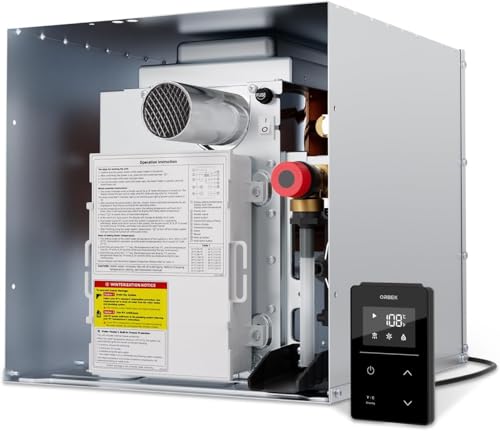
ORBEK 60,000 BTU propane tankless with altitude modeBest OverallORBEK 60,000 BTU propane tankless with altitude mode60,000 BTU propaneHigh-altitude suitability mode12V DCPanel sold separately in black or white
Hillhub 65,000 BTU tankless, 3.9 GPM, 12.8 inch cutoutBest Standard RetrofitHillhub 65,000 BTU tankless, 3.9 GPM, 12.8 inch cutout65,000 BTU propanen/an/an/a
Dastiaque 55,000 BTU propane tankless, altitude variantBest Altitude VariantDastiaque 55,000 BTU propane tankless, altitude variant55,000 BTU propaneHigh altitude version available12V, CSA certificatedn/a
Countrymod 11Gen 65,000 BTU tankless with 12V DCBest Safety TimerCountrymod 11Gen 65,000 BTU tankless with 12V DC65,000 BTU propaneHigh altitude noted in listingn/a15 x 15 inch
61,000 BTU propane tankless RV heater, 15x15 white doorBest Stated 9,800 Feet61,000 BTU propane tankless RV heater, 15x15 white door61,000 BTU propaneStated stable to about 9,800 feet12V DC15 x 15 inch white

A propane burner is an air-fuel mixer, and air thins as you climb. At a mountain campsite the same heater that worked at the coast gets less oxygen per breath, runs richer and can turn sooty, weak or hard to light.

Some tankless makers publish an altitude rating, a special mode or a separate high-altitude variant. This guide ranks five units by how clearly they state it, how much burner they bring and what the rest of the installation has to do to make the claim hold up.

Before you buy

6 Criteria to Look For Before Buying a High-Altitude RV Water Heater

  1. 01

    Altitude statement quality

    A vague line like built for mountains tells you nothing, while a named mode or a number tells you what to check. The ORBEK lists a suitability mode, the 61,000 BTU unit cites about 9,800 feet, and the Dastiaque offers a high-altitude version. Buy for the elevation you actually camp at, and read the manual for any jet or setting change. Do not assume that a heater which lit fine in the valley will light the same way at the pass, because the air density at the burner is what the flame cares about.

  2. 02

    Burner margin

    Gas burners lose output in thin air, commonly estimated at a few percent per thousand feet. A 65,000 BTU Hillhub or Countrymod starts with more headroom than a 55,000 BTU Dastiaque. If your campsite sits near the unit rated ceiling, pick the larger burner and expect a smaller temperature rise. A margin of 10,000 BTU or more is a sensible target for regular high-country trips, because it keeps showers comfortable when the weather turns.

  3. 03

    Inlet water temperature

    Mountain camping often means cold inlet water, which demands a bigger temperature rise at a time when the burner is weaker. A burner that is fine at sea level in July may not satisfy a shower in October at 8,000 feet. Plan for lower flow by turning down the tap, which gives the burner more time to heat each gallon. Warming a bucket-sized supply for a rinse is a simple fallback when a dry-camping morning is below freezing.

  4. 04

    Fuel supply in the cold

    Propane pressure drops as the cylinder cools, and a half-empty tank delivers less gas when it is very cold. A regulator that holds steady matters more with a hungry 65,000 BTU burner. Keep cylinders sheltered and filled above a quarter, and consider two cylinders with an auto-changeover regulator if the heater is your main source of hot water. A frozen regulator vent or a snow-covered cylinder is a surprisingly common cause of a mysterious shutdown.

  5. 05

    Door fit and exhaust path

    The Hillhub is sized for a 12.8 inch opening, while the Countrymod and the 61,000 BTU unit use 15 by 15 inch doors. Wind and snow can blow back through an exhaust, so keep the flue clear and avoid mounting in a spot that collects drifts. A cheap exhaust screen or a short wind deflector can reduce nuisance shutdowns on gusty ridges.

  6. 06

    Winter drain and freezing

    High-altitude trips often go below freezing, so a drain plan is not optional. Dual-outlet units like the Dastiaque and Countrymod have more places to drain. Blow out lines at low pressure and leave drains open when you store the rig. Check that nothing in the outdoor outlet fitting holds water, since that is where a split most often begins.

Detailed reviews

The 5 best high-altitude rv water heaters, explained

01
ORBEK 60,000 BTU propane tankless with altitude mode
60,000 BTUAltitude modeCopper exchanger12V DC
Check price on Amazon
Best for: Mountain campers who want the altitude behavior documented as a mode.

ORBEK builds this tankless heater around a 60,000 BTU propane burner and an oxygen-free copper heat exchanger, and the listing names a high-altitude suitability mode directly. That is the phrase that matters here: the maker acknowledges the problem and provides a setting for it, rather than leaving the owner to guess. The door panels are sold separately in black and white, so finish is your choice.

The tradeoff is burner headroom. At 60,000 BTU it sits below the 65,000 BTU units, and altitude takes a further share of whatever heat the burner can make. In practice that means a mountain camper with cold inlet water should expect a smaller temperature rise and should avoid running two taps at full flow. A mode that tunes combustion helps the flame, but it cannot create more heat than the gas and air allow.

Routine care is mostly about setup. Set the mode according to the manual when you reach elevation, keep the exhaust clear of snow and nests, and drain the exchanger fully before freezing nights. Because a regulator can also lose steady pressure in cold weather, check it each season rather than only after a failure.

What works

  • Named high-altitude suitability mode
  • Oxygen-free copper heat exchanger
  • On-demand heating with no stored water to freeze solid
  • Door panel color is selectable

Watch out for

  • 60,000 BTU leaves less margin when thin air cuts output
  • Door panel is a separate purchase
  • Needs a complete winter drain and healthy 12V power

Spec sheet

Burner
60,000 BTU propane
Altitude
High-altitude suitability mode
Exchanger
Oxygen-free copper
Power
12V DC
Door
Panel sold separately in black or white
02
Hillhub 65,000 BTU tankless, 3.9 GPM, 12.8 inch cutout
65,000 BTU3.9 GPMCSA listed12.8 inch retrofit
Check price on Amazon
Best for: Owners who want the largest burner margin and have a smaller standard opening.

Hillhub lists a 65,000 BTU burner with a 3.9 GPM rating, CSA certification and a retrofit design for a standard opening of about 12.8 by 12.8 inches. The extra 5,000 BTU over the ORBEK is real margin at altitude, where output falls. The listing promises hot water in about three seconds, which should be read as the time the burner takes to light, not the time the pipe takes to deliver heat.

The tradeoff is altitude documentation. This listing is the strongest burner here but does not feature an altitude mode as prominently as the ORBEK, so confirm the altitude behavior with the seller before buying for a high-country rig. It also uses a smaller opening than the 15 inch class, which may or may not match your cutout.

In ownership, treat the cutout as the first check, the regulator as the second and the exhaust as the third. Clear snow from the flue, descale in hard water and drain fully for winter. If you camp in the mountains regularly, ask whether the unit needs an altitude adjustment from the factory before you install it. A short email to the seller before you buy is cheap insurance, and a written reply gives you something to point to if the heater does not behave as described.

What works

  • 65,000 BTU burner gives altitude margin
  • 3.9 GPM rated flow
  • CSA certification listed
  • Retrofit design for a 12.8 inch opening

Watch out for

  • Altitude handling is less explicit than the ORBEK
  • 12.8 inch opening may not match every cutout
  • Hot-water-in-seconds is a maker claim

Spec sheet

Burner
65,000 BTU propane
Flow
Up to 3.9 GPM
Retrofit
Standard 12.8 x 12.8 inch opening
Start
Instant hot water in about 3 seconds claimed
Certification
CSA
03
Dastiaque 55,000 BTU propane tankless, altitude variant
55,000 BTUAltitude variantDual outlets12V CSA
Check price on Amazon
Best for: Light users who want an outdoor outlet and will order the altitude variant.

Dastiaque lists a 55,000 BTU propane tankless with the note that a high-altitude version is available, an LED display with touch control and both internal and external water outlets. The dual outlets let you connect an outdoor shower or camp kitchen to the same heater. As the smallest burner here, it is aimed at moderate use rather than a household.

The tradeoff is margin. A 55,000 BTU burner loses a share of its output in thin air, so a cold morning at elevation with a low inlet temperature will stretch it. The altitude version is a separate variant, which means you have to order the right one rather than assume the standard model will behave at elevation.

Treat the ordering step as part of the installation: confirm the altitude variant, the door size and the power supply before you pay. Keep the external outlet capped when not in use, drain both outlets for winter and keep the exhaust clear. An external outlet left open can also let cold air into the line, so close the valve at the heater when you are not using the outdoor connection.

What works

  • High-altitude version is offered
  • Dual internal and external outlets
  • LED display with touch control
  • 55,000 BTU suits modest demand

Watch out for

  • Smallest burner in the group
  • Altitude capability depends on ordering the right variant
  • Two outlets add another place to drain for winter

Spec sheet

Burner
55,000 BTU propane
Altitude
High altitude version available
Control
LED display with touch
Outlets
Internal and external
Power
12V, CSA certificated
04
Countrymod 11Gen 65,000 BTU tankless with 12V DC
65,000 BTU12V DC40-minute timerDual outlets
Check price on Amazon
Best for: Owners who want a safety timer and an outdoor outlet in a 15 inch cutout.

Countrymod calls this the 11th generation and lists a 65,000 BTU burner, a 15 by 15 inch door, 12V DC power and a note on high altitude. It adds a 40-minute timer that automatically shuts the heater off, a feature meant to protect against a forgotten tap. Dual internal and external outlets let you share the heater with an outdoor shower.

What you give up is that the timer can cut a long wash short, so a family that likes extended showers will notice it. It also depends on a seller whose support network is thinner than Suburban or Dometic. The altitude note in the listing should be read as a claim to confirm, not a guarantee at your campsite.

Set up with the same checklist as other tankless units: regulator, exhaust, battery, door fit and a winter drain. If the 40-minute timer shuts the unit off, close the tap and reopen it to restart. Keep the manual somewhere you can find it, since settings vary by generation. If a long wash is part of your routine, a short pause and restart is a small price for a safety feature that protects against a forgotten tap and wasted propane.

What works

  • 65,000 BTU burner gives margin at elevation
  • 40-minute automatic shutoff
  • Dual internal and external outlets
  • Standard 15 x 15 inch door

Watch out for

  • Timer can interrupt long showers
  • Thinner support network
  • Altitude performance needs confirming

Spec sheet

Burner
65,000 BTU propane
Door
15 x 15 inch
Timer
40-minute auto shutoff
Outlets
Internal and external
Altitude
High altitude noted in listing
05
61,000 BTU propane tankless RV heater, 15x15 white door
61,000 BTU9,800 ft rating12V DCControl panel
Check price on Amazon
Best for: Campers who want a stated elevation figure in a standard 15 inch door.

This listing states that the heater operates stably and reliably at altitudes up to about 9,800 feet, with a 61,000 BTU burner, a 15 by 15 inch white door and a built-in control panel. It is the only listing in this group that puts a specific elevation number in the copy. Maker figures are claims, but a number is easier to compare than a vague phrase.

The tradeoff is brand recognition and parts. A lesser-known label means you should check the seller, warranty and instruction sheet. At 61,000 BTU it sits between the ORBEK and the 65,000 BTU units, so the margin at altitude is modest.

Treat it as a value unit for the mountains: verify the elevation of your usual campsites against the 9,800 foot figure, keep the exhaust clear and drain for winter. Above that elevation, expect weaker performance and consider a larger margin. If you spend a season near the stated limit, write down the settings that worked so you can repeat them next year without hunting through the manual.

What works

  • Listing names about 9,800 feet
  • 61,000 BTU burner
  • Standard 15 x 15 inch door
  • Built-in control panel

Watch out for

  • Lesser-known brand and support
  • Margin shrinks as you climb past the rating
  • Stated figure is a maker claim

Spec sheet

Burner
61,000 BTU propane
Altitude
Stated stable to about 9,800 feet
Door
15 x 15 inch white
Power
12V DC
Control
Built-in panel

Spec sheet decoder

What the numbers on the box really mean

The specs manufacturers lead with, translated into what they tell you about real-world performance.

Altitude rating

The elevation at which the maker says the burner remains stable. It is a design claim, usually stated in feet.

Watch forThe 61,000 BTU unit cites about 9,800 feet.

High-altitude mode

A setting that adjusts the fuel and air balance for thin air. It prevents sooty or weak flames.

Watch forORBEK lists a high-altitude suitability mode.

BTU

Heat output per hour at design conditions. It drops as altitude rises.

Watch forA 55,000 BTU Dastiaque has less margin than the 65,000 BTU Hillhub.

Auto shutoff timer

A timer that turns the burner off after a set time. It protects against a tap left open.

Watch forCountrymod lists a 40-minute timer.

Dual outlets

Two water outlets, one inside and one outside. They let one heater serve a shower and an outdoor kitchen.

Watch forDastiaque and Countrymod list both.

Methodology

How We Evaluated These High-Altitude RV Water Heaters

Altitude clarity

We scored how specifically each listing addresses elevation. A named mode or elevation number earned more than a general line. We treated all of them as maker claims, and we did not assume that two listings with similar wording behave the same on a mountain. The more specific a statement was, the more useful it was to a buyer.

Burner margin

We compared 55,000, 60,000, 61,000 and 65,000 BTU units and credited the larger ones for altitude headroom. A larger burner helps only if gas supply and exhaust support it. We also noted that a bigger burner can mean a larger minimum flow, which matters for a rig with a gentle pump.

Fit and retrofit

We looked at door sizes such as 12.8 inch and 15 by 15 inch openings. A mismatch means carpentry, which adds risk at a remote campsite. We also asked whether the listing names the exact door and cutout, since vague fit language is a common source of returns.

Cold-weather handling

We considered drain points, outlet count and freeze risk. Heaters with extra outlets scored a little lower on winterizing ease.

Support and parts

We weighed brand reach and listing documentation. Heaters from less known sellers earned less credit because parts and manuals are harder to find.

Decision guide

How to Choose the Right High-Altitude RV Water Heaters

By Elevation

SituationPickWhy
Up to roughly 5,000 feetDastiaque 55,000 BTUEnough burner for modest altitude loss
Mountain camping with a documented modeORBEK 60,000 BTUNamed suitability mode
Around 9,800 feet61,000 BTU unitStates stable to about 9,800 feet
Maximum marginHillhub 65,000 BTULargest burner here

By Budget

TierPickWhy
Lowest61,000 BTU unitStated elevation at a lower tier
Low to midCountrymod 65,000 BTULarge burner with timer
MidDastiaque 55,000 BTUAltitude variant
UpperORBEK 60,000 BTUCopper exchanger and named mode

Mode vs Margin

Mode

The ORBEK lists a suitability mode and the Dastiaque a separate altitude variant. They address combustion directly but cannot add heat the burner lacks.

Margin

The Hillhub and Countrymod rely on 65,000 BTU headroom. They start with more output, so thin air costs them proportionally less.

Pick a mode if you camp high all the time; pick margin if you move between elevations.

Outlet and Features Axis

PreferencePickWhy
Outdoor shower connectionCountrymod 65,000 BTUDual internal and external outlets
Outdoor connection, smaller burnerDastiaque 55,000 BTUDual outlets
Auto shutoff protectionCountrymod 65,000 BTU40-minute timer
Simple panel61,000 BTU unitBuilt-in control panel

For Cold-Season Mountain Trips Specifically

Look for

A large burner, a documented altitude setting and a drain plan you can finish in minutes. Cold inlet water and thin air both reduce heat.

In this comparison

The Hillhub 65,000 BTU gives the most output, while the ORBEK pairs a named altitude mode with a copper exchanger.

When to Spend More

Spend more if

You camp above about 8,000 feet or in shoulder seasons. The ORBEK's mode and the Hillhub's burner margin justify the premium.

Save if

You camp at moderate elevation in warm months. The Dastiaque or the 61,000 BTU unit is enough.

Ownership

Maintenance schedule

The upkeep that decides whether this machine lasts two seasons or ten.

TaskIntervalWhy it matters
Set or confirm altitude modeAt each new elevationA mode or jet that suits one elevation may not suit another. Read the manual before the first shower.
Clear snow and debris from the flueEach trip in winterA blocked exhaust causes poor combustion and shutdowns. Check it before lighting.
Check regulator and cylinderEach seasonCold weather lowers propane pressure. A regulator in poor shape starves a large burner.
Drain both outletsBefore freezingDual-outlet units hold water in two spots. Open every drain and bypass the heater.
Descale the exchangerYearly in hard waterMountain wells are often hard. Scale cuts flow and output.

FAQ

Frequently Asked Questions

Why does altitude matter for a propane heater?

Thin air carries less oxygen, so the burner makes less heat and can run rich. Makers address this with modes, variants or ratings. Check the manual for your elevation, and ask the seller if the unit ships set for sea level or for altitude. Some units need a service step to change settings, and that is easier at home than at a campsite.

Do I need a special high-altitude heater?

Below about 5,000 feet most heaters work normally. Above that, a heater with an altitude mode or variant is safer.

How much output do I lose?

A common rule of thumb is a few percent per thousand feet above a threshold. It varies by design, so compare burners and keep a margin. If you want a quick check, note your coldest inlet water and highest campsite, then see whether the heater still reaches a comfortable shower at half flow.

Why is my water not as hot in the mountains?

Cold inlet water and thinner air both reduce temperature rise. Turn down the tap and choose a larger burner.

Can I use it above 9,800 feet?

Ratings that stop near that elevation are a limit. Above it, performance is not assured, so check with the maker.

Does altitude affect ignition?

Yes, thin air and a cold cylinder can make lighting harder. Keep the regulator healthy and the battery strong. If the burner clicks but will not catch, wait a minute with the tap closed so the exchanger can clear, then try again at a slightly higher flow.

Bottom line

The short version

Browse more high-altitude rv water heaterson Amazon →
James Miller, Lead Machine Editor

About the author

James Miller

Lead Machine Editor, MachineFanatic

James Miller leads MachineFanatic's buying guides, turning spec sheets, manuals and owner feedback into clear verdicts on power tools, outdoor power equipment, shop machines and kitchen machines.

More from James →

Keep reading

Related guides