


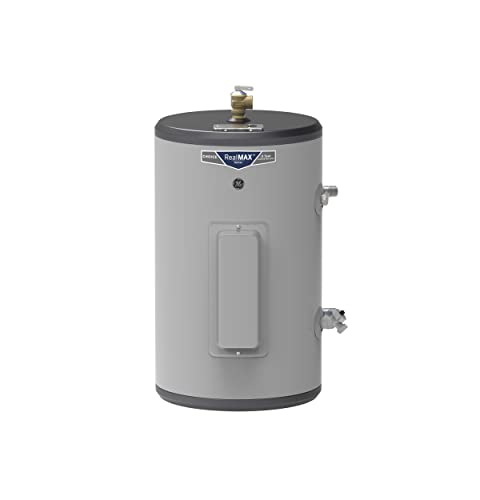


Among the 120V options, this is the only one designed for an RV wall. It stores ten gallons in a porcelain-lined steel tank, and its 120V element can run alone when you have shore power, with a propane burner standing by when you do not. That dual-fuel design is why it works for a trailer that sometimes sits at a pedestal and sometimes sits in a field.
The cost of that flexibility is complexity. You have a burner, a spark module, a flue and a gas valve to maintain in addition to the electric element. Compared with the pure 120V mini tanks in this guide, it ranks at the top price tier, and it needs a 12V supply for ignition. If you will never use propane, you are paying for hardware you ignore.
Ownership means a yearly flush, an anode rod check and a clean burner tube. The 120V element itself is low maintenance, but a bad thermostat or a tripped high-limit reset can take the electric side out while gas keeps working, which is a quiet advantage of having both. Treat the electric side as the default at campgrounds and the propane side as the safety net, and the unit earns its premium.
What works
- Built for an RV exterior cutout
- 120V element plus propane backup
- Replaceable anode rod protects the tank
- Spark ignition avoids a standing pilot
Watch out for
- Top price tier in this group
- Needs 12V for the gas side to light
- Heavier and more complex than a mini tank
Spec sheet
- Tank
- 10 gal porcelain-lined steel
- Electric
- 120V element
- Gas
- Propane DSI burner
- Corrosion
- Replaceable anode rod
- Use
- RV exterior cutout