
Amazon affiliate links - we earn a commission.Affiliate disclosure

Buying guide · 13 min read · Updated 2026-11-07

Best 10 Gallon RV Water Heaters (2026)

Six 10 gallon RV water heaters compared: DSI vs pilot ignition, anode rod vs aluminum tank, gas-electric options, and which one fits your rig's cutout.

James MillerBy James MillerLead Machine Editor6 machines comparedSpec-sheet verified
Best 10 Gallon RV Water Heaters

At a glance

Our top picks

Side by side

Spec comparison

MachineTankIgnitionFuelCorrosion
Suburban SW10DE 10-gallon gas/electric DSI heaterBest OverallSuburban SW10DE 10-gallon gas/electric DSI heater10 gal porcelain-lined steelDirect spark (DSI)Propane or 120V elementReplaceable anode rod
Dometic WH-10GEA 10-gallon gas/electric heaterBest ValueDometic WH-10GEA 10-gallon gas/electric heater10 gal aluminumElectronicPropane or electricNo anode needed
Suburban SW10DEL 10-gallon DSI heater with 12V relayBest for Inside ControlSuburban SW10DEL 10-gallon DSI heater with 12V relay10 gal porcelain-lined steelDirect spark (DSI)Propane or electricReplaceable anode rod
Suburban SW10D 10-gallon direct spark heaterBest Gas-First PickSuburban SW10D 10-gallon direct spark heater10 gal porcelain-lined steelDirect spark (DSI)Propane burnerReplaceable anode rod
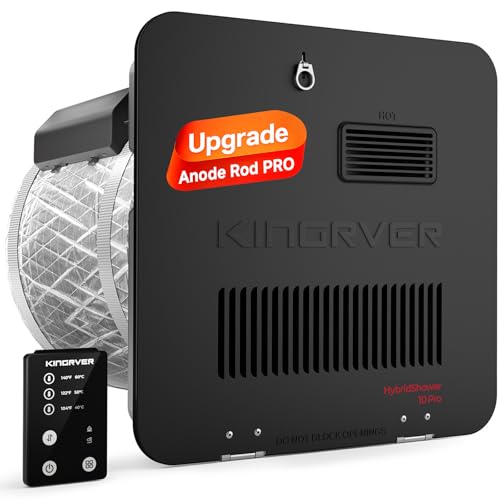
KINGRVER 10-gallon gas/electric RV heater, titanium anodeBest Budget AlternativeKINGRVER 10-gallon gas/electric RV heater, titanium anode10 galn/aPropane or electricBuilt-in titanium anode
Thermomate 10-gallon 120V point-of-use tank, 1500WBest Stationary Mini TankThermomate 10-gallon 120V point-of-use tank, 1500W10 galn/aElectric onlyn/a

A 10 gallon RV water heater is the standard size for travel trailers and mid-size coaches. It is a small insulated tank with a gas burner, an electric element, or both, and it lives behind an exterior access door in a cutout that has not changed much in decades.

Choosing well comes down to how it lights, how it fights corrosion, which power source you will really have at camp, and whether the new unit physically matches the hole in your wall. Most failed purchases are fit or ignition mistakes, not heating mistakes.

Before you buy

6 Criteria to Look For Before Buying a 10 Gallon RV Water Heater

  1. 01

    Ignition: DSI or pilot

    A pilot unit keeps a flame burning and must be shut off before you drive or refuel, while direct spark ignition lights only on demand. All the Suburban models here, including the SW10DE and SW10D, use DSI, and the Dometic uses electronic ignition. The mistake buyers make is forgetting that DSI needs steady 12V; a weak battery below roughly 10.5V commonly causes failed lights. Pick DSI unless you have a reason to avoid battery dependence.

  2. 02

    Corrosion protection

    A steel tank lives or dies by its sacrificial anode rod, which should be inspected yearly and replaced when about 75 percent is consumed. The Suburban SW10DE and SW10DEL rely on a replaceable rod, the KINGRVER lists a titanium anode, and the Dometic WH-10GEA uses an aluminum tank with no rod at all. Owners who forget maintenance do better with the Dometic. Hard water with iron or sulfate shortens rod life.

  3. 03

    Fuel and power flexibility

    Gas gives independence while electric saves propane at hookups. The SW10DE, SW10DEL, Dometic and KINGRVER can use either, while the SW10D is gas-first and the Thermomate is electric only. Running both together speeds recovery when you have shore power. A heater that cannot match the way you camp will frustrate you faster than any spec.

  4. 04

    Cutout and fit

    RV heaters sit in exterior cutouts with a specific flange, flue and door. The Suburban 10 gallon models share a footprint, and the KINGRVER is marketed as replacing most older 10 gallon tanks. The Thermomate is a residential-style tank and will not mount in that hole. Measure the opening, note your current brand, and confirm the replacement door before ordering.

  5. 05

    Control and wiring

    Some heaters switch at the unit and others add a 12V relay for an inside switch. The SW10DEL has that relay, while the SW10DE and SW10D do not. If your panel lacks a heater switch, the relay adds nothing. Match the model suffix to your existing wiring, not to a feature list.

  6. 06

    Weight and tank size

    Ten gallons sounds generous but is about two short showers with careful use, and the cold-water mix stretches it. Aluminum construction, as in the Dometic, cuts weight compared with porcelain-lined steel. The Suburban SW12DE is a 12 gallon alternative if your cutout allows. Do not upsize tanks without checking the opening.

Detailed reviews

The 6 best 10 gallon rv water heaters, explained

01
Suburban SW10DE 10-gallon gas/electric DSI heater
10 gal tankGas + 120VDSI ignitionAnode rod
Check price on Amazon
Best for: Owners replacing a standard 10 gallon heater who want propane and shore power in one unit.

The SW10DE is the configuration most 10 gallon cutouts were built around: a porcelain-lined steel tank, a propane burner lit by a spark module instead of a standing pilot, and a 120V element that you can run alone or alongside the burner. Because the burner only lights when you ask for heat, there is no pilot to extinguish before you drive and no propane wasted keeping a flame alive between showers.

The tradeoff is the 12V dependency. The spark module and gas valve need a healthy house battery, and a battery sagging toward 10.5V is a classic reason for a heater that clicks and never lights. Against the SW10D in this lineup, the SW10DE adds the electric element, which matters at a full-hookup site where you would rather save propane. Against the SW10DEL, you give up the inside relay for a remote switch, which only matters if your panel already has one.

Ownership is routine but not optional. The anode rod needs a look every spring and a replacement when about three quarters of it is gone, the tank should be drained and flushed yearly, and the burner tube should be cleared of spider nests before a season of heavy use. Treat those three chores as the price of a steel tank and it will usually outlast the trailer's first set of tires.

What works

  • Spark ignition, no standing pilot to relight
  • Gas or 120V element, or both together
  • Replaceable anode rod extends tank life
  • Fits the common 10 gallon exterior cutout

Watch out for

  • Needs steady 12V DC to light reliably
  • Steel tank corrodes if the anode is ignored
  • Heavier than an aluminum tank of the same size

Spec sheet

Tank
10 gal porcelain-lined steel
Ignition
Direct spark (DSI)
Fuel
Propane or 120V element
Corrosion
Replaceable anode rod
Control
Switch at heater
02
Dometic WH-10GEA 10-gallon gas/electric heater
10 gal aluminum10,000 BTUNo anodeGas/electric
Check price on Amazon
Best for: Owners who want to skip anode rod maintenance and shave weight.

Dometic takes a different route to corrosion resistance: an aluminum tank rather than steel with a sacrificial rod. The listing specifies a 10,000 BTU burner with electronic ignition, and an aluminum tank is noticeably lighter to carry and to hold in an access panel. With no anode rod to buy, inspect or forget, the single most neglected maintenance step on RV water heaters simply disappears.

Where it falls short is familiarity. The Suburban line has decades of parts, forum threads and technician habits behind it, while an aluminum Dometic is a smaller target when you need a gasket, door or thermostat in a hurry. It sits mid-pack for price tier, above the Suburban SW10D in this group, so the argument for it is longevity and weight, not savings. Check that your cutout and flue match before ordering, since aluminum units are not always dimensionally identical to steel ones.

Ownership is the lightest here. You still flush sediment yearly and still bypass the heater when winterizing, but there is no rod to pull in November and no steel threads to rust. If you camp in hard-water regions and dread rod maintenance, this is the more forgiving machine; if you value parts availability above all, the Suburban SW10DE is the safer pick.

What works

  • Aluminum tank needs no anode rod
  • Lighter to lift and mount
  • 10,000 BTU burner with electronic ignition
  • Gas and electric operation in one unit

Watch out for

  • Smaller parts and service network
  • Higher price tier than basic Suburban units
  • Confirm cutout dimensions before ordering

Spec sheet

Tank
10 gal aluminum
Burner
10,000 BTU
Ignition
Electronic
Corrosion
No anode needed
Fuel
Propane or electric
03
Suburban SW10DEL 10-gallon DSI heater with 12V relay
10 gal tank12V relayDSI ignitionGas/electric
Check price on Amazon
Best for: Rigs wired with an inside heater switch.

The SW10DEL is the SW10DE with one change that decides everything: a 12V relay so the heater can be switched from a panel inside the rig. In practice that means you turn on hot water from the kitchen or bath rather than walking outside to flip a switch at the heater. For people with the wiring already in place, that convenience is the entire reason to buy it.

The flip side is that it only helps if your coach has the corresponding remote switch. Without it, you are paying for a feature you cannot use, and the standard SW10DE would do the same job. Both share the porcelain-lined tank and the replaceable anode rod, and both can run on propane, 120V, or both. Compared with the Suburban SW10D, the L-suffix model gives you the electric element and the remote control that the plain D version lacks.

Ownership matches its siblings: yearly flush, anode check, burner tube cleaning. One extra point is the relay itself, a small electrical part that can fail separately from the heater, so keep the wiring diagram handy. Choose it when the rig's panel was built for it, and otherwise save the effort.

What works

  • Switch hot water on from inside the rig
  • Spark ignition avoids a standing pilot
  • Gas, electric or combined operation
  • Replaceable anode rod protects the tank

Watch out for

  • Useless without a matching remote switch
  • Extra relay is one more part that can fail
  • Same steel-tank upkeep as other Suburban models

Spec sheet

Tank
10 gal porcelain-lined steel
Ignition
Direct spark (DSI)
Fuel
Propane or electric
Relay
12VDC for remote switch
Corrosion
Replaceable anode rod
04
Suburban SW10D 10-gallon direct spark heater
10 gal tankDirect sparkAnode rodOptional element
Check price on Amazon
Best for: Boondockers who run on propane and rarely have shore power.

The SW10D is the propane-only workhorse of the family. It lights with a spark, stores 10 gallons in a porcelain-lined steel tank, and protects that tank with a replaceable anode rod. The listing mentions an optional electric element, but the base D version is fundamentally a gas appliance, which suits boondockers who rarely see a pedestal.

Its limit shows up the moment you plug in. Without the electric element you cannot offset propane at a full-hookup site, and recovery depends entirely on the burner. Next to the SW10DE, this model is cheaper in tier terms and simpler, with fewer parts to fail, but it gives up flexibility. If you often camp at campgrounds with shore power, the extra cost of the DE version pays back in saved propane within a season or two.

Ownership is the most basic of the Suburban set: flush annually, inspect the rod, keep the flue and burner tube clear. It is a good match for a rig that already has a working heater and just needs a like-for-like replacement without extra features.

What works

  • Simple, proven gas-only architecture
  • Spark ignition without a pilot
  • Replaceable anode rod included
  • Lower price tier than the DE variants

Watch out for

  • No electric element to save propane
  • Needs 12V for ignition like other DSI units
  • Steel tank requires regular rod checks

Spec sheet

Tank
10 gal porcelain-lined steel
Ignition
Direct spark (DSI)
Fuel
Propane burner
Corrosion
Replaceable anode rod
Part no.
5242A
05
KINGRVER 10-gallon gas/electric RV heater, titanium anode
10 gal tankTitanium anodeDual fuelDrop-in swap
Check price on Amazon
Best for: Budget-minded owners willing to try a newer brand with a titanium anode.

KINGRVER pitches a dual-fuel 10 gallon tank with a built-in titanium anode, meant to replace most older 10 gallon units. A titanium rod is an impressed-style protection idea that does not consume itself the way a magnesium rod does, which on paper means less yearly maintenance. That is an interesting approach and the main reason this unit stands out in the group.

The caution is track record. Suburban and Dometic have long service histories, documented parts and wide dealer familiarity, while a newer brand makes you rely on the seller for support and replacement parts. Priced in the lower-middle tier, it competes on feature list rather than reputation, so confirm the warranty terms and cutout dimensions before you commit.

If you buy it, do a careful first-season check: look for leaks at the fittings, verify the flame is steady blue, and confirm the thermostat holds temperature. After that, standard care applies: flush sediment yearly and bypass for winter. It suits an owner comfortable with a less proven brand in exchange for lower upkeep on paper.

What works

  • Titanium anode aims at lower upkeep
  • Gas or electric operation
  • Designed to replace older 10 gallon tanks
  • Lower tier than Dometic

Watch out for

  • Short track record versus Suburban
  • Parts and service support is thinner
  • Verify warranty and fit before buying

Spec sheet

Tank
10 gal
Fuel
Propane or electric
Corrosion
Built-in titanium anode
Fit
Replaces older 10 gal tanks
Brand
KINGRVER
06
Thermomate 10-gallon 120V point-of-use tank, 1500W
10 gal tank120V 1500WElectric onlyHard-wired
Check price on Amazon
Best for: Stationary cabins and shops with permanent 120V power.

This is not an RV heater in the traditional sense. It is a residential-style point-of-use tank that runs on 120V at 1500W with an adjustable thermostat, designed for a sink, small appliance or a quick shower. It has no propane burner and no flue, so it only works where you have reliable AC power.

That makes it a fit for a stationary cabin, tiny house, garage or shop, and a poor fit for a travel trailer that boondocks. Against the Suburban models here, it gives up gas operation entirely, so the first power outage or dry-camping weekend leaves you with cold water. It also is not a drop-in for an RV cutout, so plan on separate mounting and plumbing.

Ownership is simple: no burner, no ignition, no exhaust. You flush it, check the relief valve, and keep it away from freezing. It is the lowest-price tier in this roundup for a reason, and it is only the right answer when your use case has permanent power.

What works

  • No burner, flue or ignition to maintain
  • Adjustable thermostat
  • Compact and quick to plumb in
  • Lowest price tier here

Watch out for

  • Electric only, useless when boondocking
  • Not a drop-in for an RV cutout
  • Needs hard-wired 120V circuit

Spec sheet

Tank
10 gal
Power
120V, 1500W
Fuel
Electric only
Install
Hard-wired
Thermostat
Adjustable

Spec sheet decoder

What the numbers on the box really mean

The specs manufacturers lead with, translated into what they tell you about real-world performance.

BTU rating

BTU measures burner heat output per hour. A 10,000 BTU burner like the Dometic's heats the tank at a fixed pace regardless of marketing.

Watch forMost 10 gallon gas models cluster near 10,000 BTU, so do not pay extra for small differences.

Element wattage

The 120V element is typically around 1,400 to 1,500W, so it draws about 12 to 13 amps. That load matters on a 30A pedestal.

Watch forThe Thermomate lists 1500W and is electric only, so it has no gas backup.

Recovery rate

This is how fast the tank reheats after use. Running gas and electric together shortens it.

Watch forListings seldom publish it, so lean on tank size and burner rating for the SW10DE versus SW10D.

DSI vs pilot

DSI lights with a spark only when heat is called for. Pilots burn continuously.

Watch forEvery Suburban unit in this lineup is DSI, so battery health becomes the key check.

Anode rod

A sacrificial metal rod corrodes in place of the tank wall. Aluminum tanks avoid the need.

Watch forThe Dometic has none, the KINGRVER lists titanium, and the Suburban set uses replaceable rods.

Methodology

How We Evaluated These 10 Gallon RV Water Heaters

Ignition and power design

We evaluated how each unit lights and what it needs to run. The Suburban SW10DE and Dometic use spark or electronic ignition, while the Thermomate is electric only. We weighed this against how owners actually camp.

Corrosion strategy

We compared anode rod, aluminum tank and titanium approaches based on the spec sheets. The Dometic ranks high for low upkeep, the Suburban set for parts availability. Maintenance burden counted heavily.

Fit and replacement ease

We looked at whether each unit is a like-for-like swap for a common 10 gallon cutout. The Suburban SW10D, SW10DE and SW10DEL share a family footprint, while the Thermomate is a different class of device. Fit mistakes are the costliest error.

Owner feedback patterns

We considered the recurring owner reports about ignition lockouts, bypass valves and rod neglect. These patterns shaped the cons we list. We did not rely on any single review.

Value across price tiers

The lineup runs from the cheapest Thermomate tier to the upper-tier Dometic and Suburban SW12DE. We judged value by what each tier buys in flexibility and maintenance, not by absolute price.

Decision guide

How to Choose the Right 10 Gallon RV Water Heaters

By How You Camp

SituationPickWhy
Mostly full hookups and some boondockingSuburban SW10DEGas and electric in one unit
Mostly boondocking on propaneSuburban SW10DSimple gas-first design
Want inside switchSuburban SW10DEL12V relay for panel control
Hate anode maintenanceDometic WH-10GEAAluminum tank, no rod
Cabin with permanent powerThermomate 10 galElectric only, hard-wired

By Budget

TierPickWhy
Lowest tierThermomate 10 galOnly if power is permanent
Lower-middleKINGRVER 10 galDual fuel, newer brand
MiddleSuburban SW10DProven gas-only unit
Upper-middleSuburban SW10DELAdds inside control
UpperDometic WH-10GEAAluminum longevity

Steel Tank vs Aluminum Tank

Steel with anode rod

The Suburban SW10DE, SW10DEL, SW10D and the titanium-anode KINGRVER protect the tank with a rod that needs yearly attention. Parts are easy to find and the design is familiar to every technician.

Aluminum, no rod

The Dometic WH-10GEA skips the rod and trims weight, but it has a smaller service network. It suits owners who forget maintenance.

Pick steel if you value parts and will do the chores; pick the Dometic if you want less upkeep.

Remote Switching and Wiring

WiringPickWhy
Switch at heater onlySuburban SW10DEStandard control
Inside panel switch presentSuburban SW10DELUses 12V relay
No 12V systemThermomate 10 galRuns on 120V only
Marginal battery bankDometic WH-10GEAUse electric when plugged in

For Winter and Cold Camping Specifically

Look for

A unit you can drain and bypass fully, plus the ability to heat on propane when pedestals freeze. Never leave antifreeze in the tank.

In this comparison

The Suburban SW10DE handles both propane and shore power, and the Dometic drains without a rod to remove. The Thermomate is only for heated spaces.

When to Spend More

Spend more if

You keep the rig for years and want fewer chores, which points to the Dometic WH-10GEA, or you want the flexibility of the Suburban SW10DEL.

Save if

You camp seasonally and are replacing a like-for-like unit, where the Suburban SW10D or KINGRVER may be enough.

Ownership

Maintenance schedule

The upkeep that decides whether this machine lasts two seasons or ten.

TaskIntervalWhy it matters
Flush the tankYearlySediment collects and lowers recovery. Flushing also removes minerals that corrode fittings.
Inspect anode rodYearlyReplace when about 75 percent consumed. Skipping this lets the tank itself corrode.
Clear burner tubeYearlySpider nests cause yellow flame and failed lights. A clear tube keeps combustion clean.
Check bypass valvesSpring and fallValves left in winter position cause no-hot-water calls. Verify both sides before travel.
Test relief valveYearlyThe pressure and temperature relief valve protects against over-pressure. Lift the lever briefly to confirm it moves.

FAQ

Frequently Asked Questions

Should I buy a DSI or pilot model?

DSI lights on demand and avoids a standing flame, so most owners prefer it. Every Suburban model in this guide uses DSI. The tradeoff is dependence on 12V power.

How much does budget affect the choice?

Budget tiers here move from the Thermomate at the low end to the Dometic and Suburban SW10DEL higher up. Prices change, so check listings. Pay more for flexibility or maintenance savings.

How long should an RV heater last?

A steel tank with a maintained anode rod often lasts many seasons, while neglected tanks fail early. The Dometic aluminum design avoids rod failure.

Is a bigger BTU number better?

Not much. Most 10 gallon burners sit near 10,000 BTU, so recovery differences are small. Tank size and power source matter more.

Can I use antifreeze in the heater?

No. Bypass the heater and drain it fully when winterizing, because antifreeze can harm the anode rod and fill the tank needlessly.

Can the Thermomate replace my RV heater?

Not as a drop-in. It is electric only and lacks a burner and flue, so it suits a stationary building rather than a travel trailer.

Bottom line

The short version

Browse more 10 gallon rv water heaterson Amazon →
James Miller, Lead Machine Editor

About the author

James Miller

Lead Machine Editor, MachineFanatic

James Miller leads MachineFanatic's buying guides, turning spec sheets, manuals and owner feedback into clear verdicts on power tools, outdoor power equipment, shop machines and kitchen machines.

More from James →

Keep reading

Related guides