
Amazon affiliate links - we earn a commission.Affiliate disclosure

Buying guide · 14 min read · Updated 2026-11-25

Best Juicers Under $200 (2026)

Six slow masticating juicers at or under $200 with 3.3 to 4.6 inch chutes and 54 to 55 RPM augers, compared on yield, cleanup, noise and wide-chute design.

James MillerBy James MillerLead Machine Editor6 machines comparedSpec-sheet verified
Best Juicers Under $200

At a glance

Our top picks

Side by side

Spec comparison

A slow masticating juicer crushes produce with a rotating auger instead of shredding it on a fast basket. That gentler squeeze yields more juice from leafy greens, runs quietly, and makes juice that holds its color and flavor for a day in the fridge.

Prices move, and the $200 cap used here reflects live listing prices when this guide was updated. At this cap every machine is a slow juicer with a 200W motor, so the differences come down to chute width, auger speed, motor type, cleanup design and extras such as a nut milk function.

Before you buy

6 Criteria to Look For Before Buying a Juicer Under $200

  1. 01

    Chute width and prep time

    The chute is the first thing that decides whether you will use the machine daily. The Mokkom's 4.6 inch opening and the Canoly's 4.5 inch opening with auto-cutting take whole apples and big carrots, while the SIFENE's 3.3 inch opening needs produce cut to fit. Prep time is the number one reason owners give up on juicing. Match chute width to the produce you buy.

  2. 02

    Auger speed and torque

    Slow juicers turn an auger at 40 to 100 RPM, and the Mokkom runs at 55 and the SIFENE at 54. The slow speed limits heat and oxidation, which is why the juice keeps longer. Torque, as the Anybear's 180 N.m, matters when the auger meets a dense root. Do not buy on wattage alone, as all six are 200W.

  3. 03

    Motor type and durability

    The Mokkom uses a brushless AC motor that has no carbon brushes to wear out, which suits daily use. The SIFENE uses a DC motor, which is fine but has brushes that wear over years. A larger, slower motor runs quieter. Check the warranty and parts availability, because a motor failure outside warranty ends the juicer.

  4. 04

    Cleaning design

    Cleanup is the main reason slow juicers get abandoned, since they have a screen, an auger and a bowl. The DUMOS lists dishwasher-safe parts and a brush. A fine mesh needs brushing even if the parts go in a dishwasher. If you juice daily, rinse parts under a tap before the pulp dries, which cuts cleaning to two minutes.

  5. 05

    Yield and pulp dryness

    A slow auger squeezes pulp dry, and a well-made screen leaves a crumbly, almost dry pulp. If the pulp is still wet, run it through again or add a hard item like an apple. Leafy greens yield far more than in a centrifugal machine. Judge yield by the pulp rather than by a maker's percentage claim. A quick test is to squeeze a handful of the discarded pulp in your fist: if more than a few drops come out, the screen gap is too wide or the feed rate is too fast. Slowing down, feeding smaller pieces and alternating soft and hard items usually fixes it without any change in equipment.

  6. 06

    Extras and safety

    A reverse function clears jams, as on the DUMOS and SIFENE, and a safety lock stops the unit when the chute is open. The Canoly's nut milk function adds value for plant milk drinkers. Extras add parts, so count how many you need to wash. Pick only the extras you will actually use.

Detailed reviews

The 6 best juicers under $200, explained

01
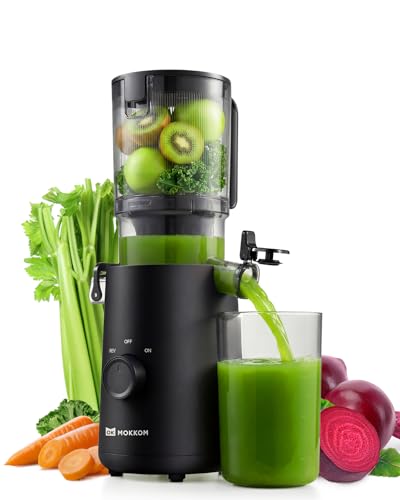
Mokkom 200W Cold Press Masticating Juicer, 4.6 Inch Chute
200W AC brushless55 RPM4.6 inch chuteAuto-rotating auger
Check price on Amazon
Best for: Daily juicers who want low noise and the least produce prep.

The Mokkom pairs a 200W brushless AC motor with a 55 RPM auger and the widest feed chute in this guide, at 4.6 inches. A brushless AC motor has no carbon brushes to wear out, which is a durability advantage over cheap DC designs, and it runs quietly. The large chute accepts whole apples and big carrot pieces with little cutting.

An auto-rotating auger pushes produce down, which reduces the clogging that wide chutes can cause. Next to the SIFENE, it has a wider chute and a brushless motor but no stated two-speed mode. Set beside the Anybear, it is slightly faster in auger speed but similar in motor power. The wide opening is the main time saver, since prep is the reason most owners abandon juicing.

Expect a longer cleanup than a centrifugal juicer, with a screen, auger and bowl to wash. Use the supplied brush on the screen straight after juicing, and let parts dry fully. Alternate soft and hard ingredients so fibrous celery does not wrap the auger, and run the reverse function if anything jams. Because the bowl is large, you can juice a full morning batch for two people without stopping to empty the pulp, which suits a household that makes a jar for the day.

What works

  • 4.6 inch chute fits whole fruit
  • Brushless AC motor has no brushes to wear
  • 55 RPM slow press
  • Auto-rotating auger limits clogging

Watch out for

  • Longer cleanup than a centrifugal
  • Large body needs counter space
  • Limited published detail on parts

Spec sheet

Motor
200W brushless AC
Auger speed
55 RPM
Chute
4.6 inch
Feature
Auto-rotating auger
Type
Slow masticating
02
DUMOS 200W Cold Press Juicer, 4.25 Inch Chute with Reverse
200W4.25 inch chuteReverse functionDishwasher safe
Check price on Amazon
Best for: People who want a simple slow juicer with dishwasher-safe parts.

The DUMOS is a 200W slow masticating juicer with a 4.25 inch chute, a reverse function and an automatic safety lock that stops the unit when the chute is open. Detachable parts are listed as dishwasher safe, and a cleaning brush is included, which shortens the chore that decides whether a juicer gets used. The blade-free auger is a safety plus.

Next to the Mokkom, it has a slightly narrower chute and no brushless motor claim, but its dishwasher-safe parts and lower tier make it easier to live with. Measured against the Canoly, it skips the nut milk function and is simpler. The reverse button is useful for clearing a jam without taking the unit apart, which is common when celery or fibrous greens bunch up.

Use the brush on the screen right after juicing, because mesh is the part dishwashers do not clean well. Cut leafy greens into bundles and feed them with a firm apple to push them through. Keep the lid latched, as the safety lock will stop the unit if it is not seated.

What works

  • Dishwasher-safe parts with a brush
  • Reverse function clears jams
  • 4.25 inch chute
  • Auto safety lock

Watch out for

  • No brushless motor claim
  • Mesh still needs hand cleaning
  • Slower than a centrifugal

Spec sheet

Motor
200W slow press
Chute
4.25 inch
Safety
Automatic lock when lid off
Cleaning
Dishwasher-safe parts, brush included
Extra
Reverse function
03
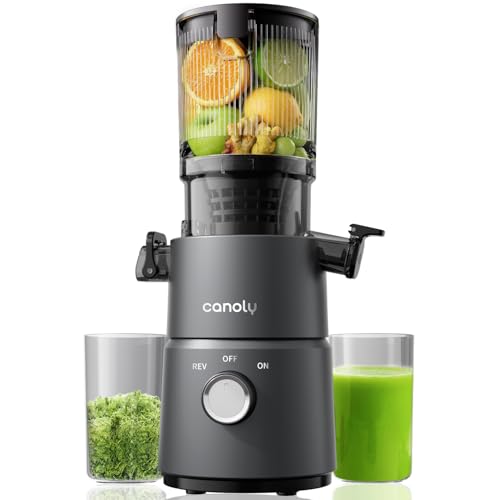
Canoly C03 2-in-1 Cold Press Juicer and Nut Milk Maker, 4.5 Inch Chute
200W4.5 inch chuteNut milkAuto-cutting
Check price on Amazon
Best for: Households that want juice and fresh nut milk from one machine.

The Canoly C03 adds a second job: it makes nut milk as well as juice, which few slow juicers at this cap do. A 4.5 inch chute with integrated auto-cutting reduces prep, and a 200W high-torque motor is aimed at fibrous items like ginger and celery. The auto-cutting feature chops produce as it enters, so you can drop in larger pieces than the chute alone suggests.

Set beside the Mokkom, it gives you the nut milk function, but a slightly narrower chute and no brushless claim. Against the DUMOS, it adds the second use but also adds parts to wash. If you drink almond or oat milk regularly, a machine that makes it from raw ingredients can pay back through lower grocery spending.

The extra function means extra parts: a fine mesh for nut milk that clogs unless rinsed immediately. Soak nuts overnight for the best texture, and strain through the supplied filter. Clean the nut milk screen with a brush and hot water before the residue dries. A common surprise is that nut milk from a juicer is thinner than store-bought carton milk, so many owners add a small pinch of salt or a date for body. Keep the leftover nut pulp for baking, since it freezes well and adds fiber to muffins and crackers.

What works

  • Makes juice and nut milk
  • 4.5 inch chute with auto-cutting
  • High-torque 200W motor
  • Handles fibrous produce

Watch out for

  • More parts to wash
  • Nut milk screen clogs if left
  • Larger footprint

Spec sheet

Motor
200W high torque
Chute
4.5 inch with auto-cutting
Second use
Nut milk
Model
C03
Type
Slow masticating
04
Anybear 200W Cold Press Slow Juicer, 4.3 Inch Tritan Chute
200W180 N.m torque4.3 inch chuteTritan chute
Check price on Amazon
Best for: Buyers who want a stated torque figure for hard roots.

The Anybear states a torque figure of 180 N.m, a number that is more informative than wattage because torque is what drives the auger through dense produce. A 4.3 inch chute takes whole fruit, and the chute is made from Tritan, a tough BPA-free plastic that resists clouding. The motor is rated at 200W, the same as most slow juicers here.

Measured against the Mokkom, it has a slightly narrower chute and a stated torque figure, which helps buyers who care about performance on hard roots. Next to the SIFENE, it has a wider chute but no stated two-speed mode. The torque claim is encouraging, though it is a maker figure and not a test result.

Tritan resists stains better than cheap plastic, but wash it promptly after beet or carrot juice. Use the brush on the screen and let the auger dry upright. Cut hard roots into chunks no wider than the chute, since forcing them stalls the motor.

What works

  • 180 N.m torque is stated
  • 4.3 inch Tritan chute
  • 200W slow press
  • BPA-free chute resists staining

Watch out for

  • Torque is a maker claim
  • No two-speed mode listed
  • Parts count is high

Spec sheet

Motor
200W
Torque
180 N.m claimed
Chute
4.3 inch whole fruit
Material
Tritan BPA-free chute
Type
Slow masticating
05
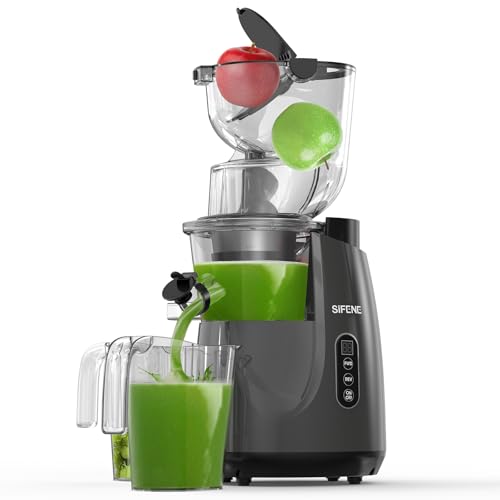
SIFENE 200W Masticating Juicer, 54 RPM, Two Speeds and Reverse
200W DC54 RPM3.3 inch chuteTwo speeds
Check price on Amazon
Best for: Buyers who juice both leafy greens and hard roots and want modes for each.

The SIFENE has a 54 RPM single auger, a 200W DC motor and two modes, soft and hard, plus a reverse function. The soft mode is for berries and leafy greens, and the hard mode is for celery, ginger and root vegetables. A 70 mm chute is the narrowest here, so produce needs more cutting, but an 800 ml juice jug is included.

The two speed modes are the distinguishing feature, since a single speed has to compromise between greens and roots. Set beside the Mokkom, it demands more prep but offers more control. Measured against the DUMOS, it adds a hard and soft setting. A DC motor is acceptable at this size but has brushes that wear, so heavy daily use will age it sooner than the brushless Mokkom.

Cut produce to fit the 70 mm opening, and feed soft items on the soft setting. Clean the screen and auger right away. Use reverse when the unit stalls rather than forcing the pusher. Because the chute is the narrowest in the lineup, plan on slicing apples into quarters and carrots into thick sticks, which adds about a minute of prep but keeps the auger from jamming.

What works

  • Soft and hard modes plus reverse
  • 54 RPM auger
  • 800 ml jug included
  • Compact chute fits smaller counters

Watch out for

  • 70 mm chute needs more cutting
  • DC motor has brushes that wear
  • Less capacity per batch

Spec sheet

Motor
200W DC
Auger speed
54 RPM
Chute
3.3 inch (70 mm)
Modes
Soft, hard and reverse
Jug
800 ml juice jug included
06
Aorda 200W Slow Masticating Cold Press Juicer, Matte Grey
200WCold pressCompact bodyQuiet
Check price on Amazon
Best for: Small kitchens where counter space comes first.

The Aorda is a slow masticating juicer with a 200W motor and a deliberately compact body that is meant to save counter space. It markets quiet operation and a cold press method that limits heat. The listing offers fewer hard numbers than the others, so the design is the main selling point.

Against the Mokkom, it has a smaller footprint and less published detail on chute width and torque. Against the Anybear, it makes no torque claim. It is the right pick for a small kitchen where counter space is the first constraint, as long as you accept narrower produce prep.

Wash the screen and auger immediately, and use the cleaning brush. Store the parts apart to let them dry. Cut produce small, since a compact body usually means a narrower opening and a smaller bowl.

What works

  • Compact body saves counter space
  • Quiet slow press
  • 200W motor
  • Matte finish hides fingerprints

Watch out for

  • Fewer published numbers
  • Likely narrower chute
  • Smaller juice capacity

Spec sheet

Motor
200W
Style
Vertical slow masticating
Design
Compact and space-saving
Finish
Matte grey
Use
Fruit and vegetable juice

Spec sheet decoder

What the numbers on the box really mean

The specs manufacturers lead with, translated into what they tell you about real-world performance.

55 RPM auger

The rotational speed of the crushing screw. Slower speeds limit heat and foam.

Watch forThe Mokkom lists 55 RPM and the SIFENE 54 RPM, which are essentially the same.

Brushless AC motor

A motor design without carbon brushes. It runs quieter and lasts longer than a brushed DC motor.

Watch forOnly the Mokkom advertises it, and the SIFENE uses DC.

180 N.m torque

The twisting force available at the auger. It matters on dense roots.

Watch forThe Anybear states it, but it is a maker claim.

Chute in inches

The width of the feed opening. A wider chute means less cutting.

Watch forThe range runs from 3.3 inches on the SIFENE to 4.6 inches on the Mokkom.

Reverse function

The auger spins backward to clear a jam. It saves disassembly.

Watch forThe DUMOS and SIFENE offer it.

Methodology

How We Evaluated These Juicers Under $200

Auger and motor design

We compared auger speed, motor type and torque claims. The Mokkom's brushless AC motor and 55 RPM auger scored highest for durability. The Anybear's 180 N.m torque was treated as a promising claim.

Chute and prep

Chute width from 3.3 inches on the SIFENE to 4.6 inches on the Mokkom was weighed against the time saved. Auto-cutting on the Canoly earned extra credit.

Cleanup and parts

Dishwasher-safe parts on the DUMOS and the included brushes counted. The Canoly's second screen for nut milk was scored as extra work.

Features and safety

Reverse functions, safety locks and nut milk modes were compared, since they decide how easy the machine is to live with.

Fit at the cap

Every item is at or under the cap on its live listing. The ranking favors durability and low prep over extra gadgets.

Decision guide

How to Choose the Right Juicers Under $200

By Daily Routine

SituationPickWhy
Daily juicing, minimal prepMokkom 4.6 Inch Cold PressWidest chute and a brushless motor
Easy cleanupDUMOS 4.25 Inch Cold PressDishwasher-safe parts and a brush
Juice and nut milkCanoly C03 2-in-1Nut milk function
Hard rootsAnybear 4.3 Inch Cold Press180 N.m torque claim
Greens and rootsSIFENE 54 RPM JuicerSoft and hard modes

By Budget

TierPickWhy
Lowest in the lineupAorda Slow JuicerCompact and simple
Lower middleDUMOS 4.25 Inch Cold PressDishwasher-safe parts
MiddleSIFENE 54 RPM JuicerTwo modes
Upper middleMokkom 4.6 Inch Cold PressBrushless motor and widest chute
Top of the capCanoly C03 2-in-1Nut milk plus juice

Wide Chute vs Compact Body

Wide chute (Mokkom, Canoly)

Less cutting, whole fruit goes in, but the body is larger and takes counter space.

Compact body (Aorda, SIFENE)

Fits small counters and stores easily, but produce needs more cutting.

Choose the wide chute if time is the constraint, and compact if space is.

Motor and Speed Control

PreferencePickWhy
Longest-lasting motorMokkom 4.6 Inch Cold PressBrushless AC
Tune speed to produceSIFENE 54 RPM JuicerSoft and hard modes
Torque for dense rootsAnybear 4.3 Inch Cold Press180 N.m stated

For Leafy Greens Specifically

Look for

A slow auger, a fine screen and a reverse function to clear tangled stalks. Alternate greens with firmer produce.

In this comparison

The SIFENE's soft mode and the Mokkom's auto-rotating auger handle greens best, and the DUMOS's reverse clears jams quickly.

When to Spend More

Spend more if

You want vertical slow juicers with larger bowls, a dual-stage screen or a long warranty. Higher tiers also offer drier pulp.

Save if

You juice a few times a week, in which case any of these 200W machines is enough.

Ownership

Maintenance schedule

The upkeep that decides whether this machine lasts two seasons or ten.

TaskIntervalWhy it matters
Brush the screen after every useImmediatelyDried pulp clogs the fine mesh and cuts yield. A brush clears it in seconds.
Wash the auger and bowlAfter every useSugars dry sticky. Rinse and dry them before storing.
Check the gasketsMonthlyWorn seals leak juice into the base. Replace them when they harden.
Soak stained plasticsWeeklyCarrot and beet stain plastic. Use a warm soap soak.
Dry parts fullyAfter washingTrapped moisture grows mildew. Air dry before reassembly.

FAQ

Frequently Asked Questions

Is a slow juicer worth it over a centrifugal one?

For leafy greens, quiet operation and juice that keeps a day, yes. For speed and low effort, a centrifugal machine is quicker.

What does the $200 cap buy?

It buys 200W slow masticating juicers with wide chutes and extras. The cap reflects listing prices when this guide was updated.

How long does slow juicer juice keep?

Up to a day in a sealed jar in the fridge, since less air is mixed in. Fresh is still best.

Do I need to peel produce?

Peel citrus and anything with a waxed or bitter skin. Apples and carrots can go in washed.

How long do these motors last?

A brushless AC motor can last many years, while a brushed DC motor wears sooner. Short batches help both.

Can I juice soft fruit like berries?

Yes, with the soft mode or by alternating with firm produce. Soft fruit alone can clog the screen.

Bottom line

The short version

Browse more juicers under $200on Amazon →
James Miller, Lead Machine Editor

About the author

James Miller

Lead Machine Editor, MachineFanatic

James Miller leads MachineFanatic's buying guides, turning spec sheets, manuals and owner feedback into clear verdicts on power tools, outdoor power equipment, shop machines and kitchen machines.

More from James →

Keep reading

Related guides