
Amazon affiliate links - we earn a commission.Affiliate disclosure

Buying guide · 12 min read · Updated 2026-11-07

Best Meat Grinders for Bones (2026)

Six grinders that list soft or poultry bone capability, compared by motor type, head size, gear material and what each maker actually states about bone limits.

James MillerBy James MillerLead Machine Editor6 machines comparedSpec-sheet verified
Best Meat Grinders for Bones

At a glance

Our top picks

Side by side

Spec comparison

MachineHeadMotorBodyPlates
LEM BigBite #32 Grinder, 1.5 HP, Raw Chicken BonesBest for Heavy Bone WorkLEM BigBite #32 Grinder, 1.5 HP, Raw Chicken Bones#321.5 HPStainless steeln/a
Anatole 1.5 HP #12 Bone Mincer, 1100WBest #12 Bone MincerAnatole 1.5 HP #12 Bone Mincer, 1100W#121.5 HP, 1100 watt copperStainless steel1/4, 1/3, 2/5 inch and 3-hole
Huanyu 2000W #10 Bone Grinder, DC MotorBest Home Pet-Food PickHuanyu 2000W #10 Bone Grinder, DC Motor#102000 watt pure copper DCn/an/a
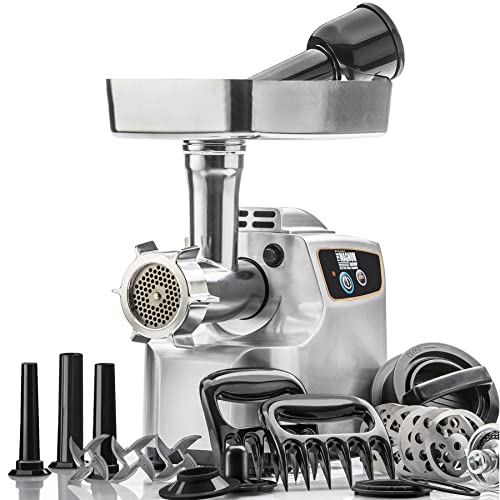
STX Magnum 1800W Air-Cooled Grinder, Soft BonesBest Air-Cooled MotorSTX Magnum 1800W Air-Cooled Grinder, Soft Bonesn/a1800 watt locked, air-cooledn/a6 grinding plates
Sinyder 3500W Grinder, Soft Bones, 72 dBBest Quiet Touch-Control PickSinyder 3500W Grinder, Soft Bones, 72 dBn/a3500 watt max, pure coppern/a5 mm and 7 mm, plus fan plate
Anatole 1.3 HP 950W Bone Mincer, 4 PlatesBest Lower-Power Bone MincerAnatole 1.3 HP 950W Bone Mincer, 4 Platesn/a1.3 HP, 950 watt copperStainless steel1/4, 1/3, 2/5 inch and 3-hole

Bone grinding is a different load from meat grinding. Bone is hard, brittle and abrasive, so it chews up knives and plates, spikes the motor current and can shatter into fragments that jam the auger. A grinder that handles chicken carcasses calmly may be ruined by one beef knuckle.

Most home grinders carry no bone rating at all. The few that do usually limit it to soft or poultry bone and say so in a clause. This guide sorts the lineup by what each maker states, by motor type and gear material, and it treats every unsupported claim as a reason to read the manual before feeding the machine anything hard.

Before you buy

6 Criteria to Look For Before Buying a Meat Grinder for Bones

  1. 01

    What the listing says about bone

    The LEM #32 names raw chicken bones, the Huanyu excludes large leg bones, the STX and Sinyder say soft bones, and the Anatole models call themselves bone mincers without giving a limit. A stated limit is more useful than a bare claim. When in doubt, the manual outranks the listing, and no home grinder should take beef or pork leg bones. The reason is physical: a dense leg bone does not crush progressively, it resists until something fails, and that something is usually the knife edge, the plate or a gear tooth. Poultry bone is thin and partly cartilage, so it shears and crumbles under the auger.

  2. 02

    Motor type and cooling

    Bone spikes current and heats windings. The STX's air-cooled cowl and breaker and the Huanyu's DC motor with speed control address that in different ways. A motor that cools or slows under load survives bone better than a single-speed motor running flat out. Watch the housing temperature during a session: if the side of the motor is too hot to hold your hand against for a few seconds, stop and let it cool. Heat is cumulative, and a machine that coped with the first ten pounds can fail on the next ten without any warning but a hot smell.

  3. 03

    Gear material

    The Sinyder names metal gears and the Huanyu lists a copper DC motor, while others leave gear material unstated. Plastic gears strip when a bone fragment locks the auger. For bone work, metal gears are a requirement, not a luxury. Even then, the gear train is only as strong as the weakest link, which is often the drive shaft coupling or the key that joins the shaft to the auger. If a listing says nothing about the drive, ask the seller or read owner questions before trusting the machine with bone.

  4. 04

    Head size and throat

    A larger head, like the LEM's #32 or the Anatole's #12, has a throat wide enough for bone-bearing pieces and plates with room to pass fragments. A #10 head, as on the Huanyu, is adequate for poultry. Small heads bridge on bone-in pieces.

  5. 05

    Plates and knife wear

    Bone dulls knives and wears plates quickly. The Anatole's 3-hole plate passes fragments with less resistance, and the STX ships six plates. Budget for replacement knives and plates as a consumable. A rough rule is to inspect the knife edge and plate face after every few bone sessions: a plate that has gone dished or a knife with a rounded edge produces mush instead of a clean grind and sends extra heat into the motor.

  6. 06

    Noise and electronics

    The Sinyder claims 72 dB, and the Huanyu and Sinyder both use touchscreens. Electronics add control but also a failure point near moisture. Decide whether presets are worth that risk.

Detailed reviews

The 6 best meat grinders for bones, explained

01
LEM BigBite #32 Grinder, 1.5 HP, Raw Chicken Bones
#32 head1.5 HP motorRaw chicken bonesStainless build
Check price on Amazon
Best for: High-volume processors who grind poultry carcasses and bone-in trim.

The LEM #32 is the only grinder in this guide whose listing names a specific bone type. It states that the machine handles beef, pork, poultry, lamb, venison and raw chicken bones, and a 1.5 horsepower motor behind a #32 head gives it the torque to take the shock of a bone fragment without stalling.

A large head matters for bone because the auger throat is wide enough to take bone-bearing pieces without bridging, and the plate has room to pass fragments. Against the Anatole 1.5 HP, which is a #12 bone mincer, the LEM has the larger intake and the longer record in the grinding trade, while the Anatole states a bone orientation in its product name.

The build is stainless steel throughout, so cleanup is straightforward and corrosion is not a concern after a messy job. The practical advice is to feed bone gradually, small pieces at a time, mixed with meat so the load is spread, and to replace the knife and plate more often than you would for meat alone. Bone dulls steel fast, and a dull knife loads the motor and heats the machine. Never push with force; let the auger pull.

What works

  • Listing names raw chicken bones
  • 1.5 HP motor gives torque headroom
  • #32 head takes bone-bearing pieces
  • Stainless steel build resists corrosion

Watch out for

  • Large, heavy machine
  • Bone speeds wear on knife and plate
  • Overkill for small pet-food batches

Spec sheet

Head
#32
Motor
1.5 HP
Bone statement
Raw chicken bones listed
Body
Stainless steel
Includes
3 plates, knife, stomper, stuffing tubes
02
Anatole 1.5 HP #12 Bone Mincer, 1100W
#12 head1.5 HP 1100W200 to 250 lb/h4 plates
Check price on Amazon
Best for: Pet-food and sausage makers who want a #12 with a wide plate choice.

Anatole calls this a bone mincer in the product name and pairs it with a 1.5 HP, 1100 watt pure copper motor and a #12 commercial-grade head. The listing claims 200 to 250 pounds per hour depending on the material, and the body, blades, plates and tray are stainless steel.

Four plates are included, spanning one quarter to two fifths of an inch and a 3-hole plate, plus four sausage stuffers, which makes it a more complete kit than most. The 3-hole plate is the interesting one for bone work, since larger holes pass fragments with less resistance. Against the LEM #32, you get a smaller head and a similar motor class in a #12 body, which suits a bench rather than a stand.

The maker does not give a precise bone limit in the listing, so use the manual and stay with poultry and small soft bone. Wash and dry every part, keep the plates oiled and expect to sharpen or replace the cross blades sooner than with meat-only use. A motor of this size warms quickly during long bone runs, so rest it between batches.

What works

  • Product named a bone mincer
  • 1.5 HP copper motor in a #12 head
  • Four plates and four stuffers included
  • Stainless body, blades and tray

Watch out for

  • No stated bone limit in the listing
  • Warms up during long runs
  • Heavy for a #12

Spec sheet

Head
#12
Motor
1.5 HP, 1100 watt copper
Output claim
200 to 250 lb per hour
Plates
1/4, 1/3, 2/5 inch and 3-hole
Body
Stainless steel
03
Huanyu 2000W #10 Bone Grinder, DC Motor
#10 head2000W DC motor5 speedsAuto-reverse
Check price on Amazon
Best for: Raw pet-food makers who want a stated limit and variable speed.

Huanyu states its bone limit plainly: the machine handles a variety of meats and bones, excluding large leg bones. A 2000 watt pure copper DC motor drives a #10 head, a five-speed touchscreen sets the pace and an auto-reverse function clears jams.

The explicit exclusion is what earns the rank. A manufacturer that tells you what not to feed the machine is giving you a usable rule, which is better than a blanket claim. A DC motor with speed control can run slowly and steadily through bone, which is gentler on the gears than a single fast speed, and the #10 head is larger than a #8 without being a bench-sized machine.

The three included plates are 4 millimeter fine, 7 millimeter coarse and a fan-shaped one. Keep to chicken carcasses, duck necks and small poultry bone, and cut larger pieces into short sections before feeding. Dry the parts after washing, since moisture on a copper-motor machine's electronics is the common failure. The touchscreen needs a dry cloth only.

What works

  • States that large leg bones are excluded
  • DC motor with five speeds
  • Auto-reverse clears jams
  • Fine, coarse and fan plates included

Watch out for

  • Touchscreen and electronics add failure points
  • Not for beef or pork leg bones
  • Mid-size head limits batch volume

Spec sheet

Head
#10
Motor
2000 watt pure copper DC
Control
5-speed touchscreen
Safety
Auto-reverse
Bone limit
Excludes large leg bones
04
STX Magnum 1800W Air-Cooled Grinder, Soft Bones
1800W lockedAir-cooled motorSoft bones6 plates
Check price on Amazon
Best for: Cooks who grind carcasses regularly and want a cooled motor.

STX builds its grinder around cooling. The listing describes a patented cowl air induction system that moves air through the motor, plus a circuit breaker, which are the two features a bone-grinding machine most needs. The 1800 watt figure is a locked-motor number, and the listing states the machine grinds soft bones.

Cooling matters because bone is the load that heats a motor fastest. An air-cooled design keeps windings at a safer temperature during a long batch, and the breaker trips before damage occurs. The high-volume feeder tray and an auger with variable intake help the machine take irregular pieces without stalling.

Six plates give you a full range of textures, and the kit is a complete home package. As with every machine here, treat the soft-bone statement as a limit, not an invitation: poultry carcasses and fish bones are one thing, beef leg bones another. Clear the air intake of dust, keep the breaker accessible and reset it only after the motor cools.

What works

  • Air-cooled motor design with cowl induction
  • Circuit breaker protection
  • Six plates for varied textures
  • States soft-bone capability

Watch out for

  • 1800 watt figure is a locked-motor number
  • Soft bones only
  • Older design with a bulky body

Spec sheet

Motor
1800 watt locked, air-cooled
Cooling
Cowl air induction system
Safety
Circuit breaker
Bone statement
Grinds soft bones
Plates
6 grinding plates
05
Sinyder 3500W Grinder, Soft Bones, 72 dB
3500W max6 touch modes72 dB claimMetal gears
Check price on Amazon
Best for: Pet owners who want a quieter machine with presets and metal gears.

Sinyder's grinder lists soft bones for raw pet food, 5 to 7 pounds of meat per minute and a 72 decibel noise claim, alongside metal gears and a touchscreen with six presets and a timer. The 3500 watt figure is a maximum, so the sustained rating is lower.

The metal gears are the relevant feature for bone work, since plastic gears strip when a fragment locks the auger. The noise claim is a rare number in this class and fits a kitchen where pets or children are present. Against the Huanyu, the Sinyder offers a stated sound level and timer, while the Huanyu offers a clearer bone exclusion.

Two plates, 5 and 7 millimeters, and a fan plate cover pet-food grinds. Keep bone to the soft end, cut pieces short and feed gradually. Treat the max wattage as a peak figure and keep batches modest. Clean the touchscreen with a dry cloth and dry the parts to avoid rust.

What works

  • Metal gears resist stripping
  • Stated 72 dB noise level
  • Six presets and a built-in timer
  • Soft-bone raw pet food use is stated

Watch out for

  • 3500 watt figure is a maximum
  • Soft bones only
  • Few plates for variety

Spec sheet

Motor
3500 watt max, pure copper
Control
Touchscreen, 6 presets, timer
Rate
5 to 7 lb per minute
Noise claim
72 dB
Plates
5 mm and 7 mm, plus fan plate
06
Anatole 1.3 HP 950W Bone Mincer, 4 Plates
1.3 HP 950WCopper motor4 plates2 blades
Check price on Amazon
Best for: Smaller pet-food batches where a #12 bone mincer is enough.

This is the smaller sibling of the Anatole 1.5 HP, with a 1.3 HP, 950 watt copper motor, the same four plates, two cross blades and four sausage stuffers. The body, cross blades, plates and tray are stainless steel.

The difference between the two Anatole models is motor headroom: 1.3 HP against 1.5 HP, or 950 watts against 1100. For poultry bone and light bone-in trim, the smaller motor is adequate, and it costs less to run, but it has less reserve if a fragment jams the auger. Against the LEM #32, the Anatole is a smaller, lighter machine with a similar plate range.

Use it for chicken frames and soft bone, cut pieces short and feed in small amounts with meat. Wash, dry and oil the plates. Expect to replace cross blades more often than with meat alone. If the motor hums without turning, stop immediately and clear the jam rather than waiting.

What works

  • Copper motor with 1.3 HP rating
  • Four plates and four stuffers included
  • Stainless body and tray
  • Lower cost than the 1.5 HP sibling

Watch out for

  • Less motor reserve for jams
  • No stated bone limit
  • Heavy for the power class

Spec sheet

Motor
1.3 HP, 950 watt copper
Plates
1/4, 1/3, 2/5 inch and 3-hole
Blades
2 cross blades
Stuffers
4 sausage tubes
Body
Stainless steel

Spec sheet decoder

What the numbers on the box really mean

The specs manufacturers lead with, translated into what they tell you about real-world performance.

Soft bones

A vague manufacturer term that usually means poultry and fish bone, not beef or pork leg bone.

Watch forThe STX and Sinyder use it; the Huanyu excludes large leg bones.

Locked-motor watts

A peak rating at the instant of stall, not the sustained rating.

Watch forThe STX lists 1800 watts locked, the Sinyder 3500 watts max.

Air-cooled

A motor that moves air through the windings to shed heat.

Watch forThe STX's cowl air induction system is the clearest example.

DC motor

A direct current motor that can run slowly and steadily under load.

Watch forThe Huanyu pairs it with five speeds.

3-hole plate

A plate with a few large holes that passes bone fragments more easily.

Watch forThe Anatole models include one.

Methodology

How We Evaluated These Meat Grinders for Bones

Stated bone capability

We ranked by what each listing says about bone, crediting the LEM's raw chicken bones and the Huanyu's explicit leg-bone exclusion.

Motor design

We compared cooling, speed control and breakers, from the STX's air-cooled cowl to the Huanyu's DC motor.

Gears and head

We favored named metal gears and larger heads that handle bone-bearing pieces.

Plates and consumables

We looked at plate choices and noted that bone wears knives and plates faster.

Honesty of the listing

We discounted vague claims and favored makers who state limits.

Decision guide

How to Choose the Right Meat Grinders for Bones

By Bone Type

SituationPickWhy
Chicken frames and carcassesLEM BigBite #32Raw chicken bones named
Raw pet food with clear limitsHuanyu 2000W #10Excludes large leg bones
Soft bone, long sessionsSTX Magnum 1800WAir-cooled with breaker
Bone-bearing trimAnatole 1.5 HP3-hole plate and #12 head

By Budget

TierPickWhy
LowestAnatole 1.3 HPSmaller copper motor
Low-midSinyder 3500WTouchscreen and metal gears
MidHuanyu 2000WDC motor and speed control
HigherLEM BigBite #32Strongest motor and stated bone use

Air-Cooled vs DC-Controlled

Air-cooled

The STX moves air through the motor and adds a breaker, which suits long bone sessions.

DC-controlled

The Huanyu runs at variable speed, so it can take bone slowly and steadily.

Pick the STX for long runs; pick the Huanyu for controlled, careful bone work.

By Noise

SituationPickWhy
Wants a stated sound levelSinyder 3500W72 dB claim
Wants variable slow speedHuanyu 2000WDC motor
Does not mind noiseLEM BigBite #32Large motor, no claim
Garage or shop useSTX Magnum 1800WAir-cooled design

For Raw Pet Food Specifically

Look for

A stated bone limit, metal gears, a coarse plate and a cooled or protected motor. Cut bone pieces short and mix with meat.

In this comparison

The Huanyu's stated exclusions and the Sinyder's soft-bone pet-food claim fit this use.

When to Spend More

Spend more if

You grind bone regularly in volume, where the LEM #32 or a protected motor pays off.

Save if

You grind chicken frames occasionally. The Anatole 1.3 HP or Sinyder is enough.

Ownership

Maintenance schedule

The upkeep that decides whether this machine lasts two seasons or ten.

TaskIntervalWhy it matters
Replace knives and platesEvery few bone sessionsBone dulls steel quickly, and dull blades heat the motor. Replace the knife and plate as a matched pair so the faces seat flat against each other and cut cleanly.
Clear air intakesMonthlyDust blocks cooling air on cooled motors.
Wash and oil partsAfter each useMoisture and bone residue rust plates.
Inspect gears and headEach seasonBone shocks stress gears. Listen for ticking.
Keep electronics dryAlwaysMoisture on touchscreens causes faults.

FAQ

Frequently Asked Questions

Can a home grinder handle beef bones?

No. Most home grinders are rated only for soft or poultry bone. Beef and pork leg bones can break knives, crack plates and jam the motor. If you need to process large bones, a dedicated bone crusher or a butcher's service is the safer route than pushing a kitchen grinder past its limit.

Is bone grinding safe for the machine?

Only on machines that state a bone capability, and then only within that limit. Check the manual before the first batch. Cut bone to short, thumb-length pieces, feed it with meat rather than alone and stop the moment the sound changes to a labored grind or a ticking.

Why does bone wear plates fast?

Bone is abrasive and hard, so it dulls the knife and polishes the plate. Replace them as consumables.

What size head do I need?

A #10 to #12 suits poultry bone, and a #32 suits volume. Small heads bridge on bone-bearing pieces. Bridging means the pieces lock across the throat and the auger spins without pulling anything, a quick way to burn a motor if you keep pushing. A wider throat and an auger with a deeper thread pull bone-bearing pieces down before they can jam.

How do I reduce jams?

Cut bone into short pieces, mix with meat and feed gradually. Use reverse to clear a jam, and never reach into the throat with a hand or a tool while the machine has power. Unplug first, then clear the head and inspect the knife and plate for chips before restarting.

Are 3500 watts real?

It is a maximum figure. The sustained motor rating is far lower, so keep loads modest.

Bottom line

The short version

Browse more meat grinders for boneson Amazon →
James Miller, Lead Machine Editor

About the author

James Miller

Lead Machine Editor, MachineFanatic

James Miller leads MachineFanatic's buying guides, turning spec sheets, manuals and owner feedback into clear verdicts on power tools, outdoor power equipment, shop machines and kitchen machines.

More from James →

Keep reading

Related guides