
Amazon affiliate links - we earn a commission.Affiliate disclosure

Buying guide · 13 min read · Updated 2026-11-07

Best Pool Pumps (2026)

Six pool pumps compared across single speed, dual speed and variable speed, by flow, voltage, plumbing size and energy use for in-ground and above-ground pools.

James MillerBy James MillerLead Machine Editor6 machines comparedSpec-sheet verified
Best Pool Pumps

At a glance

Our top picks

Side by side

Spec comparison

The pool pump is the heart of the circulation system: it pulls water through the skimmer and drain, pushes it through the filter and heater and back to the pool. It runs for hours every day, so its efficiency matters far more than the price on the box. A pump that is slightly more expensive but uses a fraction of the power pays for itself over a swimming season.

The main split is speed control. Single speed pumps run at one rate, dual speed pumps have a high and a low setting, and variable speed pumps let you dial the speed to the job. The physics of pumps rewards slowing down, which is why variable speed has taken over. This guide sorts the field by speed type, flow, voltage and how each one fits a real pool.

Before you buy

6 Criteria to Look For Before Buying a Pool Pump

  1. 01

    Speed control

    Pump power draw falls with the cube of speed, so running at half speed uses roughly one eighth of the power while moving half the water. The Pentair SuperFlo VS and Aquastrong 2 HP variable speed pumps use this. Single speed pumps like the Hayward Super Pump run flat out all the time. A good rule is to run the slowest speed that keeps the water clear, then use a higher speed only when you vacuum or run the heater.

  2. 02

    Flow versus turnover

    A pool should turn over its volume about once a day. Divide the pool volume by the flow rate to get the run time. The VARMINPOOL at 10,567 GPH can turn over a large pool at low speed, while the Hayward PowerFlo LX at a smaller flow needs longer. A pool with a heater or a waterfall may need a minimum flow to keep those working, so check each device label before dropping the speed.

  3. 03

    Voltage

    220 V pumps like the Aquastrong 2 HP draw half the current of a 115 V pump of the same power. Check the wiring and breaker, and have a licensed electrician bond and connect the pump. Never swap 115 V and 230 V settings without reading the label.

  4. 04

    Plumbing size

    A big pump on small pipe wastes energy and strains the system. The Aquastrong dual speed ships with 1.5 inch and 2 inch adapters. Match the pump to the pipe and the filter's rated flow. If the pipe is 1.5 inch and the pump is oversized, flow is limited by friction, not by the motor.

  5. 05

    In-ground or above-ground

    Above-ground pools use smaller pumps and hoses, like the Hayward PowerFlo LX. In-ground pools have rigid plumbing and heavier filters, suited to the SuperFlo VS. A large pool with a long plumbing run benefits from a larger motor and a larger filter.

  6. 06

    Noise and strainer basket

    A TEFC motor and a low-speed setting cut noise. A large basket, like the Hayward Super Pump's, holds more leaves and needs less frequent emptying. Noise is also a neighbor issue in tight lots, so favor slow speeds at night.

Detailed reviews

The 6 best pool pumps, explained

01
Pentair SuperFlo VS 1.5 HP variable speed pool pump (EC-342001)
1.5 HPVariable speedTEFC motorIn-ground
Check price on Amazon
Best for: In-ground pools where you want a proven variable speed from a major brand.

The SuperFlo VS is a variable speed in-ground pump with a totally enclosed fan cooled motor, a design that keeps dust and moisture out of the windings and extends motor life. Variable speed lets the pump run slowly for routine filtration and speed up for vacuuming, heater flow or a waterfall, matching the work to the job.

The efficiency argument is a matter of physics. A pump's power draw falls with the cube of its speed, so running at half speed uses roughly one eighth of the power while moving half the water. A pump that runs slowly for twelve hours uses a fraction of the electricity of a single speed pump that runs at full tilt for eight. Compared with the Aquastrong 2 HP variable speed at a lower price, the Pentair offers brand support and a recognizable service network.

Ownership means cleaning the strainer basket weekly, checking the lid O-ring and lubricating it each season, and setting the speed schedule once. It is a pump you configure and then largely forget. If you move up from a single speed pump, check that your filter, heater and any salt cell are rated for the flows you plan to run, since low speed is gentler on all of them. Expect to spend an afternoon setting the schedule and checking filter pressure the first week.

What works

  • Variable speed cuts energy use sharply
  • TEFC motor resists dust and moisture
  • Genuine OEM product with brand support
  • Fits standard in-ground plumbing

Watch out for

  • Costs more than the imported variable speed pumps
  • Needs a one-time speed schedule setup
  • Listing gives few flow numbers

Spec sheet

Motor
1.5 HP totally enclosed fan cooled
Speed
Variable speed
Pool type
In-ground
Listing
Genuine O.E.M. product
Plumbing
Standard 1.5 or 2 inch
02
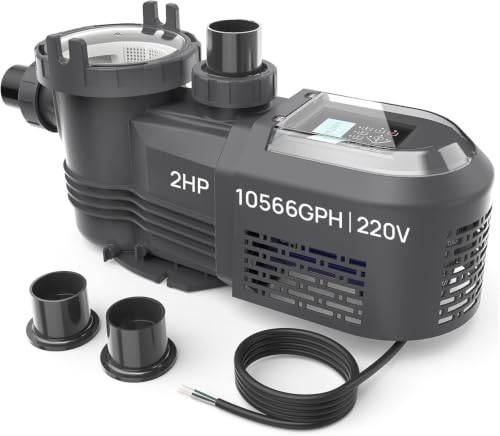
Aquastrong 2 HP variable speed pool pump 220 V, 10,566 GPH
2 HP220 V1,200 to 4,000 RPM4 time periods
Check price on Amazon
Best for: Larger pools that need a lot of flow and a lower running cost.

The Aquastrong 2 HP variable speed pump covers a speed range from 1,200 RPM, which moves about 3,566 GPH, up to 4,000 RPM for peak flow of 10,566 GPH. Up to four timed periods in a 24 hour cycle let you schedule low-speed filtration, a mid-speed run for the skimmer and high speed for cleaning.

The maker claims energy savings of up to 80 percent compared with a single speed pump, which fits the physics of running slowly: the cube law means a pump at 1,200 RPM uses a small fraction of the power of one at 3,450. Treat the 80 percent as a best case, but the direction is right. At 220 volts the pump draws less current than a 115 volt unit of the same power.

It is a value pick for large in-ground and above-ground pools. It costs less than the Pentair but has less brand history, so register it and keep the receipt. Clean the strainer weekly and check that the plumbing matches the inlet size. Because the pump can also run on a shorter, faster cycle, make sure the plumbing can handle high flow before you run it at 4,000 RPM, otherwise the pressure at the filter will climb.

What works

  • Speed range of 1,200 to 4,000 RPM
  • Four scheduling periods
  • 220 V draws less current
  • Lower cost than major brand variable speeds

Watch out for

  • Less brand support than Pentair or Hayward
  • 220 V wiring required
  • Energy savings claim is a best case

Spec sheet

Motor
2 HP variable speed, 220 V
Max flow
10,566 GPH
Speed range
1,200 RPM (3,566 GPH) to 4,000 RPM
Scheduling
Up to 4 time periods per 24 hours
Savings claim
Up to 80% less energy
03
VARMINPOOL 2.5 HP variable speed pool pump, 10,567 GPH
2.5 HP10,567 GPH1,200 to 4,000 RPMStep-less speed
Check price on Amazon
Best for: Large pools with heaters, features or high flow demand.

The VARMINPOOL is a 2.5 HP variable speed pump with step-less control from 1,200 to 4,000 RPM, four preset speeds and multiple timing options. Its 10,567 GPH peak flow is about the same as the Aquastrong 2 HP, with a bigger motor that gives it headroom at high speed.

Step-less speed means you can set exactly the flow that your filter and heater need, rather than choosing among fixed steps. That fine control makes it easier to find the slowest speed that still keeps the pool clean, which is where the savings come from.

It is suitable for both in-ground and above-ground pools, though large pools with heaters, waterfalls or a salt system are where its extra horsepower matters. As with any variable speed, set it once and check that the filter pressure is normal. Treat the preset speeds as starting points: watch the water clarity for a week, then lower the low-speed setting until the pool starts to lose clarity, and back up one step.

What works

  • Step-less 1,200 to 4,000 RPM control
  • 2.5 HP motor with headroom
  • Four preset speeds
  • Works on in-ground and above-ground pools

Watch out for

  • Motor is oversized for small pools
  • Limited brand history
  • Needs correct pipe sizing for high flow

Spec sheet

Motor
2.5 HP variable speed
Max flow
10,567 GPH
Speed range
Step-less 1,200 to 4,000 RPM
Presets
Four preset speeds
Pool type
In-ground and above-ground
04
Hayward Super Pump 1 HP single speed in-ground pool pump
1 HPSingle speedIn-groundLarge basket
Check price on Amazon
Best for: A small in-ground pool where upfront cost matters more than running cost.

The Hayward Super Pump is the long-standing single speed standard for in-ground pools. A heavy-duty motor with airflow ventilation runs quieter than older designs, and an extra-large debris basket holds more leaves so you empty it less often.

Its weakness is the one all single speed pumps share: it runs at full speed whenever it is on, which wastes electricity on a task a slower pump could do. If your local rules or electricity costs favor efficiency, a variable speed pump is a better buy; if your pool is small and you run it a few hours a day, the Hayward is a dependable choice.

Compared with the Pentair SuperFlo VS, it costs less up front and more to run. Keep the basket clean, grease the lid O-ring and watch for motor noise, which signals bearing wear. Because it is a single speed pump, plan a timer or smart plug to limit run hours, and consider the added cost of a variable speed upgrade if you run the pump more than six hours a day.

What works

  • Hayward reliability and parts availability
  • Extra-large debris basket
  • Quieter airflow ventilated motor
  • Simple single speed operation

Watch out for

  • Runs at full speed all the time
  • Higher running cost than variable speed
  • 1 HP is modest for large pools

Spec sheet

Motor
1 HP single speed
Pool type
In-ground
Basket
Extra-large debris basket
Motor cooling
Airflow ventilation
Model
W3SP2607X10
05
Hayward PowerFlo LX 1.1 HP single speed above-ground pool pump
1.1 HPSingle speedAbove groundW3SP1580X15
Check price on Amazon
Best for: A standard above-ground pool with a simple plumbing setup.

The PowerFlo LX is a 1.1 HP single speed pump built for above-ground and on-ground pools. A heavy-duty motor with reduced noise suits a pump that sits in a backyard close to a deck, and it is listed as compliant with current national energy standards.

For a modest above-ground pool, a pump this size moves enough water to filter it within a day and costs far less than a variable speed unit. The cost of a variable speed upgrade often does not pay back on a small pool that runs only part of the year.

Compared with the Aquastrong 1.5 HP dual speed, the Hayward is simpler and has a better brand record. Keep the strainer clean, protect the pump from freezing and use the correct hose adapters for your pool. Drain it and cover the motor over winter if the pool is closed, since an above-ground pump sitting in standing water will corrode.

What works

  • Quieter motor for backyard use
  • Compliant with national efficiency standards
  • Brand parts support
  • Suited to above-ground pools

Watch out for

  • Single speed uses more power
  • 1.1 HP limits large pools
  • No timer included

Spec sheet

Motor
1.1 HP single speed
Pool type
Above-ground and on-ground
Noise
Reduced operational noise
Efficiency
Meets current national standards
Model
W3SP1580X15
06
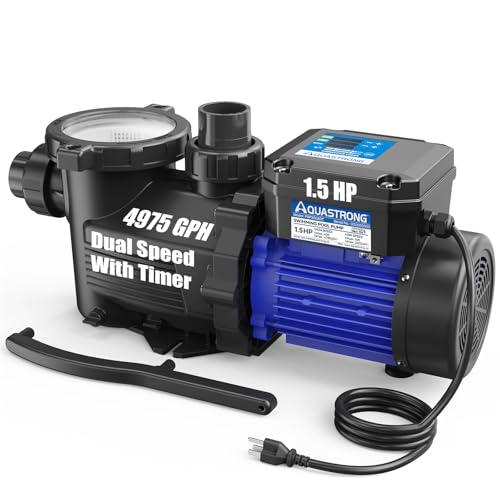
Aquastrong 1.5 HP dual speed pool pump with timer, 115 V, 4,795 GPH
1.5 HPDual speed4,795 GPHTimer
Check price on Amazon
Best for: A budget upgrade from single speed on a medium pool.

This is a dual speed pump with a built-in timer: a high speed for cleaning and a low speed for routine circulation. A dual speed design captures part of the efficiency gain of variable speed, because running slowly most of the day cuts the electricity used.

It rated at 4,795 GPH at high speed, and two adapters, 1.5 inch and 2 inch, fit most pool plumbing. Self-priming reduces the fuss of starting the pump, and it works on both in-ground and above-ground pools on a 115 volt supply.

It costs less than a variable speed pump and saves more than a single speed. Check the timer after a power loss and keep the strainer clean. Set the timer for the low speed through the night and the high speed for an hour or two of skimming and vacuuming each day, and confirm the pressure gauge stays in the normal range.

What works

  • Dual speed saves energy at low speed
  • Built-in timer
  • Includes 1.5 inch and 2 inch adapters
  • 115 V operation

Watch out for

  • Only two speeds, not infinitely adjustable
  • Less brand history
  • 4,795 GPH is a high-speed rating

Spec sheet

Motor
1.5 HP dual speed, 115 V
Max flow
4,795 GPH
Timer
Built-in
Priming
Self-priming
Adapters
1.5 inch and 2 inch

Spec sheet decoder

What the numbers on the box really mean

The specs manufacturers lead with, translated into what they tell you about real-world performance.

Variable speed

The motor speed adjusts, usually from about 1,200 to 3,450 or more RPM. Lower speeds mean lower noise and lower power.

Watch forThe Aquastrong lists 1,200 to 4,000 RPM.

TEFC

Totally enclosed fan cooled, a motor design that excludes dust and moisture. It is a common spec on higher-quality motors.

Watch forThe Pentair SuperFlo VS uses a TEFC motor.

GPH

Gallons per hour at the highest speed.

Watch forThe VARMINPOOL lists 10,567 GPH at peak.

Self-priming

The pump can pull water up from below its level to start.

Watch forThe Aquastrong dual speed lists self-priming.

Dual speed

A pump with a high and a low speed setting.

Watch forLow speed is where the savings come from.

Methodology

How We Evaluated These Pool Pumps

Speed and efficiency

We compared single, dual and variable speed designs. Variable speed pumps like the Pentair SuperFlo VS and Aquastrong 2 HP lead on running cost. Savings claims were treated as best cases, not guarantees.

Flow range

We read flow from low to high speed. The Aquastrong lists about 3,566 GPH at 1,200 RPM up to 10,566 GPH at 4,000 RPM. A narrow range limits how low you can run.

Motor design

We favored enclosed, fan-cooled motors and noted noise.

Fit

We matched pumps to in-ground or above-ground pools and to pipe size. A pump that does not fit your pipe size scores poorly no matter its rating.

Brand support

We weighed parts and service access, which favor Pentair and Hayward.

Decision guide

How to Choose the Right Pool Pumps

By Pool Type

PoolPickWhy
In-ground, brand supportPentair SuperFlo VSVariable speed with TEFC motor
Large in-ground with featuresVARMINPOOL 2.5 HP10,567 GPH and step-less speed
Large pool on a budgetAquastrong 2 HP VSVariable speed at lower cost
Small in-groundHayward Super Pump 1 HPSimple single speed
Above-groundHayward PowerFlo LXQuiet 1.1 HP single speed

By Budget

TierPickWhy
LowestAquastrong 1.5 HP dual speedTimer and two speeds
LowHayward PowerFlo LXBrand single speed
MidHayward Super PumpIn-ground single speed
UpperAquastrong 2 HP VSVariable speed value
PremiumPentair SuperFlo VSBrand variable speed

Variable vs Single Speed

Variable speed

The Pentair SuperFlo VS, Aquastrong 2 HP and VARMINPOOL run at low speed most of the day, cutting electricity sharply.

Single speed

The Hayward Super Pump and PowerFlo LX are cheaper up front but run at full speed whenever they are on.

Variable for pools you run most of the year; single speed for small seasonal pools.

By Voltage

SupplyPickWhy
220 V in-groundAquastrong 2 HP VSLower current
115 VAquastrong 1.5 HP dual speedPlug-in friendly
Existing wiringPentair SuperFlo VSStandard residential
Small poolHayward PowerFlo LXLight load

For Energy Savings Specifically

Look for

A variable speed motor with a low-speed setting and a scheduling feature, since the savings come from slow, long runs.

In this comparison

The Aquastrong 2 HP offers four time periods and a 1,200 RPM minimum, and the VARMINPOOL offers step-less control.

When to Spend More

Spend more if

You run the pool most of the year. The Pentair SuperFlo VS pays back in electricity.

Save if

The pool is small and seasonal. The Hayward PowerFlo LX is enough.

Ownership

Maintenance schedule

The upkeep that decides whether this machine lasts two seasons or ten.

TaskIntervalWhy it matters
Empty the strainer basketWeeklyA full basket restricts flow and strains the motor. Check it after storms and in leaf season.
Lubricate the lid O-ringEach seasonA dry O-ring leaks air and breaks the prime.
Check filter pressureWeeklyHigh pressure signals a dirty filter that slows the pump.
Inspect for leaksMonthlyA drip at the shaft seal signals wear. A drip can mean a failed shaft seal.
WinterizeEach fallDrain the pump to avoid freeze damage.

FAQ

Frequently Asked Questions

How much does variable speed really save?

Pump power falls with the cube of speed, so running at half speed uses about one eighth of the power. Real savings depend on how slowly you can run and still keep the pool clean. The savings are largest on pools run all season.

How long should I run my pool pump?

Enough to turn over the pool's volume about once a day. Divide the pool volume by the flow to find the hours.

Can I replace a single speed pump with a variable speed pump?

Usually yes, but check the voltage, pipe size and the equipment pad. An electrician should handle the wiring. A pool pro can confirm the filter and pipe rating.

Why is my pool pump loud?

A full basket, air leak or failing bearing are common causes. Slow speed also reduces noise.

Is bigger better for a pool pump?

No. An oversized pump on small pipe wastes energy and stresses the filter. Match the pump to the plumbing and filter.

How long do pool pumps last?

Many last several years, depending on water chemistry and run time. Variable speed motors tend to run cooler and last longer. Keep chemistry balanced to avoid corrosion.

Bottom line

The short version

Browse more pool pumpson Amazon →
James Miller, Lead Machine Editor

About the author

James Miller

Lead Machine Editor, MachineFanatic

James Miller leads MachineFanatic's buying guides, turning spec sheets, manuals and owner feedback into clear verdicts on power tools, outdoor power equipment, shop machines and kitchen machines.

More from James →

Keep reading

Related guides