
Amazon affiliate links - we earn a commission.Affiliate disclosure

Buying guide · 12 min read · Updated 2026-11-07

Best Portable Sewing Machines (2026)

Six portable sewing machines compared by power source, stitch range and fabric limits, from full tabletop units to battery mini machines and handheld menders.

James MillerBy James MillerLead Machine Editor6 machines comparedSpec-sheet verified
Best Portable Sewing Machines

At a glance

Our top picks

Side by side

Spec comparison

Portable means two different things in sewing. A portable tabletop machine is a full mechanism small and light enough to carry to a class or a friend's house. A tiny hand-held machine is a lightweight stitcher that trades power for size and often runs on batteries.

The right choice depends on how much sewing you ask of it. Real garments, hems and bags need a tabletop machine with a bobbin and a proper feed. Quick repairs, kids' crafts and travel mends can be handled by a small battery machine, as long as you accept its limits.

Before you buy

6 Criteria to Look For Before Buying a Portable Sewing Machine

  1. 01

    Tabletop versus handheld

    A tabletop portable like the Brother GX37 has a bobbin and a feed, so it makes a real lockstitch. A handheld makes a single-thread stitch that is closer to basting. If you plan to sew a garment, choose a tabletop; if you want a pocket repair kit, a handheld will do.

  2. 02

    Power source

    The mini tabletop runs from AC or four AA batteries, the handheld runs from four AA or USB, and the Brother machines need an outlet. Batteries drain fast under load, so a battery machine suits short repairs. Carry spares or a power bank. Alkaline cells sag in voltage as they drain, so the motor slows well before the batteries are dead, and a slow motor gives uneven stitches. Rechargeable cells hold their voltage longer but may start lower, so test your set on a scrap before a trip.

  3. 03

    Fabric thickness limit

    The handheld lists a limit of 1.8 millimeters, and the Singer Stitch Sew Quick works best on lightweight fabrics. Brother tabletop machines handle everyday garment cloth. Stated limits matter more than marketing words like leather and denim.

  4. 04

    Bobbin and threading

    Brother machines pair an automatic threader with a drop-in top bobbin. Handhelds avoid the bobbin entirely, which is simple but weaker. If you will sew for long periods, a bobbin machine gives a stronger seam. The lockstitch locks the top and bottom threads inside the fabric, which is why it survives washing, while a chain stitch is held by a single loop that can pull out from one broken thread. That mechanical difference is the biggest gap in this whole lineup.

  5. 05

    Weight and carry

    Portable is only useful if you will actually lift the machine. Brother tabletops carry with a handle but need a padded bag, while minis and handhelds fit in a drawer. Check the dimensions and imagine your carry route. A machine you carry up two flights of stairs weekly should have a firm handle and a hard cover, while one that moves from desk to cupboard can be bulkier. If the weight is not on the listing, assume a tabletop Brother is a two-handed lift and plan a trolley or a padded bag for the trip.

  6. 06

    Accessories you really use

    Six feet on the GX37 and XM2701, seven on the CS5055 and a spare-needle kit on the Singer mender cover the basics. A zipper foot and spare needles matter most. Decorative accessories rarely matter when you travel.

Detailed reviews

The 6 best portable sewing machines, explained

01
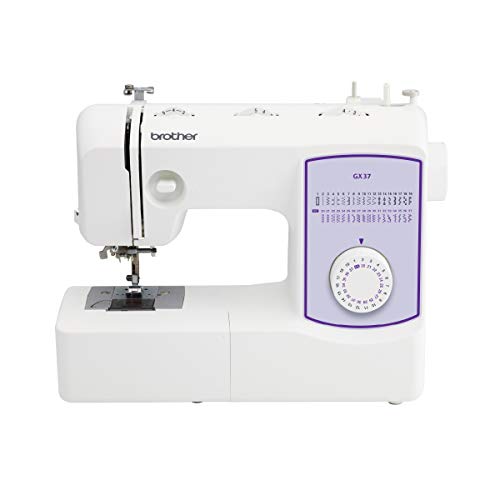
Brother GX37 sewing machine, 37 stitches
37 stitchesAuto buttonhole6 feetDrop-in bobbin
Check price on Amazon
Best for: Sewists who carry a real machine to classes or between rooms.

The GX37 is the sensible carry-along machine: a full sewing mechanism with 37 stitches, an automatic needle threader, a drop-in top bobbin and an auto-size buttonhole, in a body made to be lifted onto a table and put away again. Auto-size buttonholes are the detail worth noticing, because the machine measures the button for you and repeats the same hole every time.

Compared with the Brother XM2701 it matches the stitch concepts and the six feet, and its distinction is the automatic buttonhole that suits a garment sewist. Compared with the CS5055 it is mechanical rather than computerized, so it has no LCD and no computer-set stitch parameters, but it is simpler to carry and to understand.

Because a portable machine is lifted often, treat the handling as part of ownership. Carry it by the handle with the cord and pedal stowed, keep the accessory tray closed so feet do not rattle loose, and wipe lint from the bobbin area after every trip, since car travel shakes loose fluff into the hook. Re-seat the bobbin cover firmly each time and check the needle for bends before the first stitch after a journey. If you take it to classes, label the pedal and the cord with your name, since identical Brother machines in one room get mixed up quickly. A small zipped pouch for spare needles, a seam ripper and the extra bobbins keeps the accessory tray from becoming a rattle box.

What works

  • Auto-size buttonhole repeats identical holes
  • Drop-in top bobbin with automatic threader
  • Thirty-seven stitches cover utility and decorative work
  • Mechanical drive has no circuit board to fail

Watch out for

  • No LCD or computerized setting of stitch values
  • Plastic housing needs a padded bag for car travel

Spec sheet

Type
Portable tabletop
Built-in stitches
37
Buttonhole
Auto-size
Presser feet
6
Bobbin
Drop-in top
02
Brother XM2701 portable machine, 27 stitches
27 stitches6 feetAuto threader4 bobbins
Check price on Amazon
Best for: Basic sewing at a table you set up in different rooms.

Brother markets the XM2701 as a portable machine, and its straightforward construction fits that. It has 27 stitches, an automatic threader, a drop-in top bobbin, six presser feet and a twin needle, so the kit is complete for a first year of sewing.

Compared with the GX37 it has ten fewer stitches and no auto-size buttonhole, and that difference sets the ranking. What it keeps is the lowest-friction portable experience: the mechanism is simple, the controls are visible, and nothing needs charging or updating.

The four bobbins are a quiet advantage for a machine that travels, because you can wind several colors before a class and swap them without rewinding. Keep the bobbins in a small box, transport the machine with the foot pedal tucked into its tray, and give the bobbin area a brush after each outing. For heavier fabric, reduce speed and choose a stronger needle instead of pushing the machine past its design. A machine this plain will sit happily in a closet for months, but turn the handwheel a few times and run a scrap seam before relying on it, because dried lint and a stiff bobbin case are the usual causes of a poor first stitch. If you share it among family, keep one pack of fresh needles with it so nobody sews with a bent one.

What works

  • Simple mechanical controls
  • Automatic threader and drop-in bobbin
  • Four bobbins and a twin needle in the kit
  • Six presser feet cover everyday work

Watch out for

  • Ten fewer stitches than the GX37
  • No auto buttonhole

Spec sheet

Type
Portable mechanical
Built-in stitches
27
Presser feet
6
Needle set
3 pieces plus twin needle
Bobbins
4
03
Brother CS5055 computerized machine, 60 stitches
60 stitchesLCD7 feetImproved threader
Check price on Amazon
Best for: Travelers who want automatic stitch settings in a portable body.

If you want electronics in a machine you will move, the CS5055 is the choice. It adds 60 stitches and an LCD that sets length and width for you, an improved needle threader and seven presser feet, plus four bobbins.

It is the heaviest in kit contents among the Brother machines in this guide, so budget more packing room than for the XM2701. Compared with the GX37 it removes dial guesswork but adds a board that needs a service center if it fails, so carry it with care.

Pack it in a padded bag, wrap the cord loosely, and avoid leaving it in a hot car, since heat and shocks are harder on boards than on cams and levers. Keep the LCD protected from scratches and check the display after every trip. Bring the instruction booklet too, because stitch numbers on an LCD machine map to a printed chart, and a quick glance at it saves you cycling through the menu at a class. Lay the cord straight, never wound tight around the machine, since a kinked cord is a common failure on any plug-in unit. If it misbehaves after transport, switch it off, wait a minute and try again before assuming a fault.

What works

  • LCD and computer-set stitch parameters
  • Sixty stitches and seven feet
  • Improved automatic needle threader
  • Four bobbins included

Watch out for

  • Board is vulnerable to knocks and heat
  • Needs a padded bag for travel

Spec sheet

Type
Computerized
Built-in stitches
60
Presser feet
7
Display
LCD
Bobbins
4
04
Mini tabletop machine, 12 stitches, AC or battery
12 stitchesAC or 4 AALED lightFoot pedal
Check price on Amazon
Best for: Light repairs and crafts away from a power outlet.

This mini tabletop machine works from either an AC adapter or four AA batteries, with a foot pedal and an LED light. Twelve stitches include straight, zigzag, overlock and a buttonhole, which is the whole kit a quick repair needs.

It differs from the handheld machines in this guide because it sits on a table and has a foot pedal, so both hands guide the fabric. Compared with the Brother GX37 it has a quarter of the stitches and a much smaller motor, and it is the sort of machine to buy for light hems, curtains and craft projects.

Battery use is the point: it can sew without an outlet, though batteries drain quickly under load, so carry spares. Wipe the needle plate often because the small hook area fills with lint, and avoid pushing thick denim through, since a mini motor will stall and strain the gears. The LED light is the quiet bonus on a mini like this: it shows the needle area in a dim train carriage or a hotel desk lamp. Choose cotton thread of a normal weight, avoid dense decorative threads and let the foot pedal control your speed so the small motor never races.

What works

  • Runs on AC or four AA batteries
  • LED light helps in dim rooms
  • Foot pedal frees both hands
  • Twelve stitches include a buttonhole

Watch out for

  • Small motor stalls on thick fabric
  • Batteries drain quickly under load

Spec sheet

Type
Mini tabletop
Stitches
12
Power
AC adapter or 4 AA
Light
LED
Control
Foot pedal
05
Mini hand-held mender, battery or USB powered
Handheld4 AA or USBUp to 1.8mmQuick repairs
Check price on Amazon
Best for: Emergency hem and button repairs while traveling.

A handheld machine stitches with a single thread and a moving needle that you guide across the fabric yourself. This one runs on four AA batteries or a compatible USB power source and lists a fabric limit of 1.8 millimeters, which is a real number to respect.

It is a repair tool, aimed at loose seams, small tears, hems and patches. Compared with the tabletop mini it has no foot pedal and no feed, so stitch length depends on your hand speed, and compared with the Singer Stitch Sew Quick it adds a USB power option.

Use it flat, with the fabric folded and held taut, and expect a stitch that is closer to a basting than a seam. Replace the needle if it bends, keep a spare thread on hand and do not pull the fabric, since the needle can snap. It is a travel-bag emergency tool, not a sewing machine replacement. For a button that has popped off a coat, a hem that has dropped on a skirt or a split in a bag lining, it will hold until you reach a proper machine. Pack a spare needle and a card of matching thread, because the stitch quality depends on a fresh needle more than on the motor.

What works

  • Works on 4 AA batteries or USB power
  • Small enough for a travel bag
  • Fabric limit stated at 1.8mm
  • Quick for loose seams and patches

Watch out for

  • Single-thread stitch is weaker than a lockstitch
  • No feed system so stitch length depends on your hand

Spec sheet

Type
Handheld
Power
4 AA or USB
Fabric limit
Up to 1.8mm thick
Use
Hems, loose seams, patches
Skill level
Beginner
06
Singer Stitch Sew Quick cordless mender
CordlessSingle threadLightweight fabricsThreads included
Check price on Amazon
Best for: Quick temporary stitching on lightweight fabric.

Singer's Stitch Sew Quick is the established name in handheld menders. It is cordless, uses a single thread feed, and the maker states it works best on lightweight fabrics, which is an honest limit that the cheaper handhelds often skip.

It includes threads, bobbins, needles and a thread spindle, so the first repair does not need a shopping trip. Next to the USB-powered handheld it lacks a mains option, but it carries the Singer brand and a simpler feature list.

Best use is temporary basting and small repairs. Hold the fabric taut, move at a steady pace, and replace the needle when it dulls. For anything that will be washed hard, go back afterward with a tabletop machine and redo the seam. A chain stitch can pull out if one loop breaks, so finish each repair with a few overlapping stitches and a knot by hand. Keep the machine away from damp bags and sun-warmed cars, because battery contacts corrode and a dead mender at the wrong moment is useless.

What works

  • Cordless and compact
  • Established brand
  • Threads, bobbins and needles included
  • Useful for temporary basting

Watch out for

  • Works best only on lightweight fabrics
  • Single-thread stitch can unravel

Spec sheet

Type
Handheld mender
Power
Cordless battery
Stitch
Single thread
Best on
Lightweight fabrics
Kit
Threads, bobbins, needles

Spec sheet decoder

What the numbers on the box really mean

The specs manufacturers lead with, translated into what they tell you about real-world performance.

Fabric thickness limit

The maximum cloth thickness the machine can pierce, usually given in millimeters for minis.

Watch forThe handheld lists 1.8mm, and the Singer mender states lightweight fabrics only.

Single-thread stitch

A chain stitch made without a bobbin. It is quick but can unravel.

Watch forBoth handhelds here use it.

Auto-size buttonhole

The machine measures the button and sews a matching hole in one sequence.

Watch forThe Brother GX37 lists it.

AC or battery power

Whether the machine runs from mains, batteries or both.

Watch forThe mini tabletop accepts AC or four AA, the handheld accepts four AA or USB.

Drop-in top bobbin

A bobbin loaded from above under a clear cover.

Watch forThe Brother GX37, XM2701 and CS5055 use it.

Methodology

How We Evaluated These Portable Sewing Machines

Stitch quality

We separated lockstitch tabletop machines from single-thread handhelds. The Brother GX37 at 37 stitches and the CS5055 at 60 stitches sit in the first group, while both handhelds sit in the second.

Portability

We considered how each machine moves: handle carry, battery power or pocket size. The mini tabletop and handhelds win on size, the Brothers on capability.

Power flexibility

We noted AC, battery and USB options. The mini tabletop and handheld offer battery use, and the Brothers rely on an outlet.

Fabric limits

We read stated limits, including the 1.8mm figure and the lightweight-only note. Claims about leather were not credited without a stated thickness.

Kit and ownership

We counted accessories, from the XM2701 six feet to the Singer mender thread set. Computerized risk on the CS5055 was weighed against its convenience.

Decision guide

How to Choose the Right Portable Sewing Machines

By How You Sew

SituationPickWhy
Garments on the moveBrother GX37Auto buttonhole and 37 stitches
Simple classes and curtainsBrother XM2701Basic, easy to carry
Want an LCDBrother CS505560 stitches, computerized
Light mends off-gridPortable tabletop miniAC or 4 AA batteries
Emergency hemsHandheld mini machineUSB or battery
Quick bastingSinger Stitch Sew QuickCordless single-thread

By Budget

TierPickWhy
Lowest tierHandheld mini machineCheapest repair tool
Low tierSinger Stitch Sew QuickKnown brand mender
Low-middle tierPortable tabletop miniFoot pedal and AC option
Middle tierBrother CS5055Computerized
Upper tierBrother GX37Auto buttonhole
Top tierBrother XM2701Reliable mechanical

Tabletop vs Handheld

Tabletop

The Brother GX37, XM2701, CS5055 and the mini tabletop make a bobbin lockstitch that holds. They need a table and, apart from the mini, an outlet.

Handheld

The handheld mini and the Singer mender make a single-thread stitch that suits temporary repairs. They are tiny and cheap but should not replace a real machine.

Pick tabletop for anything you plan to wear or wash often; pick handheld for emergencies.

Power Needs

PreferencePickWhy
Outlet onlyBrother GX37Full mechanism
AC or batteriesPortable tabletop miniDual power
USB or batteriesHandheld mini machinePower bank friendly
CordlessSinger Stitch Sew QuickBattery operation

For Travel Specifically

Look for

A stated fabric limit, a carry handle and the ability to run without an outlet. Spare needles matter more than extra feet.

In this comparison

The handheld mini offers USB power and a stated 1.8mm limit, and the Brother GX37 is the best real machine to bring if there is a table at the destination.

When to Spend More

Spend more if

You want real seams in a portable body: the Brother GX37 or CS5055 with a proper bobbin.

Save if

You only need a travel mender. The handheld mini or Singer Stitch Sew Quick covers that.

Ownership

Maintenance schedule

The upkeep that decides whether this machine lasts two seasons or ten.

TaskIntervalWhy it matters
Brush the bobbin area after travelAfter each tripVibration shakes lint into the hook. A quick brush prevents skipped stitches.
Check the needle for bendsBefore each sessionTransport knocks needles out of true. A bent needle breaks or skips.
Replace batteriesWhen speed dropsWeak batteries slow the motor and cause uneven stitches.
Store pedal and cord in the trayAfter useLoose cords catch and bend the machine body when carried.
Check the manual for oilingPer manualMany portable models are not oiled by the owner.

FAQ

Frequently Asked Questions

Is a handheld sewing machine a real sewing machine?

It is a repair tool. It makes a single-thread stitch, so it suits hems and patches rather than garments.

Which portable machine suits a beginner?

The Brother XM2701 or GX37. Both have an automatic threader and a drop-in bobbin.

Can a mini machine sew denim?

Light denim at slow speed, perhaps, but small motors stall on thick seams. Check the stated thickness limit.

Do portable machines need special cases?

A padded bag helps, especially for computerized models like the CS5055. Dust and knocks are the main risks.

How long do batteries last?

Not long under load. Carry spares or use a USB power bank where the machine supports it.

Are portable machines less accurate?

The tabletop Brothers are as accurate as other home machines. Minis and handhelds are less consistent because of small motors and hand guidance.

Bottom line

The short version

Browse more portable sewing machineson Amazon →
James Miller, Lead Machine Editor

About the author

James Miller

Lead Machine Editor, MachineFanatic

James Miller leads MachineFanatic's buying guides, turning spec sheets, manuals and owner feedback into clear verdicts on power tools, outdoor power equipment, shop machines and kitchen machines.

More from James →

Keep reading

Related guides