
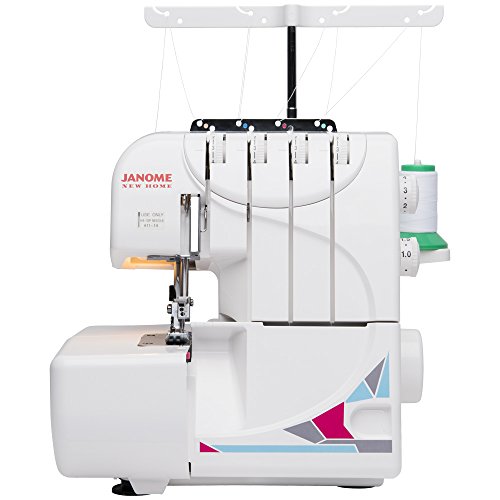


The MOD-8933 makes the serger less intimidating. Its lay-in threading system uses color-coded thread guides, so each of the thread paths is marked and the thread drops into its channel instead of being fed through tiny eyes. That single feature reduces the most common beginner frustration.
It converts between three and four thread operation, with a differential feed to control stretch and puckering, a quick-change rolled hem and adjustable presser foot pressure. Next to the SewLaVie 360 it offers fewer stitch options on paper but a more established brand and a calmer set-up, and compared with the Singer 0420 it favors easy handling over raw power.
Ownership is mostly housekeeping. Lint from the cutting blade piles up under the needle plate, so open the covers and brush after every project, and use serger needles recommended by the maker rather than regular sewing needles. Change the needles on schedule, keep four spools of the same weight on the stands, and never run the machine without thread in the loopers, since dry loopers wear faster. When you thread for the first time, work in the order the manual prints, usually upper looper first, then lower looper, then the right needle and finally the left, because getting the order wrong ties threads together inside the machine. Photograph the finished thread path with your phone, which gives you a reference for the next time a thread breaks mid-project.
What works
- Lay-in threading with color-coded guides
- Three or four thread conversion
- Differential feed controls stretch and puckering
- Quick-change rolled hem and adjustable presser pressure
Watch out for
- Fewer stitch options than the 12-stitch competitors
- Not aimed at thick layers like the heavy duty Singers
Spec sheet
- Thread options
- 3 or 4 thread convertible
- Threading
- Lay-in with color-coded guides
- Feed
- Differential feed
- Rolled hem
- Quick change
- Presser foot pressure
- Adjustable