
Amazon affiliate links - we earn a commission.Affiliate disclosure

Buying guide · 12 min read · Updated 2026-11-07

Best Robotic Pool Cleaners for Leaves (2026)

Six robotic pool cleaners compared for leaf-heavy pools: surface skimming, intake and basket capacity, runtime and the rinse routine that keeps suction up.

James MillerBy James MillerLead Machine Editor6 machines comparedSpec-sheet verified
Best Robotic Pool Cleaners for Leaves

At a glance

Our top picks

Side by side

Spec comparison

Leaves are a different problem from dust. They arrive in bursts, float for a while, then sink and mat together, and a robot with a small basket or a narrow intake clogs within minutes and drops its suction.

The best leaf robots pair a coarse, roomy basket with enough battery or cable to run repeated short cycles. Skimming the surface before leaves sink helps, and so does a routine of rinsing the basket every single run.

Before you buy

6 Criteria to Look For Before Buying a Robotic Pool Cleaner for Leaves

  1. 01

    Surface versus floor leaf removal

    Leaves float for a time, then sink and mat. Only the Beatbot Sora 70 skims the surface, using JetPulse jets, while every other robot here works after leaves sink. Skimming prevents the mat that clogs a basket. If trees overhang your pool, it is worth real money.

  2. 02

    Basket size and access

    A leaf load fills a small basket in minutes and suction collapses. The Dolphin Nautilus CC Plus has a top-load basket that opens in seconds, which makes mid-cycle emptying realistic. Prefer a roomy coarse basket over fine mesh. Ask how the basket opens, and whether it needs tools or only a latch.

  3. 03

    Runtime for repeated runs

    Leaf days mean several short cycles. The Sora 70 lists five hours, the Zebary C1 200 minutes, the Lodoba 190 and the CliBot S5 180, while the corded Dolphin never runs out. A battery that must recharge between rinses slows the routine. Corded designs suit this job well, particularly when a storm drops a season of leaves overnight.

  4. 04

    Coarse mesh over fine

    Fine filters clog instantly with leaf litter. Leaf pools want coarse mesh and frequent rinsing, not ultra-fine layers. A fine layer is for dust, not leaves. Match the filter to the dominant debris, and switch layers with the seasons if the maker sells both.

  5. 05

    Intake width and clog sensing

    The Zebary C1 uses dual suction ports and load sensors, which spread the intake and warn of clogging. A narrow intake bridges on a leaf drift and stalls. Wider is better for drifts, and a narrow inlet is the first thing a mat of wet leaves will bridge.

  6. 06

    Ledges and platforms

    Leaves lodge on shelves and steps where flow is weak. The Beatbot Sora 30 adds a platform zone with ultrasonic sensing for those areas. A floor-only robot leaves them to rot. Check your pool for ledges.

Detailed reviews

The 6 best robotic pool cleaners for leaves, explained

01
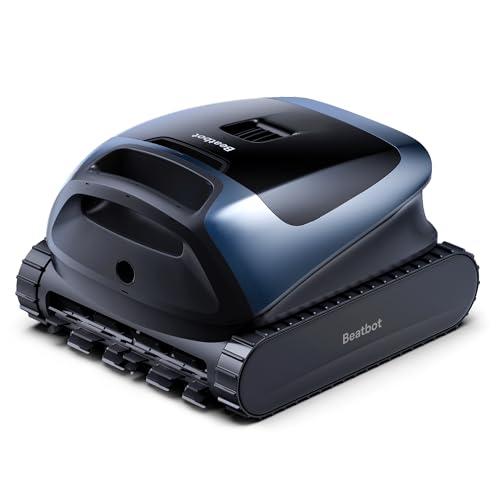
Beatbot Sora 70 with JetPulse surface skimming
JetPulse skimming10,000 mAh battery5 hr floor runtime8 inch shallow areas
Check price on Amazon
Best for: Pools under trees where leaves float before they sink.

Leaves are easiest to remove while they still float, and the Sora 70 is built around that fact. Dual water jets create flow that guides surface debris toward the machine, so a leaf drop is collected before it sinks and mats on the floor. That is a different mechanism from the floor suction in every other robot here.

The five-hour floor runtime gives room for repeated passes after a storm, and the large battery means the surface mode can run without leaving the floor undone. It is also the most costly machine in the lineup, so a pool with only a few trees nearby may not justify it. Against the Sora 30, it adds surface work and a bigger pack for a higher price.

Check the surface intakes and jets after every leafy run, because a stuck leaf weakens the flow. Rinse the basket, charge the pack and shade the body. Expect battery capacity to fade over several seasons. In autumn, when the drop is heaviest, run it daily at a low load rather than weekly at a high one, because small batches keep the basket clear and the jets unblocked.

What works

  • Surface jets collect leaves while they still float
  • Five-hour floor runtime allows repeated storm passes
  • Large ten thousand mAh pack supports surface mode
  • Reaches shallow areas as low as eight inches

Watch out for

  • Most costly machine in this lineup
  • Surface intakes need inspection after leafy runs
  • Surface mode drains the battery faster than floor mode

Spec sheet

Surface system
JetPulse dual jets guide floating debris inward
Battery
10,000 mAh pack
Floor runtime
Up to 5 hours
Shallow reach
Areas as low as 8 inches
Coverage
Surface, waterline, floor, walls
02
Beatbot Sora 30 with platform cleaning
6,800 GPH rated4-zone cleaningPlatform cleaningSurface parking
Check price on Amazon
Best for: Leaf-prone pools with a sun shelf or ledge.

Leaves collect where water slows, and in many pools that means a sun shelf. The Sora 30 adds a platform zone to floor, waterline and wall coverage, so leaves lodged on a ledge get picked up rather than left to rot. Ultrasonic sensing lets it work shallow water without beaching itself.

It shares a high pump rating with the Sora 10, but like most floor-suction robots it works after leaves sink, not before. That makes it a strong second choice when the Sora 70 is out of budget and the pool has a ledge. It does not skim the surface, so floating leaves wait for your net.

Rinse the filter after every leaf run, flushing from the inside out so stems do not wedge in the mesh, and wipe the ultrasonic sensors, since sunscreen film can confuse them. Charge promptly and keep the robot out of the sun. Use the surface parking to avoid lifting a full wet body from the deep end. A shelf cleaner earns its keep in spring, when blossoms and seed pods settle in the shallow water.

What works

  • Platform zone clears leaves lodged on ledges
  • Ultrasonic sensing prevents beaching in shallow water
  • High pump rating for pulling leaves into the basket
  • Surface parking spares a heavy lift

Watch out for

  • No surface skimming for floating leaves
  • Costs more than the simpler floor robots
  • Platform mode is wasted on a plain deep pool

Spec sheet

Pump rating
6,800 GPH via HydroBalance layout
Zones
Floor, waterline, walls and platform
Debris claim
Listing mentions removing leaves from all zones
Sensing
Ultrasonic shallow-area sensing
Retrieval
Surface parking with one-touch recall
03
Dolphin Nautilus CC Plus corded with top-load basket
Corded powerTop-load basketActive brushSmart navigation
Check price on Amazon
Best for: Leaf-heavy pools where empty-and-restart cycles are routine.

Leaf season is a rinse-and-restart routine, and a corded robot suits it perfectly. There is no charge to wait for, so you can empty a full basket and send the machine back in within a minute. A top-load basket opens without disassembly, which is what makes the constant rinsing tolerable.

An active brush scrubs as it climbs, so leaves stuck to a wall with algae film come loose. The cable is the compromise, since on a pool with trees and ladders it can wrap and tug. Compared with the cordless Sora 30 it gives up shallow-area sensing and surface parking but never runs out of power.

Uncoil the cable before each run and keep it straight. Rinse the basket after every cycle, and inspect the brush each season. Keep the transformer sheltered from rain. Over a long autumn the brush bristles flatten from leaf drag, so replace the brush before the season ends rather than after.

What works

  • Corded power allows empty-and-restart cycles
  • Top-load basket opens in seconds
  • Active brush loosens leaves stuck to walls
  • No battery to age under heavy use

Watch out for

  • Cable can wrap around ladders and fittings
  • No surface parking or shallow sensing
  • Basket fills quickly in a heavy leaf drop

Spec sheet

Power
Corded through a transformer
Basket
Top-load filter basket
Brush
Active scrubbing brush
Navigation
Smart navigation
Pool type
In-ground pools
04
CliBot S5 cordless, triple brushless motors
5,580 GPH ratedTriple motors180 min runtime4 cleaning modes
Check price on Amazon
Best for: Moderate leaf loads where motor strength matters and budget is mid-range.

Leaves need suction that does not sag when the intake half-fills, and three separate brushless motors help keep that flow steady. The S5 lists 5,580 GPH and up to 180 minutes of runtime, enough for a few quick passes after a windy day. Its four modes let you run floor-only when the leaves are on the bottom.

It is the mid-range answer to leaf work, cheaper than the Beatbot models and with more motor than most budget names. The compromise is a newer brand, so ask about spare tracks and filters. Compared with the Lodoba, it offers a bigger pump rating and one more motor.

Charge after every run and rinse the basket straight away, because wet leaves mat as they dry and cling to mesh like felt. Keep the battery in shade. Check the intake for stuck leaves before each cycle, and shake out the basket over a bucket rather than the deck so the wet litter stays contained. It is a small habit that keeps the next run strong.

What works

  • Three brushless motors keep suction steady
  • Floor-only mode targets sunken leaves
  • 180 minutes covers several quick passes
  • Mid-range cost for the motor set

Watch out for

  • Newer brand with less certain parts support
  • No surface skimming
  • Basket size is not stated on the listing

Spec sheet

Pump rating
5,580 GPH
Motors
Three brushless motors
Runtime
Up to 180 minutes
Modes
Four cleaning modes
Reach
Floors and walls
05
Lodoba cordless with dual brushless motors
4,800 GPH rated190 min runtimeDual brushless motors3 cleaning modes
Check price on Amazon
Best for: Leafy pools on a moderate budget where longer cycles help.

The Lodoba keeps leaf work simple: dual brushless motors turning at 3,200 RPM, a 4,800 GPH suction rating and a stated runtime of up to 190 minutes. The longer window is a real advantage on a leafy day, when several short cycles beat one long one. Floor, wall and full modes let you target where leaves have collected.

Below the premium cordless names in price, it lists both in-ground and above-ground use, though you should verify wall height for your pool. As a less established brand, parts and warranty need a question before purchase. Compared with the S5, it has a longer stated runtime but one fewer motor.

Flush the debris basket after each run and put the unit on the charger promptly. Leaves also stain light liners, so a quick surface skim keeps the colour even. Keep the robot shaded and note the model label for filter orders. If leaves are heavy, skim the biggest ones by hand first, because a robot works best on what the net leaves behind.

What works

  • 190 minutes allows several quick passes
  • Dual brushless motors suit repeated runs
  • Floor, wall and full modes target leaf locations
  • Lower cost than the premium cordless options

Watch out for

  • Less established brand for parts and warranty
  • No surface skimming
  • Dual pool-type claim needs a wall height check

Spec sheet

Pump rating
4,800 GPH
Motors
Dual brushless motors at 3,200 RPM
Runtime
Up to 190 minutes
Modes
Floor, wall or full coverage
Pool type
In-ground and above-ground
06
Zebary C1 with dual suction ports, 200 minutes
Dual suction ports200 min runtimeMotor load sensorsPools to 2,500 sq ft
Check price on Amazon
Best for: Pools where leaves collect in drifts and basket clogging is the main risk.

Two suction ports spread the intake across the width of the body, which helps when leaves lie in drifts rather than singly. A pair of sensors monitors motor load and speed, so the robot can react when the filter starts to clog with leaves. That is the feature most worth having in a leaf pool.

A 4,500 mAh pack gives up to 200 minutes and the maker lists pools up to 2,500 square feet, in-ground or above-ground. Against the Lodoba it is the longer-running machine on paper and the more reactive one. The brand is newer, so parts support deserves a question.

Wipe the ports clear of stuck leaves and rinse the filter after every run. Charge promptly. Keep the robot out of direct sun between uses, and watch for the load sensor warning that signals a full basket. When the warning appears, treat it as a prompt to empty the filter rather than a fault.

What works

  • Dual ports spread intake across a wider strip
  • Load sensors react when the filter clogs
  • 200 minutes of stated runtime
  • Rated for in-ground and above-ground pools

Watch out for

  • Newer brand with uncertain parts support
  • No surface skimming
  • Smaller battery than the Beatbot models

Spec sheet

Intake
Dual suction ports
Runtime
Up to 200 minutes
Battery
4,500 mAh six-cell pack
Sensors
Dual sensors monitor motor load and speed
Pool size
Up to 2,500 square feet

Spec sheet decoder

What the numbers on the box really mean

The specs manufacturers lead with, translated into what they tell you about real-world performance.

JetPulse

Dual water jets that create surface flow to push floating debris inward. It is how the Sora 70 skims.

Watch forOnly the Sora 70 has it, so the other robots cannot skim.

Top-load basket

A basket that opens from the top without disassembly. It makes mid-cycle emptying quick.

Watch forThe Dolphin Nautilus CC Plus uses one.

Dual suction ports

Two underside inlets that widen the intake footprint. They resist bridging on leaf drifts.

Watch forThe Zebary C1 uses them.

Motor load sensing

Sensors that watch motor speed and load. They detect a clogged filter early.

Watch forThe Zebary C1 has dual sensors.

Runtime minutes

Stated battery life for a clean pool in the gentlest mode, so leaf-heavy runs will be shorter. Leaves and climbing shorten it.

Watch forThe CliBot S5 lists 180 minutes and the Lodoba 190.

Methodology

How We Evaluated These Robotic Pool Cleaners for Leaves

Leaf mechanism

We compared surface skimming against floor suction. Only the Sora 70 skims, using JetPulse jets. We treated floor-only robots as collecting after leaves sink.

Basket and access

We looked at basket access and capacity. The Dolphin top-load design counted for quick emptying. We favoured coarse mesh for leaves.

Runtime and cycles

We compared stated minutes from 180 to five hours and the corded option. Leaf days need repeated runs. We discounted for battery fade.

Intake design

We considered port width and load sensing, as on the Zebary C1. Narrow intakes bridge on drifts. We rewarded designs that warn of clogging.

Ownership

We read for parts and handling. Basket volume and intake size on the listings, plus owner talk about leaf-heavy pools, are what we weighed. Leaf pools wear tracks and brushes faster.

Decision guide

How to Choose the Right Robotic Pool Cleaners for Leaves

By Leaf Pattern

SituationPickWhy
Leaves float for hoursSora 70JetPulse surface skimming
Leaves lodge on a ledgeSora 30Platform zone and shallow sensing
Leaves drift in pilesZebary C1Dual ports and load sensing
Daily empty-and-restartNautilus CC PlusCorded with top-load basket
Moderate leaves, tight budgetLodoba190 minutes and brushless motors

By Budget

Budget tierPickWhy
Lowest in the lineupZebary C1Wide intake at the lowest tier
Lower middleLodobaBrushless motors
MiddleCliBot S5Three motors
Upper middleNautilus CC PlusCorded durability
PremiumSora 70Surface skimming

The Sora 30 sits in the upper band; check the listing for current pricing.

Surface Skimming vs Floor Suction

Surface skimming (Sora 70)

Collects leaves while they float and prevents mat formation. It costs the most and has jets to inspect.

Floor suction (everyone else here)

Collects leaves after they sink. It costs less and is simpler, but baskets clog sooner.

Trees overhang, pick skimming. Occasional leaves, floor suction is enough.

By Power Preference

PreferencePickWhy
No charging between runsNautilus CC PlusCorded
Longest cordless windowSora 70Five hours on floors
Mid-length cordlessZebary C1200 minutes
Moderate cordlessLodoba190 minutes
Shorter cordlessCliBot S5180 minutes

For Overhanging Trees Specifically

Look for

Look for surface skimming, a roomy coarse basket and a way to run several short cycles. Avoid fine filters in this setting, and keep them for a dusty summer instead. A basket you can empty in seconds beats extra suction.

In this comparison

The Sora 70 skims, the Dolphin opens fastest and the Zebary C1 warns of clogging. Pick the one that fixes your biggest pain, not the one with the most features.

When to Spend More

Spend more if

Trees overhang the pool or leaves arrive daily. The Sora 70 buys skimming and the Sora 30 buys ledge reach. Both cut the work of clearing leaves.

Save if

Leaves are occasional. The Lodoba or Zebary C1 handles them, and you can skim the biggest by hand.

Ownership

Maintenance schedule

The upkeep that decides whether this machine lasts two seasons or ten.

TaskIntervalWhy it matters
Empty and rinse the basketAfter every run, mid-cycle in leaf seasonWet leaves mat as they dry. A full basket collapses suction.
Clear intakes and jetsAfter leafy runsA stuck leaf blocks an inlet or jet. A quick clear restores flow.
Charge and shade the batteryAfter each cordless runHeat ages lithium cells. Charging promptly preserves capacity.
Check tracks and brushesEach seasonLeaf-season use wears tracks quickly. Worn tracks lose wall grip.
Uncoil the cable on corded modelsAfter each runLeaf-heavy runs drag the cable around, and a kinked cable wears the swivel. A loose coil protects it.

FAQ

Frequently Asked Questions

Which robot is best for a leafy pool?

The Sora 70 is best because it skims leaves before they sink. The Dolphin Nautilus CC Plus is the corded alternative. Match the robot to how often leaves arrive and how much time you want to spend at the pool edge each week.

Should I use a fine filter in leaf season?

No. Fine mesh clogs instantly with leaf litter and drops suction. Use a coarse basket and rinse often. Save fine layers for dust.

Is corded better for leaves?

Often, yes, because you can empty and restart without waiting for a charge. The cost is cable handling. Cordless works if you accept a break between runs.

Can a robot clear a whole leaf drop?

Not alone. Skim the biggest leaves by hand and let the robot handle the rest. It prevents a mat from forming, and a mat is what really ruins a cleaning cycle.

How often should I empty the basket?

Every run, and mid-cycle on heavy days. A full basket collapses suction. A corded robot makes this easy.

Do leaves harm robots?

They can jam intakes and wear tracks faster. Inspect both regularly. A quick clear after each leafy run prevents damage.

Bottom line

The short version

Browse more robotic pool cleaners for leaveson Amazon →
James Miller, Lead Machine Editor

About the author

James Miller

Lead Machine Editor, MachineFanatic

James Miller leads MachineFanatic's buying guides, turning spec sheets, manuals and owner feedback into clear verdicts on power tools, outdoor power equipment, shop machines and kitchen machines.

More from James →

Keep reading

Related guides