
Amazon affiliate links - we earn a commission.Affiliate disclosure

Buying guide · 14 min read · Updated 2026-11-19

Best RV Air Conditioners for Class A Motorhomes (2026)

Six rooftop air conditioners for Class A motorhomes compared on capacity per zone, generator load, heat pump options and fitting several units on a long roof.

James MillerBy James MillerLead Machine Editor6 machines comparedSpec-sheet verified
Best RV Air Conditioners for Class A Motorhomes

At a glance

Our top picks

Side by side

Spec comparison

MachineCoolingHeatingControlNoise claim
Dometic FreshJet 3 Series 15K BTU rooftop AC, whiteBest OverallDometic FreshJet 3 Series 15K BTU rooftop AC, whiten/an/an/an/a
Arsenda 18K BTU RV AC, WiFi and remote, heat pumpBest Smart ControlArsenda 18K BTU RV AC, WiFi and remote, heat pump18,000 BTUAbout 10,236 BTU heat pumpApp, touch ADB panel, WiFi, remoten/a
TURBRO 15,000 BTU non-ducted with 1,500W heat, 52 dBBest Electric HeatTURBRO 15,000 BTU non-ducted with 1,500W heat, 52 dB15,000 BTU1,500W elementRemote and smart appAs low as 52 dB
Renogy 3-in-1 RV AC with heat pump, 15,000 BTU, 43 dBBest Quiet Heat PumpRenogy 3-in-1 RV AC with heat pump, 15,000 BTU, 43 dBn/aHeat pumpn/a43 dB
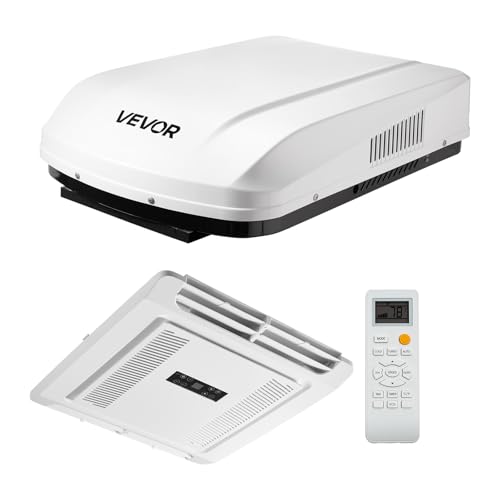
VEVOR 15,000 BTU RV AC with heat pump, 120V non-ductedBest Value Heat PumpVEVOR 15,000 BTU RV AC with heat pump, 120V non-ducted15,000 BTUAbout 10,236 BTU heat pumpRemote and button paneln/a
TOSOT 16,000 BTU RV AC heat pump, 43 dB claim, whiteBest Large Quiet UnitTOSOT 16,000 BTU RV AC heat pump, 43 dB claim, white16,000 BTU12,500 BTU heat pumpn/a43 dB

A Class A motorhome rarely cools with one air conditioner. A long coach usually carries two or three rooftop units, each covering a zone such as the salon, the galley or the bedroom, and each served by a ceiling assembly that may be ducted or not.

That changes the buying logic. The question is rarely which single unit is best but which unit suits a given zone, what the whole set demands from a generator or a high-amp service, and how much weight the roof can carry. We compare picks as zone units, with notes on mixing sizes and managing the electrical load.

Before you buy

6 Criteria to Look For Before Buying a RV Air Conditioner for Class A Motorhomes

  1. 01

    Think in zones, not units

    A Class A typically carries two or three rooftop units, each serving a zone. A 15,000 BTU unit like the Dometic or TURBRO suits a large salon, while a smaller or cheaper unit can serve a guest zone. Replacing one unit is a zone decision, so identify which zone is actually weak before buying.

  2. 02

    Total electrical load

    Two or three air conditioners running together demand serious power. A 50 amp service can feed two units with care, but a generator may handle only one at a time without soft starts. Add the running amps of each unit, usually 12 to 16 amps, and stagger startups so the surges do not coincide.

  3. 03

    Soft starts and generator sizing

    A fixed-speed 15,000 BTU compressor can need roughly 3,500 watts to start without help. A soft start capacitor cuts that sharply, so a modest generator can start each unit in turn. Without it, a big coach may need an oversized generator just to cope with the surge. Many Class A owners fit a soft start to every unit, a small cost against the price of a larger generator and the fuel it burns.

  4. 04

    Ducted or non-ducted ceilings

    Many Class A coaches have non-ducted ceiling assemblies, but some use ducted systems with branches along the roof. All six picks here are non-ducted designs, so check your ceiling before ordering. A mismatch forces a ceiling rebuild that costs more than the unit.

  5. 05

    Heat pump versus element

    A heat pump like the TOSOT's 12,500 BTU system is efficient in mild weather but fades near freezing, while the TURBRO's 1,500 watt element heats at any temperature at a heavy draw. On a 50 amp coach you can afford either, but on a generator the element is expensive.

  6. 06

    Roof weight and handling

    A rooftop unit weighs 70 to 110 pounds, and a Class A roof can be 12 feet above the ground. Lift handles like the TURBRO's, a lighter body like the Dometic's and a rope-and-pulley system make installation safer. Never plan to carry a unit up a ladder alone. Work with a helper on the roof and one on the ground, wait for a calm day and keep the old unit in place until the new gasket and curb are ready.

Detailed reviews

The 6 best rv air conditioners for class a motorhomes, explained

01
Dometic FreshJet 3 Series 15K BTU rooftop AC, white
15,000 BTUE-coated coilsLightweightNon-ducted
Check price on Amazon
Best for: Coaches replacing a zone unit that want the best parts support.

On a coach with several rooftop units, parts and technician familiarity matter more than any single feature, and Dometic's FreshJet 3 is the most widely stocked design in the group. The 15,000 BTU model fits a large zone such as a salon, and a lighter body eases the job of lifting a unit onto a tall coach.

E-coated evaporator coils resist corrosion, and the backwards-compatible mounting lets many owners keep an existing air distribution box on non-ducted ceilings. That cuts installation time, which is useful when you are replacing a unit mid-trip.

It is a fixed-speed machine, so with two or three units on a generator the startup surges must be staggered, ideally with soft starts. Against the TURBRO it lacks heat or inverter modulation. Wash the filter each month and check the roof gasket every spring.

What works

  • E-coated evaporator coils resist corrosion
  • Lighter body eases lifting on a tall coach
  • Reuses an existing distribution box
  • Widest parts and service support

Watch out for

  • Fixed-speed starts need staggering across units
  • No heat pump in this listing

Spec sheet

Capacity
15,000 BTU
Series
FreshJet 3
Coils
E-coated evaporator
Fit
Reuses existing ADB
Shroud
White
02
Arsenda 18K BTU RV AC, WiFi and remote, heat pump
18,000 BTU10,236 BTU heatWiFi and app115V plus 12V
Check price on Amazon
Best for: Large open salons that want app control and a heat pump.

Arsenda's 18,000 BTU unit adds app, WiFi, remote and touchscreen panel control, which on a big coach lets you run each zone from the driver seat or the bed. The heat pump heating figure is listed near 10,236 BTU, giving mild-weather warmth in the salon without lighting the furnace.

It is the largest compressor in the group, which suits a long open salon or a sun-baked front cabin. The cost is a heavy startup surge, so on a generator it should start alone, not while another unit is running. Like other Arsenda models it needs both 115V AC and 12V DC power.

Versus the Dometic it offers control and heat at a lower cost, with a thinner service network. Check the DC feed whenever the house batteries are serviced and keep the filter clean.

What works

  • 18,000 BTU for a large zone
  • App, WiFi, remote and panel control
  • Heat pump around 10,236 BTU
  • Non-ducted standard roof fit

Watch out for

  • Largest startup surge in the group
  • Needs 115V AC and 12V DC together

Spec sheet

Cooling
18,000 BTU
Heating
About 10,236 BTU heat pump
Control
App, touch ADB panel, WiFi, remote
Power
115V AC plus 12V DC
Duct type
Non-ducted
03
TURBRO 15,000 BTU non-ducted with 1,500W heat, 52 dB
15,000 BTU1,500W heat52 dB claimApp control
Check price on Amazon
Best for: 50 amp coaches wanting zone heat from the air conditioner.

On a Class A with 50 amp service, a 1,500 watt resistive heating element is a practical way to take the chill off a bedroom zone without running the furnace. TURBRO pairs it with 15,000 BTU of cooling and a quoted noise level as low as 52 dB, plus lift handles that make roof placement safer.

Resistive heat works in colder air than a heat pump but draws about 12.5 amps at 120 volts, so it competes with the other units for your service capacity. On a generator it is a heavy extra load. The smart app and remote let you manage each zone from inside.

Compared with the Dometic it adds heat and app control for a higher price. Keep the filter clean and inspect the element area for dust before the first cold night.

What works

  • 1,500W element heats at colder outdoor temperatures
  • Lift handles help roof installation
  • Remote and smart app control
  • 52 dB claim at 15,000 BTU

Watch out for

  • Resistive heat draws about 12.5 amps
  • Fixed-speed start adds to generator strain

Spec sheet

Cooling
15,000 BTU
Heating
1,500W element
Noise claim
As low as 52 dB
Control
Remote and smart app
Handling
Lift handles
04
Renogy 3-in-1 RV AC with heat pump, 15,000 BTU, 43 dB
15,000 BTUHeat pump43 dB claim350 CFM
Check price on Amazon
Best for: Bedroom zones where noise is the first concern.

When the bedroom unit is the one that matters, sound is the first criterion, and the Renogy claims 43 dB with a dual-motor, dual-fan layout that moves 350 CFM. It adds a heat pump for mild-weather warmth, giving a quiet, all-season zone unit.

A coach with several units can use it in the sleeping zone and put a louder, cheaper unit in the salon. The heat pump lowers heating draw compared with a resistive element. As with every heat pump, output falls near freezing.

Against the TURBRO it is quieter in claim and uses less electricity for heat, but loses the cold-weather capability of an element. A 15,000 BTU fixed-speed compressor still wants a soft start. Wash the filter often and recheck bolts after the first trip.

What works

  • 43 dB claim is the quietest in the group
  • Heat pump included for mild weather
  • Dual-motor, dual-fan 350 CFM airflow
  • 15,000 BTU suits a large zone

Watch out for

  • Heat pump fades near freezing
  • Fixed-speed compressor surges at startup

Spec sheet

Capacity
15,000 BTU
Heating
Heat pump
Noise claim
43 dB
Airflow
350 CFM
Fans
Dual-motor, dual-fan
05
VEVOR 15,000 BTU RV AC with heat pump, 120V non-ducted
15,000 BTU10,236 BTU heatRemote and panel14.25 in
Check price on Amazon
Best for: Cost-conscious owners filling secondary zones.

VEVOR offers 15,000 BTU of cooling and roughly 10,236 BTU of heat pump heating in a non-ducted unit that fits the standard 14.25 inch roof opening. It is the budget-friendly way to add a heat pump to a coach with multiple roof openings.

Control is by remote and a button panel, which is simpler than the app-driven units and may suit owners who prefer buttons. For a three-unit coach, using a cheaper VEVOR for a guest zone and a premium unit for the main bedroom is a common way to spread cost.

Compared with the Renogy it has a lower price and no stated noise figure, so check the specification sheet. A fixed-speed compressor means staggering the startups. Wash the filter and check the gasket annually.

What works

  • 15,000 BTU with heat pump heating
  • Fits the standard 14.25 in roof opening
  • Remote and panel control
  • Budget-friendly for secondary zones

Watch out for

  • No decibel figure in the listing
  • Fixed-speed startups need staggering

Spec sheet

Cooling
15,000 BTU
Heating
About 10,236 BTU heat pump
Control
Remote and button panel
Roof opening
14.25 in square
Voltage
120V
06
TOSOT 16,000 BTU RV AC heat pump, 43 dB claim, white
16,000 BTU12,500 BTU heat43 dB claimHeat pump
Check price on Amazon
Best for: Main-zone cooling and heat in a quiet package.

TOSOT's 16,000 BTU unit stretches the 15,000 BTU class by 1,000 BTU and adds a 12,500 BTU heat pump, with a 43 dB claim that the maker says is 32 percent quieter than a standard RV unit. For a big salon that also doubles as sleeping space, that combination is attractive.

On a Class A it works best as the main-zone unit, with a smaller unit elsewhere. The compressor is fixed-speed, so a soft start is wise with a generator. Heat pump output weakens as the outside air approaches freezing.

Against the Renogy it has more capacity and stronger heat for a higher purchase cost. Keep the filter clean, check roof bolts after trips and make sure the control board is compatible with your ceiling panel.

What works

  • 16,000 BTU beats the standard 15,000 BTU class
  • 12,500 BTU heat pump
  • 43 dB claim
  • Standard non-ducted roof fit

Watch out for

  • Fixed-speed compressor needs a soft start
  • Higher cost than basic cooling-only units

Spec sheet

Cooling
16,000 BTU
Heating
12,500 BTU heat pump
Noise claim
43 dB
Mounting
Standard roof opening
Shroud
White

Spec sheet decoder

What the numbers on the box really mean

The specs manufacturers lead with, translated into what they tell you about real-world performance.

BTU per zone

Capacity is a per-unit figure, and a coach may have several. Total capacity is the sum across zones.

Watch forA 15,000 BTU unit in a salon and a 13,500 BTU unit in a bedroom is typical.

Resistive heat watts

A heating element is rated in watts, and 1,500 watts is about 12.5 amps at 120 volts.

Watch forThe TURBRO's element adds a large load to a generator.

Heat pump BTU

Heating capacity from reverse-cycle cooling, measured at mild outdoor temperatures.

Watch forThe TOSOT quotes 12,500 BTU; expect less near freezing.

CFM airflow

Cubic feet per minute shows how much air the fans move. It helps judge zone coverage.

Watch forThe Renogy lists 350 CFM; other makers do not.

dB claim

A maker figure for the quietest mode, not a measurement. Bedroom zones care most.

Watch forThe 43 dB claims of the TOSOT and Renogy beat the TURBRO's 52 dB.

Methodology

How We Evaluated These RV Air Conditioners for Class A Motorhomes

Zone capacity

We compared 15,000 BTU units with the 16,000 BTU TOSOT and the 18,000 BTU Arsenda, and matched each to a likely zone. The salon needs the most capacity. Oversized units in small zones scored lower.

Electrical load

We looked at compressor type and heating method, noting the TURBRO's 1,500 watt element and the heat pumps. We flagged units that need staggered starts. Dual-power needs on the Arsenda were noted.

Noise by zone

We compared 43 dB claims on the TOSOT and Renogy with 52 dB on the TURBRO. We weighted sleeping zones heavily. The VEVOR lists no figure.

Control options

We checked app, WiFi, remote and panel control. A coach with several zones benefits from remote control. Simpler button panels earned credit for reliability, because a wireless app is one more thing that can fail on a trip with weak cellular service or a router that was left switched off.

Installation and support

We considered lifting aids, mounting compatibility and parts support. The Dometic led on support and the TURBRO on lift handles. Unfamiliar brands were noted for thinner service.

Decision guide

How to Choose the Right RV Air Conditioners for Class A Motorhomes

By Zone

SituationPickWhy
Main bedroom, quietRenogy 15K43 dB claim
Large open salonArsenda 18K18,000 BTU with app control
Guest or secondary zoneVEVOR 15KBudget heat pump
Replacing like for likeDometic FreshJet 3 15KBest parts support

By Budget

SituationPickWhy
Lowest outlayVEVOR 15KHeat pump at a low cost
Mid-rangeDometic FreshJet 3 15KProven design
Mid-range, electric heatTURBRO 15K1,500W element
Premium quietTOSOT 16KLarge and quiet

Heat Pump vs Electric Element

Heat pump

The TOSOT, Renogy, Arsenda and VEVOR move heat efficiently in mild weather at a modest draw.

Electric element

The TURBRO's 1,500 watt element heats in colder air but draws about 12.5 amps.

Heat pump for shoulder seasons; element on a strong 50 amp service for quick warmth.

Generator vs Shore Power

SituationPickWhy
50 amp shore powerAny unit with staggered startsTwo units run together
Generator with soft startsDometic FreshJet 3 15KSimple fixed-speed unit
Small generatorRenogy 15KQuiet, moderate load
Big generatorArsenda 18KLarge capacity

For Multi-Unit Coaches Specifically

Look for

Matching control boards, staggered starts and a plan for which unit starts first. Consider smart control across zones.

In this comparison

The Arsenda and TURBRO offer app control. The Dometic offers the easiest like-for-like parts support.

When to Spend More

Spend more if

The unit serves your bedroom or you rely on the generator. The TOSOT and Renogy repay in noise and efficiency.

Save if

The unit serves a guest zone used rarely. The VEVOR is enough.

Ownership

Maintenance schedule

The upkeep that decides whether this machine lasts two seasons or ten.

TaskIntervalWhy it matters
Wash every zone filterMonthly in seasonEach zone has its own filter, and a clogged one freezes that coil. Mark the dates on a calendar, and keep spares so that a wash day never leaves a zone running without a filter.
Inspect roof gasketsEach springSeveral openings mean several leak points on a large roof. Replace any flattened gasket, and look at the lap sealant around each curb too, since a Class A roof sees more sun and flex than a small trailer.
Check 12V feed on dual-power unitsYearlyThe Arsenda needs 12V DC alongside shore power. Check terminals whenever you service the house batteries.
Rinse condensersTwice a yearRoof dust reduces heat rejection on every unit. Low-pressure water works best.
Test staggered start routineStart of seasonA tripped generator on a hot day is avoidable. Practice starting each unit in turn, and note how long the generator takes to settle after each start so you know the right gap between them.

FAQ

Frequently Asked Questions

How many air conditioners does a Class A need?

Most Class A coaches carry two or three units, one per zone. A 40 foot coach commonly has a salon unit, a bedroom unit and sometimes a third. Capacity per zone matters more than the total. Walk the coach on a hot afternoon and note which room lags behind, because that zone, not the average, tells you which unit to replace first.

Can I replace just one of my units?

Yes, and many owners do. Match the roof opening, the ceiling type and the control board, and consider whether the new unit changes your electrical load. A newer unit with a different startup profile can quietly upset a load-management setup that worked for years with the old one.

Do I need a soft start with several units?

On a generator, yes, in most cases. Fixed-speed compressors surge at startup, and staggering plus soft starts keeps the generator from tripping. A simple habit is to start the largest zone first, wait a minute for it to settle and then bring on the second unit, which spreads the surges across time.

Is a 50 amp service enough for three units?

Not for all three at once with other appliances. Two units plus modest loads is a realistic limit, and an energy management system can shed loads when a compressor starts. Count the water heater, the residential refrigerator and the washer as air conditioners in disguise, since each can draw enough to tip a loaded service over its limit.

Which unit should go in the bedroom?

The quietest, such as the TOSOT or Renogy with their 43 dB claims. Put cheaper units in zones where noise matters less. Sound travels through a coach ceiling, so the bedroom unit also benefits from a tight gasket and a snug interior panel, which cost nothing to check.

Can I mix brands across zones?

Yes, if each unit matches its ceiling assembly and control board. Mixed brands may mean separate thermostats and different parts needs. Keep a spare filter and capacitor for each brand on board, since a failure on a remote trip is easier to survive with the part in the drawer.

Bottom line

The short version

Browse more rv air conditioners for class a motorhomeson Amazon →
James Miller, Lead Machine Editor

About the author

James Miller

Lead Machine Editor, MachineFanatic

James Miller leads MachineFanatic's buying guides, turning spec sheets, manuals and owner feedback into clear verdicts on power tools, outdoor power equipment, shop machines and kitchen machines.

More from James →

Keep reading

Related guides