
Amazon affiliate links - we earn a commission.Affiliate disclosure

Buying guide · 13 min read · Updated 2026-11-07

Best RV Generator Transfer Switches (2026)

Six RV automatic transfer switches compared on 30 amp and 50 amp ratings, source priority, transfer delay and inverter compatibility for campers and vans.

James MillerBy James MillerLead Machine Editor6 machines comparedSpec-sheet verified
Best RV Generator Transfer Switches

At a glance

Our top picks

Side by side

Spec comparison

An RV transfer switch decides where the coach gets its power: the campground pedestal, an onboard generator, an inverter or a portable unit. A good one switches sources automatically and never lets two live sources connect, which protects both the appliances and the people wiring them.

Most buyers compare amp ratings, but the behavior around the handoff matters just as much. How long the switch waits before connecting, which source it prefers and how it handles a flickering campground supply all decide whether the air conditioner survives the change.

Before you buy

6 Criteria to Look For Before Buying a RV Generator Transfer Switch

  1. 01

    30 amp or 50 amp service

    A 30 amp RV runs on 120V and is limited to about 3,600 watts, while a 50 amp RV uses 120/240V split-phase and can reach about 12,000 watts. The Nirakoka 30 amp and Renogy 30 amp switches suit the first, while the Nirakoka, LINKCRO, KUTTOLE and low-cost 50 amp units suit the second. Check your coach's shore power inlet before buying, because the wrong rating forces rewiring. A 30 amp plug has three prongs and a 50 amp plug has four, which makes the check easy, and adapters between them do not change how much current the coach's wiring can safely carry. Plugging a 50 amp coach into a 30 amp pedestal through a dogbone adapter simply limits you to 3,600 watts, so the switch should be sized to the coach, not to the pedestal.

  2. 02

    Source priority

    Some switches prefer shore power when both are live, while the KUTTOLE PD50 prioritizes the generator. Generator-first suits boondocking, where you start the generator on purpose. Shore-first suits campgrounds, where the pedestal is the primary source and the generator is for backup.

  3. 03

    Transfer delay

    The low-cost 50 amp switch waits thirty seconds before moving to the generator, which gives the engine time to settle. A switch that transfers instantly can load a cold engine and stall it. Look for a delay of at least ten seconds, and know that the coach's air conditioner may have its own restart delay.

  4. 04

    Neutral handling

    In a 50 amp split-phase coach, the neutral and ground must be handled correctly or you can create stray current and GFCI trips. The Nirakoka 50 amp lists a switched neutral design. If you have a generator with a floating neutral or a bonded neutral, check the manual before wiring. Portable generators often have a floating neutral, which means the coach must supply the neutral-to-ground bond, while onboard generators are usually bonded. Getting this wrong can leave the chassis energized or trip the generator's GFCI, so confirm the setup with a multimeter before the first trip.

  5. 05

    Inverter compatibility

    The Renogy 30 amp and the Nirakoka 30 amp integrate with inverters. An inverter charger may have its own internal transfer relay, so you may not need a separate switch. Check the inverter manual first, since adding a second switch can create a conflict. Many inverter chargers include a pass-through relay that already switches between shore and inverter power, and in that case an external switch is only useful for adding a generator input. Draw a simple diagram of every source before you buy, and ask the inverter maker which source it expects on its AC input.

  6. 06

    Listing and installation

    Most aftermarket RV switches in this price range are not UL listed to the same standard as factory equipment. Have a qualified RV technician or electrician check the install, and consider whether your insurer or campground has rules about modifications. Keep a copy of the wiring diagram in the coach, label each wire at both ends and photograph the install before closing the panel, since the next owner or technician will need it.

Detailed reviews

The 6 best rv generator transfer switches, explained

01
Nirakoka RV Automatic Transfer Switch 50A 70A 240VAC With Neutral
50A to 70A240VACPre-wiredAutomatic
Check price on Amazon
Best for: 50 amp coaches that switch between shore power and a generator.

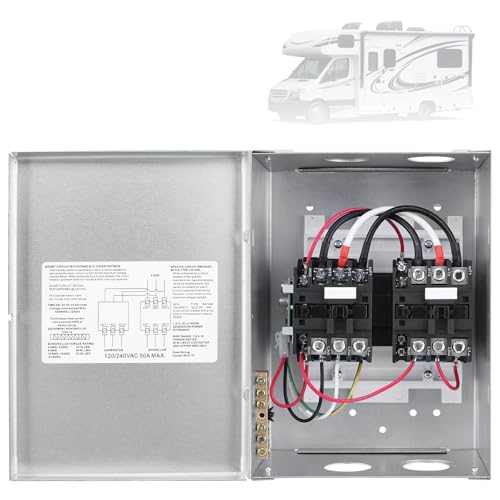
The Nirakoka 50 amp is the straightforward option for a 50 amp coach. It is pre-wired to switch the primary AC source automatically, which means the installer connects the shore power cord, the generator and the coach panel rather than building the logic from relays. A 240VAC rating with a switched neutral suits the 120/240V split-phase system used in 50 amp RVs.

The switched neutral matters. In a split-phase RV, the neutral must follow the active source so that the coach never sees two neutrals tied together, which can produce stray current and false trips on GFCI protection. Against the LINKCRO and KUTTOLE 50 amp units, the Nirakoka lists its neutral handling clearly, and against the 30 amp options it serves a coach with two air conditioners and a residential refrigerator.

Plan the install around access. Mount the switch near the main panel, keep wire runs short and use the gauge the manual specifies. Test the transfer with the air conditioner off first, then with it on, to hear whether it reconnects cleanly after the delay.

What works

  • Pre-wired automatic source change
  • Switched neutral for split-phase 50 amp systems
  • 240VAC rating suits two-air-conditioner coaches
  • Fits RVs and boats

Watch out for

  • Needs careful wiring and an electrician's check
  • Less recognized brand than factory switches
  • Larger and costlier than 30 amp units

Spec sheet

Rating
50 amp class, 240VAC
Neutral
Switched neutral design
Wiring
Pre-wired for automatic source change
Applications
RV, speedboats
Type
Automatic transfer
02
LINKCRO RV 50 Amp Automatic Transfer Switch for RV and Standby
50AAutomaticGenerator start detectRV and standby
Check price on Amazon
Best for: Owners who want the coach to move to the generator on its own.

The LINKCRO 50 amp is described as switching to the generator automatically once the onboard generator or backup power unit turns on. That is the behavior most RV owners want: start the generator, wait a few seconds and let the coach transfer without a trip to the panel. It lists 50 amp 120/240V capability and applications in RVs, speedboats and home standby.

Its value is in the clear automatic logic, but the same detail raises a question that every ATS buyer should ask: how long does it wait? A switch that connects the generator the instant it senses voltage can overload an engine that is still warming up. Against the Nirakoka, it is similarly capable, and against the KUTTOLE it describes the handoff in more detail.

In ownership, treat the first week as a testing period. Run the generator, watch the transfer, then plug into shore power and watch it switch back. Note any delay and confirm that sensitive electronics, like a television or a router, tolerate the brief interruption.

What works

  • Switches when the onboard generator starts
  • Fifty amp 120/240V capability
  • Suits RV, boat and standby use
  • Straightforward automatic logic

Watch out for

  • Transfer delay and source priority need checking
  • Less established brand than factory switches
  • Wiring needs care to match the coach panel

Spec sheet

Rating
50 amp
Voltage
120/240V
Behavior
Switches when onboard generator starts
Applications
RV, speedboat, home standby
Type
Automatic transfer
03
KUTTOLE RV 50 Amp Automatic Transfer Switch PD50
50AGenerator priorityAutomaticRV and home standby
Check price on Amazon
Best for: Boondockers who want the generator to take priority over shore power.

The KUTTOLE PD50 is configured to prioritize generator power. That is a specific design choice: when both sources are live, the switch chooses the generator, which suits a coach whose owner starts the generator on purpose and wants the coach to follow. It is a 50 amp automatic switch for RV, speedboat and home standby use.

Priority behavior is the key difference. Other switches in this group are generally shore-first, preferring the campground pedestal when it is available, which saves fuel but can leave you on a weak pedestal. A generator-first design suits boondocking and tailgating, where the generator is the main source, but it can run the generator unnecessarily if you forget to shut it off at a site with hookups.

Check that the transfer delay is long enough for the generator to stabilize and that the switch returns to shore power when the generator stops. Label the panel so guests know what happens when the engine starts. A short sticker beside the switch with the source priority and delay time saves confusion on a trip with a borrowed coach.

What works

  • Generator-first priority for boondocking
  • Fifty amp automatic switching
  • Suits RV, boat and home standby
  • Clear single-model design

Watch out for

  • Generator-first priority can waste fuel at hookup sites
  • Wiring and delay need verification
  • Less documentation than major brands

Spec sheet

Rating
50 amp
Priority
Generator power first
Type
Automatic transfer
Applications
RV, speedboat, home standby
Model
PD50
04
50A Low Cost RV Transfer Switch With 30 Second Delay
50A30-second delayPark power protectionPermanent install
Check price on Amazon
Best for: Budget 50 amp coaches that need a protective start-up delay.

This low-cost 50 amp switch installs permanently in the RV, protects against faulty park power and transfers to generator power automatically once the generator is energized, after a 30 second delay. That delay is the notable feature, because it lets the generator warm up and stabilize before the coach loads it.

A thirty-second wait is useful in practice. An engine that has just started produces unstable voltage and frequency for a few seconds, and connecting an air conditioner compressor at that moment can stall the engine or damage the compressor. Against the other 50 amp switches in this group, the delay is a clear and verifiable protection, while the lower cost reflects simpler hardware and thinner documentation.

Ownership is simple but needs discipline. Check the switch's behavior when both shore power and generator are live, since the manual specifies which source wins. Keep the unit dry and tighten connections after the first few trips. Because it costs less, it makes a sensible choice for a first conversion where the budget is tight and the electrical system is simple.

What works

  • Thirty-second delay lets the generator stabilize
  • Protects against faulty park power
  • Permanent RV installation
  • Lowest cost 50 amp option here

Watch out for

  • Simpler hardware and thinner documentation
  • Delay may feel long if you want fast transfer
  • Less recognized brand

Spec sheet

Rating
50 amp
Delay
30 seconds before generator transfer
Protection
Protects from faulty park power
Install
Permanent in the RV
Type
Automatic transfer
05
Nirakoka 30 Amp Automatic Transfer Switch 120VAC for RV
30A120VACShore, inverter, gensetAutomatic
Check price on Amazon
Best for: Smaller 30 amp coaches with a single air conditioner.

The 30 amp Nirakoka is the right size for a coach with a single air conditioner and a 30 amp service, which is about 3,600 watts at 120V. It integrates inverters, shore power and generators for automatic switching between sources, which makes it a useful hub for a smaller coach that adds a solar and battery system.

A 30 amp, 120VAC switch is simpler than a 50 amp split-phase one, with fewer conductors and no second hot leg. That makes it cheaper and easier to install, but it cannot serve a coach with two air conditioners and a large inverter. Against the Renogy 30 amp, it is less specialized for inverters, and against the 50 amp units it is a smaller, less costly choice.

In ownership, treat the 3,600 watt ceiling as a hard limit. An air conditioner, a microwave and a hair dryer together will exceed it, so use a load monitor or learn which appliances cannot run at once.

What works

  • Right size for 30 amp coaches
  • Handles shore, inverter and generator sources
  • Simpler wiring than split-phase 50 amp units
  • Lower cost than 50 amp switches

Watch out for

  • Limited to about 3,600 watts
  • Cannot serve two air conditioners
  • Less specialized than inverter-focused switches

Spec sheet

Rating
30 amp
Voltage
120VAC
Sources
Inverter, shore power, generator
Applications
RV
Type
Automatic switching
06
Renogy 30 Amp Transfer Switch for Pure Sine Wave Inverter
30AInverter focusAuto returnSolar compatible
Check price on Amazon
Best for: Van and small RV owners with a solar and inverter system.

The Renogy 30 amp switch is designed around inverter systems. It switches automatically to backup power when the main source fails and returns when it is restored, with no manual step. That suits an RV or van with a Renogy or similar pure sine wave inverter and a solar battery bank, where the inverter is the primary source and shore power or a generator is the backup.

The pairing matters. A pure sine wave inverter produces clean power for sensitive electronics, and a switch built for it keeps the transitions tidy. Against the Nirakoka 30 amp, the Renogy is more specifically aimed at solar and inverter users and comes from a brand known for off-grid gear. Against the 50 amp switches, it is limited to 3,600 watts.

Ownership notes: match the inverter's output to the switch, keep wiring short and verify the transfer on a battery that is not fully charged. A switch is only as good as the source feeding it. If the battery bank sags below the inverter's low-voltage cutoff, the inverter shuts off and the switch will move to the backup source, so size the battery bank for your evening load.

What works

  • Designed for pure sine wave inverters
  • Automatic switch to backup and return
  • Suits solar and generator systems
  • Brand known for off-grid equipment

Watch out for

  • Limited to 30 amps and about 3,600 watts
  • Best value only with an inverter system
  • Needs wiring matched to the inverter

Spec sheet

Rating
30 amp
Best match
Pure sine wave inverters
Behavior
Switches to backup, then returns
Applications
Solar inverters, home generators
Brand
Renogy

Spec sheet decoder

What the numbers on the box really mean

The specs manufacturers lead with, translated into what they tell you about real-world performance.

30A versus 50A RV service

30A is 120V and about 3,600 W, while 50A is 120/240V split-phase and about 12,000 W.

Watch forThey use different inlets and cords.

Automatic transfer switch

A device that selects between sources and prevents two live sources from connecting at once.

Watch forDelay and priority decide how it behaves in real use.

Switched neutral

A design where the neutral follows the active source, as on the Nirakoka 50 amp.

Watch forDo not bond neutral to ground twice.

Transfer delay

The wait before connecting the generator, 30 seconds on the low-cost 50 amp unit.

Watch forA short delay can stall a cold engine.

Pure sine wave inverter

An inverter that produces clean AC power, the type the Renogy switch targets.

Watch forModified sine inverters can upset some electronics.

Methodology

How We Evaluated These RV Generator Transfer Switches

Rating and coach fit

We evaluated whether each switch matches a 30 amp or 50 amp coach. The Nirakoka 30 amp and Renogy are 30 amp, while the Nirakoka 50 amp, LINKCRO, KUTTOLE and low-cost 50 amp units serve split-phase coaches.

Handoff behavior

We considered delay and source priority, including the 30 second delay on the low-cost 50 amp unit and the KUTTOLE's generator-first design.

Wiring and neutral handling

We looked at how each switch describes its neutral and pre-wiring. The Nirakoka 50 amp's switched neutral and pre-wired layout reduce installation errors.

System compatibility

We compared fit for inverter, solar and generator systems. The Renogy and Nirakoka 30 amp switches are described for those sources.

Ownership and support

Based on owner feedback patterns, wiring mistakes cause more failures than hardware faults, and a switch that survives a few seasons of vibration is as valuable as one that looks good on paper. We favored clear documentation and simple installs.

Decision guide

How to Choose the Right RV Generator Transfer Switches

By RV Service Size

SituationPickWhy
30 amp coach, one ACNirakoka 30 Amp120VAC switching for shore, inverter and generator
50 amp coach, two ACsNirakoka 50 Amp240VAC with switched neutral
Van or small rig with inverterRenogy 30 AmpDesigned for pure sine wave inverters

By Budget

Budget tierPickWhy
Lowest outlay50A Low Cost RV Transfer SwitchBasic 50 amp with a protective delay
Middle groundLINKCRO 50 AmpAutomatic handoff when the generator starts
Highest outlayNirakoka 50 Amp 70APre-wired with switched neutral

Shore-First vs Generator-First

Shore-first

Most switches prefer the campground pedestal and fall back to the generator. That saves fuel and suits full-hookup travel.

Generator-first

The KUTTOLE PD50 prioritizes generator power. It suits boondocking, but can waste fuel if you forget to stop the generator at a hookup site.

Choose shore-first for campgrounds; choose generator-first for boondocking.

Inverter vs Generator Backup

PreferencePickWhy
Solar and battery systemRenogy 30 AmpMatches pure sine wave inverters
Onboard generatorLINKCRO 50 AmpSwitches when the generator starts
Protect the generator at startup50A Low Cost RV Transfer SwitchThirty-second delay

For Boondocking Specifically

Look for

A delay long enough for the generator to stabilize, clear source priority and wiring that suits your inverter. Test every transfer at home before a trip.

In this comparison

The KUTTOLE PD50 and low-cost 50 amp switch suit generator use, while the Renogy suits solar systems.

When to Spend More

Spend more if

You have a 50 amp coach and run expensive appliances. A pre-wired unit like the Nirakoka 50 amp reduces installation mistakes.

Save if

You have a small rig and only use a generator occasionally. The Nirakoka 30 amp covers it.

Ownership

Maintenance schedule

The upkeep that decides whether this machine lasts two seasons or ten.

TaskIntervalWhy it matters
Test transfersBefore each tripRun the generator and shore power transfer. Catching a fault at home beats finding it at a campsite.
Inspect connectionsEvery 6 monthsVibration loosens terminals. Check and tighten with the power off.
Check the enclosureYearlyMoisture and dust shorten switch life. Keep the cover on and dry.
Verify the neutral setupAfter any wiring changeNeutral errors cause GFCI trips and stray current.
Service the generatorPer its scheduleA stable generator makes any transfer switch work better.

FAQ

Frequently Asked Questions

Does my RV need an aftermarket transfer switch?

Most RVs with onboard generators already have a factory switch. Aftermarket switches suit conversions, vans and coaches with a portable generator inlet.

Can a 30 amp switch run a 50 amp RV?

No. The ratings and wiring differ. Use a 50 amp switch for a 50 amp coach.

Why does the switch wait before connecting?

A delay lets the generator stabilize. Connecting a large load to a cold engine can stall it.

Do I need an electrician?

A qualified technician is advisable, since neutral and grounding errors are common and can be dangerous.

Can I use a transfer switch with solar?

Yes, if it is rated for the inverter. The Renogy 30 amp is designed for inverter and solar systems.

What if shore power fails?

A good ATS moves to the backup source automatically. Check that it also returns to shore power when it is restored.

Bottom line

The short version

Browse more rv generator transfer switcheson Amazon →
James Miller, Lead Machine Editor

About the author

James Miller

Lead Machine Editor, MachineFanatic

James Miller leads MachineFanatic's buying guides, turning spec sheets, manuals and owner feedback into clear verdicts on power tools, outdoor power equipment, shop machines and kitchen machines.

More from James →

Keep reading

Related guides