
Amazon affiliate links - we earn a commission.Affiliate disclosure

Buying guide · 14 min read · Updated 2026-11-07

Best Whole House Automatic Transfer Switch Options (2026)

Five whole house automatic transfer switch options compared, from Generac 14, 22 and 26 kW standby packages to generic 100 and 125 amp dual power units.

James MillerBy James MillerLead Machine Editor5 machines comparedSpec-sheet verified
Best Whole House Automatic Transfer Switch Options

At a glance

Our top picks

Side by side

Spec comparison

MachineOutput classSwitchMonitoringScopeMaker
Generac 22kW Whole Home Generator With Transfer Switch and CellularBest OverallGenerac 22kW Whole Home Generator With Transfer Switch and Cellular22 kWTransfer switch includedCellular capabilityWhole home backupGenerac
Generac 14kW Whole Home Generator With Transfer Switch and CellularBest ValueGenerac 14kW Whole Home Generator With Transfer Switch and Cellular14 kWTransfer switch includedCellular capabilityWhole home protectionGenerac
Generac 26kW Whole Home Generator With Transfer Switch and CellularBest for Large HomesGenerac 26kW Whole Home Generator With Transfer Switch and Cellular26 kWTransfer switch includedCellular capabilityWhole home backupGenerac
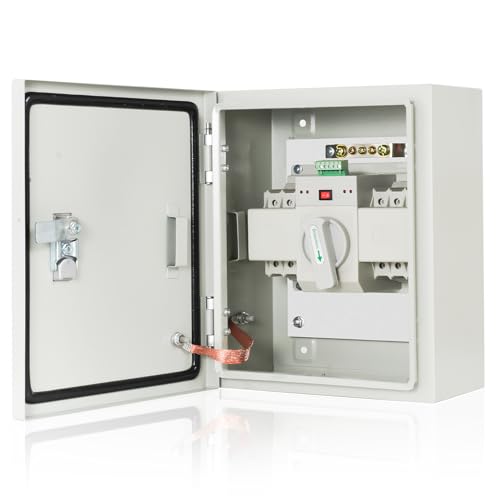
125 Amp Automatic Transfer Switch Dual Power Panel 3P 120/240VGeneric 125A Option125 Amp Automatic Transfer Switch Dual Power Panel 3P 120/240Vn/an/an/an/an/a
100 Amp AC110V Dual Power Automatic Transfer Switch 2-Pole Mini ATSSmallest Option100 Amp AC110V Dual Power Automatic Transfer Switch 2-Pole Mini ATSn/an/an/an/an/a

An automatic transfer switch watches the utility line, starts the backup source when power fails and moves the house onto it within seconds, then reverses the process when the grid returns. For a whole house, that switch has to carry the entire service, not just a handful of circuits.

That requirement is why the category splits in two. Standby generator packages include a purpose-built switch sized for a home service, while generic dual power modules are small industrial parts that do not meet residential requirements. This guide treats them honestly and ranks them by fit.

Before you buy

6 Criteria to Look For Before Buying a Whole House Automatic Transfer Switch Option

  1. 01

    Service size and switch rating

    Most homes built in the last few decades have a 200 amp service, and a whole-house transfer switch must carry the whole of it unless the panel is split. A generic 100 amp or 125 amp module, such as the two generic units in this guide, cannot do that for a 200 amp house. Check your main breaker rating and ask the installer whether a service-entrance switch or a sub-panel approach is right. A common compromise is a sub-panel for essential circuits, fed through a smaller switch, which lets a modest generator protect the heating, refrigeration and well pump without carrying the entire house.

  2. 02

    Standby package versus standalone switch

    The Generac 14, 22 and 26 kW packages include a transfer switch designed with the generator, with controller logic, documentation and a support network behind it. A standalone dual power module leaves the engineering to you. Buyers who skip the packaged system to save money often lose the savings in electrician time and permit hurdles. A packaged system also comes with defined clearances, wiring diagrams and a service network, which lets an inspector approve the work quickly. A one-off dual power module usually has none of that, and the installer has to improvise.

  3. 03

    Generator sizing and load calculation

    A 14 kW unit can run a smaller home or a larger one with load shedding, a 22 kW unit suits most homes with central air and a 26 kW unit suits homes with multiple air conditioners. A load calculation lists every appliance with its starting and running watts. Skipping the calculation is how owners end up with a generator that trips every time the air conditioner starts. A central air conditioner may draw 3,000 to 5,000 watts to start but only 2,000 to 3,500 once running, and a well pump or a sump pump adds a similar surge. Smart load management modules can hold back an air conditioner until the generator has headroom, which lets a smaller unit cover a larger house.

  4. 04

    Transfer time and sensitive electronics

    An automatic switch typically takes ten to thirty seconds to start the generator and transfer, so lights flicker and computers reboot. A whole-house system can be paired with a battery backup or UPS for sensitive electronics. This is a normal behavior, not a defect. If you work from home or run medical equipment, plan a plug-in battery backup for those specific devices, because the generator transfer will always cause a short interruption. Check that the controller offers a delay before transfer, which prevents the system from switching back and forth during a flickering outage.

  5. 05

    Listing and inspection

    Look for UL 1008 or equivalent listing and confirm the utility and local inspector accept the product. Generic dual power switches sold for industrial use are often marked for different standards. An unlisted switch can void insurance and may be refused by the utility.

  6. 06

    Installation, permit and fuel

    A standby system needs a pad, a gas line sized for the generator, an electrical connection to the main panel and a permit. Natural gas is the usual fuel, with propane as an alternative where gas lines are not available. Quotes vary widely, so get several and ask what is included. Ask whether the quote covers the gas line, the electrical connection, the permit, the pad and the first service visit, because omissions are the main reason a low quote becomes a high bill. Confirm in writing who is responsible for the utility interconnection paperwork.

Detailed reviews

The 5 best whole house automatic transfer switch options, explained

01
Generac 22kW Whole Home Generator With Transfer Switch and Cellular
22 kW standbyTransfer switch includedCellular monitoringWhole-house
Check price on Amazon
Best for: Typical single-family homes with central air that want full automatic backup.

The 22 kW Generac is the practical benchmark for a whole-house system because the transfer switch is sized for the service, packaged and listed together with the generator. At roughly 22,000 watts on natural gas, it can usually carry a typical home with central air conditioning, an electric range or a well pump, with the switch managing the handoff automatically. Cellular capability lets the owner monitor status and exercise reports remotely.

The important point is that the switch is designed with the generator, not bolted on afterward. It detects an outage, signals the engine to start and moves the load once the voltage and frequency are stable, which usually takes about ten to fifteen seconds. Against the 26 kW unit, the 22 kW is lower in capacity and cost, and against the 14 kW it is a better fit for homes with two air conditioners or large electric loads.

Ownership means a professional install, a gas line, a pad and a permit. After that, the generator runs a weekly exercise cycle, needs annual service and requires fresh oil and filters on schedule. Treat the maintenance contract as part of the cost of ownership. Keep a log of exercise runs and any alerts, since a standby generator that has not run under load for a year is the one most likely to fail during a real outage.

What works

  • Transfer switch is engineered and listed with the generator
  • 22 kW class carries most whole-home loads
  • Cellular monitoring for status and alerts
  • Automatic start and transfer after an outage

Watch out for

  • Requires professional installation and a gas supply
  • Costs far more than portable generator solutions
  • Needs annual service and a weekly exercise cycle

Spec sheet

Output class
22 kW
Switch
Transfer switch included
Monitoring
Cellular capability
Scope
Whole home backup
Maker
Generac
02
Generac 14kW Whole Home Generator With Transfer Switch and Cellular
14 kW standbyTransfer switch includedCellular monitoringHome backup
Check price on Amazon
Best for: Smaller or gas-heated homes with one air conditioner.

The 14 kW package gives a smaller home the same automatic, whole-house experience with a smaller generator. At 14,000 watts it can run lighting, refrigeration, heating, a well pump and one air conditioner, though a house with two cooling systems or electric heat will need load management. The switch and the controller handle starting, transferring and re-transferring.

Its value comes from matching the generator to the actual load rather than to the size of the house. Many homes run comfortably at 8,000 to 12,000 watts if large loads are staggered, and smart load modules can shed an air conditioner when the generator is near its limit. Against the 22 kW, it is cheaper to buy and install, but a heavy electric load can overwhelm it.

Installation and upkeep follow the same pattern as larger units: professional setup, gas supply, permit and annual maintenance. Ask the installer to size the system with a real load calculation, not a rule of thumb. Also ask about fuel supply: a large natural gas line and meter may need an upgrade, and a propane tank must be sized for several days of running.

What works

  • Whole-home automatic backup at a lower generator size
  • Transfer switch included and listed with the system
  • Cellular capability for monitoring
  • Lower purchase and install cost than 22 kW

Watch out for

  • Not suited to homes with two air conditioners or electric heat
  • Requires load management when running many appliances
  • Professional installation and permit required

Spec sheet

Output class
14 kW
Switch
Transfer switch included
Monitoring
Cellular capability
Scope
Whole home protection
Maker
Generac
03
Generac 26kW Whole Home Generator With Transfer Switch and Cellular
26 kW standbyTransfer switch includedCellular monitoringLarge homes
Check price on Amazon
Best for: Large homes with multiple air conditioners and electric appliances.

The 26 kW package is the answer for a large home with multiple air conditioners, electric appliances and a well pump. At 26,000 watts it has the headroom to start several large motors without load shedding, which avoids the stutter and voltage sag that smaller units can show when two compressors start together.

The cost of that headroom is size and price. A 26 kW unit needs a larger pad, a bigger gas supply and a more substantial install, and its fuel consumption at full load is correspondingly higher. Against the 22 kW, the gain is real only for homes whose calculated load actually exceeds it.

A professional load calculation will tell you whether the extra four kilowatts are worth it. If the house runs two air conditioners, an electric range, a dryer and a pool pump, the 26 kW unit makes sense. If not, the 22 kW is the better buy.

What works

  • Headroom to start several large motors without shedding
  • Transfer switch included and listed with the system
  • Cellular capability for monitoring
  • Suits large homes with heavy electric loads

Watch out for

  • Needs a larger pad and gas supply
  • Costs more and uses more fuel at full load
  • Oversized for typical homes

Spec sheet

Output class
26 kW
Switch
Transfer switch included
Monitoring
Cellular capability
Scope
Whole home backup
Maker
Generac
04
125 Amp Automatic Transfer Switch Dual Power Panel 3P 120/240V
125A3-pole120/240VDual power
Check price on Amazon
Best for: Electricians and DIY experts wiring a sub-panel or dedicated load.

This is a generic dual power transfer panel rated at 125 amps with three poles at 120/240V. It switches between two sources automatically, which makes it a candidate for a sub-panel or a large dedicated load rather than a full service entrance. At 125 amps, it can pass up to about 30,000 watts at 240V, but only if the wiring, breakers and listing support that use.

The key caution is the listing. Residential service-entrance transfer switches are typically UL listed to a specific standard and approved by the utility and the local inspector. A generic dual power module sold without that listing may fail inspection and can create liability issues for an insurer. Against the Generac packages, it costs less but delivers none of the system engineering or documentation.

If you pursue this route, hire an electrician, verify the listing, confirm the switch is rated for your service type and check that the neutral is handled correctly. For a 200 amp house, a 125 amp switch will not serve the whole panel.

What works

  • Automatic dual power switching at a low cost
  • 125 amp rating suits sub-panels and large loads
  • Three-pole 120/240V design
  • Flexible for custom installations

Watch out for

  • Listing may not satisfy residential inspection
  • Too small for a 200 amp whole-house service
  • No manufacturer system engineering or support

Spec sheet

Rating
125 amp
Poles
3P
Voltage
120/240V
Type
Dual power transfer panel
Listing
Check for UL or ETL mark
05
100 Amp AC110V Dual Power Automatic Transfer Switch 2-Pole Mini ATS
100A2-poleAC110VMini ATS
Check price on Amazon
Best for: Small solar or cabin systems designed by an electrician.

This mini automatic transfer switch is a two-pole, 100 amp, 110V dual power module described by the seller as a PC-level switch for infrequent switching, aimed at solar and small backup systems. It is a component rather than a residential product, and its rating and listing reflect that.

For a whole house it is not a fit. A two-pole 110V design cannot serve a 240V split-phase service, and a 100 amp rating is below the 200 amp service common in modern homes. It may suit a small off-grid cabin or a solar-plus-grid sub-system where an electrician has designed the wiring around it. Against the 125 amp panel, it is smaller and lower voltage, and against the Generac systems it is not in the same category.

Buy it only if you know exactly what it must do, and have a licensed electrician specify and install it. For most homeowners reading a guide like this one, the better answer is a packaged system or a portable generator with a listed manual switch. Do not use it as a substitute for a listed residential transfer switch on the main service.

What works

  • Compact and low cost for small systems
  • Automatic dual power switching
  • Works with 50/60 Hz sources
  • Suitable for solar-plus-grid sub-systems

Watch out for

  • Two-pole 110V design cannot serve a 240V home service
  • 100 amp rating is below typical 200 amp services
  • Not a listed residential transfer switch

Spec sheet

Rating
100 amp
Poles
2P
Voltage
AC110V, 50/60 Hz
Type
PC-level dual power switch
Use
Solar, backup and small systems

Spec sheet decoder

What the numbers on the box really mean

The specs manufacturers lead with, translated into what they tell you about real-world performance.

Automatic transfer switch (ATS)

A device that senses a power failure, starts the backup source and switches the load automatically.

Watch forWhole-house use requires a rating that matches your service.

kW rating

The generator's output capacity: 14, 22 and 26 kW for the Generac packages.

Watch forMatch it to your calculated load, not your house size.

3P versus 2P

The generic 125A panel has three poles and the mini ATS has two. Split-phase homes need switches that handle both hot legs.

Watch forA two-pole 110V unit cannot serve a 240V service.

Dual power

A switch that selects between two sources, usually utility and backup, with one active at a time.

Watch forNot all dual power modules are rated for residential use.

Cellular capability

Remote monitoring over a cellular link, listed on the Generac packages.

Watch forIt may need a service plan after an initial period.

Methodology

How We Evaluated These Whole House Automatic Transfer Switch Options

Whole-house suitability

We evaluated whether each option can carry a full home service. The Generac 14, 22 and 26 kW packages are designed for it, while the 100 amp and 125 amp generic units are not rated for a typical 200 amp service.

Listing and documentation

We looked at how clearly each product ties to a recognized standard. The Generac packages are sold as listed systems, while the generic units require the buyer to verify listing.

Sizing fit

We compared the 14, 22 and 26 kW classes against typical home loads. A 22 kW unit suits most homes, while the 14 kW suits smaller or gas-heated homes.

Installation burden

We considered permits, gas supply and electrical work. All whole-house options need a licensed professional, but packaged systems have clearer procedures.

Long-term support

Based on owner feedback patterns, an established maker with service networks matters more than saving on parts. Maintenance contracts and parts availability influence the verdict. We also considered how readily a local technician can service each system, because a unit nobody nearby can repair is risky when the outage lasts a week.

Decision guide

How to Choose the Right Whole House Automatic Transfer Switch Options

By Home Size and Load

SituationPickWhy
Small or gas-heated home, one ACGenerac 14kWEnough for essentials with load management
Typical home with central airGenerac 22kWCarries most whole-home loads
Large home, multiple ACs and electric loadsGenerac 26kWHeadroom for large motor starts

By Budget

Budget tierPickWhy
Lowest outlay for a standby systemGenerac 14kWSmallest packaged whole-home system here
Middle groundGenerac 22kWBest balance of capacity and cost
Highest outlayGenerac 26kWLargest capacity for big homes

Packaged System vs Standalone Switch

Packaged system

The Generac units include an engineered switch, a controller and support. They cost more but reduce design risk and inspection issues.

Standalone switch

The generic 125 amp and 100 amp modules cost far less but leave listing, sizing and support to you. They suit electricians building a custom system, not casual buyers.

Choose a packaged system for a whole house; use a standalone switch only with an electrician's design.

Whole House vs Selected Circuits

PreferencePickWhy
Everything stays onGenerac 22kWWhole-home capacity with automatic switching
Essentials only, cheaperGenerac 14kWCovers critical loads with load management
Sub-panel for a dedicated load125 Amp Dual Power PanelAutomatic switching for a defined sub-panel

For Outage Reliability Specifically

Look for

A listed switch, a generator sized to your calculated load and a maintenance plan. Ask for a quote that includes the pad, gas line and permit.

In this comparison

The Generac 22kW is the best match for most homes, the 14kW suits smaller loads and the 26kW suits large homes.

When to Spend More

Spend more if

You have central air, a well pump or a medical need for continuous power. The 22 kW or 26 kW packages avoid load-shedding compromises.

Save if

You only need to protect a few circuits. A smaller package or a portable generator with a manual switch may be enough.

Ownership

Maintenance schedule

The upkeep that decides whether this machine lasts two seasons or ten.

TaskIntervalWhy it matters
Annual generator serviceYearlyOil, filters and spark plugs wear. A service visit keeps the engine ready.
Check the weekly exercise logMonthlyA failed exercise cycle is an early warning. Review alerts from the controller.
Inspect the transfer switchYearlyDust and heat loosen terminals. An electrician should check torque and contacts.
Test a simulated outageTwice a yearA real load test shows the switch and engine work together. Shut off the main under supervision.
Keep the pad clearOngoingDebris and vegetation block cooling air. Keep clearances around the enclosure.

FAQ

Frequently Asked Questions

What size generator do I need for a whole house?

It depends on a load calculation. A 22 kW unit suits most homes with central air, 14 kW suits smaller or gas-heated homes and 26 kW suits large homes.

Can I buy a transfer switch separately for a whole house?

Yes, but it must be rated for your service, listed and installed by a licensed electrician. Most homeowners are better off with a packaged system.

Why not use a 100 amp generic switch?

A 100 amp rating is below the 200 amp service in many homes, and generic modules may not be listed for residential use. It can fail inspection.

How long does an automatic switch take to transfer?

Usually ten to thirty seconds, including engine start. Lights flicker and some electronics reboot, which is normal.

Do I need a permit?

Almost always. A standby generator and transfer switch need electrical and often gas permits, and an inspection.

Can a standby generator run on propane?

Many can, with a conversion or the correct fuel kit. Natural gas is common where lines exist, and propane works where they do not.

Bottom line

The short version

Browse more whole house automatic transfer switch optionson Amazon →
James Miller, Lead Machine Editor

About the author

James Miller

Lead Machine Editor, MachineFanatic

James Miller leads MachineFanatic's buying guides, turning spec sheets, manuals and owner feedback into clear verdicts on power tools, outdoor power equipment, shop machines and kitchen machines.

More from James →

Keep reading

Related guides