


Amazon affiliate links - we earn a commission.Affiliate disclosure

Buying guide · 13 min read · Updated 2026-11-13

Best Solar Generator for Home Use (2026)

Six solar generators for everyday home use, from patio and garage tools to a home office, sorted by what you plug in and how often you cycle them.

James MillerBy James MillerLead Machine Editor6 machines comparedSpec-sheet verified
Best Solar Generator for Home Use

At a glance

Our top picks

Side by side

Spec comparison

MachineCapacityAC outputChargePanel
Jackery Solar Generator 1000 v2 with 200W panel, 1024WhBest OverallJackery Solar Generator 1000 v2 with 200W panel, 1024Wh1024Wh LiFePO41500W, 3000W peak0 to 100% in 50 minutes200W foldable
EcoFlow DELTA 3 Classic with 220W panel, 1024WhBest Fast CyclingEcoFlow DELTA 3 Classic with 220W panel, 1024Wh1024Wh1800W, 3600W surge0 to 80% in 45 minutes220W
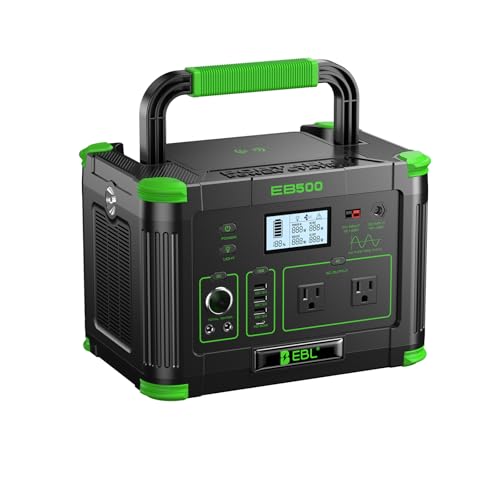
EBL 500W 519Wh portable power stationBest Value Mid PackEBL 500W 519Wh portable power station519.48Wh (140,400mAh)500W pure sine, 2 outletsn/aNot included
MARBERO 237Wh 300W kit with foldable solar panelBest Starter KitMARBERO 237Wh 300W kit with foldable solar panel237Wh (64,000mAh)300W pure sinen/aFoldable, included
Jackery HomePower 3600 Plus 3584Wh, 3600WBest Home Base UnitJackery HomePower 3600 Plus 3584Wh, 3600W3584Wh LFP3600W, 7200W in paralleln/an/a
EcoFlow DELTA Pro 3600Wh 3600W, expandableBest Proven PlatformEcoFlow DELTA Pro 3600Wh 3600W, expandable3600Wh LFP3600W, 4500W expandedFull in about 2.7 hoursn/a

Everyday home use is a different job from emergency backup. A unit that lives in the garage and moves to the patio, the shed or the home office gets cycled every week, picked up and carried, and judged by how it behaves with a drill, a string of lights, a laptop and a speaker.

That puts weight, cycle life and quiet operation ahead of the biggest number on the box. This guide ranks units by how well they handle weekly cycling around a house and yard, and notes where the same box doubles as outage backup without being the whole plan.

Before you buy

6 Criteria to Look For Before Buying a Solar Generator for Home Use

  1. 01

    List what you plug in

    A drill draws 500 to 800W, a circular saw 1,200 to 1,500W, a leaf blower 600 to 1,200W, a laptop 50W and a TV 100W. A 500W unit like the EBL runs the last two, the Jackery 1000 v2 the first three, and the 3600W units a compressor too. Match watts to your heaviest tool.

  2. 02

    Cycle life if you cycle weekly

    LiFePO4 packs in the Jackery and EcoFlow units are rated for 2,000 or more cycles, while lithium-ion packs in the EBL and MARBERO are rated 500 to 800. A weekly user cycles about 50 times a year, so the cheaper packs age in 10 to 15 years on paper but fade earlier in heat.

  3. 03

    Weight and carrying

    A 24 lb unit is easy to move around a yard, while a 3584Wh Jackery weighs far more and stays in the shop. If you move the unit between patio, shed and office, weight decides. A small cart helps.

  4. 04

    Charge speed

    The DELTA 3 Classic reaches 80 percent in 45 minutes, the Jackery 1000 v2 full in 50, the DELTA Pro full in 2.7 hours. If you drain the pack on Saturday, a fast charge saves a week. Check your circuit can supply it.

  5. 05

    Noise and fans

    Fans spin up at high load, and a unit in a shed beside the neighbor's fence will be heard. LiFePO4 stations are quiet at light loads and noticeable at 1,000W or more. Keep heavy loads short or place the unit away from the fence.

  6. 06

    Solar for the yard

    A 220W panel gives 130 to 180W, about 600 to 800Wh on a sunny day, which offsets a patio session. A 40W kit barely helps. If solar is a goal, count real harvest and consider a larger array.

Detailed reviews

The 6 best solar generator for home use, explained

01
Jackery Solar Generator 1000 v2 with 200W panel, 1024Wh
1024Wh LiFePO41500W / 3000W50 min charge10ms UPS
Check price on Amazon
Best for: Households that want one unit for tools, patio, desk and light backup.

A weekly workhorse needs cells that shrug off cycling, and this Jackery's LiFePO4 pack is rated for the thousands of cycles that a weekly user would rack up over a decade. A 1500W inverter runs a circular saw, a hedge trimmer or a pressure washer on its lowest setting, and the 10ms UPS means it can also sit on the desk as a backup.

It is a bit heavy to carry around a yard at about 24 lb, and the 200W foldable panel gives only 120 to 160W in sun, so solar is a top up for the patio rather than a way to avoid wall charging. A 50 minute wall refill makes weekly cycling painless, and the pack's price sits at an upper mid tier.

The warranty and service network are the strongest at this size, which matters for a unit that sees real use. Keep it indoors between jobs, switch the inverter off when idle and wipe the vents each season. For a household that wants one box to do almost everything small, it is the answer. A typical week might see it run a hedge trimmer for twenty minutes on Saturday, a laptop and monitor for a few hours on weekdays and a string of lights and a speaker at a Sunday barbecue, which together use about 1kWh and fit one full cycle with a little left over.

What works

  • LiFePO4 rated for weekly cycling
  • 1500W runs a saw or trimmer
  • 50 minute full charge
  • 10ms UPS for the desk

Watch out for

  • 24 lb is heavy for a long carry
  • Panel is a modest top up
  • Upper mid price tier

Spec sheet

Capacity
1024Wh LiFePO4
AC output
1500W, 3000W peak
Charge
0 to 100% in 50 minutes
UPS
10ms
Panel
200W foldable
02
EcoFlow DELTA 3 Classic with 220W panel, 1024Wh
1024Wh1800W / 3600W45 min to 80%220W panel
Check price on Amazon
Best for: Households that drain and refill a battery weekly and want quick turnarounds.

EcoFlow's kit fits a household that drains a battery on Saturday and wants it full by lunch. The 45 minute 0 to 80 percent charge, an 1800W inverter with 3600W of surge and a 100W USB-C port cover a leaf blower, a router and a laptop, and the 220W panel is large enough to run a patio setup on a clear afternoon.

Its compromise is that 1024Wh is a modest tank for power tools, and that the unit sits at a mid price tier. A circular saw at 1,200W empties the pack in under an hour of continuous use, though tool duty cycles are usually short. The app provides live watts, charge caps and firmware updates.

EcoFlow's service network is broad and the platform is mature. Keep it in a dry garage, charge it above freezing and check the vents each season. This suits a household that cycles often and wants fast turnarounds. Set beside the Jackery 1000 v2 it gives up the 10ms UPS claim and some cycle life certainty, but it gains a bigger bundled panel and a faster refill, which suits people who care more about turnaround than about desk uptime.

What works

  • 0 to 80% in about 45 minutes
  • 1800W with 3600W surge
  • 220W panel included
  • 100W USB-C output

Watch out for

  • 1024Wh runs tools for under an hour
  • Mid price tier
  • Panel is bulky to store

Spec sheet

Capacity
1024Wh
AC output
1800W, 3600W surge
Charge
0 to 80% in 45 minutes
Panel
220W
USB-C
100W output
03
EBL 500W 519Wh portable power station
519Wh500W AC2 AC outlets10 ports
Check price on Amazon
Best for: Light weekly use on a patio or at a desk where cost per watt-hour matters.

EBL's 500W station is the budget way to power a patio, a home office or a small workshop. 519Wh runs a laptop, monitor, router and lamp for about five hours, and a 500W inverter covers a drill or a string of lights. Ten ports, including wireless charging, keep phones and accessories off the AC inverter.

It is a lithium pack, not LiFePO4, so expect 500 to 800 cycles. Weekly use would see it fade in a few years. There is no panel in the listing and the brand has little service history. At 500W, a miter saw or a pressure washer is beyond it.

Care is simple: keep it in a dry spot, charge it after use and top it up every few months. It suits households that use a battery a few times a month and want the lowest cost per watt-hour for a patio or office. A useful habit is to charge it fully after every use and then leave it alone, because small lithium packs treated this way tend to last longer than ones left half used for months.

What works

  • 519Wh at a low price tier
  • Ten ports including wireless charging
  • Two pure sine AC outlets
  • Easy one hand carry

Watch out for

  • Lithium pack, shorter cycle life
  • No panel included
  • 500W is too little for most power tools

Spec sheet

Capacity
519.48Wh (140,400mAh)
AC output
500W pure sine, 2 outlets
Ports
10 including wireless charging
Class
Lithium battery pack
Panel
Not included
04
MARBERO 237Wh 300W kit with foldable solar panel
237Wh300W ACFoldable panelPure sine
Check price on Amazon
Best for: First time buyers who want a small patio and desk kit with a panel.

This MARBERO kit puts a 237Wh pack and a foldable panel in one box, which makes it the simplest way to try solar around the house. It runs a laptop, lights and a fan on the patio, and the panel lets you recharge in the yard without cords to the house.

It cannot run tools. 300W is below any saw or blower, and 237Wh is a short reserve. The pack is lithium rather than LiFePO4, so frequent cycling would age it, and the brand has limited service reach. The panel is small, giving 25 to 40W in sun.

For ownership, fold the panel after use, wipe dust off and store the pack at half charge. It suits someone who wants to learn what solar does in daily life before spending more. After a month you will know whether you reach for it weekly, whether the panel earns its keep and whether you want a bigger pack, and the small cost of finding that out is the real value of this kit.

What works

  • Panel included
  • 237Wh pack with pure sine output
  • Low cost of entry
  • Light and portable

Watch out for

  • 300W cannot run tools
  • Lithium pack ages with weekly use
  • Limited service reach

Spec sheet

Capacity
237Wh (64,000mAh)
AC output
300W pure sine
Panel
Foldable, included
Class
Lithium battery
Use
Small home and patio jobs
05
Jackery HomePower 3600 Plus 3584Wh, 3600W
3584Wh LFP3600W AC7200W paralleled21kWh expandable
Check price on Amazon
Best for: Workshops and garages that need real tool power and occasional backup.

A shop, a barn or a workshop that needs real tool power finds its answer here: 3600W starts a table saw or a compressor, and 3584Wh of LFP runs them for a work session. Jackery ties its ceramic membrane cell design to high temperature tolerance, helpful in a hot garage.

The unit is heavy and expensive, so it is a base station that stays put, not something you carry around the yard. This listing has no panels, so it charges from the wall, which fits a shop with an outlet. For a household that wants one big unit for projects and backup, it works, but a smaller unit covers lighter jobs better.

Ownership benefits from Jackery's service. Keep it level, dry and ventilated, check the charge every few months and update firmware. It is the pick for a workshop that sees heavy loads. Use a heavy gauge cord with a short run to the tool, since a long thin extension at 1,500W loses power and heats up, and consider a dedicated shelf with a rubber mat so the cabinet is off the damp concrete floor.

What works

  • 3600W starts saws and compressors
  • 3584Wh LFP runs a work session
  • Expandable to 21kWh
  • Strong service network

Watch out for

  • Heavy and expensive
  • No panels in this listing
  • Overkill for patio and desk use

Spec sheet

Capacity
3584Wh LFP
AC output
3600W, 7200W in parallel
Expansion
up to 21kWh
Cells
Ceramic membrane LFP
Panels
Not in this listing
06
EcoFlow DELTA Pro 3600Wh 3600W, expandable
3600Wh LFP3600W AC4500W expanded2.7 hr charge
Check price on Amazon
Best for: Workshops that want proven hardware with plenty of accessory support.

EcoFlow's DELTA Pro has a long field record in home workshops and garages, with accessories for solar, generator and wall charging. Its 3600W inverter and 3600Wh LFP pack match the Jackery, and a 2.7 hour full recharge fits a weekly routine of work and refill.

It is an older design, without some of the newer features, and it ships without panels. It is heavy, so a cart or a fixed spot is a must, and cost sits at an upper tier. Expanding output to 4500W takes a second unit.

Its app is mature, and community knowledge is wide. Keep it between 20 and 80 percent when idle, clean the fans and use heavy gauge cords for big tools. It suits a household that wants proven hardware. Many workshop owners pair it with a second battery later, so a first purchase can be modest and the system grows as the projects get bigger, rather than forcing a large spend on day one.

What works

  • Long field record
  • 3600Wh LFP pack
  • 2.7 hour full recharge
  • Output grows to 4500W

Watch out for

  • Older design
  • No panels bundled
  • Heavy

Spec sheet

Capacity
3600Wh LFP
AC output
3600W, 4500W expanded
Charge
Full in about 2.7 hours
Expansion
Extra batteries available
Ecosystem
Mature accessories

Spec sheet decoder

What the numbers on the box really mean

The specs manufacturers lead with, translated into what they tell you about real-world performance.

1500W / 3000W

The Jackery 1000 v2's continuous and peak output.

Watch forPeak lasts a second and covers tool starts.

2.7 hour charge

The DELTA Pro's time to full from the wall.

Watch forSlower than the smaller EcoFlow units.

LiFePO4

Cells rated for thousands of cycles.

Watch forUsed in the Jackery and EcoFlow picks.

Pure sine

A clean waveform for sensitive electronics.

Watch forAll units here claim it.

21kWh expansion

The Jackery 3600 Plus maximum stack.

Watch forExtra batteries are sold separately.

Methodology

How We Evaluated These Solar Generator for Home Use

Tool and load fit

We compared inverter ratings with common tool and appliance loads. The EBL's 500W covers desk and lights, the Jackery 1000 v2 a saw, and the 3600W units a compressor.

Cycle life

We favored LiFePO4 for weekly cycling and treated the EBL and MARBERO's lithium-ion packs as shorter lived.

Turnaround

We compared charge speeds, from the 45 minute EcoFlow to the 2.7 hour DELTA Pro, and noted solar contributions.

Portability

We weighed the 24 lb Jackery against heavier shop units and lighter patio kits.

Support and cost

We weighed brand service reach and cost per Wh. Jackery and EcoFlow lead on support, EBL on cost.

Decision guide

How to Choose the Right Solar Generator for Home Use

By Home Task

SituationPickWhy
Patio lights and laptopMARBERO 237Wh kitSmall kit with a panel
Home office and deskEBL 500W 519WhTen ports and 500W
Weekend yard tools and deskJackery Solar Generator 1000 v21500W and LiFePO4
Weekly cycling and fast refillEcoFlow DELTA 3 Classic kit45 minute charge
Workshop saws and compressorJackery HomePower 3600 Plus3600W and 3584Wh

By Budget

TierPickWhy
LowestMARBERO 237Wh kitSmall kit
Lower midEBL 500W 519WhCapacity per cost
MidEcoFlow DELTA 3 Classic kitFast charge and panel
Upper midJackery Solar Generator 1000 v2Balanced everyday unit
HighestJackery HomePower 3600 PlusShop power

Carry Around vs Stay Put

Carry around

The MARBERO, EBL, Jackery 1000 v2 and DELTA 3 Classic weigh under 25 lb and move between patio, shed and office. They suit mixed daily use.

Stay put

The HomePower 3600 Plus and DELTA Pro need a cart and a fixed spot. They suit a shop or a utility room where heavy loads run.

Choose carry around for versatility, stay put for heavy tools.

Panel Choice

PreferencePickWhy
Biggest included panelEcoFlow DELTA 3 Classic kit220W
Mid panelJackery Solar Generator 1000 v2200W foldable
Small panelMARBERO 237Wh kitFoldable included
Add your own panelEBL 500W 519WhNo panel bundled
Large array laterJackery HomePower 3600 PlusExpandable system

For a Home Workshop Specifically

Look for

A 1,800W or higher inverter, a 3,000W or higher surge for saw starts and LiFePO4 for cycling. A circular saw at 1,300W runs 40 minutes on 1kWh.

In this comparison

The Jackery 1000 v2 and DELTA 3 Classic handle a saw in short bursts. The HomePower 3600 Plus and DELTA Pro run tools for a session.

When to Spend More

Spend more if

You cycle weekly or run tools. The Jackery 1000 v2 and DELTA 3 Classic bring LiFePO4 or fast charging, and the 3600W units bring shop power.

Save if

You use it monthly for light loads. The EBL 500W and MARBERO kit cover desks and patios at low tiers.

Ownership

Maintenance schedule

The upkeep that decides whether this machine lasts two seasons or ten.

TaskIntervalWhy it matters
Wipe vents and portsEvery 3 monthsGarage dust clogs fans and raises noise.
Storage chargeEvery 3 monthsKeep packs at 50 to 60 percent when idle.
Inspect cordsEvery 6 monthsTool cords fray at plugs, and heavy loads need good leads. Replace any cord with a warm plug or a split jacket right away, because a poor connection at 1,500W produces heat that is easy to miss.
Keep it dryAlwaysGarages and sheds see damp air. Store on a shelf, not on the floor, and keep a small desiccant pack nearby, because condensation inside a vent or port is a slow way to kill an electronics board.
Run a full cycleOnce a yearReveals capacity loss.

FAQ

Frequently Asked Questions

Can a solar generator run power tools?

Yes within its rating. A 1500W unit runs a circular saw or hedge trimmer in short bursts. A 500W unit does not. Tools with big start surges need a high surge rating, and cordless tool chargers are the easy win, since a battery charger at 100W is well inside any unit here.

How long will it run a saw?

A 1,300W saw drains 1kWh in about 40 minutes of continuous cutting. Real use is intermittent, so a session of a few hours is plausible.

Is LiFePO4 worth it for weekly use?

Yes. It is rated for thousands of cycles. Lithium-ion packs fade sooner with weekly use.

Can I use it outdoors?

Under cover, yes. Most units are not waterproof, so keep them out of rain and off wet ground. A covered porch or an open garage is ideal, and a cheap plastic crate turned upside down makes a fine rain shield in a pinch.

Do I need panels?

No. Wall charging is faster. Panels help for patio use and outages, but a 220W panel adds only 600 to 800Wh on a sunny day.

Is it good as a backup too?

Yes for hours. A 1kWh unit can run a router and fridge overnight, though backup guides focus on longer outages.

Bottom line

The short version

Browse more solar generator for home useon Amazon →
James Miller, Lead Machine Editor

About the author

James Miller

Lead Machine Editor, MachineFanatic

James Miller leads MachineFanatic's buying guides, turning spec sheets, manuals and owner feedback into clear verdicts on power tools, outdoor power equipment, shop machines and kitchen machines.

More from James →

Keep reading

Related guides