

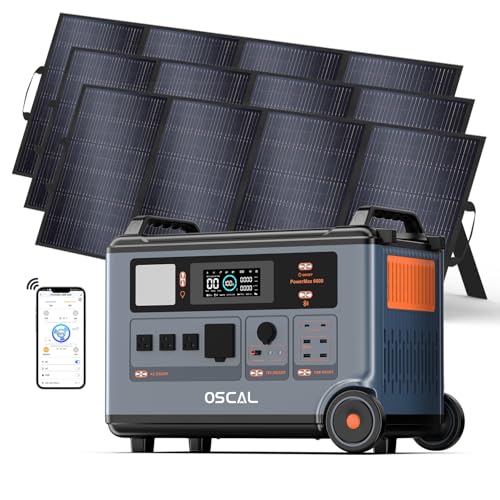




This is the only machine in the lineup whose numbers start to resemble what a 50 amp coach expects. Seven thousand two hundred watts of rated output at 240 volts is roughly 30 amps on a split-phase circuit, and the 14,400 watt surge figure means a big rooftop compressor does not have to fight for its startup current. The tank is 5,040Wh, so a fully charged unit can carry a modest coach through an evening of air conditioning and still have the refrigerator and lights alive in the morning.
The cost of that capability is mass and commitment. This is a cart-it-aboard appliance, not something you lift into a storage bay by hand, and the two 200W panels in the kit add only 400 watts of harvest, so topping up 5,000Wh from them alone takes more than one good sun day. The listing says it accepts both high and low voltage panels and can recharge in roughly two hours from the wall or a strong combination of sources, which is the real answer for campground hookup days. Against the Oscal PowerMax 6000, you get about 1,400 watts more rated output and a battery that is bigger by 1,440Wh.
Ownership is mostly about respecting the chemistry. Park it inside a ventilated bay or a shaded compartment, because hot cargo areas shorten LiFePO4 life even though the chemistry tolerates heat better than older lithium.
What works
- 7,200W output covers most single-leg coach loads
- 120V and 240V output suits split-phase wiring
- 5,040Wh tank carries a coach overnight
- Expandable with extra battery packs later
Watch out for
- Heavy enough that two people should move it
- Two 200W panels refill the tank slowly
- Costs more than the 3,000Wh class by a wide margin
Spec sheet
- Capacity
- 5,040Wh
- Rated AC output
- 7,200W
- Surge
- 14,400W
- Voltage
- 120V and 240V
- Included panels
- 2 x 200W