


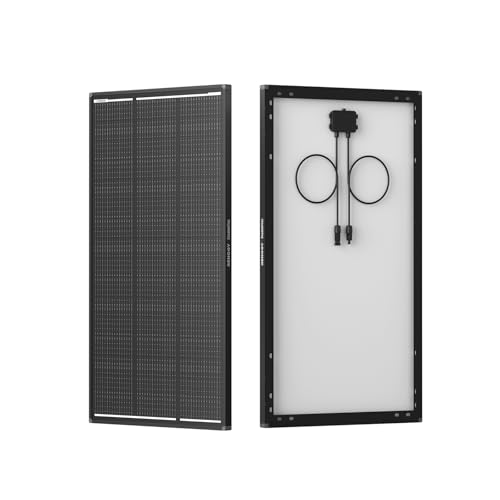
With 200 watts in a frame about 46 by 30 inches, the HQST packs the most capacity of any panel in this lineup into a form that fits a Class B van. HQST notes that N-type cells and sixteen busbars make the panel more compact and lighter than comparable PERC modules. Those cells also decay more slowly, which is what the 30-year performance listing is leaning on.
The point to weigh is wiring. A 200W 12V-class panel runs at roughly eleven amps, so you need a controller rated well above that and wire heavy enough to carry it, typically 10 AWG for short runs. Next to the 150W DOKIO, which needs a smaller controller, the HQST costs a bit more in electronics even though the panel itself is the better value per watt.
Ownership is easy: IP65 connectors and a framed design suit permanent mounting. Seal screw holes with a roof-grade sealant, check the frame hardware after the first heat cycle, and keep a small spare MC4 pair in the toolbox. For a first bank of about 100Ah, this single panel is a respectable starting point. If you later double up, a matching second HQST wired in parallel keeps voltages identical and avoids mismatch losses.
What works
- 200W output in a frame about 46 by 30 inches
- N-type 16BB cells age slowly and tolerate heat
- IP65 connectors and framed design suit roof mounting
- Strongest watt-per-dollar among the five picks
Watch out for
- Higher current demands a bigger controller and thicker wire
- Rigid frame will not follow a curved surface
Spec sheet
- Rated power
- 200W
- Cell design
- N-type, 16 busbar, grade A+
- Listed efficiency
- up to 25.4 percent
- Size
- 46.3 x 30.1 x 1.2 in
- Warranty term
- 30-year performance listing