
Amazon affiliate links - we earn a commission.Affiliate disclosure

Buying guide · 14 min read · Updated 2026-11-25

Best Welders Under $300 (2026)

Five 140 amp flux core MIG welders that list for under $300, from simple 2-in-1 units to a 5-in-1 dual-voltage model, ranked on duty cycle, controls and limits.

James MillerBy James MillerLead Machine Editor5 machines comparedSpec-sheet verified
Best Welders Under $300

At a glance

Our top picks

Side by side

Spec comparison

MachineOutputInputModesControl
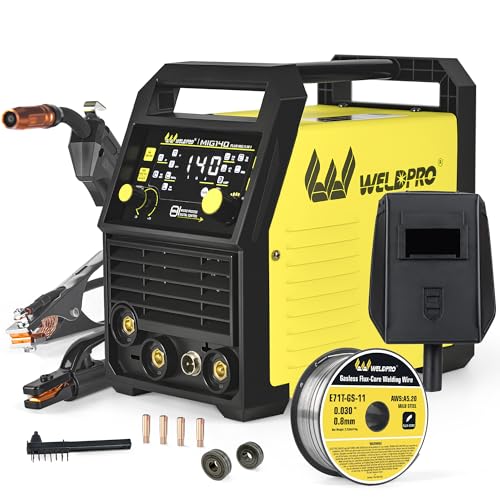
WELDPRO 140A 5-in-1 MIG welder, 110/220V auto voltage, synergicBest OverallWELDPRO 140A 5-in-1 MIG welder, 110/220V auto voltage, synergic140 amps110 or 220 volt, auto-detectSynergic MIG, thickness MIG, MMA, lift TIG, spotn/a
AWT 140A 2-in-1 flux core MIG and stick welder, 110VBest ValueAWT 140A 2-in-1 flux core MIG and stick welder, 110VUp to 140 amps110 voltFlux core MIG and MMA stickSynergic parameter matching
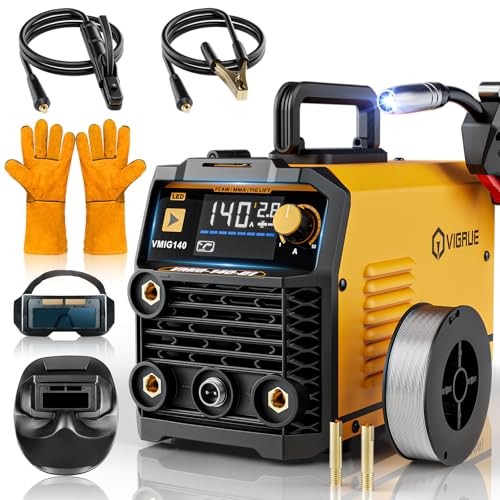
VIGRUE 140A 3-in-1 flux core, stick and lift TIG welder, 110VBest DisplayVIGRUE 140A 3-in-1 flux core, stick and lift TIG welder, 110V140 amps110 voltFlux core MIG, lift TIG, stickn/a
ACEWELDER 140A 3-in-1 gasless flux core, lift TIG and stick, 110VBest Wire RangeACEWELDER 140A 3-in-1 gasless flux core, lift TIG and stick, 110V140 ampsn/aFlux core MIG, MMA, lift TIGSynergic or manual
Sunstac 140A 3-in-1 MIG welder, IGBT inverter, LCD, 110VBest LCD ScreenSunstac 140A 3-in-1 MIG welder, IGBT inverter, LCD, 110V140 amps110 volt householdFlux core, stick, lift TIGSynergic

At this price a welder is almost always a compact inverter machine that runs on ordinary household power, feeds a self-shielded flux core wire and adds a stick mode as a backup. It is built for garage repairs, farm fixes and learning, not for production work.

The features that matter are not the number of modes but how the machine handles a 120 volt circuit, how its controls guide a beginner and how much it can really weld before it rests. We ranked the machines on those points and on what each listing admits about its limits. Prices move, and the $300 cap reflects listing prices when this guide was updated.

Before you buy

6 Criteria to Look For Before Buying a Welder Under $300

  1. 01

    Input voltage and real reach

    A 140 amp label applies at full power, and a 120 volt 20 amp circuit limits a flux core inverter to roughly 140 to 160 amps at best, with realistic work in 1/8 to 3/16 inch steel. 240 volts nearly doubles reach. The WELDPRO detects either voltage, while the others are 110 volt only. If you have a 240 volt outlet, a dual-voltage machine gives you room to grow. If not, treat 1/8 inch as the working ceiling and plan multi-pass welds for anything thicker. Breaker size matters as much as the outlet: a shared 15 amp circuit trips quickly under a welding load, so use a dedicated 20 amp line where you can. Avoid long extension cords, since voltage drop starves an inverter and reduces output.

  2. 02

    Flux core versus gas MIG

    Flux core wire carries its own shielding, so you need no gas cylinder and you can weld outdoors in a breeze. It also spatters more, leaves slag to chip off and is hot and fuming. Gas MIG with solid wire is cleaner and prettier but needs a cylinder and still air. At this budget, flux core is the practical choice. Know that the polarity is electrode negative, a common beginner mistake. Flux core also works well on rusty or painted steel, but the cleaner the metal, the better the weld. Grind the joint to bright metal, and chip and brush the slag between passes so you do not trap it in the next bead.

  3. 03

    Synergic control

    Synergic control selects voltage and wire speed from a thickness or amperage setting, which cuts the guesswork for a beginner. The ACEWELDER and Sunstac list it, and the WELDPRO adds a thickness mode. Experienced welders sometimes prefer manual dials, so look for a machine that offers both. Either way, test on scrap before welding a real part. Listen to the arc: a steady crackle like frying bacon means the settings are right, while popping and heavy spatter point to wrong wire speed or polarity. Learn that sound and you will weld better on any machine.

  4. 04

    Duty cycle

    Duty cycle is the welding time in a ten minute window at a stated current. A 140 amp machine on 120 volts typically has a low rating at full output, so a hot run of a long seam will trip the thermal protection. Budget listings often omit it. Weld in short beads and give the machine time to cool. If the machine shuts off mid-bead, leave it powered so the fan can cool it, and restart only when the indicator clears. Welding hot also warps thin steel, so spread the heat by skipping around a long seam.

  5. 05

    Mode count versus quality

    Three- and five-in-one machines compromise each mode. The lift TIG on these machines is DC only and basic, and it needs a separate gas supply and torch. Stick and flux core are the strong modes. Do not pay extra for a mode you will not use. If TIG matters to you, a dedicated TIG machine with a foot pedal will serve better than a lift-start add-on. Spot welding is a niche mode that suits sheet panels and little else.

  6. 06

    Wire, drive rolls and liner

    Flux core uses knurled drive rolls, not the V-groove rolls used for solid wire, and the wrong roll crushes the wire. Check the wire size range, spool size and liner. The ACEWELDER accepts 0.030 to 0.040 inch wire. A small spool is fine for repair work, but a 10 pound spool saves money for regular use. Confirm that the spool hub on the machine fits the size you want to buy, since many compact welders take only a small spool. A matching contact tip for each wire size should come in the box.

Detailed reviews

The 5 best welders under $300, explained

01
WELDPRO 140A 5-in-1 MIG welder, 110/220V auto voltage, synergic
140A110/220V auto5 modesSynergic MIG
Check price on Amazon
Best for: Garages with both 120 and 240 volt outlets and a need for versatility.

The WELDPRO is a dual-voltage inverter that detects whether it is plugged into 110 or 220 volts and sets itself accordingly, which removes a common beginner mistake. It offers five modes: synergic MIG, thickness-based MIG, stick (MMA), lift TIG and spot welding. Synergic control picks wire speed and voltage from a thickness or amperage setting, which is a big help when you are learning, while manual control remains for experienced users.

The 140 amp rating is a ceiling that applies at full power, and a 120 volt circuit limits what you can really weld. The useful range on 120 volts is roughly thin to 1/8 inch steel with good prep, and on 220 volts the machine can reach further. The lift TIG mode is DC only and basic, so treat it as a convenience and not a replacement for a proper TIG machine.

Set beside the AWT 2-in-1, it offers more modes and dual voltage at the price of more menus to learn. Always use the correct polarity for flux core, which is electrode negative, and keep ventilation open. Replace contact tips as they wear and keep the drive rolls clean. Because the machine can sense the supply, you can run it from a suitably sized generator, though the generator must handle the starting load. A quick test on scrap in each mode when you first unbox it saves surprises on the first real job.

What works

  • Automatic 110/220 volt detection
  • Synergic and thickness-based settings
  • Five modes including stick and lift TIG
  • Gasless flux core needs no cylinder

Watch out for

  • More menus than a beginner needs
  • Lift TIG is basic and DC only

Spec sheet

Output
140 amps
Input
110 or 220 volt, auto-detect
Modes
Synergic MIG, thickness MIG, MMA, lift TIG, spot
Process
Gasless flux core
Display
LED
02
AWT 140A 2-in-1 flux core MIG and stick welder, 110V
140AFlux core and stickSynergic5/32 in steel
Check price on Amazon
Best for: Beginners who want flux core and stick without extra modes.

AWT keeps the feature list short: gasless flux core MIG and stick, nothing else. The listing says the machine welds mild steel up to 5/32 inch, which is a realistic claim for a 140 amp unit on household power if the joint is prepped and the passes are planned. Synergic control matches voltage and wire speed to your wire choice, which lowers the learning curve.

A two-mode machine is easier to understand than a five-mode one. You choose wire or stick, set a thickness and weld. For a first welder used on trailer repairs, gates and brackets, that simplicity is an advantage. The stick mode is a useful backup outdoors in wind, where gasless wire can still produce spatter and slag.

Measured against the WELDPRO, it works only on 110 volts and has no TIG or spot mode. That limits growth, but it also keeps the price down. Check polarity for flux core, replace the contact tip when it wears and brush slag off between passes. Keep a few stick electrodes in a dry container, since the stick mode is the machine's best answer to thick or filthy steel.

What works

  • Simple two-mode layout
  • Synergic matching of wire and voltage
  • Rated for 5/32 inch mild steel
  • Stick mode as an outdoor backup

Watch out for

  • 110 volt only
  • No TIG or spot welding mode

Spec sheet

Output
Up to 140 amps
Input
110 volt
Modes
Flux core MIG and MMA stick
Steel limit
Up to 5/32 inch mild steel
Control
Synergic parameter matching
03
VIGRUE 140A 3-in-1 flux core, stick and lift TIG welder, 110V
140A3-in-1Large displayAccessories included
Check price on Amazon
Best for: Learners who want a clear display and a complete starter kit.

VIGRUE's 3-in-1 is a 140 amp, 110 volt inverter with a large LED display that shows settings in real time. A clear screen matters more than it sounds, because a beginner changes thickness and current often and wants confirmation. The box includes a ground clamp, an electrode holder and a set of accessories, which means you can start without shopping for extras.

The three modes are flux core MIG, lift TIG and stick. Lift TIG is the simplest kind: you touch the tungsten to the work and lift it to start the arc, with no high-frequency start, and it requires a separate gas bottle and torch that are not part of a flux core kit. Treat it as an option, not a feature to build on.

Against the ACEWELDER, it has a similar spec sheet, so the decision comes down to the display and the included accessories. Keep a wire brush handy, check the polarity for flux core and let the machine rest after long runs. A 110 volt inverter at its limit heats quickly. Because the display shows live values, use it to repeat a setting that worked and write it on a card taped to the lid. The bundled clamp is usable, but a heavier ground clamp is a cheap upgrade that improves the arc.

What works

  • Large display shows live settings
  • Ground clamp and holder included
  • Three modes in a compact body
  • Flux core needs no gas cylinder

Watch out for

  • 110 volt only
  • Lift TIG needs extra gear to use

Spec sheet

Output
140 amps
Input
110 volt
Modes
Flux core MIG, lift TIG, stick
Display
Large LED, real-time settings
In the box
Ground clamp, electrode holder, accessories
04
ACEWELDER 140A 3-in-1 gasless flux core, lift TIG and stick, 110V
140A3-in-10.030 to 0.040 in wireSynergic or manual
Check price on Amazon
Best for: Welders who want to try different wire sizes on thin and thick stock.

ACEWELDER's 140 amp machine lists a mild steel limit of 4.0 millimeters, about 5/32 inch, and support for 0.030, 0.035 and 0.040 inch wire. Wire diameter matters: thin wire welds thin sheet with less burn-through, while thicker wire carries more current for thicker stock. A machine that accepts three sizes gives you more room to match the job.

It offers synergic or manual control, so a beginner can let the machine match voltage and wire speed and an experienced welder can take over. That choice avoids outgrowing the machine. The three modes mirror the VIGRUE: flux core MIG, stick and lift TIG.

In ownership, flux core wire is the main running cost and is sensitive to moisture, so store spools dry. Clean the drive rolls and liner, replace the contact tip when it burns back and set the polarity to electrode negative for flux core. Next to the AWT, you get more wire options and a TIG mode.

What works

  • Accepts three wire diameters
  • Synergic or manual control
  • Rated to about 5/32 inch mild steel
  • Flux core, stick and lift TIG

Watch out for

  • 110 volt limits penetration
  • Flux core is spattery compared with gas MIG

Spec sheet

Output
140 amps
Steel limit
Up to 4.0 mm (about 5/32 inch)
Wire sizes
0.030, 0.035 and 0.040 inch
Control
Synergic or manual
Modes
Flux core MIG, MMA, lift TIG
05
Sunstac 140A 3-in-1 MIG welder, IGBT inverter, LCD, 110V
140AIGBT inverterLCD screenSynergic
Check price on Amazon
Best for: Small-garage welders who value a compact body and an LCD readout.

Sunstac's 3-in-1 uses an IGBT inverter, an integrated wire feeder and a new LCD screen that the listing says is easier to read than the old LED display. IGBT inverters are light and efficient compared with old transformer welders, and they hold a steadier arc at low current. The integrated wire feed keeps the machine in one compact body.

It runs on ordinary household 110 volt power and offers synergic control with flux core, stick and lift TIG modes. The original MIG torch and a stick electrode holder are mentioned in the listing. As with the others, a 110 volt circuit sets the upper limit of what you can weld.

Next to the VIGRUE, it offers an LCD in place of a large LED, and against the WELDPRO it is simpler but not dual voltage. Pick it if you prefer an LCD and a smaller footprint. Keep the wire dry, clean the liner and rest the machine after long beads. The integrated feeder means a jam happens inside the case, so open it occasionally and clear stray wire. A small can of compressed air clears dust around the drive rolls in seconds.

What works

  • IGBT inverter is light and efficient
  • LCD screen for parameters
  • Integrated wire feeder
  • Synergic control for beginners

Watch out for

  • 110 volt only
  • Lift TIG is basic

Spec sheet

Output
140 amps
Input
110 volt household
Modes
Flux core, stick, lift TIG
Screen
LCD
Control
Synergic

Spec sheet decoder

What the numbers on the box really mean

The specs manufacturers lead with, translated into what they tell you about real-world performance.

Amps and duty cycle

Maximum output and the share of ten minutes you can weld at it.

Watch forThe listings rate 140 amps but say little about duty cycle.

Synergic

Automatic matching of wire speed and voltage to a setting.

Watch forThe ACEWELDER, Sunstac and AWT list it.

Lift TIG

A TIG start where you touch and lift the tungsten. It needs argon and a TIG torch.

Watch forThe VIGRUE, ACEWELDER and Sunstac list lift TIG.

Wire diameter

The thickness of the wire. Thin wire for sheet, thicker for plate.

Watch forThe ACEWELDER lists 0.030, 0.035 and 0.040 inch.

Auto voltage

The machine detects 110 or 220 volt input and adjusts.

Watch forOnly the WELDPRO lists it.

Methodology

How We Evaluated These Welders Under $300

Realistic capacity

We treated the 140 amp rating as a ceiling and the 5/32 inch steel claims as best case on household power. The WELDPRO's dual voltage widens the real range. Others were judged at 110 volts.

Beginner controls

Synergic settings, displays and mode counts were reviewed. The VIGRUE's large display and the ACEWELDER's wire range earned credit. Menu clutter on a five-mode machine was noted.

Safety and setup

We looked at included accessories, polarity guidance and thermal protection. A complete kit scores higher. Machines that bury polarity information lost points.

Process quality

Flux core and stick were treated as the main modes. Lift TIG was treated as a bonus. Spot mode on the WELDPRO was noted as a niche feature.

Cap compliance

Every welder was verified under the $300 cap at the time of writing. We left out a plastic welder, a flame polisher and parts that were not arc welders. Notes rely on the spec sheet and owner feedback patterns.

Decision guide

How to Choose the Right Welders Under $300

By Power Supply

SituationPickWhy
120 and 240 volt outletsWELDPRO 5-in-1Auto voltage detection
120 volt only, simple needsAWT 2-in-1Flux core and stick only
120 volt, want a clear screenVIGRUE 3-in-1Large display
120 volt, multiple wire sizesACEWELDER 3-in-10.030 to 0.040 inch wire
120 volt, compact bodySunstac 3-in-1IGBT with LCD

By Budget

TierPickWhy
Lowest in this listAWT 2-in-1Simple two-mode machine
Lower middleSunstac 3-in-1LCD and synergic
MiddleACEWELDER 3-in-1Wire size range
Upper middleVIGRUE 3-in-1Accessories and display
Top of the capWELDPRO 5-in-1Dual voltage and five modes

Flux Core vs Gas MIG

Flux core (all five)

No gas cylinder, works outdoors in a breeze and tolerates rust. It spatters, leaves slag and fumes more.

Gas MIG (not in this tier)

Cleaner and prettier on thin steel but needs a cylinder, a regulator and still air.

Choose flux core for repairs and outdoor work and gas MIG for clean bodywork.

Mode Needs

PreferencePickWhy
Just wire and stickAWT 2-in-1Fewer menus
Want to try TIG laterACEWELDER 3-in-1Lift TIG option
Spot welding sheetWELDPRO 5-in-1Spot mode listed
Plenty of accessoriesVIGRUE 3-in-1Kit includes holder and clamp

For Farm and Trailer Repairs Specifically

Look for

Flux core capability, a rugged body and the ability to weld rusty or dirty steel. Outdoor work in wind rules out gas.

In this comparison

The AWT and WELDPRO fit well. Keep stick rods on hand for dirty or thick pieces.

When to Spend More

Spend more if

You weld aluminum, need gas MIG or weld thick plate often. A 240 volt multi-process machine is a better investment.

Save if

You fix a gate now and then. The AWT covers it.

Ownership

Maintenance schedule

The upkeep that decides whether this machine lasts two seasons or ten.

TaskIntervalWhy it matters
Store wire dryAfter each useFlux core absorbs moisture. Damp wire spatters and porosities appear.
Clean drive rolls and linerMonthlyDust and flux build up. A dirty path causes wire feed stalls.
Replace contact tipsWhen wornA worn tip causes erratic arcs. Fresh tips improve feeding.
Inspect cables and clampsEach sessionA poor ground weakens the arc. Cracked insulation is a hazard.
Blow dust from ventsEvery few monthsDust blocks cooling. A hot inverter trips its thermal cutout.

FAQ

Frequently Asked Questions

Can I weld aluminum with these?

Not with flux core. Aluminum needs gas MIG with a spool gun or AC TIG. These machines are for steel.

What polarity does flux core need?

Electrode negative, often written DCEN. Using the wrong polarity causes heavy spatter and poor welds.

How thick can I weld on 110 volts?

Realistically up to about 1/8 inch with good prep, and 5/32 inch with multiple passes. Thicker work needs 240 volts. Bevel the edges of thick pieces and weld in several passes to get penetration.

Do I need a helmet?

Yes, an auto-darkening helmet with a suitable shade, plus gloves and long sleeves. Ventilation is essential because flux core produces fumes.

Is lift TIG usable?

It works for basic DC TIG on steel with a separate argon bottle and torch. It is a bonus, not a main feature.

Does the $300 cap change?

Listing prices move. The cap reflects prices when this guide was updated, so check the live listing.

Bottom line

The short version

Browse more welders under $300on Amazon →
James Miller, Lead Machine Editor

About the author

James Miller

Lead Machine Editor, MachineFanatic

James Miller leads MachineFanatic's buying guides, turning spec sheets, manuals and owner feedback into clear verdicts on power tools, outdoor power equipment, shop machines and kitchen machines.

More from James →

Keep reading

Related guides