
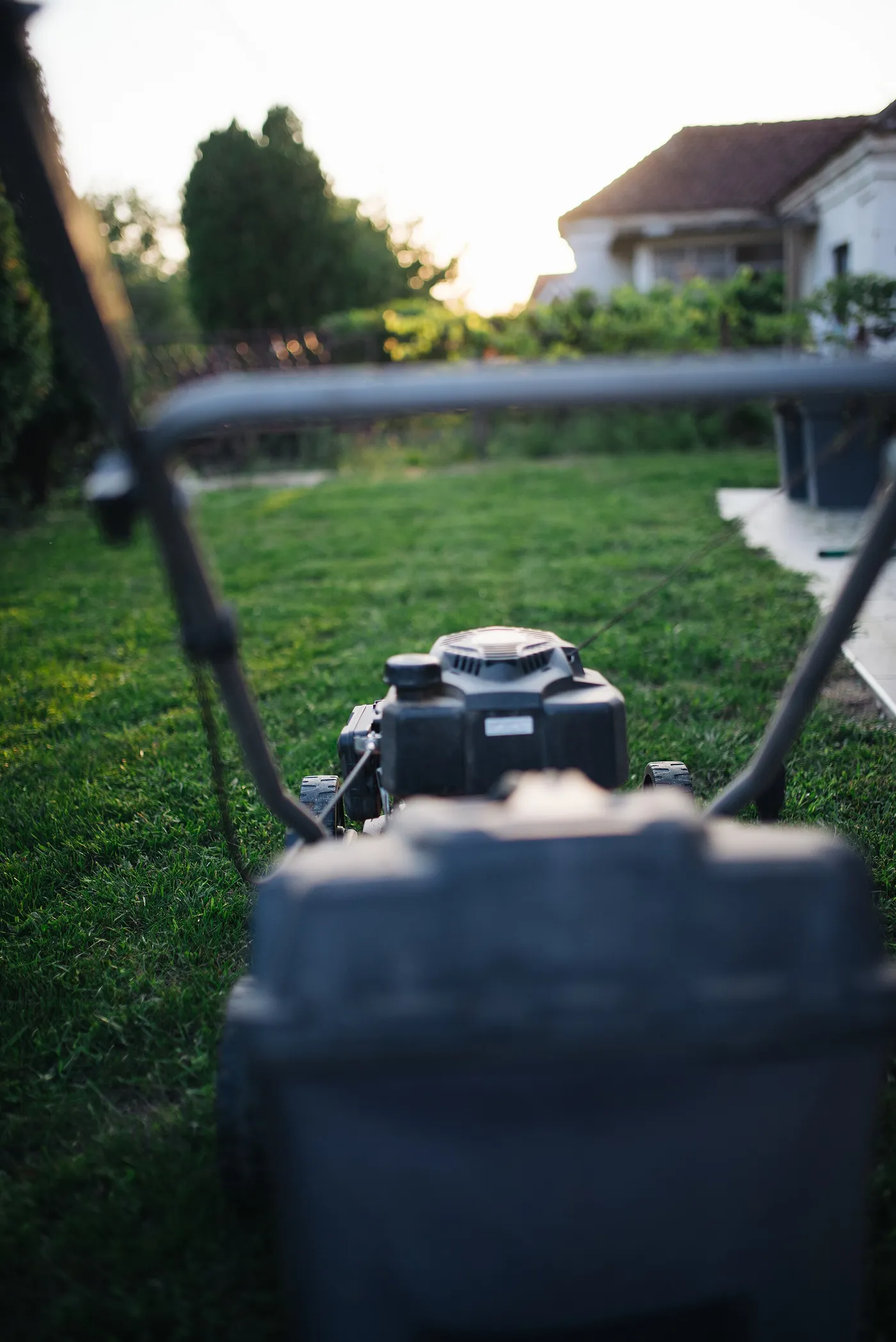
Start with the gate, not the lawn
Before you look at a single model, measure the narrowest opening between your mower storage and the lawn. That might be a side gate, a gap between a fence and a shed, or a garage door with a step. A mower deck is wider than the cutting width suggests, because the wheels and the deck housing stick out slightly past the blade path, and a 30 inch cutting deck often needs a gate opening of 34 inches or more once you include the handle and your hands.
This sounds trivial, but it is the most common reason owners return large mowers. The lawn can be enormous and the mower still has to reach it through a fixed opening. Write down the narrowest width, then keep that number in mind as the upper limit for the rest of this page.
What deck width actually means
The deck size quoted on a mower is the cutting width, measured across the path the blade sweeps. A 21 inch mower cuts a 21 inch swath. The real stripe is slightly narrower after you overlap passes, so you never get the full figure on a mowed lawn.
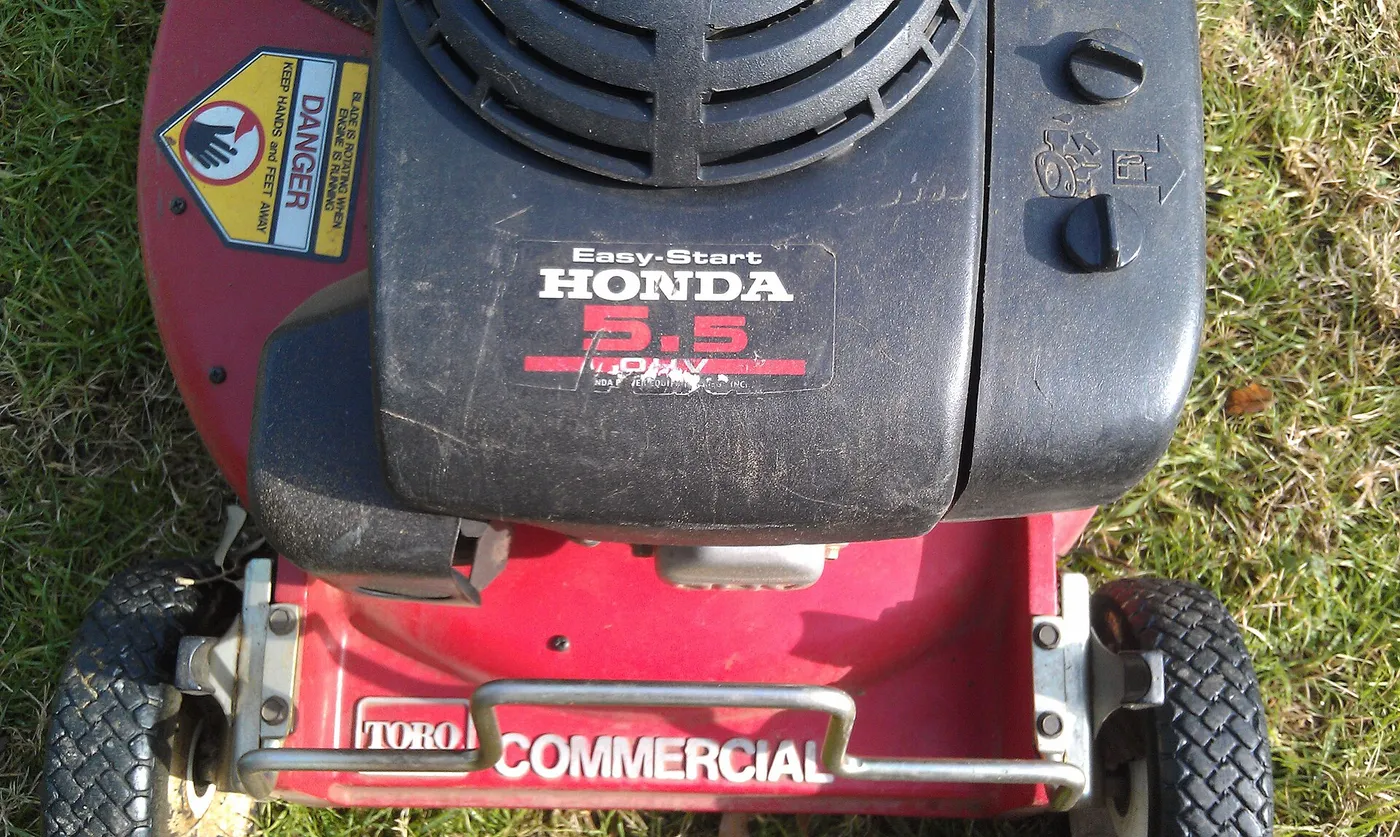
Overlap matters. To avoid leaving strips of uncut grass, you overlap each pass by a few inches. A sensible allowance is about 10 to 15 percent of deck width. A 21 inch deck therefore advances about 18 to 19 inches per pass. The same allowance on a 30 inch deck means about 26 to 27 inches per pass.
The deck also affects how the mower handles curves and how well it follows ground contours. Wider decks bridge dips and cut off the top of bumps, which can scalp high spots. Narrower decks follow terrain more closely.
The sizing maths
You can estimate mowing time with simple arithmetic. An acre is 43,560 square feet. A walking pace for a person mowing is about 2.5 to 3.5 miles per hour on open lawn, which is roughly 13,000 to 18,500 feet of travel per hour. Multiply the effective cutting width in feet by the distance walked, and you get the area covered per hour at the ideal case.
As a worked example, take a 21 inch deck with an effective width of about 1.5 feet after overlap. At 3 miles per hour, that is about 15,840 feet of travel per hour, which covers roughly 23,760 square feet an hour, or about half an acre in the ideal case. In real conditions, with turns, obstacles, emptying a bag and stopping, expect closer to half that figure.
A 30 inch deck has an effective width of about 2.2 feet. At the same pace it covers about 34,800 square feet an hour in the ideal case, or roughly 80 percent of an acre. The wider deck saves around a third of the time on the same lawn, and the savings grow as the deck gets wider.
Deck size by lawn size
| Lawn area | Typical mow time (21 inch) | Suggested deck | Notes |
|---|---|---|---|
| Under 5,000 sq ft | Under 20 minutes | 19 to 21 inch | Compact deck, easy storage |
| 5,000 to 10,000 sq ft | 20 to 40 minutes | 21 to 22 inch | Standard walk-behind |
| 10,000 to 20,000 sq ft | 40 to 80 minutes | 22 to 30 inch | Self-propel helpful, wider deck pays off |
| 20,000 sq ft to one acre | Long | 30 inch walk-behind or a riding mower | Check gate width |
| Over one acre | Very long | Riding mower or zero-turn | Walk-behind becomes impractical |
These are guides, not rules. Time spent also depends on how many trees, beds and obstacles interrupt your passes, and on whether you bag or mulch. Our discharge mode comparison explains how bagging adds stops to the mow.
How obstacles and lawn shape change the answer
A square open lawn lets a wide deck run long straight passes. A lawn broken up by flower beds, trees, a play set and a curved border forces constant turning, and every turn costs time. In that kind of yard, a wide deck often saves much less than the arithmetic predicts, and a nimble 21 inch mower may finish just as quickly.
Count the obstacles. If you have more than a handful of trees or beds that you steer around on every mow, shave one size off what the area alone would suggest. If you have a long open rectangle with a few obstacles, size up.
Narrow strips such as side yards and space between a house and a fence favour narrow decks. A wide deck cannot enter a four foot strip with comfort, and it leaves unmown edges where it cannot reach.
How power source interacts with deck size
Deck width changes the load on the blade. A wider deck cuts more grass per second, so it demands more from the engine or motor and shortens battery runtime. That is why many cordless mowers top out around 21 to 22 inches for single pack models and offer wider decks only with larger packs or dual batteries.
If you are shopping cordless, match the deck to your battery capacity. A large deck on a small pack will run out of charge before the lawn is done. We cover the pack side of this in our gas versus battery comparison, and you can see how deck size and pack count line up in our 40V mower guide.
For gas mowers, a wider deck needs a stronger engine and usually self-propel, because a heavy wide deck is tiring to push. Engines on wide decks are often larger and heavier, and the machine as a whole is harder to lift.
Turning radius and handling
Wide decks turn less easily. A walk-behind with a 30 inch deck needs more room to pivot than a 21 inch model, and the rear wheels have to drag a larger arc. This matters on small curved lawns and around beds, where you spend more time turning than cutting straight lines.

If a yard has tight curves, check whether the mower offers a pivot-friendly front wheel setup or a lighter weight that lets you tip the front up. Self-propelled models with rear-wheel drive can be harder to pivot, which is a reason to consider the drive system along with the width. See our self-propelled versus push mower page for how drive layout affects turning.
Storage and transport
Deck width translates into storage width. A mower with a 30 inch deck is typically wider than a standard door and may not fit between two cars in a narrow garage. Many mowers fold their handles to reduce height, but they cannot fold their width.
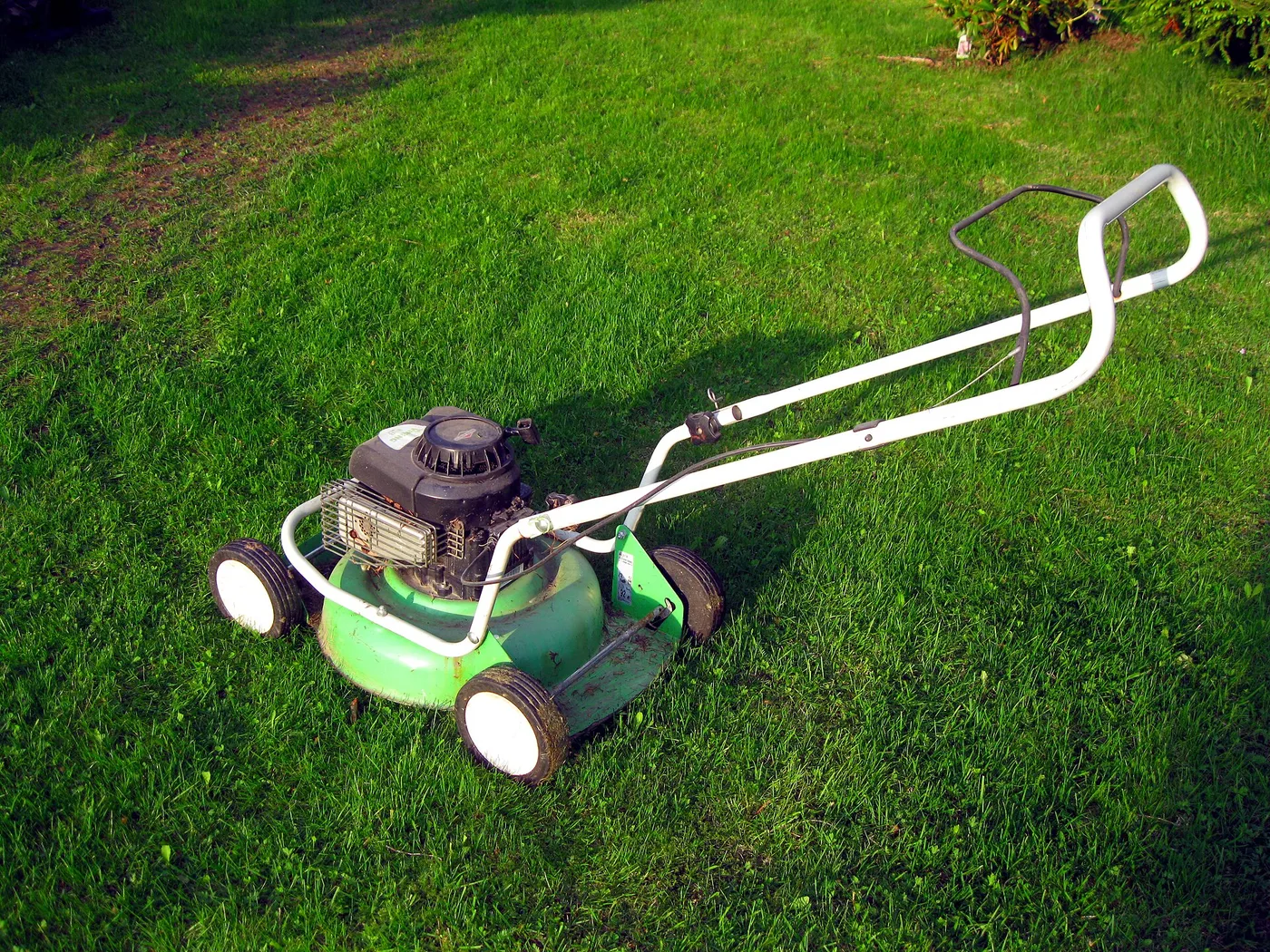
Measure your storage spot, including space to turn the mower in and out. If you plan to haul the mower in a truck or on a trailer to a second property, check the loading ramp width and the rail spacing. Check also whether you can stand the mower upright on its tail, which several battery models are designed for and which reduces storage footprint significantly.
Grass type, height and the load on a wide deck
A wider deck works harder in thick or tall grass. If your lawn grows lush in spring, you will see this in a bogged-down engine or a drained battery. Cutting in two passes, first with the deck raised and then lowered, is a standard technique for overgrown grass and reduces load on any mower.
Wider decks also scalp more readily on uneven ground, because the deck bridges dips and the blade tips drop into humps. If your lawn is bumpy, a narrower deck with adjustable wheel heights will give a more even cut.
Cutting height is set by wheel position, and a large deck often has more height positions. Check that the range matches your grass species. Many cool-season lawns do well at three inches or more, while some warm-season grasses prefer lower cuts.
Three worked examples
A small townhouse lawn
A front and back yard totalling around 4,000 square feet, with a narrow side gate of 30 inches. A 19 to 21 inch deck fits the gate with room to spare, finishes in about fifteen minutes, and stores easily. A larger deck would not pass through the gate comfortably.
A suburban lot with a few trees
About 12,000 square feet, a five foot gate, and a handful of beds. A 21 to 22 inch self-propelled mower is the natural fit. A 30 inch deck would shorten straight runs but add turning time around trees, and the gate allows it only barely.
A large flat back field
Around 30,000 square feet of open lawn, with a wide gate and a shed. A 30 inch walk-behind or a small rider cuts the time sharply. Here, a deck above 30 inches stops being a walk-behind decision and becomes a riding mower purchase.
When to move from a walk-behind to a rider
There is a point where adding deck width to a walk-behind stops making sense, because you are the engine. Pushing a wide mower for more than an hour is physical work, and heat, slopes and a full bag raise the cost. Most owners find the switch point lands somewhere between half an acre and an acre, depending on fitness, terrain and how many obstacles break the runs.
A riding mower or zero-turn adds a seat, a much wider deck, often 40 inches or more, and a big step up in price and storage space. It also needs a trailer or ramp to move, regular engine service and more care around slopes, since tipping risk is a serious safety concern on any riding machine. Follow the maker’s slope limits.
If you sit between the two, consider a self-propelled 30 inch walk-behind with a bagger. It keeps the footprint small, fits through a standard gate and finishes a half acre in a reasonable time without the cost and storage demands of a rider.
Mow frequency, growth rate and effective size
How often you mow changes what size feels right. A lawn cut weekly during the growing season has short clippings and light loads, so a modest deck keeps up. A lawn cut every two weeks, or one that grows fast after rain, has more material per pass, so the same deck works harder and clippings may clump.
The one-third rule is a standard guide for healthy turf: avoid removing more than about a third of the blade height in a single cut. If a lawn grows past that between mowings, a wider deck makes the problem worse by encouraging you to rush. Mow more often, or raise the deck and cut twice, rather than trying to finish quickly with a large deck at a low setting.
Seasonal growth also matters for time budgeting. Spring is the slowest mowing season because of fast growth and wet ground, and autumn brings leaves that load the deck. Size for your worst weeks, not your average ones.
A short sizing checklist
- Measure the narrowest gate or opening on the route from storage to lawn, and subtract a few inches for hands and handle.
- Estimate lawn area by splitting it into rectangles, then subtract beds and buildings.
- Time one full mow with your current tool or a borrowed mower, if you have one.
- Count the obstacles you steer around on a typical mow.
- Measure storage width and note whether you can store the mower upright.
- Decide whether you want to bag, mulch or side discharge, since bagging adds stops.
- If shopping cordless, check the pack capacity against the deck size and mow time.
Common sizing mistakes
- Buying on cutting width alone and ignoring the full width of the deck and wheels.
- Assuming a wider deck halves the mowing time. Turns, obstacles and bagging eat much of the gain.
- Sizing for the whole property when part of it is a separate, differently shaped lawn.
- Choosing a wide cordless deck without checking whether the battery can feed it.
- Forgetting that a wider deck leaves a wider uncut edge that must be trimmed.
- Skipping the storage measurement and discovering the mower blocks the garage door.
Trimming, edging and what the deck leaves behind
No mower cuts right to the edge of walls, fences or beds. The deck leaves an uncut strip beside obstacles, wider on larger decks, and you finish it with a string trimmer. A wider deck leaves a wider edge to trim, so the time you save on the main lawn can partly return as extra trimming.
Some decks are built with a trim-friendly design, with the wheels set closer to the edge. Check where the blade sits relative to the housing, since a deck that overhangs a wheel can cut closer on one side. Plan for a trimmer in every case, whatever deck size you choose.
Deck build and why it affects the size you can live with
Larger decks need to be stiffer, so deck construction matters more as width grows. Stamped steel decks are the common choice and tolerate knocks well but can rust if grass is left to cake on the underside. Aluminium decks resist rust and weigh less, which helps on a wide mower you have to lift. Plastic or composite decks do not corrode, though they can crack on a hard strike.
Many decks include a wash port, a hose fitting that lets you flush the underside without tipping the mower. On a wide deck this is more than a convenience, since a clogged underside reduces airflow and cut quality, and a caked deck is the usual cause of clumping. Cleaning after each mow keeps a wide deck performing as designed.
Height adjustment is another place where deck size shows up. A single lever that raises all four wheels together is easier to use than four separate adjusters, and on a large deck it keeps the deck level. Check that the lever is sturdy, because an uneven deck leaves stripes of different length across the lawn.
One last practical point: write your measurements down before shopping and keep them on your phone. Gate width, storage width, lawn area and mow time are the four numbers that settle most sizing questions in under a minute, and they stop a persuasive store display from nudging you toward a mower that will not fit your property.
Frequently Asked Questions
Is a bigger mower deck always better?
No. Wider decks cut faster on open lawns but are harder to turn, store and push, and they need more power. The best deck is the widest one that fits through your gate, fits your storage and suits your lawn shape.
What deck size is most common for homes?
The 21 to 22 inch walk-behind is the standard for average residential lawns. It balances cutting speed, handling and storage for yards from small to medium size.
What size mower do I need for half an acre?
Half an acre is about 21,780 square feet. A 30 inch walk-behind or a small riding mower is a sensible choice. A 21 inch mower can do it, but the time involved can be long.
Does deck size affect battery life?
Yes. A wider deck draws more power, so a given battery lasts a shorter time. Match deck size to pack capacity, and consider a second battery for larger lawns.
How do I measure my lawn area?
Break the lawn into rectangles and triangles, measure each in feet, multiply and add. Subtract beds and buildings. A satellite map tool with an area measure feature is a quick alternative.
Bottom line
Measure the gate and storage first, then the lawn. Pick a 21 to 22 inch deck for most lawns up to about a quarter acre, move to a 30 inch deck as open area grows, and switch to a riding mower once a walk-behind mow runs past an hour. Shave a size off if the yard is full of obstacles, and match the deck to your battery capacity if you go cordless. Compare real options in our best gas lawn mowers once you know your target width.