
The limb that came straight down
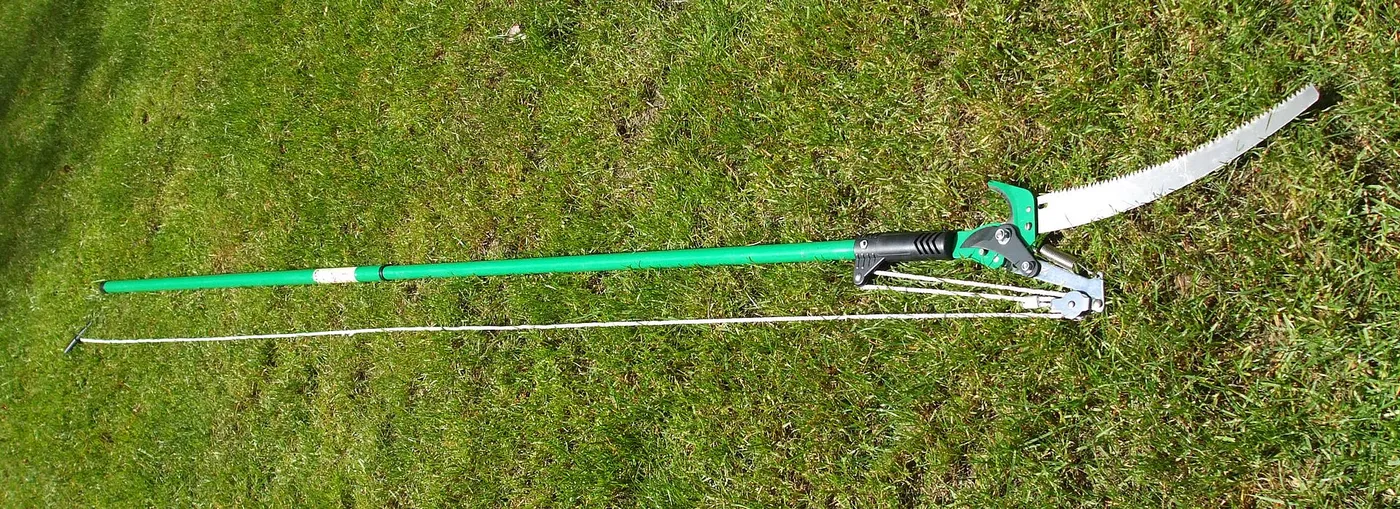
A familiar accident starts with a simple plan. A homeowner stands under a high branch, extends a pole saw straight up, and cuts through. The limb, heavier than it looked, drops along the pole and lands on the person holding it. The saw did its job. The geometry of the cut put the operator in the one place they should never be.
Pole saws look gentler than chainsaws, and their reach tempts people into jobs that feel safe because the blade is far away. The blade is far away, but the falling wood is not. Reach is the feature, and the cutting angle and drop zone are what make that reach safe or dangerous.
This article owns pole saw geometry: how reach is calculated, where the cut angle puts the limb, how to define a drop zone and what overhead hazards to check first. For the saw itself, power source and chain are covered in our gas versus battery comparison and chain types explainer.
Advertised reach versus working reach
Pole saw listings quote a maximum reach, often a figure like twelve or fifteen feet or more. That number is usually calculated by adding the extended length of the pole to the height of an average person with arms raised. It describes the highest point the tip can touch in ideal conditions, not where you can safely and effectively cut.
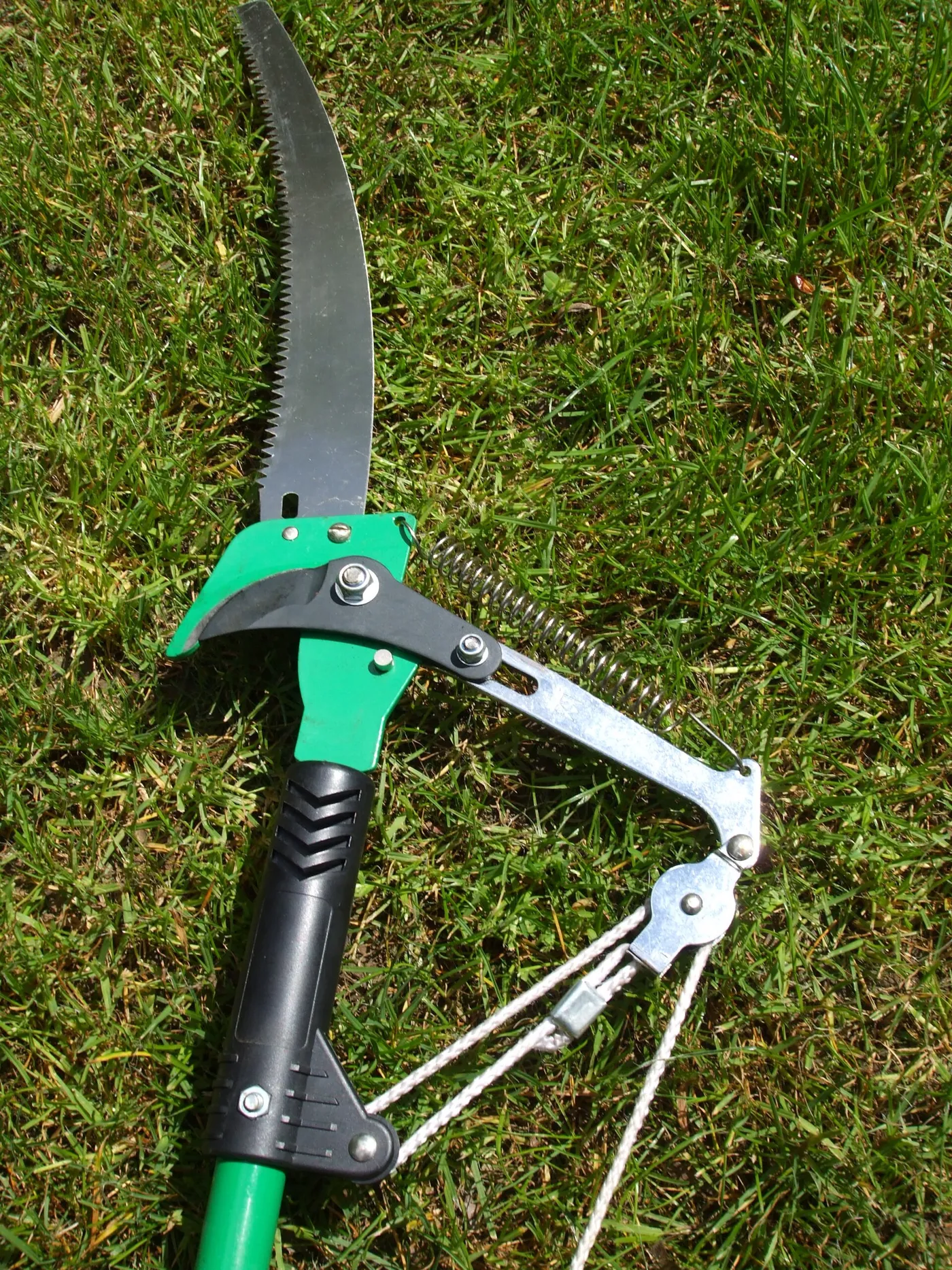
Working reach is lower. To cut safely you must stand outside the drop zone, hold the pole at a manageable angle, and keep the saw under control. A pole held near vertical is hard to steer and presses the cutting head against the branch awkwardly, while a pole held lower and further out is controllable but gives less height.
A practical estimate of working reach is the quoted maximum minus several feet. Think of the stated figure as a ceiling, and plan the job so that the branches you want to cut are comfortably below it. If a branch is near the limit of the pole, it is probably a job for a professional with a bucket truck or a climber.
Cutting angle and where the limb goes
The angle between the pole and the ground is the most important variable. A steep angle, near vertical, puts you almost directly beneath the cut. A shallow angle puts you further out, with the pole leaning across. Simple trigonometry shows why: for a given branch height, the steeper the pole, the shorter your standoff distance.
When a limb falls, it does not drop straight down. It slides along the cut, rotates around any remaining attachment and often drags down the pole. A steep angle puts the pole, and you, in its path. A shallow angle lets the limb fall to the side or away.
| Pole angle | Standoff from the cut | Control | Risk |
|---|---|---|---|
| Steep, near vertical | Short, almost under the limb | Poor, hard to steer, tiring | Highest: falling wood reaches you |
| Moderate, about 60 degrees | Moderate | Reasonable | Moderate, with a clear drop zone |
| Shallow, about 45 degrees or less | Longer | Better, but less reach | Lower, but the limb may swing |
The angles in the table are general indications, not a specification. The point is to keep the saw head as far from you horizontally as the branch allows, while keeping the pole controllable.
Setting a drop zone
A drop zone is the area where cut limbs may land, and no one, including you, should stand in it. For a pole saw, the safe approach is to estimate where the limb will fall, widen it generously, and keep it clear of people, pets, vehicles, windows and fragile plants.
As a rule, make the zone at least as wide as the length of the limb plus a safety margin, because branches pivot and rebound. Mark it if others are around. A second person can act as a spotter, but only if they stay outside the zone and the spotter's job is to watch for people and traffic, not to hold the limb.
Look up before you start, not just at the branch you want to cut. Check what the cut limb will hit as it falls, what it might snag on, and whether it can swing into a path or driveway. A branch caught in another limb, called a hang-up, can fall unpredictably later.
Power lines and other overhead hazards
Overhead wires turn a pruning job into a lethal one. A pole saw, whether its pole is fiberglass, aluminum or steel, can conduct electricity or bring a falling branch into contact with a line. Treat every overhead wire as live, including service drops to the house, and assume it is energised even if it looks insulated.
A commonly cited minimum for safe working distance from power lines of up to 50 kilovolts is 10 feet, and greater distances apply for higher voltages. Because a pole saw's reach and a falling branch both extend your effective range, keep well beyond that figure. If a branch is near or in contact with a line, do not touch it. Call the utility or a qualified line-clearance contractor.
Wet conditions increase the risk, since moisture on the pole or the branch improves conduction. Never use a metal or wet pole near any electrical line. Other overhead hazards include dead limbs, called widowmakers, that are held by little more than bark and fall without warning, and branches carrying a heavy load of snow or ice.
The three-cut method for larger limbs
For anything beyond a thin branch, the standard technique is to cut in stages. A single cut through a heavy limb can cause the bark to tear down the trunk as the limb falls, stripping a long ribbon of bark and damaging the tree. It also lets the full weight fall at once.
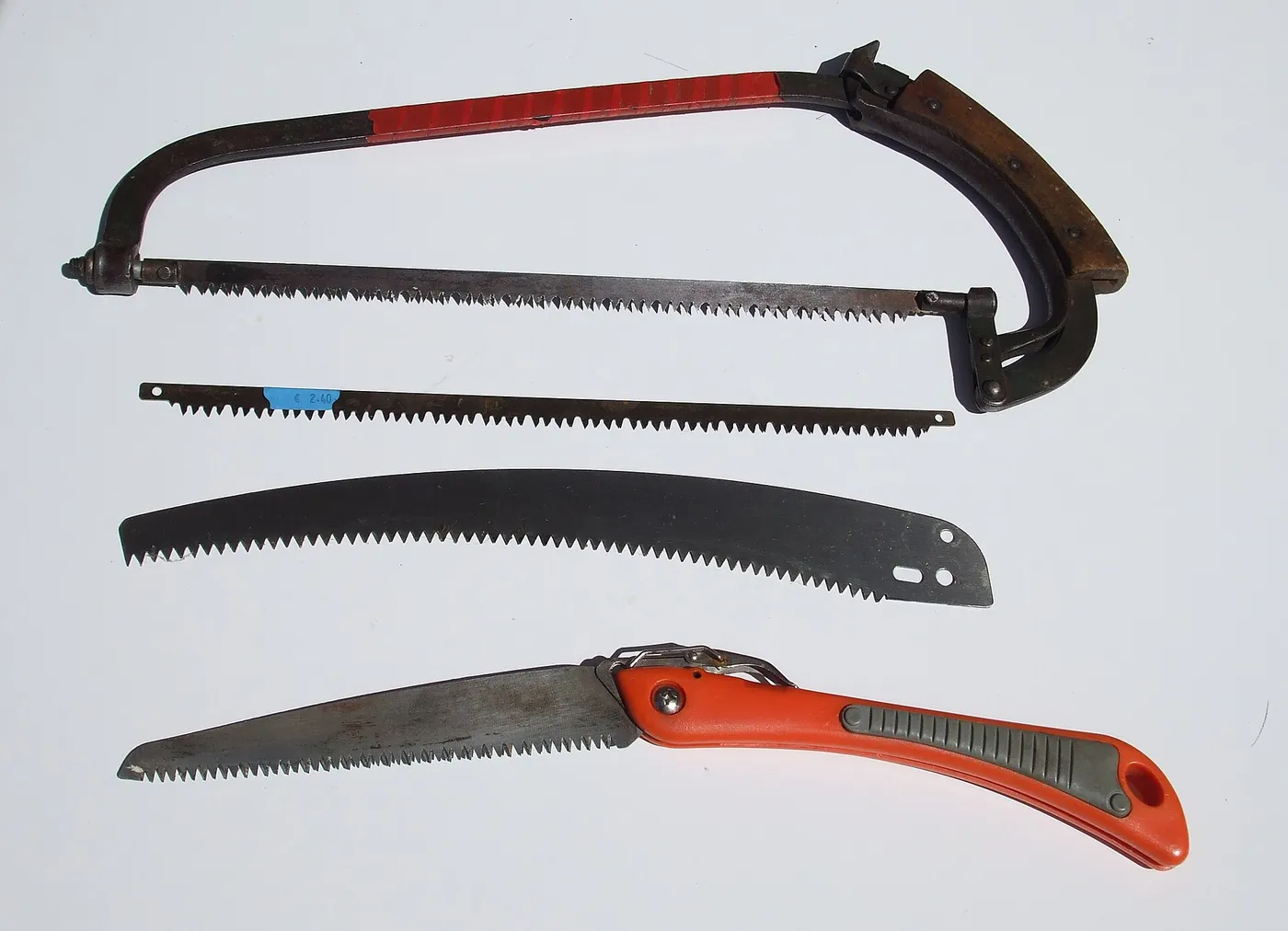
The common solution is the three-cut method. Make the first cut on the underside of the limb a short distance out from the trunk, going about a third of the way through. Make the second cut on the top, a little further out, to drop the limb's weight. Make the final cut close to the branch collar, the slightly swollen ring where the branch meets the trunk, to remove the stub cleanly.
On a pole saw this requires good control, and it works best on limbs that are small enough for the saw's capacity. If a limb is too heavy or too high for staged cuts from the ground, it is beyond a pole saw's safe use. Cutting flush against the trunk leaves a larger wound, and leaving a long stub invites decay, so the collar is the target.
Work from the tip inward
On a big branch, reduce its weight before the final cut. Remove side shoots and the outer end in small pieces, working from the tip toward the trunk. Each piece falls separately and light enough to be controlled, rather than letting one large, awkward mass crash down.
Shorter pieces also reduce the chance that the limb will hang up or swing. They give you more control over where the wood lands, and they make the drop zone smaller and easier to keep clear. This approach takes more time, but it is the safer one, and it protects the tree, the fence and your property below.
Keep the saw head moving smoothly and let the chain do the work. Pressing hard bogs the saw, and a pole saw that stalls can twist the pole in your hands. Back out the saw if it binds, instead of forcing it, and check the chain and oil level before and during the job.
Technique, stance and grip
Hold the pole with both hands, one near the saw's trigger and the other along the shaft, with the pole angled away from your body. Keep your feet planted and shoulder-width apart, and keep your face and body to the side of the pole line, not directly beneath the head.
Avoid overreaching. If you must stretch to reach the cut, you are in a position of weak control. Move your feet instead, or pick a different angle. Use short work periods, because holding a long pole overhead causes fatigue quickly, and fatigue is a major cause of mistakes.
Keep the pole's angle moderate, and support the weight with your legs and core rather than your arms. Never extend the pole to its limit unless you have a clear, stable stance and the branch is thin. Wear a helmet, eye and ear protection, gloves and sturdy boots, because debris falls from above as you cut.
- Wear a hard hat with a face screen, since sawdust and bark drop straight onto your face.
- Keep the chain brake engaged or the saw off when moving between cuts.
- Do not climb a ladder with a pole saw, and never cut from an unstable surface.
- Take breaks, so fatigue does not erode your control.
Power source and pole type
Pole saws come in gas, corded electric, battery and manual forms. Gas models offer power and reach for heavy limbs but weigh more at the head, which is a handicap when held overhead. Battery models are lighter and quieter and suit most yard pruning. Corded models are limited by the cord. Manual pruning poles are slow but light and silent, and suit thin branches.
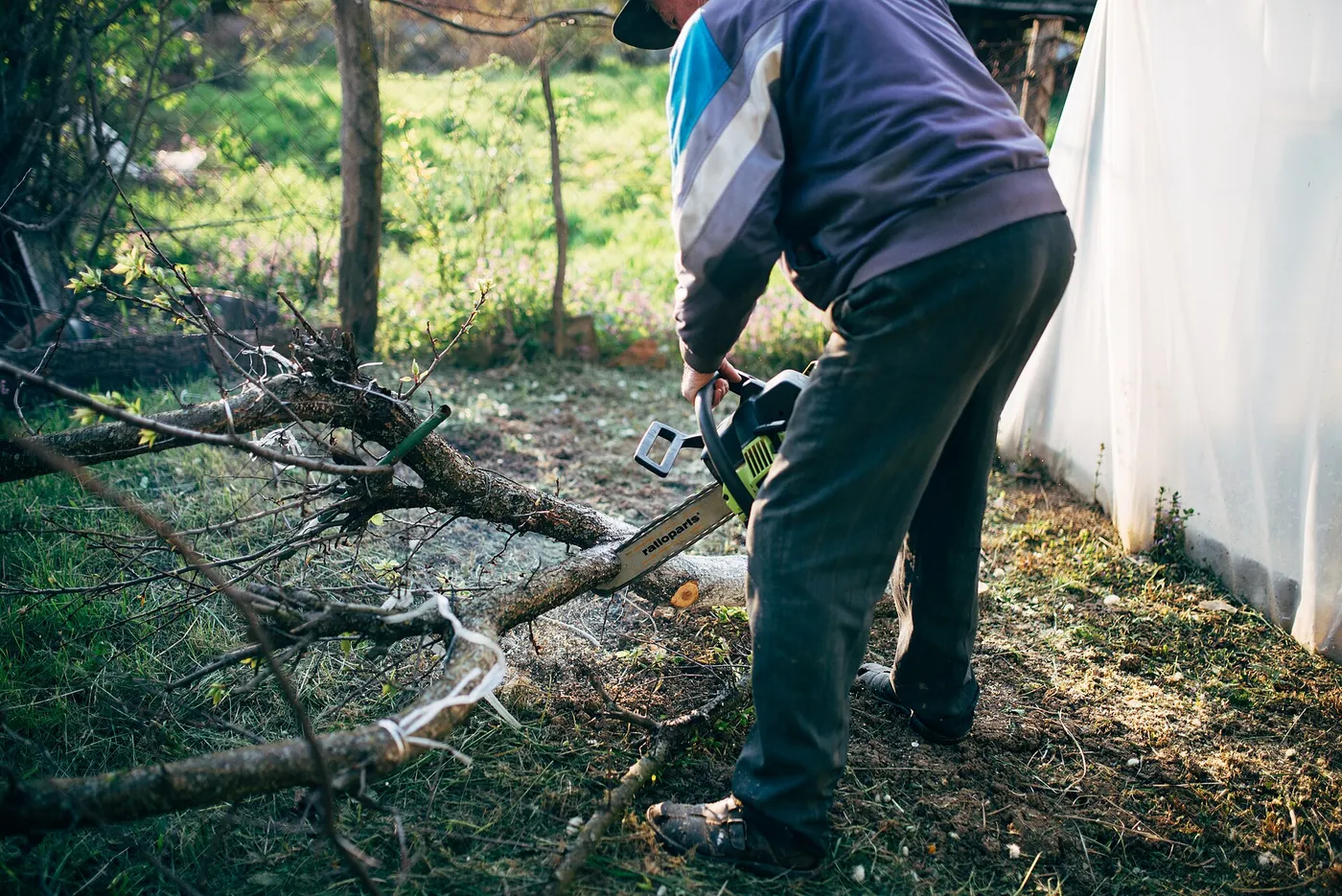
Pole material matters too. Fiberglass is common and does not conduct as readily as metal when dry, but it is not safe near power lines, and moisture changes that. Metal poles conduct and are a clear hazard near wires. Telescoping poles add reach but also flex, so extended poles can feel whippy.
Weight at the head is the biggest comfort factor. A heavy head makes the pole feel unbalanced and tires the arms faster. Hold a saw if possible before buying, and extend it to see how it feels. For comparisons of models by power source, see our guides to pole saws, gas pole saws and Ryobi pole saws.
Pre-cut checklist
- Look up and identify power lines, dead limbs and hang-ups before anything else.
- Define the drop zone and clear it of people, pets, cars and breakable items.
- Pick a standing spot with firm, level footing and a clear escape route.
- Check the saw: chain tension, bar oil, battery or fuel, and the chain brake.
- Wear a helmet, eye and ear protection, gloves, long sleeves and sturdy boots.
- Plan the cuts, starting small and working from the tip inward.
Run through the list every time. It takes a minute, and most pole saw accidents trace back to a skipped check, such as an unnoticed wire or a person wandering into the drop zone.
Hang-ups, tension and unexpected movement
Branches under tension behave differently from free-hanging ones. A limb bent by the weight of a neighboring branch, or held in a fork, can spring when cut, and the saw can be thrown sideways or the limb can whip. Look for bowed limbs and ask where the stored energy will go when the cut releases it. Relieve the tension with a small first cut on the compression side, then finish on the other side, keeping your body clear of the line of movement.
A branch that lodges in the canopy after being cut is a hang-up, and it is a hazard that stays in place. Do not walk under it, do not shake the tree, and do not try to pull it down by hand. Use a rope and stand clear to drag it free from a safe distance, or leave it to a professional. Mark the area so nobody walks through it.
Pinching is a quieter problem. If a limb sags and closes the kerf on the blade, the saw binds and can twist the pole in your hands. Cut from the side that lets the kerf open as the limb drops, and stop if the chain slows. Wedges are not practical on a pole saw, so choose smaller sections instead.
Timing and tree health
When you cut matters for the tree and for your safety. Dormant-season pruning, once leaves have fallen, makes limbs and hazards easier to see, and most trees tolerate it well. Wet, windy or icy conditions make footing and control worse, so postpone the job. Avoid pruning in the immediate aftermath of a storm, when limbs may be under hidden tension.
Make clean cuts at the branch collar and avoid leaving stubs or tearing the bark. Remove dead, diseased or crossing branches first, since those are both the safest and the most beneficial cuts. Do not remove more than a modest share of the canopy in one session, because heavy pruning stresses the tree.
When to call a professional
Know the limit of the tool. A pole saw is for light to moderate pruning at modest height. It is not for felling, for limbs thicker than the saw's rated capacity, for work near electrical lines, or for trees with obvious defects such as large dead limbs, cracks, or a lean toward a structure.
Hire a qualified arborist when the job needs climbing, rigging, or a bucket truck, or when the tree is close to a house or wires. The cost of a professional is small compared with the consequences of a serious injury or a damaged roof.
If you do the work yourself, choose the right bar and chain size for the saw head, as explained in our bar length guide, and keep the chain sharp. A dull chain forces you to push, and pushing on a pole is how control is lost.
Frequently Asked Questions
How high can I safely cut with a pole saw?
Lower than the advertised reach. Subtract several feet for standoff and control, and keep the pole at a moderate angle. If the branch is near the pole's limit, it is probably a job for a professional.
What is a safe cutting angle?
A moderate to shallow pole angle keeps you out from under the limb. A near-vertical pole puts you in the drop zone and is hard to control. Choose a position that lets the limb fall clear of you.
How close can I work to power lines?
Stay well away. A commonly cited minimum for lines up to 50 kilovolts is 10 feet, and more for higher voltages, but a pole and a falling branch extend your effective range. If a branch is near a line, call the utility or a qualified contractor.
Why should I cut from the tip inward?
It reduces the weight of each piece, so limbs are easier to control and fall in a smaller area. It also lowers the risk of a large branch tearing bark or hanging up in the tree.
Do I need a helmet for a pole saw?
Yes. Debris, sawdust and sometimes whole sections fall straight down on the operator. A helmet with a face screen, eye and ear protection, gloves and sturdy boots are standard equipment.
Is a battery pole saw strong enough?
For typical yard pruning of small and medium branches, yes. For thick limbs and long sessions, a gas model or a professional is more suitable.
Bottom line
A pole saw's reach is only useful if you can use it safely. Treat the quoted reach as a ceiling, keep the pole at a moderate angle so you stand outside the drop zone, cut small pieces from the tip inward, and clear the area of people and hazards before the first cut.
Never work near power lines, never stand under the limb, and always wear a helmet, eye and ear protection. If the job needs more than the tool can safely do, hire a professional. The goal is a clean cut and an uneventful afternoon.