
The basic difference in one paragraph
Every gas engine in your shed turns fuel and air into motion by compressing a mixture in a cylinder and igniting it. The "stroke" is one trip of the piston up or down. A 4 stroke engine takes four strokes, two full crankshaft turns, to complete one power cycle. A 2 stroke engine finishes the same cycle in two strokes, one crankshaft turn, so it fires twice as often at the same speed.
That single difference explains almost everything shoppers notice: the 2 stroke is lighter, louder and thirstier, and it needs oil mixed into the fuel. The 4 stroke is heavier, smoother and quieter, and it has its own oil reservoir. The rest of this guide shows what that means for the machines you actually own.
How a 4 stroke engine works
The four strokes each do one job, in order. First comes intake, where the piston moves down and pulls in the fuel and air mixture through an open valve. Second is compression, where the valves close and the piston rises, squeezing the mixture. Third is power, where the spark plug ignites the mixture and the expanding gas pushes the piston down. Fourth is exhaust, where the piston rises again and pushes burnt gas out through the exhaust valve.
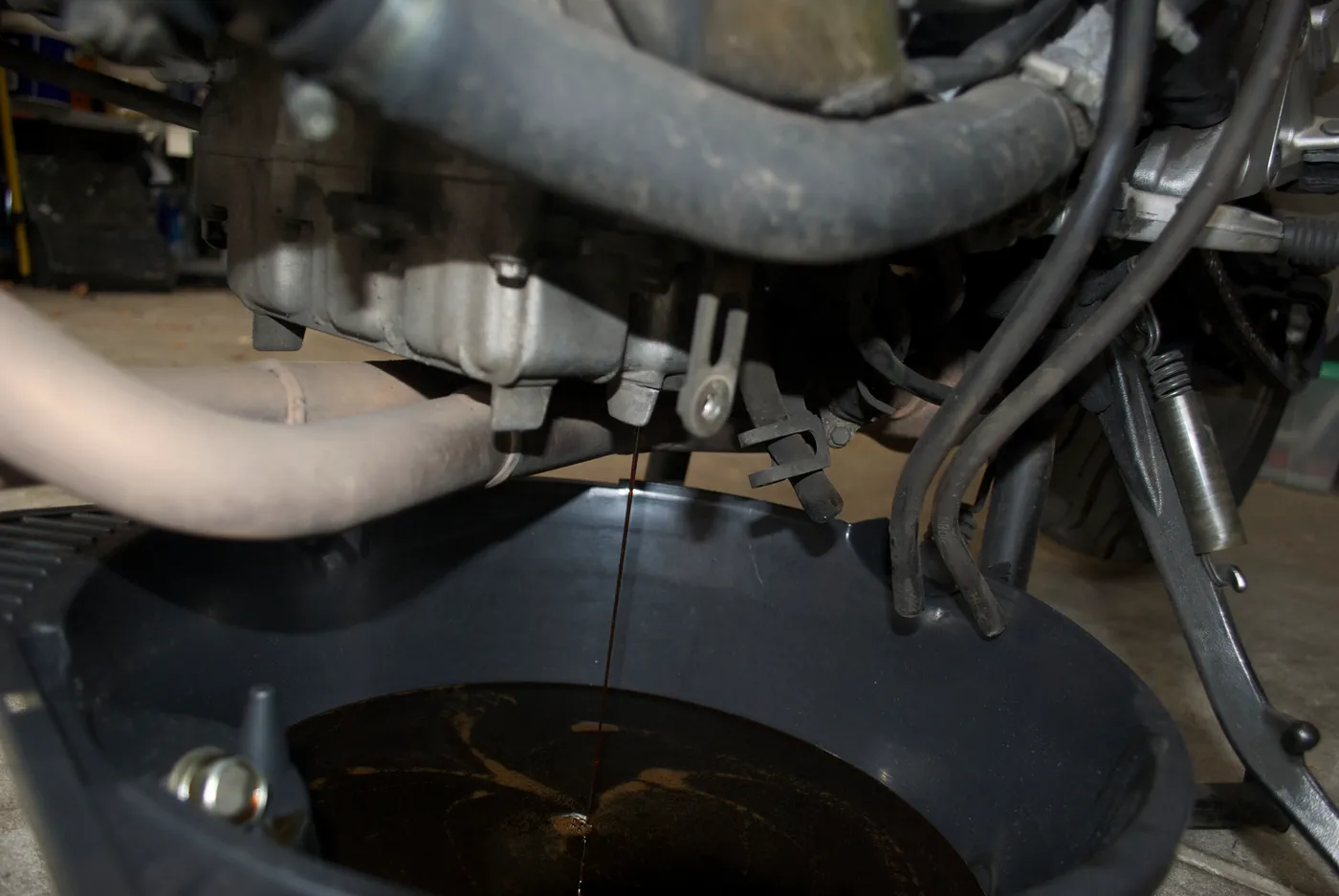
Because the valves open and close at set moments, a 4 stroke has a valve train, usually driven by a camshaft. It also keeps lubricating oil in a crankcase sump, and a pump or a splash system sends that oil to the moving parts. The fuel in the tank is plain gasoline, with no oil in it.
How a 2 stroke engine works
A 2 stroke packs the same four jobs into two strokes. As the piston rises, it compresses the mixture above it while drawing fresh mixture into the crankcase below. When the spark fires, the piston drops, and as it nears the bottom it uncovers ports in the cylinder wall. Burnt gas leaves through the exhaust port while fresh mixture from the crankcase rushes in through a transfer port.
There are no valves and no camshaft, just ports opened and closed by the piston itself. That simplicity is why the engine is light and cheap to make. The crankcase is part of the intake path, so it cannot hold a sump of oil. Lubrication has to come from oil mixed into the fuel, which flows through the crankcase and coats the bearings and cylinder as it passes.
Side by side
| Feature | 2 stroke | 4 stroke |
|---|---|---|
| Power strokes per crankshaft turn | Every turn | Every second turn |
| Lubrication | Oil mixed in the fuel | Separate oil sump |
| Fuel in the tank | Gasoline plus 2 stroke oil | Plain gasoline |
| Weight for the same power | Lighter | Heavier |
| Operating angle | Any angle, including upside down | Limited tilt, oil must stay in the sump |
| Noise | Louder, higher pitched | Quieter, deeper |
| Exhaust smoke and smell | More, from burnt oil | Less |
| Moving parts | Fewer, no valve train | More, valves and camshaft |
| Routine upkeep | Mix fuel correctly, clean air filter, spark plug | Check and change oil, plus filter and plug |
Why handheld tools use 2 stroke engines
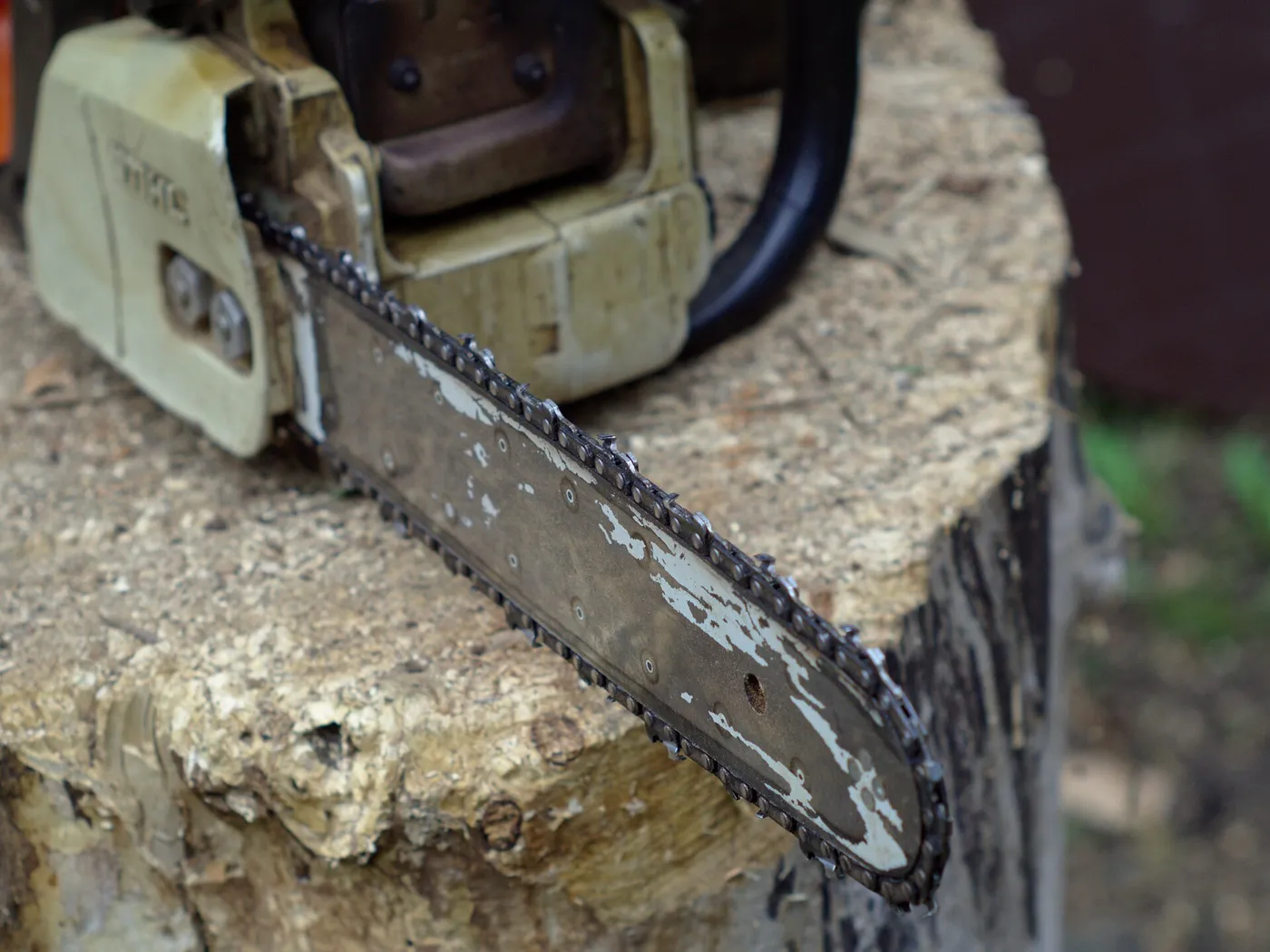
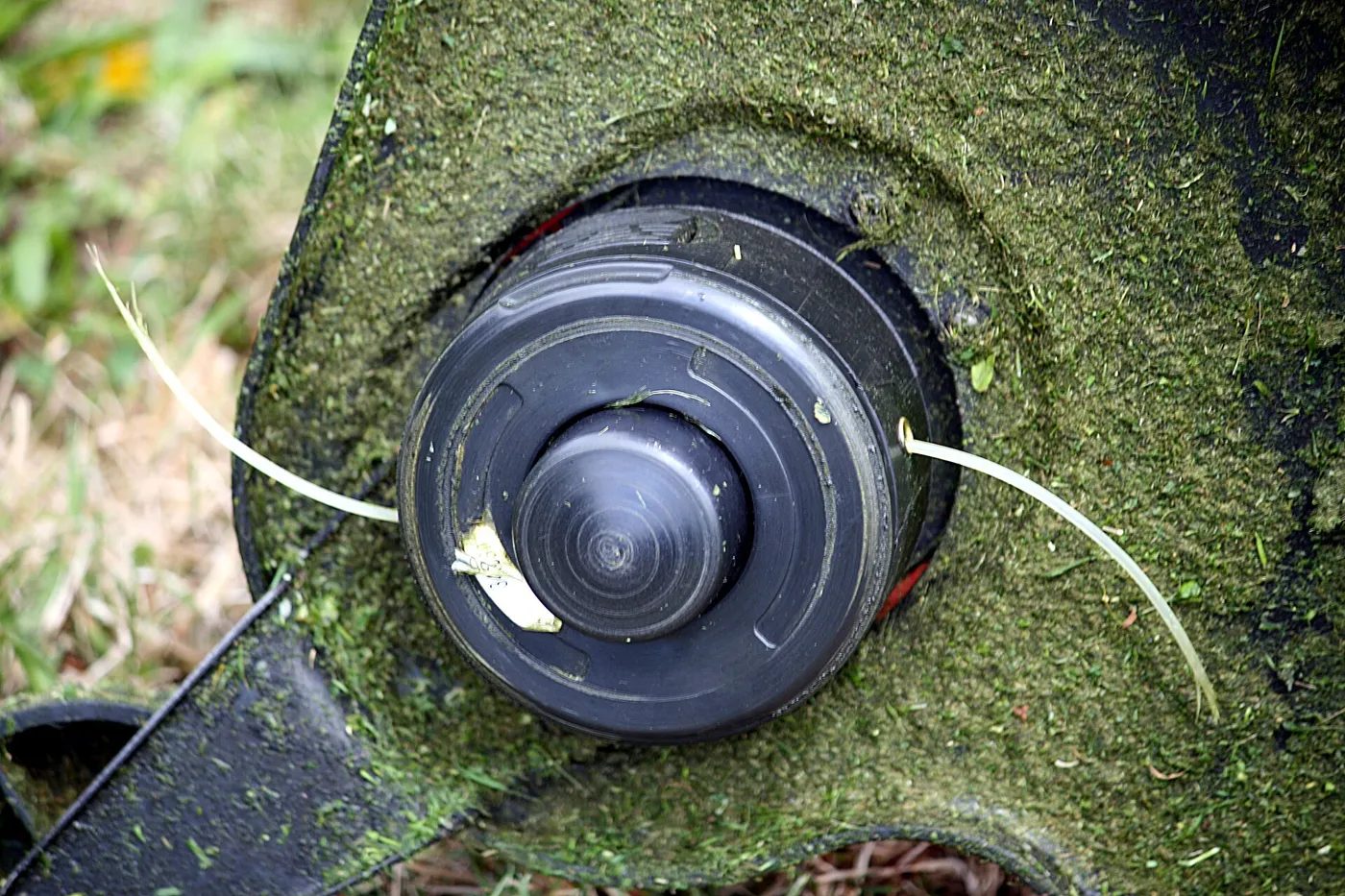
A string trimmer, a backpack blower or a chainsaw is held in your hands, swung through arcs and sometimes tilted past vertical. A 4 stroke with an oil sump would starve of oil or leak it at those angles. A 2 stroke runs in any attitude because its oil rides in the fuel, not in a sump.
Weight is the other reason. A 2 stroke makes more power for its size and weight because it fires twice as often, and it has no valve train to add mass. Over a long job, a pound of weight at the end of your arms matters more than almost any other spec. That is why you see 2 stroke engines at the top of so many pro-grade handhelds.
The four-mix and hybrid exceptions
Some brands sell engines that behave like a 2 stroke in the hand but lubricate differently, often marketed as 4-mix or similar names. Some of these still require mixed fuel, while others use straight gasoline with a separate oil path. They are not the same as a true 4 stroke, so read the fuel requirement on the engine itself before you fill the tank. True 4 stroke trimmers that run straight gas also exist, and they are heavier.
Why lawn mowers use 4 stroke engines
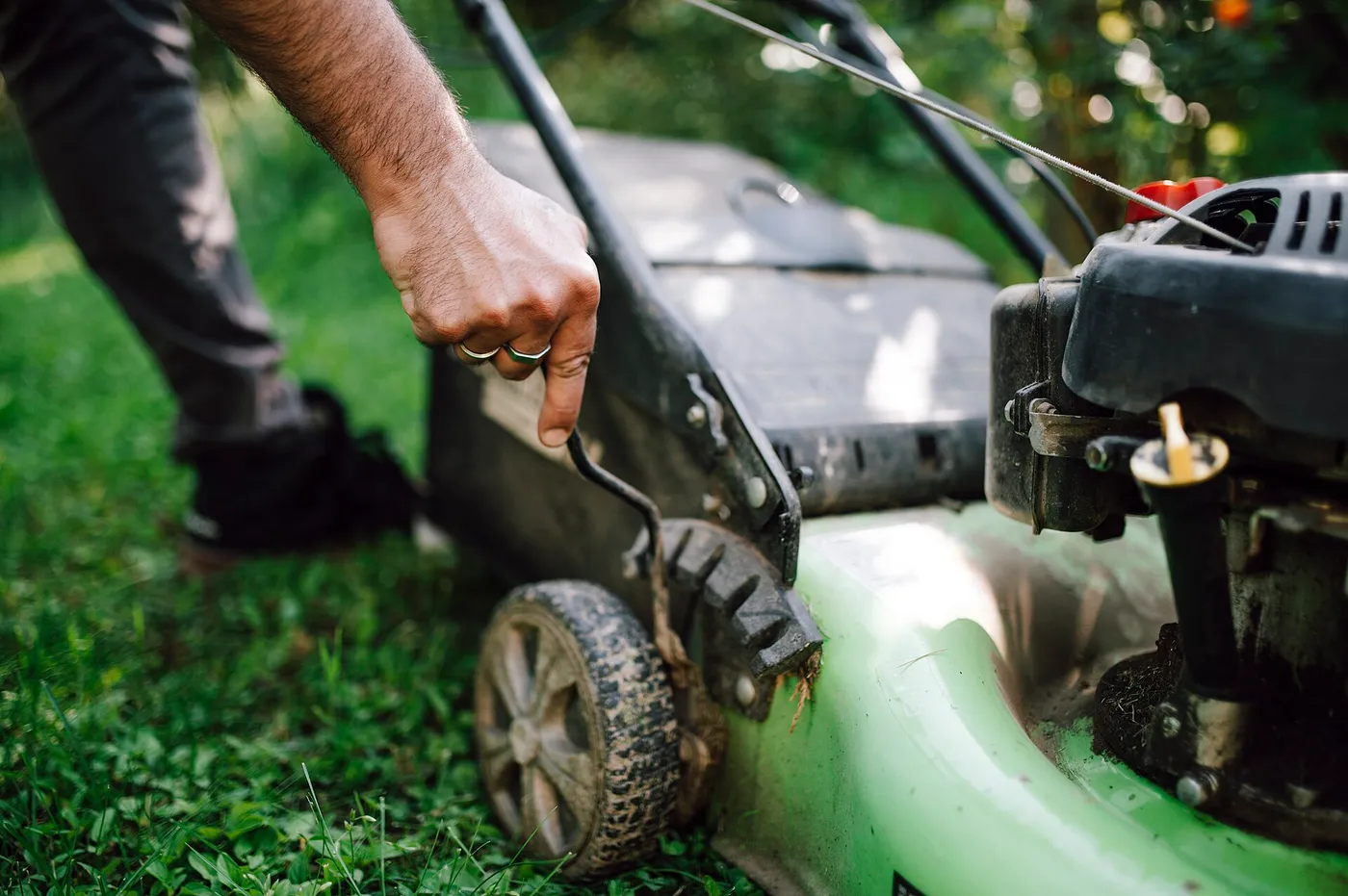
A walk-behind mower sits on wheels and stays level, so oil in a sump is not a problem. Weight is no concern because the wheels carry it. A mower runs for an hour at a time at steady load, and a 4 stroke's smoother, more durable behavior suits that. It is also quieter and has fewer fumes, which matters when you stand behind it.
Riding mowers, generators and pressure washers follow the same logic. They are heavy anyway, they run for long periods, and their owners prefer plain fuel from the can. Compare that with a handheld and you see the pattern: the machine's use decides the engine, not tradition. Our guide to gas lawn mowers shows how common 4 stroke is in that category.
Fuel and oil: where owners make mistakes
This is the part that causes most real-world damage. The two engine types need opposite handling at the pump.
- 2 stroke: needs gasoline mixed with 2 stroke oil at the ratio on the engine label or in the manual. Common ratios are 50:1, with some older or other-oil engines at 40:1 or 32:1. Our guide to mixing 2 stroke fuel walks through the arithmetic.
- 4 stroke: takes plain gasoline in the tank and engine oil in the sump. Never put mixed fuel in a 4 stroke on purpose, though a small amount of mix by accident is usually not an emergency. Check the manual.
- Ethanol: most small-engine makers allow up to 10 percent ethanol and warn against higher blends such as E15. Ethanol-free fuel is a safer choice for equipment you use rarely.
The two classic mistakes point in opposite directions. Putting straight gas in a 2 stroke leaves the engine with no lubrication, and it can seize within minutes of hard running. Putting mixed fuel in a 4 stroke fouls the plug and smokes, but it rarely does permanent harm if caught early.
Power, torque and how they feel
A 2 stroke produces its power at high rpm, in a narrow band, and the engine tends to feel snappy and peaky. It revs quickly and cuts well at full throttle, which suits a trimmer head or a chain. A 4 stroke produces more torque at lower rpm, which gives a steady pull for a mower blade or generator.
Comparing engines by displacement alone misleads. A 25 cc 2 stroke can deliver more cutting power than a 25 cc 4 stroke because it fires twice as often. Compare power output in the spec sheet when it is given, or look at how the maker rates the tool for its job.
Noise and emissions
A 2 stroke typically sounds louder and more strained, and its exhaust carries unburnt oil and some fuel. Regulators have tightened emissions on small engines for decades, and modern 2 strokes use catalysts, stratified scavenging and cleaner designs to cut the smoke. They are cleaner than they used to be, but a 4 stroke still burns cleaner in most designs.
If noise matters where you live, battery tools are quieter than both. Our explainer on outdoor power equipment noise shows how to read the decibel numbers, and local rules sometimes limit gas equipment on certain days or hours.
Maintenance compared
| Task | 2 stroke | 4 stroke |
|---|---|---|
| Oil | Mixed into every tank | Check level, change on schedule |
| Air filter | Clean often, dust shortens engine life | Clean or replace per manual |
| Spark plug | Replace as the manual says, fouls from poor mix | Replace as the manual says |
| Valves | None | May need clearance checks |
| Spark arrestor | Clean the exhaust screen | Less often |
| Storage | Drain mixed fuel or stabilize it | Drain or stabilize fuel, fresh oil |
The cost in time is different. A 2 stroke asks you to mix fuel carefully each time, and mixed fuel goes stale, so you should only mix what you will use soon. A 4 stroke asks you to remember the oil level and the oil change. Neither is hard, but each fails in its own way when ignored.
Lifespan and reliability
With correct care, both types last for many seasons on homeowner use. A 4 stroke tends to have longer life under heavy, steady loads because its lubrication is constant and its wear is spread across a oil-bathed system. A 2 stroke runs at higher rpm and depends on the quality of the fuel mix, so it is more sensitive to bad fuel, wrong ratios and clogged filters.
Most 2 stroke failures are fuel or air problems, not mechanical ones. Stale mix, the wrong ratio and a dirty air filter account for a large share of no-start and poor-running complaints. Our troubleshooting guide on why small engines will not start follows the usual order of checks.
Battery tools as the third option
For trimmers, blowers and hedge trimmers, battery tools now match or beat small 2 stroke engines in many yards, with no fuel mixing, no pull cord and very low noise. For chainsaws and larger mowers, the gap is closing but gas still leads in runtime and sustained heavy work. Weigh your yard size, battery platform and willingness to handle fuel.
If you are shopping, our cordless string trimmer comparison covers the battery side, and if you want to stay gas on a budget, look at the string trimmers in the next price class and the entry-level group. For a deeper look at the trade, see gas vs battery lawn mowers and gas vs battery chainsaws.
| Tool | Best engine type today | Reason |
|---|---|---|
| String trimmer, small yard | Battery | No mixing, quiet, light |
| String trimmer, acreage | 2 stroke gas | Runtime, easy refuel |
| Chainsaw, light pruning | Battery | Instant start, low maintenance |
| Chainsaw, felling and bucking | 2 stroke gas | Power to weight at any angle |
| Push or self-propelled mower | 4 stroke gas or battery | Weight does not matter, runtime does |
| Generator | 4 stroke | Durability, plain fuel, long run times |
Starting and daily use
Day to day, the two engines feel different before you ever cut anything. A 2 stroke usually starts with a primer bulb and a choke, and a few pulls bring it to life. Because it has no heavy valve train to turn over, the pull cord is light. Many owners find a well-maintained 2 stroke starts quickly, while a stale-fuel 2 stroke is the classic machine that will not start after winter.
A 4 stroke mower or generator has more to turn over, so the pull is heavier, and some models add an easier-start feature or an electric starter. Once running, it idles smoothly and holds a steady rpm under load. A 2 stroke idles with a ragged, higher note and wants to run near full throttle when working.
Fuel handling is the other daily difference. With a 2 stroke you carry a can of premixed fuel and you must remember what is in it. With a 4 stroke you carry plain gasoline and check the oil now and then. If several people share your tools, a mixed-fuel can labeled clearly with the ratio and the date prevents the wrong fuel from ending up in the wrong tank.
How to tell which type you own
Do not guess from the sound. Check these in order.
- Look at the fuel cap. Many 2 stroke tools show a fuel and oil ratio on the cap or tank.
- Look for an oil fill cap or a dipstick on the engine. If one exists, it is a 4 stroke with a sump.
- Read the model label and the manual. The engine type and fuel mix are specified.
- If the tool has two separate fill points, one for fuel and one for oil, it is a 4 stroke.
- If the tool is a handheld that runs upside down, it is almost certainly a 2 stroke or a 4-mix hybrid.
Frequently Asked Questions
Is a 2 stroke more powerful than a 4 stroke?
At the same displacement, yes, because it fires once per crankshaft turn instead of once every two. That gives it more power for its weight, which is why handheld tools use it. A 4 stroke delivers smoother torque at lower rpm.
Can I run straight gasoline in a 2 stroke engine?
No. Without oil in the fuel, the bearings and cylinder have no lubrication and the engine can seize quickly. Always mix to the ratio the manual specifies.
What happens if I put mixed fuel in a 4 stroke engine?
You usually get a smoky exhaust and a fouled spark plug. A single tank rarely causes lasting harm, but drain it and refill with plain gas. Check the manual for guidance.
Why do 2 stroke engines smoke more?
The oil in the fuel burns along with the gasoline, and some unburnt mixture leaves through the exhaust port. Newer designs reduce this, but a 4 stroke generally burns cleaner.
Which is easier to maintain?
A 2 stroke has fewer parts but demands correct fuel mixing. A 4 stroke needs oil checks and changes. Neither is difficult, and the better choice is the one whose routine you will actually follow.
Are 2 stroke engines being phased out?
Emissions rules have pushed makers toward cleaner designs and battery alternatives, but 2 stroke engines are still widely sold in handheld tools. Check your local regulations if you are buying.
Bottom line
Choose by the job, not by habit. A 2 stroke is the right engine for a handheld tool that has to be light and work at any angle, and it demands correct fuel mixing. A 4 stroke is the right engine for a mower, generator or pressure washer, where weight does not matter and plain gasoline plus an oil check is easier to live with. If you hate fuel altogether, a battery tool now covers most small yards. Whichever you pick, read the fuel label before every fill, because the wrong fuel is the mistake that costs the most.