
The three things every engine needs
A small engine is simple in what it asks for. It needs fuel that can burn, air to burn it with, and a spark at the right instant, along with enough compression to squeeze the mix. If any one of those is missing, you get a pull cord that spins freely, a motor that coughs and quits, or silence. Almost every no-start problem comes down to one of them.
The useful way to approach a stubborn engine is to stop guessing and work through the three in a fixed order, cheapest and most common first. That order saves hours and money, and it keeps you from replacing a carburetor when the real cause was a plug that costs very little. This guide follows that order for lawn mowers, trimmers, blowers, generators, snow blowers and chainsaws.
Safety first
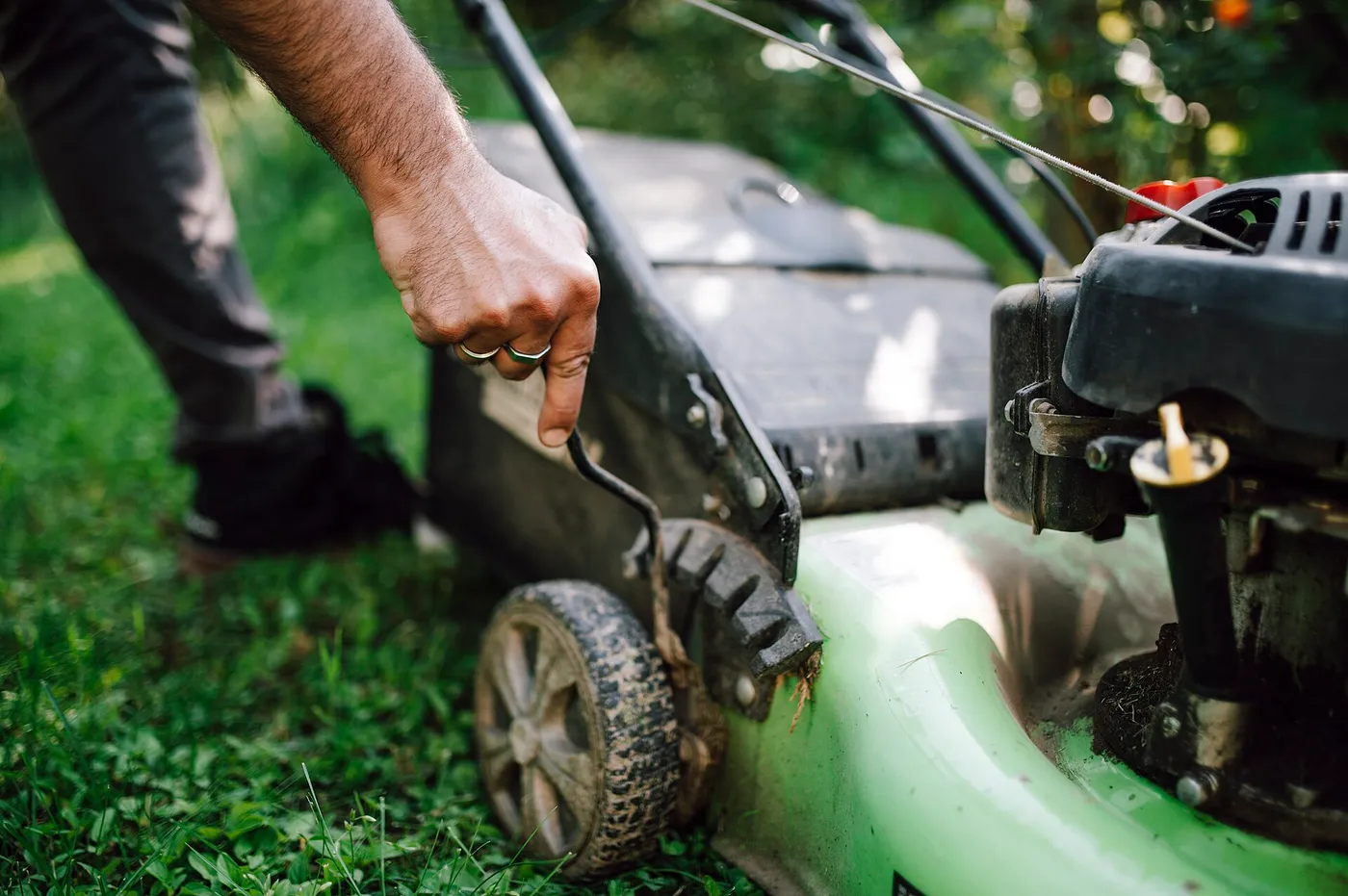
Before you open anything, remove the spark plug wire from the plug and keep it away from the plug. On a battery-start engine, also disconnect the battery. Work outdoors, away from open flame, because fuel and fuel vapor ignite easily. Let a hot engine cool before you touch the muffler. Follow your own machine's manual for every step, since layouts differ between brands and models.
Five-minute checks before you open anything
Many no-starts turn out to be an overlooked switch. Check these first.
- Stop switch or ignition switch. Make sure it is in the run position.
- Fuel shut-off valve. Some engines have a lever at the tank or carburetor. Open it.
- Fuel level. Look into the tank. A gauge can stick, and a mower that sat for a season may be nearly empty.
- Safety bail or deadman bar. On a mower, hold the bar fully against the handle when you pull. Many have a safety interlock.
- Choke and primer. Cold engines usually need the choke closed or the primer bulb pressed. Warm engines usually need it open.
- Oil level on a 4 stroke. Some engines have a low oil shutdown that stops the engine from starting.
- Pull cord and flywheel. If the cord will not pull at all, or pulls with no resistance, the cause is mechanical.
Step one: fuel
Fuel is the leading cause of no-start in small engines, and age is the usual culprit. Gasoline loses its lighter, more volatile parts within weeks and starts forming gum and varnish. One major small-engine maker says gasoline goes stale in about 30 days. Another says untreated fuel degrades noticeably in a month or two. The exact number varies, but a tank left from last season is not trustworthy.
Ethanol makes it worse. Pump gasoline with ethanol pulls moisture from the air, and in a tank that sits for weeks the water can separate from the fuel and sink to the bottom, where the carburetor draws it. Small-engine makers generally accept up to 10 percent ethanol, and warn against E15 for this equipment. Stabilizer slows aging but does not repair fuel that has already gone stale.
What to do
- Smell the fuel. A sharp varnish odor, or a dark, cloudy color, means it is stale.
- Drain the old fuel into an approved container and dispose of it properly, not on the ground.
- Refill with fresh gasoline. For a 2 stroke tool, use the correct fresh mix, and see our guide to mixing 2 stroke fuel if you are unsure of the ratio.
- Check the fuel line for cracks, kinks or collapse, and the in-line filter or tank screen for blockage.
- Try starting again, using the primer or choke as the manual says.
If the engine fires briefly and dies, the fuel path is probably partly blocked, and the carburetor is the next suspect.
The carburetor and why varnish wrecks it
The carburetor meters fuel through tiny passages and jets, sometimes thinner than a sewing needle. Stale fuel leaves a sticky varnish film that narrows or plugs those jets. Even a small blockage can stop an engine from starting, or make it surge and stall after a few seconds.
The mechanism is straightforward: as fuel evaporates inside the carburetor bowl, the heavier residue stays behind and dries into a gum. Ethanol blends add corrosion and white powdery deposits. A carburetor that has sat for a season often shows the problem the moment you try to start it.
Your options, from least to most involved, are these.
- Carburetor cleaner spray. Remove the air filter and follow the cleaner's directions and your manual. It helps with light varnish.
- Drain the bowl. Many carburetors have a drain screw at the bottom of the float bowl. Draining it removes old fuel and sediment.
- Disassemble and clean. Remove the bowl, clean the main jet and passages with carburetor cleaner, and reassemble with a new gasket.
- Replace the carburetor. On many small engines, a complete replacement costs less than the time to clean a badly gummed one.
Photograph each step as you take the carburetor apart. Throttle and choke linkages go back one way only, and a wrong reassembly causes a new problem.
Step two: spark
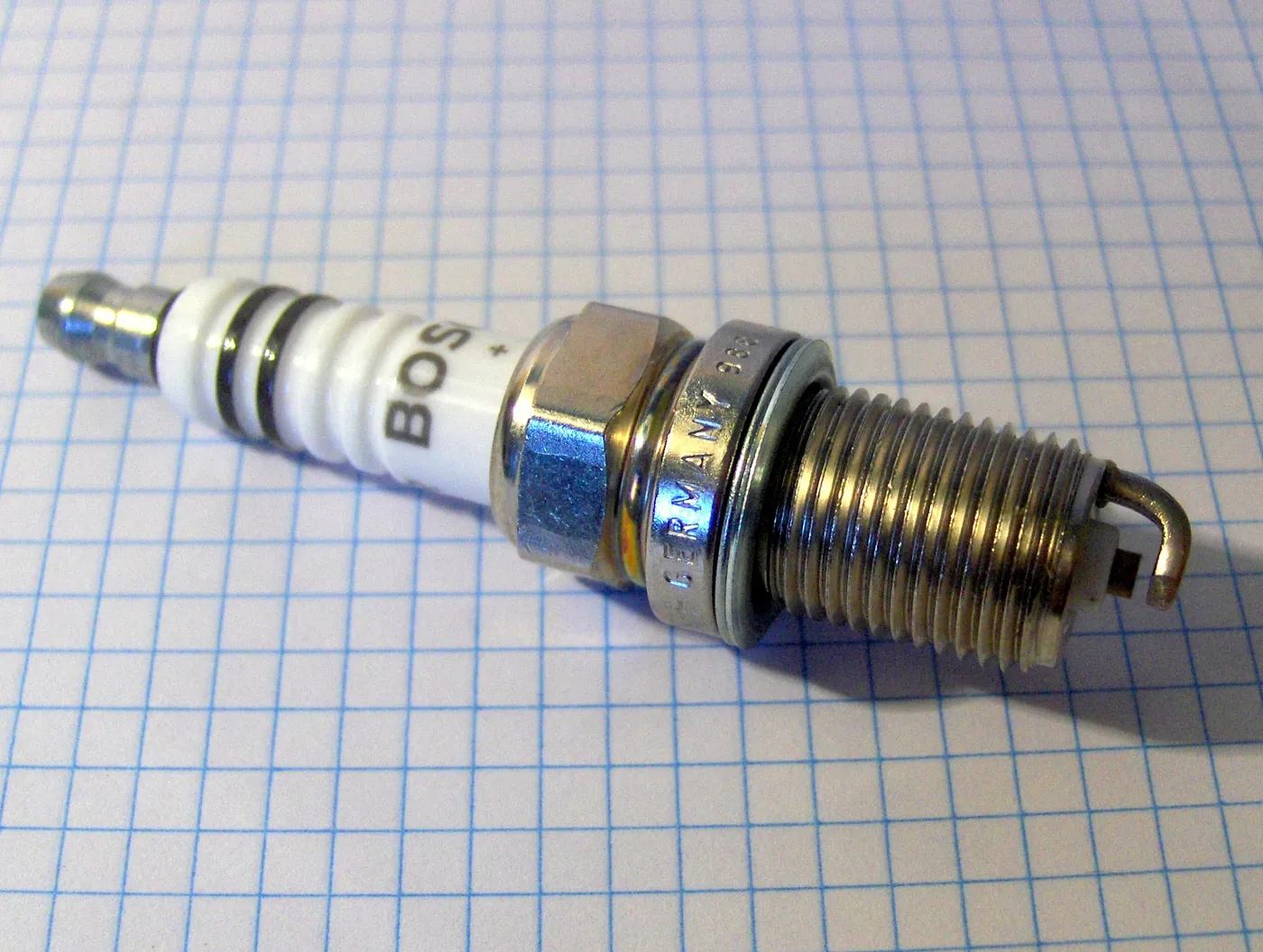
If the fuel path is clean and the engine still does not start, test for spark. A fouled, worn or damaged spark plug is one of the most common and cheapest failures to fix, and it sits at the top of many repair checklists.
Read the plug
| What you see | What it usually means |
|---|---|
| Dry, light tan or gray | Healthy combustion |
| Wet with fuel | Flooded engine, or weak spark so fuel did not ignite |
| Black and sooty | Rich mixture, dirty air filter or too much choke |
| Oily | Oil entering the cylinder, worn rings or tilted mower |
| White, blistered or melted | Overheating, lean mix, wrong plug |
| Cracked porcelain or burned electrode | Plug is worn or damaged, replace it |
Clean or replace a fouled plug and check that the electrode gap matches your manual's specification. Plugs are cheap, and a new one removes a variable. Use the exact plug your engine specifies.
Check for spark
Use a spark tester, which is a small inexpensive tool, rather than holding the plug against metal by hand. Connect the tester between the wire and the plug, pull the cord and watch for a bright blue spark. No spark, or a weak orange one, points to the plug, the wire, the ignition coil, a loose flywheel key or a stuck safety switch. Replacing the plug is the first move. If a good plug still shows no spark, the coil or its air gap to the flywheel needs attention, and many owners hand that job to a repair shop.
Step three: air
An engine needs a large volume of air to burn fuel, and a blocked air path starves it. A clogged filter makes an engine run rich, foul the plug and hard-start. This step is quick and often overlooked.
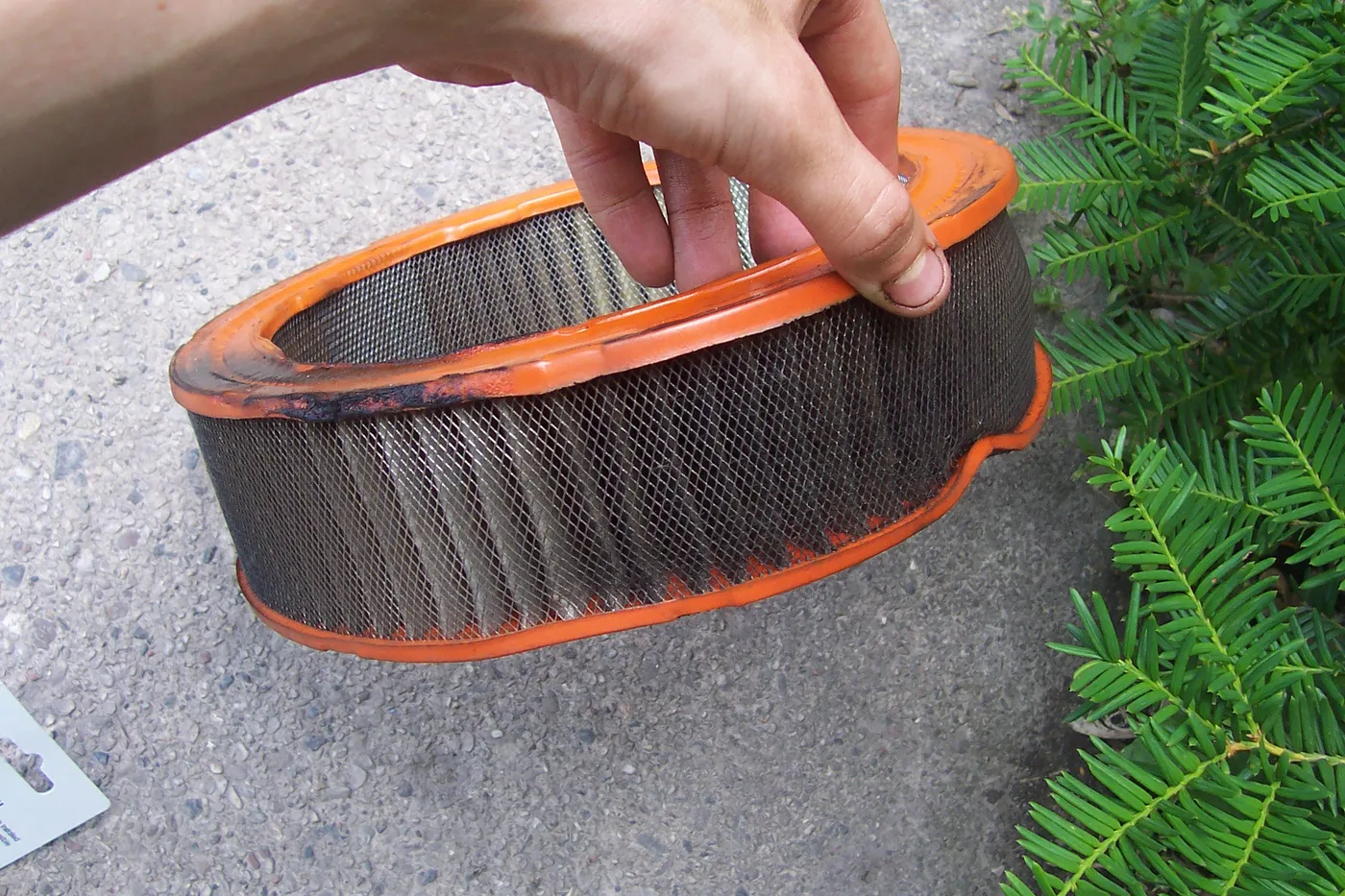
- Foam filters. Wash in warm soapy water, rinse, let dry fully, and apply a little clean engine oil if your manual says so.
- Paper filters. Tap out loose dust gently. Replace them if they are oily, wet or clogged.
- Choke plate. Make sure it moves freely and is not stuck closed.
- Intake and cooling fins. Remove packed grass and debris that block airflow around the engine.
Hold off on any test that runs the engine without an air filter unless your manual allows it, as dirt entering an open intake damages the cylinder.
Step four: compression and mechanical faults
If fuel, spark and air all check out, compression is the remaining suspect. Compression means the piston squeezes the mixture tightly before ignition. Worn rings, a burnt valve or a leaking head gasket lower it, and the engine will not fire however good the fuel and spark are.
A simple hint: when you pull the cord, you should feel resistance as the piston rises, and the cord should kick back slightly. A cord that pulls with almost no resistance suggests low compression or a broken part. A cord that will not move at all can mean a seized engine, a locked blade or a flywheel brake that is engaged.
Other mechanical causes include a sheared flywheel key, which shifts the spark timing, a stuck valve and a failed recoil starter. A compression gauge measures the pressure, and your manual lists the expected reading. Mechanical repairs often cost more than a new machine on an older, low-end engine, so weigh the value before you start.
Two stroke specifics
A 2 stroke trimmer, blower or chainsaw has its own failure patterns, because its fuel carries the oil and its exhaust has a spark arrestor. If you are unsure which type you own, our comparison of 2 stroke and 4 stroke engines shows how to tell them apart.
- Flooding. Repeated pulling with the choke on fills the cylinder with fuel. Set the choke off, hold the throttle open and pull until it fires.
- Clogged spark arrestor. Carbon blocks the muffler screen and chokes the exhaust.
- Old mix. Stale mixed fuel separates and gums the carburetor very quickly.
- Wrong mix. Too much oil fouls the plug. Too little risks a seized engine.
- Cracked fuel line or primer bulb. A small crack lets air in, so fuel does not reach the carburetor.
Four stroke mower specifics
Walk-behind mowers add their own wrinkles on top of the basic three. Many have a safety bail and a blade brake that must be engaged before the engine will run. Many have a low oil shutdown that stops the engine from starting if the sump is low. And a mower tilted the wrong way can send oil into the cylinder and air filter, causing a smoky, hard start.

If you tipped the mower to clean the deck, the manual usually tells you which side to lay it on, with the air filter and carburetor facing up. Tilt it the other way and oil can run where it should not. Let it sit, clean the filter and plug, and try again.
If you are comparing mowers because yours has become unreliable, our gas mower guide lists current options, and the battery alternatives sit in the 40V, 60V and 80V groups. A battery mower has no carburetor, no fuel and no plug, which removes this whole list of failures. For the larger decision, see gas vs battery lawn mowers.
The diagnostic order at a glance
| Symptom | Most likely cause | First fix |
|---|---|---|
| Cord pulls, no sign of firing | No fuel or no spark | Fresh fuel, new plug |
| Fires once and dies | Blocked carburetor jet or fuel line | Drain bowl, clean carburetor |
| Starts then stalls under load | Gummed carburetor, dirty filter | Clean carburetor and filter |
| Smells of fuel, plug wet | Flooded engine | Choke off, throttle open, pull repeatedly |
| Black smoke, rough start | Rich mixture, clogged air filter | Clean or replace the filter |
| Cord will not pull | Seized engine or engaged brake | Check blade and brake, then mechanical inspection |
| Cord pulls with no resistance | Low compression or broken starter | Compression test or starter inspection |
| Nothing after a long winter | Stale fuel and varnished carburetor | Drain fuel, clean carburetor, new plug |
Preventing the next no-start
Most of what stops an engine is preventable, and the habits cost almost nothing.
- Use fresh fuel. Buy only what you will burn in a month, or use ethanol-free fuel for seldom-used tools.
- Add stabilizer at the end of the season. Run the engine for a couple of minutes so it reaches the carburetor, following your manual.
- Or run it dry. Some owners drain the tank and run the carburetor empty before storage.
- Replace the spark plug yearly. It is inexpensive and removes a common cause of hard starting.
- Clean the air filter. Do this at the interval in the manual, more often in dusty work.
- Store the tool dry and covered. Moisture corrodes jets and electrical connectors.
For larger engines, the same off-season routine applies. Our guide to storing a generator for the off season shows how it works on a machine you may need to start in an emergency.
When to stop and call a shop
Not every fault is worth fixing at home. Consider a repair shop or a replacement when you reach any of these points.
- The cord will not pull, which points to seizure or a major mechanical fault.
- You get no spark from a new plug, and the coil or flywheel is suspect.
- Compression is low, and the engine is old.
- The carburetor is badly corroded or the casting is cracked.
- The repair quote is a large share of the cost of a new machine.
A budget walk-behind mower with a worn engine is often cheaper to replace than to rebuild. Weigh the repair against the value, and consider whether a battery model suits your yard.
Frequently Asked Questions
Why won't my mower start after sitting all winter?
Stale fuel is the usual reason. Gasoline degrades within weeks, and varnish can clog the carburetor jets. Drain the old fuel, fill with fresh gasoline, replace the spark plug and clean the air filter before you try again.
How do I know if the problem is fuel, spark or air?
Check fuel first by looking at its age and flow. Then check spark with a tester, and finally inspect the air filter and choke. If the plug is wet, fuel is reaching the cylinder. If it is dry, the fuel is not arriving.
Why does my engine start then die?
That points to a partly blocked fuel path, often a gummed carburetor jet or a clogged fuel filter. The engine runs on the fuel in the bowl, then stops when the jet cannot refill it. Clean the carburetor and check the fuel line.
Can I use starting fluid to get it going?
Only if your manual allows it. It can hide a fuel problem, and some makers warn that it can damage engines. A better fix is to find why fuel is not arriving.
What does a flooded engine mean?
Too much fuel has entered the cylinder, so the plug is wet and cannot spark. Turn the choke off, open the throttle and pull the cord several times. Replacing or drying the plug also helps.
How often should I replace the spark plug?
Many owners replace it once a year or every season of heavy use. Your manual gives the interval. It is a small cost compared with a no-start.
Bottom line
When a small engine will not start, work through fuel, then spark, then air, then compression, and stop at the first thing you find wrong. Old gasoline is the most common cause, so drain it and use fresh fuel before you do anything else, then fit a new spark plug and clean the air filter. Clean the carburetor only if those steps fail, and take the machine to a shop if the cord will not pull or the repair costs more than the machine is worth. Always disconnect the plug wire first and follow your manual.