
The choice changes when the battery cycles daily
An AGM battery can look perfectly adequate when a system is used for an occasional weekend. The same battery can become the limiting component when an RV, cabin, or solar setup is discharged and recharged every day. Daily cycling exposes the practical differences between absorbed glass mat lead acid and lithium iron phosphate batteries: how much rated capacity is comfortably usable, how voltage behaves under load, how quickly energy can be restored, and how cycle life changes with discharge depth.
AGM and lithium are not simply old and new versions of the same battery. They use different chemistries, different internal protection strategies, and different charging behavior. Replacing one with the other is therefore a system decision. A lithium battery may physically fit the tray yet remain incompatible with the converter, alternator charging path, low temperature environment, or protection scheme.
For a lightly used backup bank, AGM may remain sensible because it is familiar, sealed, and broadly compatible. For frequent off-grid cycling where weight and usable energy matter, lithium iron phosphate often provides the stronger operational fit. The correct comparison uses the actual battery manuals and the expected duty cycle rather than a single headline capacity.
What AGM and lithium mean in this comparison
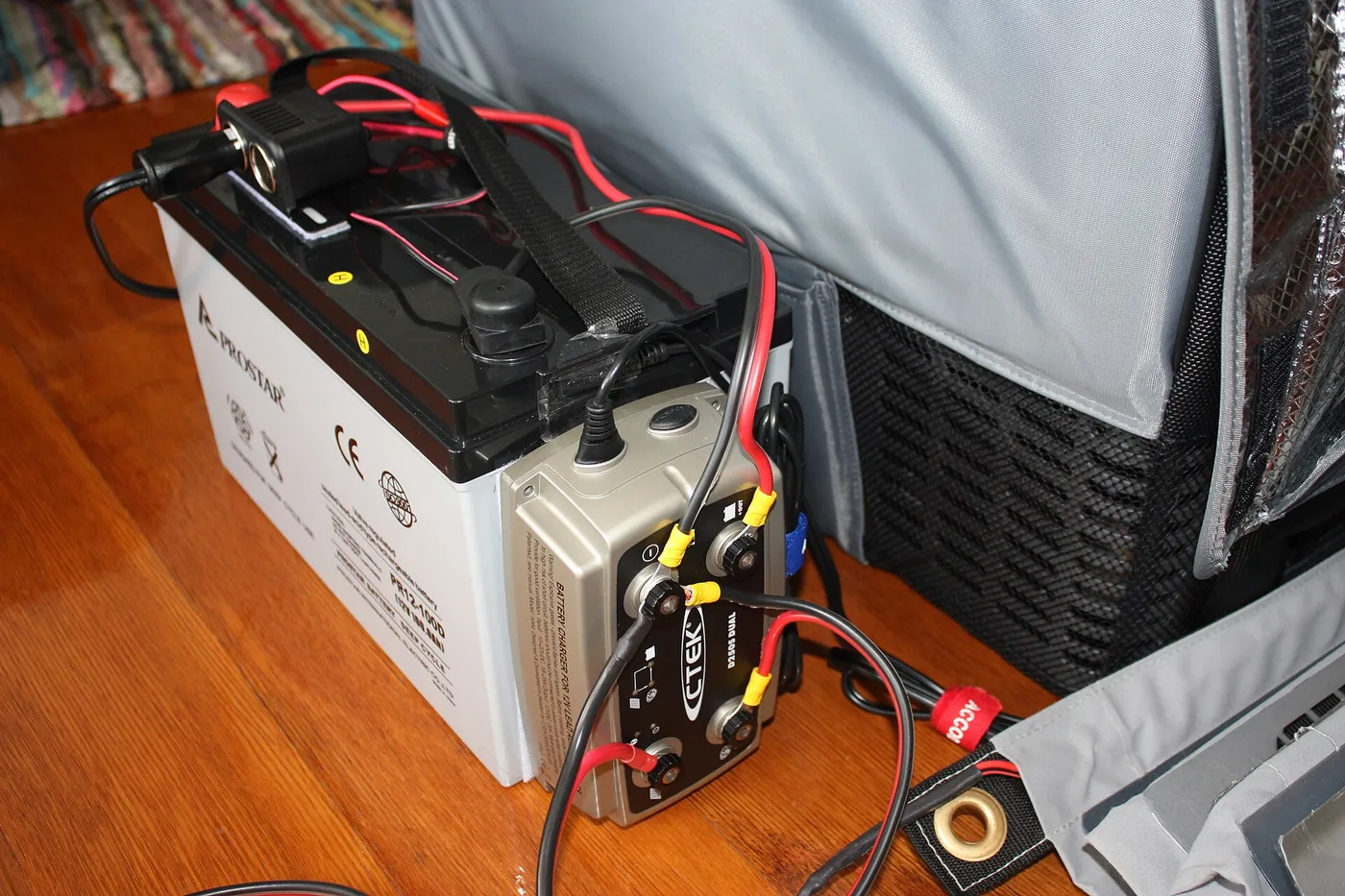
AGM stands for absorbed glass mat. It is a valve regulated lead acid design in which electrolyte is held in fiberglass separators between lead plates. The case is sealed in normal service, although pressure relief valves can vent if charging conditions become abnormal. AGM batteries do not require routine water addition, which makes them more convenient than flooded lead acid batteries in many mobile installations.
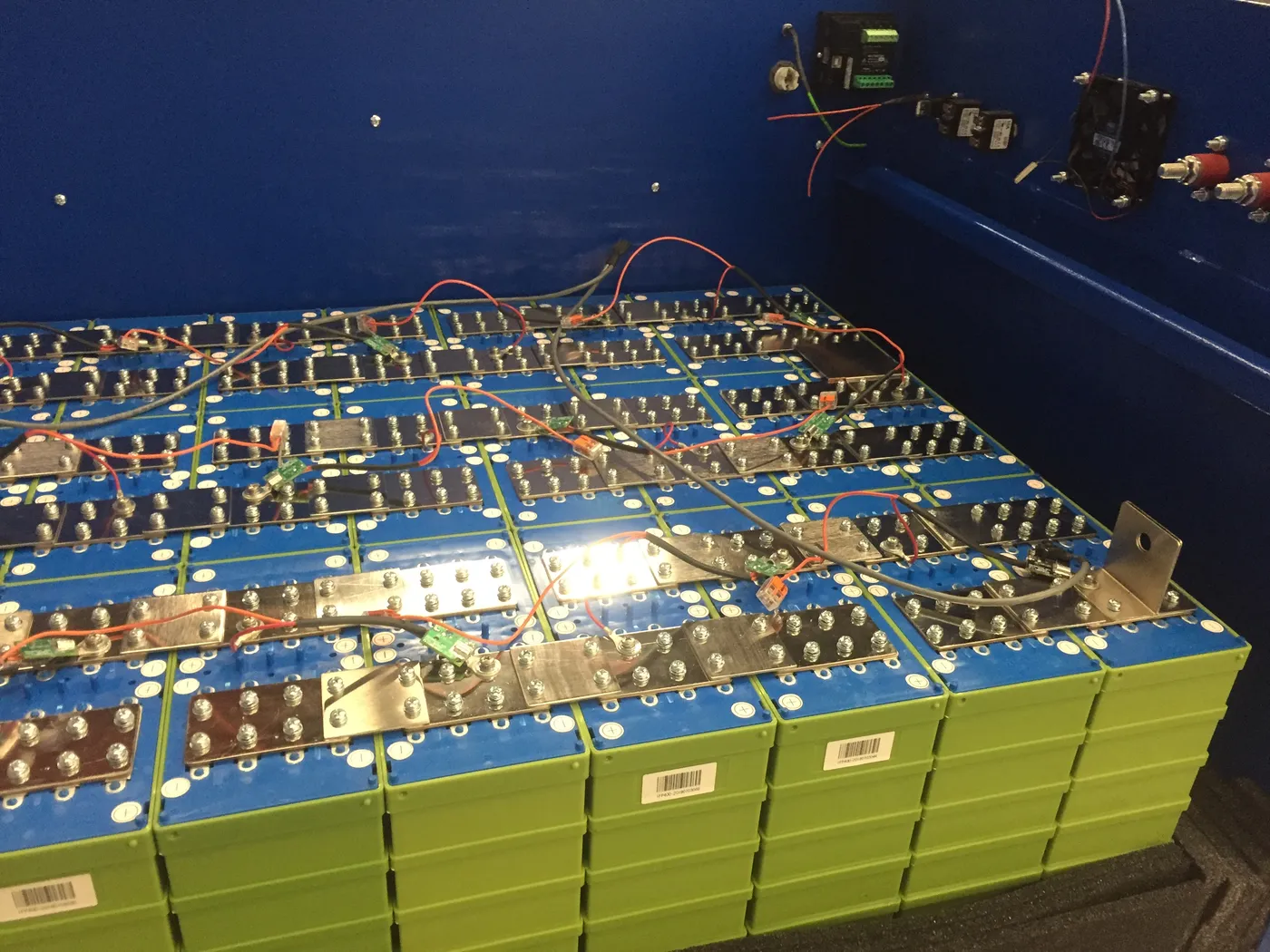
The word lithium covers several rechargeable chemistries. In RV and small solar systems, lithium iron phosphate, abbreviated LiFePO4 or LFP, is a common deep cycle choice. This article uses LFP as the lithium comparison unless stated otherwise. It should not be assumed that advice for LFP applies to every lithium ion chemistry.
An LFP battery normally includes or requires a battery management system. The BMS monitors cell voltage and temperature and can interrupt charging or discharging when limits are crossed. That protection is essential, but it is not permission to ignore system design. The charger, conductors, overcurrent protection, disconnects, mounting, and environmental conditions must still match the battery documentation.
AGM vs lithium comparison table
| Decision factor | AGM deep cycle | LFP deep cycle |
|---|---|---|
| Core chemistry | Valve regulated lead acid with absorbed electrolyte | Lithium iron phosphate cells with battery management |
| Comfortable usable capacity | Often planned around shallower discharge to preserve cycle life | Usually supports deeper routine discharge within manufacturer limits |
| Voltage under load | Declines progressively with state of charge and load | Remains relatively flat through much of the discharge |
| Weight for comparable usable energy | Higher | Lower |
| Charging | Requires staged lead acid charging and adequate absorption time | Requires an approved lithium profile and BMS coordination |
| Cold charging | Possible within the battery's stated temperature range | Usually restricted below freezing unless heating or approved controls are provided |
| Routine maintenance | No water addition, but state of charge and terminal condition still matter | No water addition, but BMS status and temperature limits matter |
| Best fit | Occasional cycling, familiar equipment, cold environments | Frequent cycling, space and weight constraints, higher usable energy needs |
Usable capacity is not the label capacity
Battery labels commonly state amp hours at a specified voltage and test rate. That number is nominal capacity, not a recommendation to remove every amp hour during each cycle. Depth of discharge has a direct relationship with cycle life, particularly for lead acid batteries. Repeatedly driving an AGM battery to a very low state of charge can accelerate sulfation and plate deterioration.
Many AGM systems are planned around using only part of the rated capacity during routine operation. The exact limit should come from the manufacturer and the required cycle life, not a universal percentage repeated without context. A system intended for occasional emergency use can accept a different discharge pattern than a battery bank cycled every day.
LFP batteries usually allow a larger portion of rated capacity to be used, but they also have limits. A BMS low voltage disconnect prevents severe cell damage, yet operating into that disconnect every day is not necessarily the best plan. Reserve supports unexpected loads, cold weather capacity changes, aging, and time to recharge.
The companion article on what LiFePO4 is and why it matters covers how usable depth of discharge relates to cycle life. For this comparison, the practical consequence is that two batteries with the same nominal amp hour rating may not deliver the same planned daily energy.
Cycle life depends on how the bank is used
Cycle life is the number of charge and discharge cycles a battery can complete before reaching a defined end of life capacity. It is not a fixed expiration date. Discharge depth, charge voltage, time spent partly charged, temperature, discharge rate, manufacturing quality, and balance between batteries all influence the result.
Lead acid batteries generally provide more cycles when each discharge is shallow. Leaving AGM partly discharged also promotes sulfation, so timely full charging matters. A solar system that repeatedly fails to complete the required absorption stage may shorten life even if the nominal array seems large enough.
LFP typically supports far more cycles at substantial discharge depth than conventional AGM. Its charge efficiency is high and it does not require the same prolonged absorption behavior. Even so, heat, excessive charge voltage, storage at unsuitable state of charge, and repeated operation at protection thresholds can reduce service life.
Published cycle figures must be read with their test conditions. A claim based on one depth of discharge cannot be compared directly with a figure based on another. End of life definitions can also differ. Use manufacturer curves that state discharge depth, temperature, rate, and remaining capacity.
Voltage behavior changes what loads see
An AGM battery's terminal voltage declines as it discharges and sags further under a heavy load. An inverter may reach its low voltage cutoff even while some chemical capacity remains. Cable resistance and loose connections deepen that voltage drop. This makes conductor sizing and connection quality important.
LFP maintains a flatter voltage through much of its discharge. Lights may remain steady and an inverter may receive stronger voltage until the battery approaches its lower limit. The flat curve also makes state of charge difficult to estimate from voltage alone. A shunt based battery monitor that counts current can provide a more useful estimate when correctly configured.
The stronger voltage is not automatically compatible with every load or charger. Some equipment uses voltage thresholds designed around lead acid behavior. A monitor, converter, solar controller, or automatic generator start module may require updated settings after a chemistry change.
Charging is where conversions often fail
AGM charging normally uses bulk, absorption, and float stages with voltage and time settings specified by the battery maker. Temperature compensation may be required. Chronic undercharging encourages sulfation, while excessive voltage can cause gassing through the valves, water loss that cannot be replaced, heat, and premature failure.
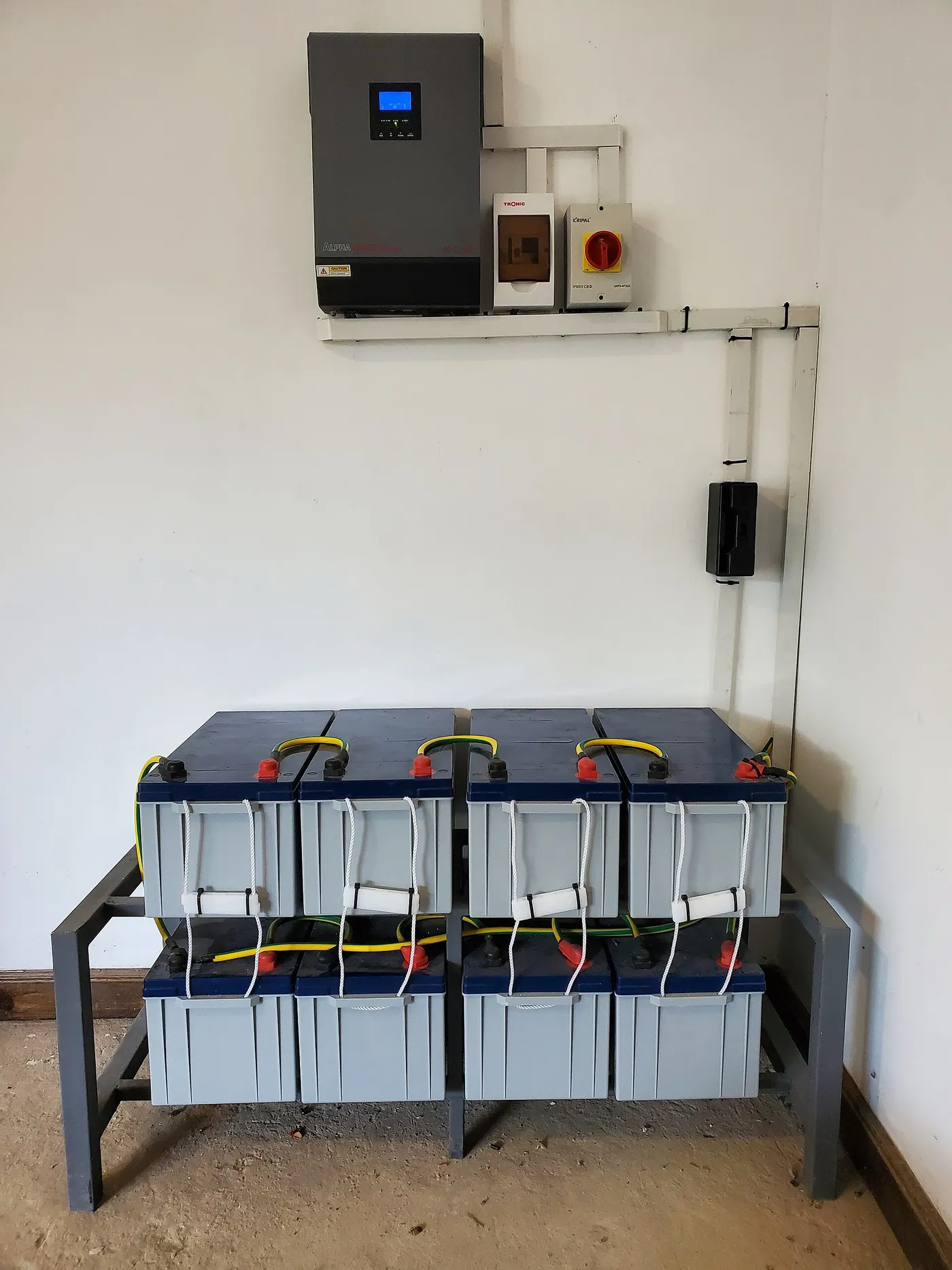
LFP charging requires limits appropriate to its cells and BMS. It generally accepts high current efficiently through much of the charge, then reaches its upper voltage quickly. A lead acid charger with an aggressive equalization or desulfation mode can be unsuitable. A lithium profile is not automatically correct either, because voltage and current limits vary by battery.
An RV can have several charging sources: shore power converter, alternator, solar controller, and generator supplied charger. Every source needs review. Direct alternator connection can demand more current than wiring or alternator cooling can support. A compatible DC to DC charger can control that path, but it must be selected and installed for the vehicle and battery.
Solar equipment also needs the right profile. Buyers comparing integrated battery products can review LiFePO4 solar generators, while portable AC systems are covered in the LiFePO4 power stations guide. These packaged systems reduce some component matching, but their input limits and charging temperature rules still apply.
Cold weather is the major lithium caution
LFP batteries can discharge in cold conditions within their stated limits, although capacity and power may decline. Charging below the manufacturer's minimum cell temperature is the greater concern because lithium plating can permanently damage cells. Many LFP batteries block charging through the BMS when cells are too cold.
A low temperature cutoff protects the battery but can surprise an owner. Solar panels may be producing and the controller may show available voltage, yet no charge enters the bank. Solutions include an approved heated battery, a conditioned battery compartment, or a control system designed for the environment. Heating consumes energy and must be included in the power plan.
AGM can usually accept charge below freezing within its specified range, with voltage adjusted for temperature. Its available capacity still falls in cold weather, and charging a frozen or damaged lead acid battery is unsafe. Neither chemistry should be treated as immune to temperature.
Weight and space favor lithium
Lead is dense. An AGM bank sized for substantial usable energy can consume considerable payload and storage volume. That matters in an RV where every battery competes with water, cargo, passengers, and axle limits. Additional batteries also need secure restraint and accessible connections.
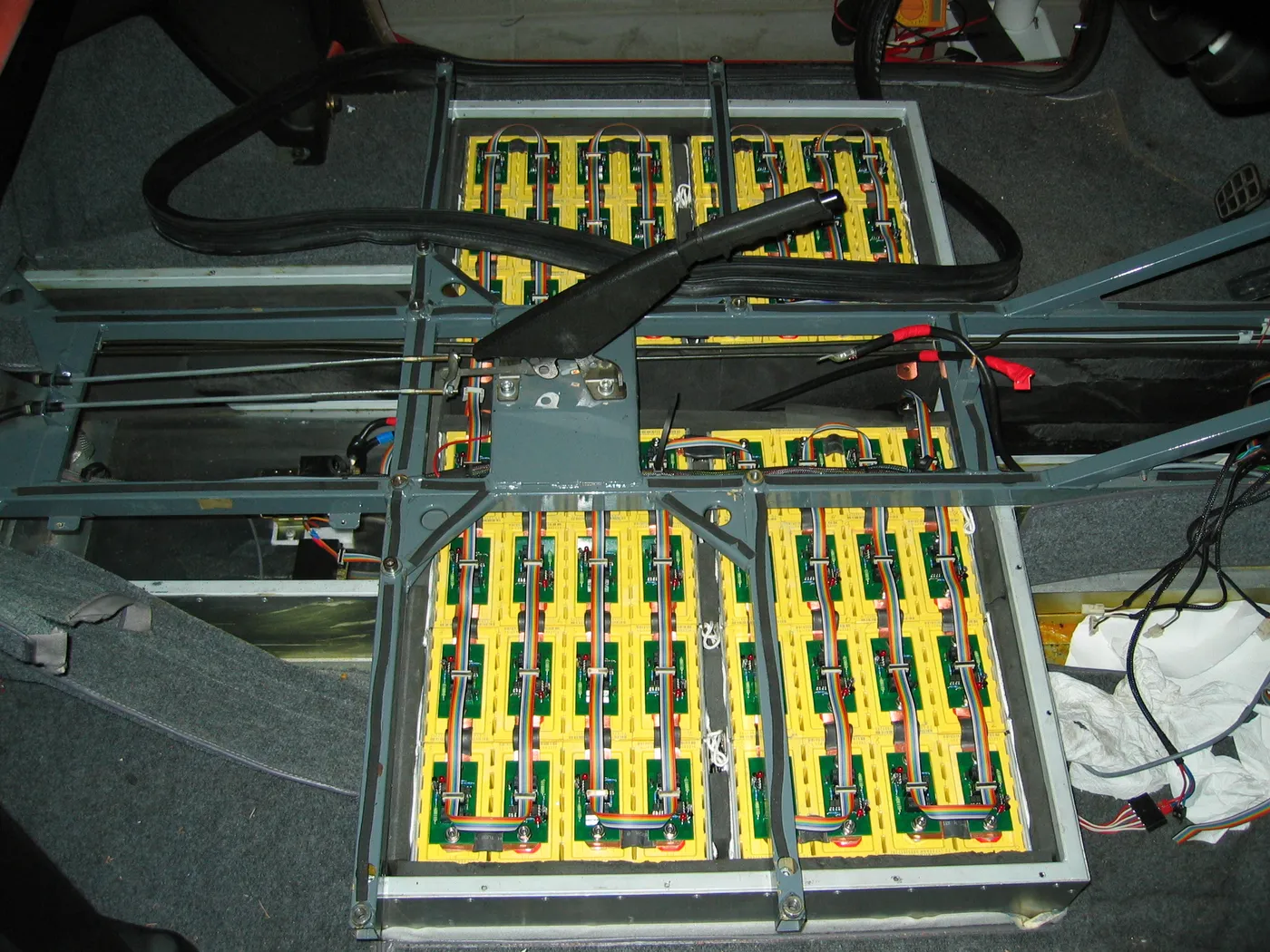
LFP generally provides more usable energy at lower weight. A smaller bank may meet the same daily load target, or the same space may hold more reserve. The installation still needs structural support, protection from impact, appropriate clearances, and cable routing.
Do not treat a lighter battery as permission to mount it anywhere. The manual may restrict orientation, moisture exposure, heat, and compartment ventilation. Cables must be supported so vibration does not load the terminals. A battery should not share an unprotected compartment with loose metal tools or fuel equipment.
High current loads require more than capacity
An inverter, air conditioner, microwave, pump, or motor can draw substantial current from a low voltage battery bank. The battery must support both the continuous current and any starting surge. AGM voltage sag can become the limiting factor. LFP may hold voltage better, but its BMS has a maximum discharge current and may disconnect if that limit is exceeded.
Parallel batteries do not automatically share current equally. Cable lengths, connection resistance, battery condition, and terminal arrangement matter. Mixing ages, capacities, models, or chemistries can create imbalance. Follow the battery manufacturer's rules for series and parallel configurations.
The inverter also needs correct sizing. The article on how to size an inverter explains continuous and surge requirements. Battery selection must then confirm that the bank and BMS can supply the resulting DC current without excessive voltage drop.
Maintenance is different, not absent
AGM is often called maintenance free because it does not need water addition. It still needs clean, tight terminals, correct charging, periodic state of charge checks, and inspection for swelling, heat, corrosion, cracks, or leakage. A battery left discharged can fail even though nobody opens its case.
LFP needs no water either, but the system needs monitoring. Check BMS warnings, connection torque according to the manual, cable condition, state of charge calibration, temperature history, and charger settings. Firmware updates should come only through official channels when the product supports them.
Storage requirements differ by model. Lead acid batteries are generally stored fully charged and maintained to prevent self discharge and sulfation. LFP manufacturers may specify a partial state of charge and a periodic inspection interval. Follow the exact manual rather than applying one chemistry's storage practice to the other.
Safety and protection require a system view
Both chemistries store enough energy to melt tools, ignite wiring, and cause injury during a short circuit. Install overcurrent protection close to the positive battery connection as required, use conductors and lugs rated for the current, cover exposed terminals, and provide an accessible disconnect. Remove jewelry and use insulated tools during service.
AGM batteries can vent hydrogen and oxygen if overcharged or failed. The compartment must follow the manufacturer's ventilation requirements and remain isolated from ignition sources. A swollen, hot, cracked, or leaking case requires immediate attention.
LFP is thermally more stable than several other lithium ion chemistries, but it is not hazard free. Do not use a battery that is swollen, punctured, smoking, unusually hot, wet internally, or emitting an unusual odor. Do not bypass the BMS or attempt cell repair. Follow emergency and disposal guidance from the manufacturer and local authorities.
A chemistry conversion should include review of charging sources, cable ampacity, fusing, disconnects, grounding, battery restraint, monitoring, temperature controls, and inverter settings. Qualified help is appropriate when system documentation is incomplete.
When AGM is the better fit
AGM remains reasonable for a system used infrequently, a backup bank kept on a compatible maintainer, or an installation where cold charging is common and battery heating is impractical. It can also avoid a wider conversion when existing chargers and controls are in good condition and the weight is acceptable.
The best AGM case is a load profile that does not demand deep daily cycling. If the bank can be recharged fully and promptly, and the owner accepts lower usable energy per unit of weight, AGM can provide dependable service. It is also widely understood by service technicians.
When lithium is the better fit
LFP is usually stronger for frequent boondocking, daily solar cycling, high usable capacity in limited space, and weight sensitive vehicles. Its flat voltage and charge acceptance can improve inverter operation and make better use of available solar hours.
The case becomes weaker when the bank will sit in freezing conditions without heat, existing charging equipment cannot be configured safely, or the installation lacks a clear path for alternator current control. Lithium works best as a coordinated system rather than a drop in label swap. The chemistry overview in what LiFePO4 is and why it matters provides more detail on cell behavior.
A practical selection checklist
First calculate daily watt hours and the maximum continuous and surge loads. Next choose a reserve and expected discharge depth that supports the required cycle life. Compare battery candidates by usable watt hours, not only nominal amp hours.
Then verify every charging source, the lowest and highest battery temperatures, BMS current limits, inverter cutoff settings, cable and fuse ratings, mounting space, and vehicle payload. Read the warranty for cycle conditions, temperature exclusions, approved chargers, and claim requirements.
Finally, plan monitoring and storage. A reliable battery bank includes a way to understand state of charge, detect faults, isolate the bank, and maintain it during periods of nonuse. Chemistry is important, but installation quality decides whether its advantages are realized.
Frequently asked questions
Can I replace an AGM battery with lithium using the same charger?
Only if the charger manufacturer and battery manufacturer confirm compatible voltage, current, stages, and temperature behavior. Disable any equalization or desulfation mode that the lithium manual prohibits. Review every charging source, not only the shore converter.
Does a lithium battery provide twice the usable energy of AGM?
It can provide substantially more planned usable energy from the same nominal capacity, but the exact ratio depends on each manufacturer's discharge limits, load rate, temperature, voltage cutoff, and desired cycle life. Calculate usable watt hours for the actual products.
Can AGM and lithium batteries be connected in parallel?
No, not as a single battery bank. Their voltage behavior and charging requirements differ. If a system uses both chemistries, they need an approved design that keeps the banks electrically managed and isolated as required.
Is LiFePO4 safe inside an RV?
It can be suitable when installed according to the battery and RV requirements with a functioning BMS, correct protection, secure restraint, suitable temperature, and protected wiring. It should not be placed where impact, water, excessive heat, or terminal shorting is likely.
Which chemistry is better below freezing?
AGM is generally simpler for cold weather charging within its approved range. LFP charging is commonly blocked below a specified cell temperature unless the battery has approved heating or the compartment is conditioned. Both lose available performance in cold conditions.
Why does my AGM inverter shut down before the battery seems empty?
Voltage can sag under a heavy load, especially with undersized cables, loose connections, a partly discharged bank, cold temperature, or an aged battery. The inverter may reach its low voltage cutoff even though some low rate capacity remains.
Bottom line
Choose AGM when cycling is occasional, existing lead acid charging equipment is suitable, cold charging matters, and weight is manageable. Choose LFP when the bank cycles frequently and usable energy, voltage stability, charging efficiency, space, and weight justify a coordinated system upgrade. Compare realistic usable watt hours and documented cycle conditions, then verify chargers, BMS limits, temperature controls, cables, fuses, mounting, and monitoring. The right chemistry is the one the entire power system can charge, protect, and operate correctly.