
The tiller that dragged the operator down the row
Ask a first-time tiller owner what surprised them and many give the same answer: the machine has a mind of its own. A front-tine tiller in firm soil bounces, jerks forward and tries to run away, because the spinning tines are doing two jobs at once. They are digging the soil and pulling the whole machine along the ground.
That behaviour is not a defect, it is the defining feature of the design. Where the tines sit relative to the wheels decides how much control you have, how deep and how evenly the machine works, and what kind of ground it can handle. Two tillers with the same engine power can behave very differently because of this one choice.
This article owns the design difference. The questions of when to till and how deep are covered in our tilling timing and depth guide, and compaction relief on lawns in the aerator comparison.
How a front-tine tiller works
On a front-tine tiller, the tines are mounted at the front of the machine, ahead of the wheels. The engine or motor turns the tines directly, and the tines grip the ground and pull the machine forward. The wheels are usually small, unpowered, and mainly serve to support the machine and set the depth together with a depth bar or stake at the rear.
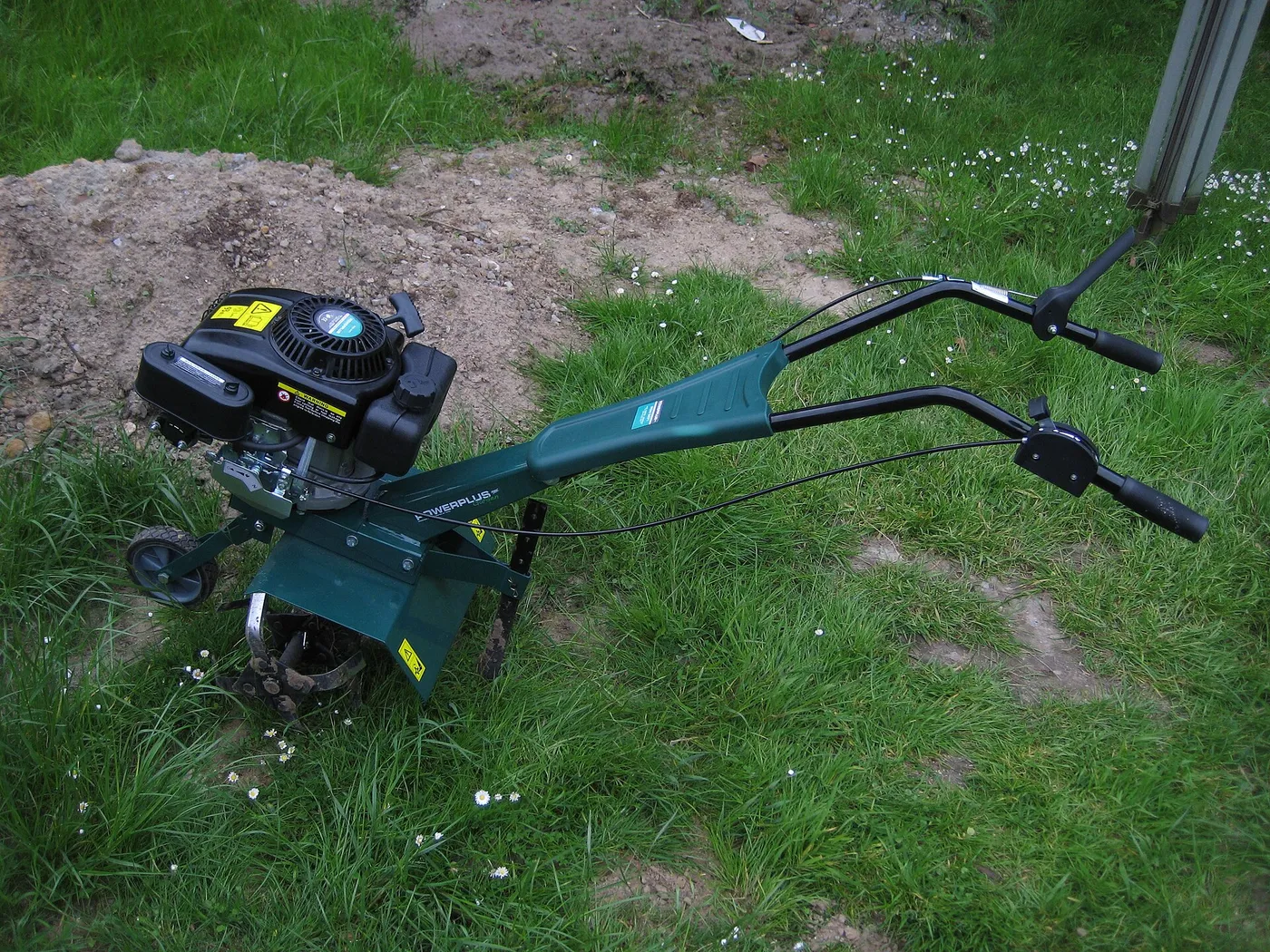
The forward motion therefore comes from the tines themselves. In loose, friable soil this works smoothly, and the machine walks along at a controllable pace. In firm or compacted soil, the tines bite and surge, and the operator holds the handles back to keep it from lunging or digging a deep trench.
Front-tine machines are typically lighter and simpler, with fewer parts. Many small electric and cordless tillers use this layout, because the simple mechanism suits a small motor. The result is a machine that is easy to store and manoeuvre in tight spaces, but less forgiving in hard ground.
How a rear-tine tiller works
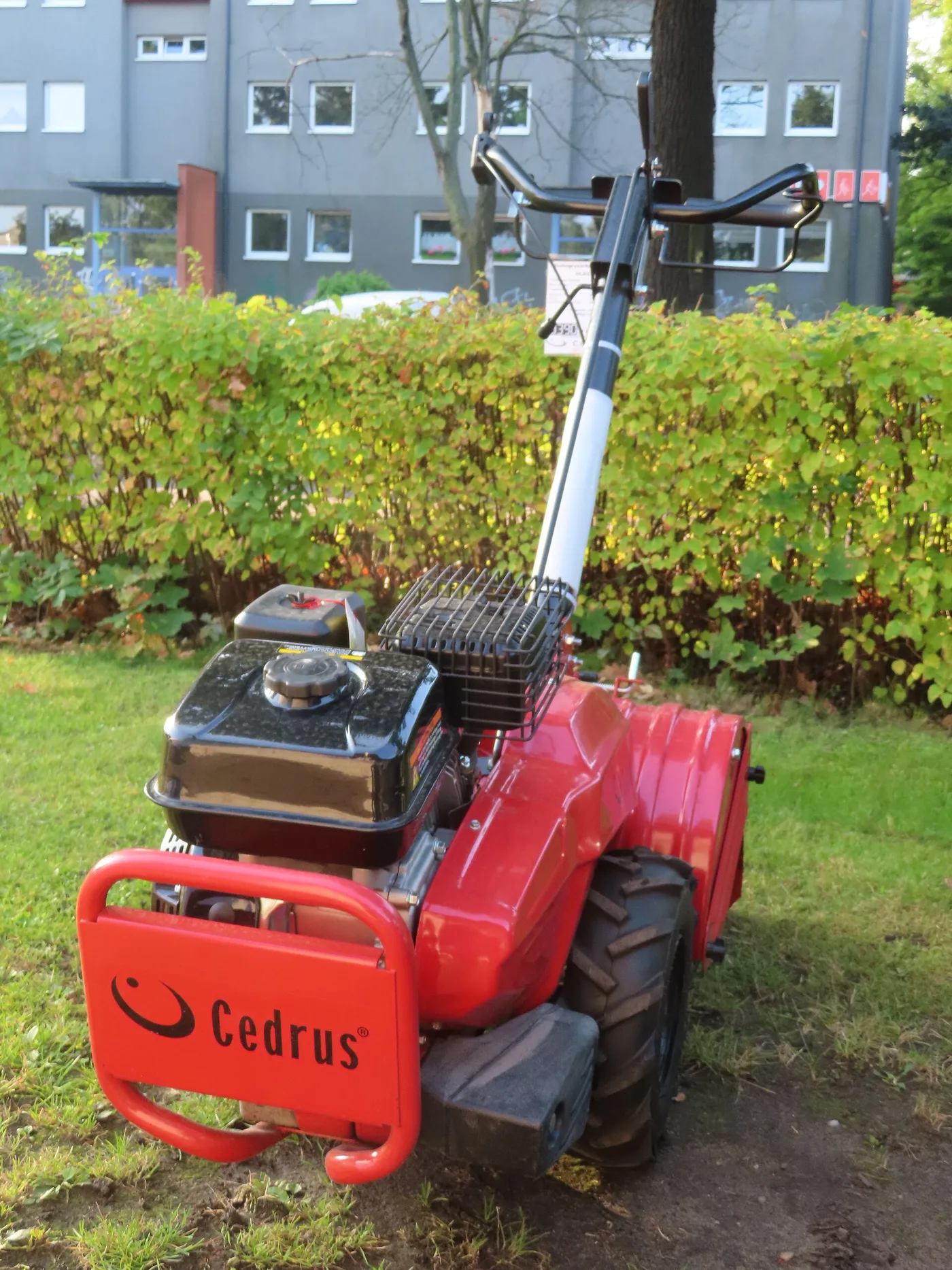
On a rear-tine tiller, the tines sit behind the wheels, and the wheels are powered by a separate drive. The machine moves forward under its own power, with a transmission that offers speed settings and often reverse. The tines are free to concentrate on digging, because they are not responsible for propulsion.
Many rear-tine machines offer a choice of tine rotation. Forward-rotating tines turn in the direction of the wheels, producing a smooth, shallow tilling that suits loose soil and seedbed preparation. Counter-rotating tines turn the opposite way, biting harder and digging deeper into hard soil, at the cost of more demand on the operator.
The result is a heavier, more stable machine with much better control. The weight helps the tines penetrate, and the powered wheels let you set a steady pace regardless of soil resistance. It is the machine of choice for large plots, new ground and compacted soil.
Side-by-side comparison
| Factor | Front-tine | Rear-tine |
|---|---|---|
| Tine position | In front of the wheels | Behind the wheels |
| What pulls the machine | The tines themselves | Powered wheels |
| Weight | Lighter, easier to lift and store | Heavier, needs a ramp or help to load |
| Control in hard soil | Surges, takes effort to hold back | Steady, powered drive and weight help |
| Depth capability | Shallower, best for loosened soil | Deeper, can break new ground |
| Turning in tight spaces | Easier, smaller footprint | Wider turns, bulkier |
| Typical use | Small gardens, raised beds, cultivation between rows | Large gardens, new beds, compacted or clay soil |
| Complexity | Simpler, fewer parts | More parts, transmission to maintain |
Soil condition decides more than anything
Soil type is the biggest factor. Loose, previously worked soil, such as an established vegetable bed, offers little resistance. A front-tine machine walks through it easily and does a perfectly good job of preparing a seedbed. In that case the rear-tine's extra capability goes unused.
Hard, compacted, rocky or heavy clay soil is where front-tines struggle. The tines bounce on the surface or surge forward, and you end up fighting the handles. The tines also tend to work shallowly, because the machine rides up. A rear-tine machine uses weight and powered wheels to keep the tines in the ground at a steady pace.
Breaking new ground, turning over sod, and working a plot that has not been dug before are classic rear-tine jobs. With a front-tine, such work involves multiple passes and a lot of wrestling. Some owners go over new ground in stages with a front-tine, taking a little more depth each pass, and that works for small areas.
Moisture matters as much as type, because wet clay clumps and dry clay turns to bricks. We cover how to judge soil readiness in the tilling guide.
Garden size and workload
Size affects the answer. A few raised beds or a plot of a few hundred square feet is well within the reach of a front-tine tiller, whether electric, cordless or small gas. The lighter machine is quicker to take out and put away, which helps if you use it only twice a year.
A large vegetable garden, a market plot or a wide planting area works better with a rear-tine. The wider tilling path and powered drive cut the time and the effort. Operators working for hours benefit from the steadier, less tiring operation.
Between the two is a grey area of medium gardens, where either could do. Consider the soil and your strength. If the soil is soft and you are comfortable handling a small machine, a front-tine is fine. If the soil is firm or you want less physical effort, step up.
Control and operator effort
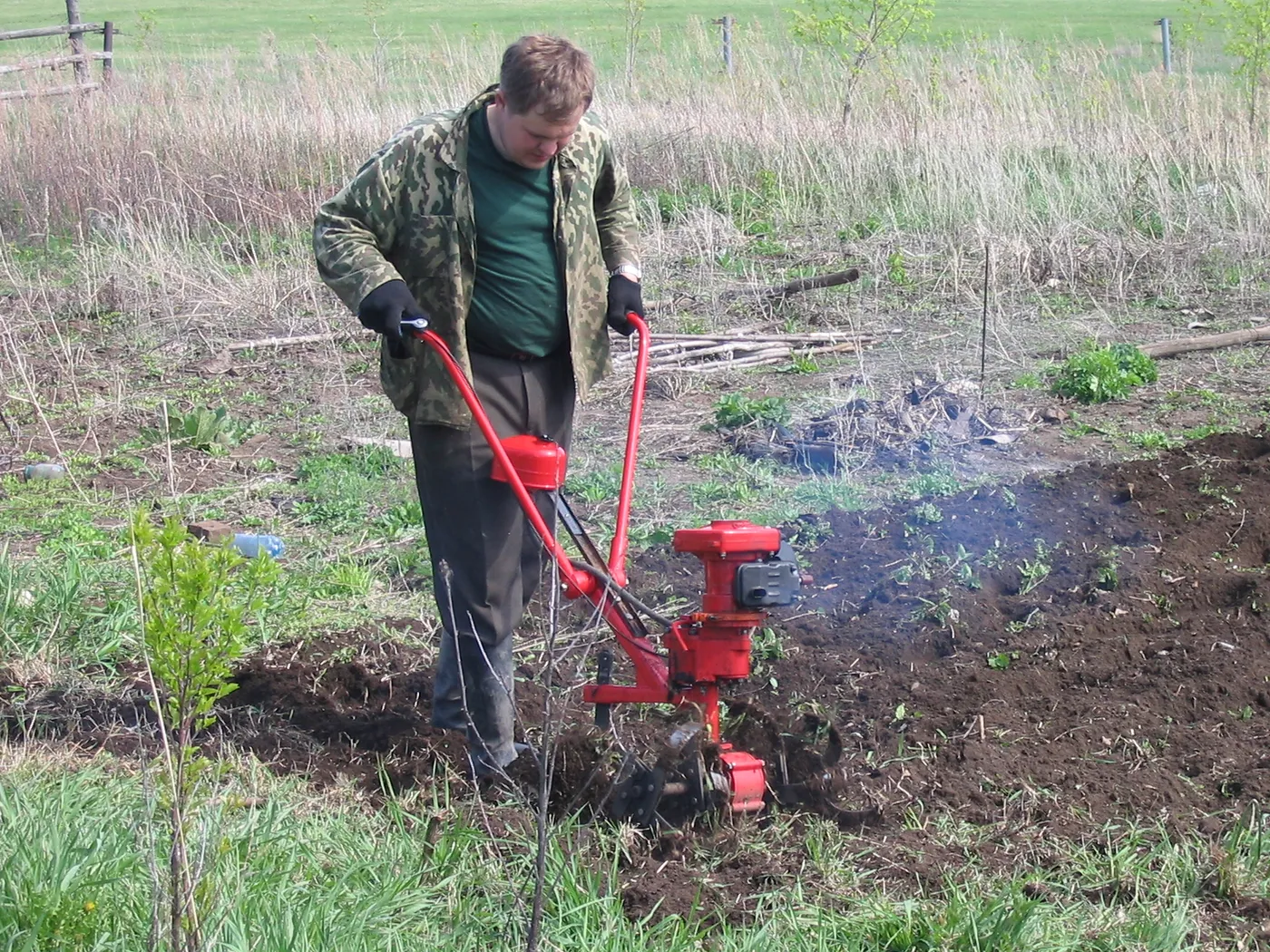
Front-tine tillers demand more from the operator. You hold the handles firmly, resist the forward pull, and steer against the machine's tendency to bounce. In firm soil, that can be tiring and, for some users, hard on the wrists and shoulders. Practise with shallow depth settings to learn the feel.
Rear-tine tillers are steadier, since the wheels set the pace, but they are heavy and wide. Turning at the end of a row takes effort, and you need strength to handle the machine safely, particularly on slopes. Reverse gear helps with manoeuvring in tight spots.
Think about who will use the machine. If more than one person will, or if the main user is not very strong, control matters. A heavy rear-tine may be unwieldy for some, and a front-tine may be exhausting in tough soil. The right choice is the machine you can control for the whole job.
Power source and size
Gas tillers dominate the rear-tine class, because the engines suit heavy work and long sessions. Front-tine machines come in gas, corded electric and cordless versions. Electric and cordless tillers are lighter, quieter and easier to start, with limits on depth and soil toughness.
For small gardens and cultivation of loose soil, electric machines are convenient. Our guides to electric tillers, small electric tillers and corded electric tillers show what these machines can do. For heavy work, gas rear-tine machines remain the standard.
Engine or motor power affects depth and working width. A bigger engine turns more tines, and more tines mean a wider path. Check the tilling width and depth specifications, which are more useful than the power figure alone.
Working width and depth
Front-tine tillers commonly have narrower working widths, in the range of one to two feet for small models, and moderate depths. Rear-tine machines often have wider paths and can reach deeper, up to several inches more than small front-tines, depending on the model and soil.
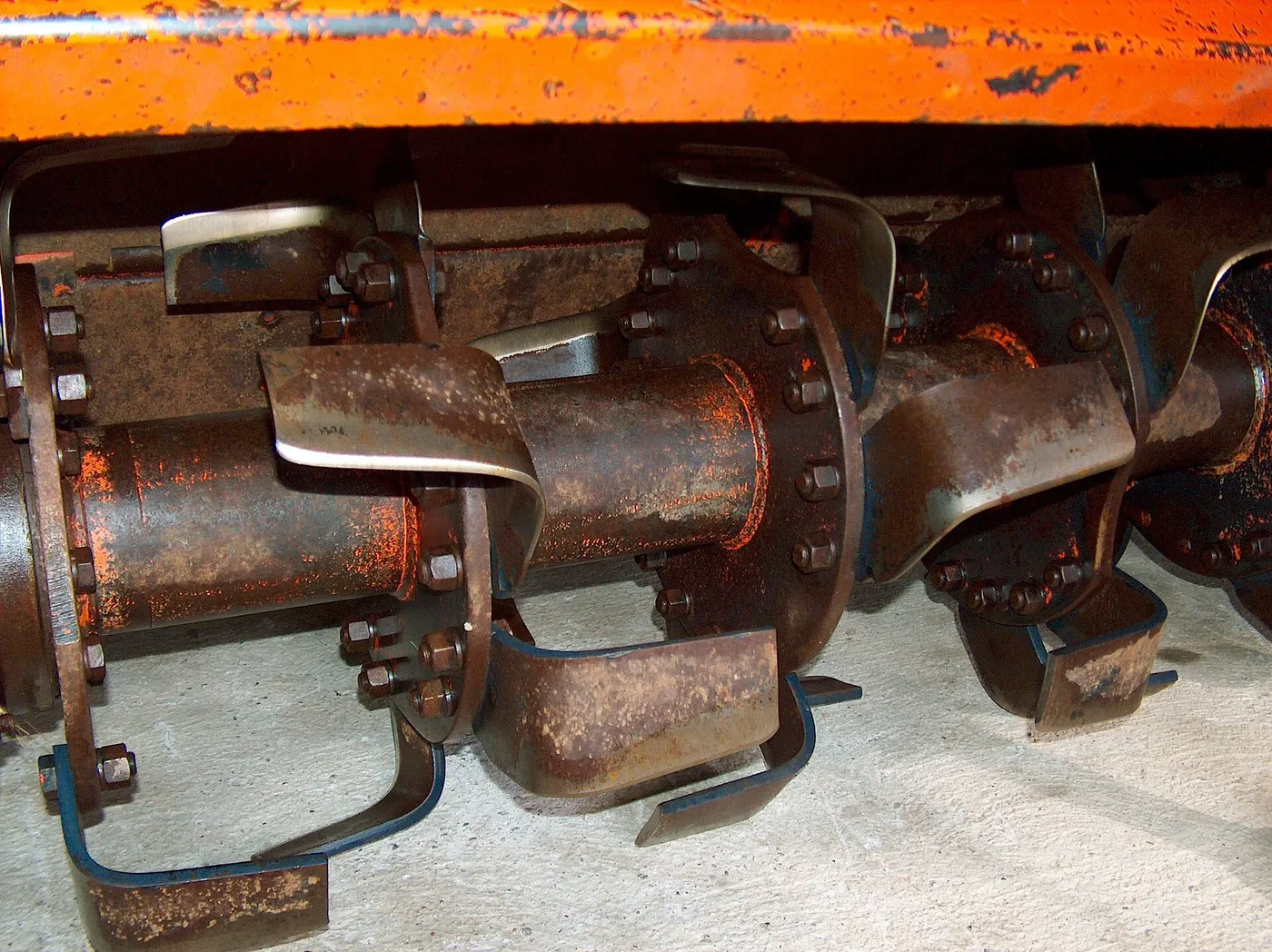
Depth is not simply a function of the design. Tine shape, machine weight, soil condition and the depth stake or bar all matter. Deep tilling of hard ground often needs several passes, with each pass going a little deeper, rather than one aggressive attempt.
Check whether the width can be adjusted. Some machines allow you to remove outer tines for narrower rows or for working between plants, which is helpful for cultivating established beds. Others offer a fixed width.
Slopes, stones and obstacles
Rocks are the great enemy of any tiller. A buried stone can stop the tines dead, throw the machine sideways and, on a front-tine, kick the whole unit toward you. Walk the plot first and remove what you can find, and expect to find more. In stony ground, work slowly at a shallow depth so that the tines ride over rather than slam into buried stones.
Slopes change the handling. A heavy rear-tine tiller on a hillside can be difficult to hold, and tilling up and down a slope encourages erosion. Work across the slope where the machine allows, and consider terracing or raised beds for steeper plots, where a light front-tine or hand tools are safer than a heavy machine.
Roots from shrubs and trees wrap around tines. Cut larger roots first with loppers or a saw, and stop to clear tines as soon as the machine labours. A tangle that winds tight around the tine shaft can damage seals, and you must always switch off and wait for rotation to stop before clearing it.
Buried hazards deserve a moment. Mark irrigation lines and cables before you start, and call the local utility locator service where buried lines might cross the plot. A tiller can cut through a shallow pipe or cable in an instant.
Attachments, row work and versatility
Many gas rear-tine machines accept attachments such as furrowers, row markers and cultivating tines. That makes them useful through the whole season: break the ground in spring, form rows, then cultivate between rows through summer. A narrow-width setting or a set of cultivator tines lets the machine work between established plants without damaging them.
Small front-tine cultivators are especially good at the in-season job. They are light enough to steer between rows, and they chop weed seedlings before they establish. For a gardener who tills the main bed once and then cultivates all summer, a small machine often does most of the work.
Think about the whole season when you buy. A machine that tills well but is awkward in narrow rows may need a second tool. A machine that cultivates well but cannot break hard ground may need an annual rental. Plan the combination that matches your calendar.
Renting, sharing and the occasional big job
Because tilling is seasonal, many owners use a machine only a few times a year. In that case, renting a heavy rear-tine for the initial break and owning a light front-tine for annual upkeep is a sensible mix. It avoids storing a big machine for eleven months and lets you use a stronger tool when the job really calls for it.
Neighbors sometimes share a tiller, which works well if you agree on maintenance and fuel. Check that the machine is the right size for each garden, and that the person using it knows how to start and stop it safely.
If you do rent, ask the staff to demonstrate the controls, tine rotation selector and any safety features, and confirm what depth the machine will reach in your soil. Dress in sturdy boots and eye protection and start with a shallow pass.
Maintenance and ownership
Front-tine machines have fewer parts, so there is less to maintain. A gas model needs the usual engine care, and the tines need cleaning and occasional replacement. Electric versions need a check of the cord, switch and motor ventilation.
Rear-tine machines add a transmission, drive belts or chains, and powered wheels, which means more servicing: lubrication, belt checks and adjustments. They also weigh more, which affects storage and transport. The compensation is durability under hard use.
For all tillers, clean soil from the tines after use, check bolts for loose fasteners, and store the machine dry. Tines wear down on hard soil, so inspect them each season. A set of sharp tines tills more easily and uses less fuel.
Noise, fuel and storage
Gas tillers are loud, and an hour of use calls for hearing protection. Electric and cordless front-tines are noticeably quieter, though the tines striking soil still make noise. A gas machine also brings fuel and oil care, and a tiller stored for most of the year benefits from stabilised fuel or a drained tank before the off-season.
Storage is a practical limit. A rear-tine tiller occupies a lot of floor space and weighs enough that you will want a ramp or a helper for loading it into a vehicle. A compact front-tine can hang on a wall hook or stand in a corner. Measure the space and think about how you will transport it before you choose.
Which should you buy
- Choose front-tine for small to medium gardens, raised beds and cultivating loose, previously worked soil.
- Choose rear-tine for large plots, breaking new ground and compacted or clay soil.
- Choose electric or cordless front-tine if you value light weight, easy starts and low noise, and your soil is soft.
- Choose gas rear-tine if you till a large area every season and want to save effort.
- Consider renting a rear-tine for a one-off job on new ground, then keep a small front-tine for upkeep.
If you maintain both a lawn and a garden, you may also find our article on spike versus plug aerators useful for the lawn side of soil compaction.
Frequently Asked Questions
What is the difference between front-tine and rear-tine tillers?
On a front-tine tiller, the tines are in front and pull the machine along. On a rear-tine tiller, powered wheels drive the machine and the tines sit behind, which gives better control and depth in tough soil.
Which tiller is better for hard or clay soil?
Rear-tine, particularly one with counter-rotating tines. Its weight and powered wheels keep the tines in the ground at a steady pace, while front-tines tend to bounce and surge.
Can a front-tine tiller break new ground?
For small areas, yes, with several shallow passes. For large plots or compacted sod, a rear-tine or a rented machine is easier and faster.
Are electric tillers front-tine?
Most small electric and cordless tillers use a front-tine layout, because it suits a small motor and a light frame. They work best in loose, previously worked soil.
What is a counter-rotating tine?
Counter-rotating tines spin opposite to the wheels, which bites harder and digs deeper into hard soil. It is more demanding to control than forward rotation, but effective on tough ground.
Is a rear-tine tiller too heavy for me?
That depends on your strength and the terrain. Powered wheels and reverse help, but the machine is wide and heavy. If you are unsure, try one in a shop or consider a rental first.
Bottom line
Choose by soil and size. Front-tine tillers are lighter and simpler, and they suit small gardens and loose soil, but they surge and bounce in firm ground. Rear-tine tillers are heavier and steadier, with powered wheels and deeper digging, which makes them the right choice for large plots and tough ground.
Check the soil moisture and the tilling depth before you start, wear protective gear and keep hands and feet away from the tines. The best tiller is the one that fits your soil, your plot and your strength.