
The four-gallon backache
A gardener buys a large backpack sprayer because bigger seemed better. Halfway through the first fill, the shoulder straps are digging in, the wand arm is tired and the person is walking in a lopsided shuffle. The tank holds plenty, and the user cannot carry it for the time it takes to empty. The sprayer is correct on paper and wrong on the lawn.
Two choices decide whether a sprayer is pleasant or miserable: the nozzle, which controls how the liquid lands, and the tank, which controls how much you carry and how often you refill. Both have less to do with price than with matching the machine to the task and the person.
This article owns the nozzle and tank questions. The soil preparation and lawn care articles in the same series, such as tilling depth and aeration, cover what happens before and after treatments.
What a nozzle does
A nozzle forces liquid through a small opening, breaking it into droplets and shaping the spray into a pattern. The opening size, shape and the pressure behind it control three things: the droplet size, the pattern width and the flow rate. Change the nozzle and you change how much liquid lands, where it lands and how likely it is to drift.
Droplet size is the least visible and one of the most important factors. Fine droplets cover a surface evenly and reach the underside of leaves, but they drift on the wind and can land where you did not intend. Coarse droplets fall quickly and resist drift, but they can bounce or run off a leaf.
A nozzle is a consumable. The orifice wears, widening and changing the output over time. A worn nozzle gives uneven coverage and uses more liquid than you think, so replace it when the spray pattern becomes streaky.
Common nozzle patterns
| Pattern | What it does | Best for | Watch for |
|---|---|---|---|
| Flat fan | A flat, wide sheet with even distribution | Lawns, weed control on open ground, even surface coverage | Overlap passes to avoid stripes |
| Hollow cone | A ring-shaped spray of fine droplets | Dense foliage, fungicides and insecticides that need thorough coverage | Drift in wind, finer droplets |
| Full cone | A solid, round spray | General spraying of shrubs and plants, spot treatment | Narrower coverage per pass |
| Adjustable cone | Twist to change from a stream to a mist | Versatile household use, spot treatment | Pattern changes can be inconsistent, harder to calibrate |
| Fine mist | Very small droplets | Indoor plants, light foliar feeding | Strong drift, not for weed killer outdoors |
| Foaming or low-drift | Coarse droplets that resist drift | Windier conditions, herbicide on lawns | May give less leaf-underside coverage |
The names vary between makers, so look at the spray photographs and the stated droplet and flow characteristics. Many household sprayers ship with a single adjustable nozzle, and upgrading to a flat fan for broadcast jobs can improve results.
Matching pattern to the job
Broad, even jobs such as treating a lawn for weeds or applying a foliar feed to a large bed call for a flat fan. It lays an even strip, and you walk at a steady pace with overlapping passes. The even distribution reduces the chance of over-applying in some spots and under-applying in others.
Dense plants, such as shrubs and vegetables with many leaves, need a cone pattern. It throws droplets in a three-dimensional cloud that reaches inside the canopy and onto both sides of the leaf. This matters for pest and disease treatments, where contact with the target is the point.
Spot treatment of individual weeds in paving or gravel suits a narrow cone or a stream, where precision matters and drift would harm nearby plants. A shield or hood on the wand improves control in windy conditions.
Whatever you spray, read the product label first. It tells you the correct application rate, the right droplet size where relevant, the protective equipment, and the weather conditions to avoid. The label is the law for pesticides and herbicides, and it overrides anything in a general guide.
Drift, wind and weather
Spray drift is the movement of droplets away from the target. It damages neighboring plants, wastes product and can expose people and pets. Fine droplets drift most, and wind speed is the main driver. Spray on calm days, and avoid the heat of midday, when droplets evaporate quickly and rise on warm air.
Keep the nozzle low and close to the target, which shortens the distance the droplets travel. A coarser droplet and a shielded wand reduce drift further. Never spray when rain is imminent, as it can wash the product off before it works.
Check the label for restrictions about wind and temperature, and follow them. A mild, still morning or evening is usually best. Keep children and pets out of the area until the spray has dried or for the period the label specifies.
Tank size and what it weighs
Water weighs about 8.3 pounds per gallon, so tank capacity converts directly to carried weight. A one gallon tank carries a little over eight pounds of liquid, and a four gallon backpack unit carries more than thirty pounds of liquid alone, before you add the weight of the sprayer itself. That is a substantial load to carry across a yard.
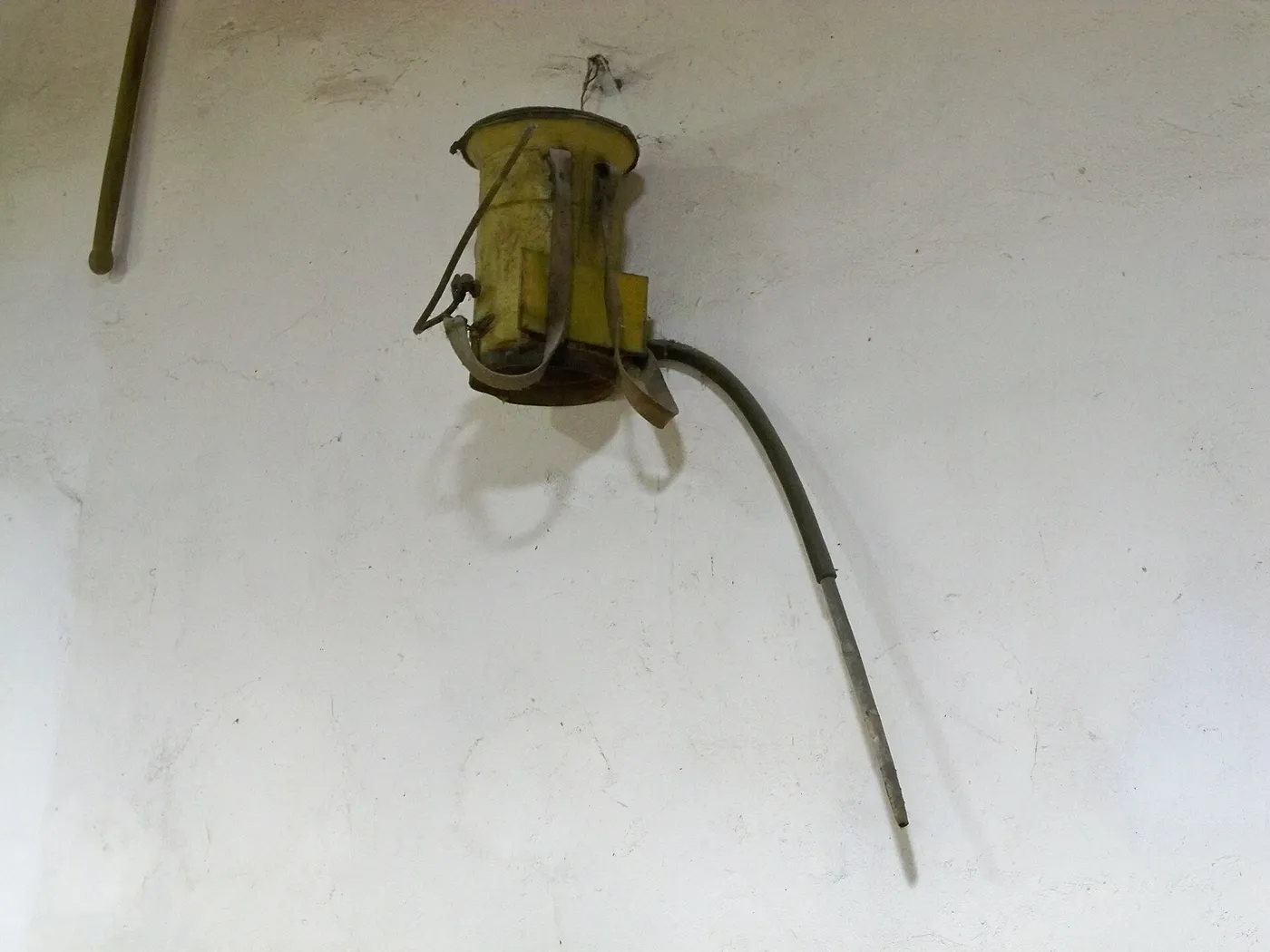
Weight affects comfort, control and how long you can keep working. A heavy tank makes you walk slowly, stoop and shift your weight, and tired users make uneven passes. A small tank is easy to carry but means more trips to refill.
| Tank size | Approximate liquid weight | Suited to |
|---|---|---|
| 1 gallon | About 8 pounds | Spot treatment, houseplants, small beds, one-handed use |
| 2 gallons | About 17 pounds | Small to medium gardens, hand-pump or shoulder-strap units |
| 3 to 4 gallons | About 25 to 33 pounds | Medium to large gardens, backpack sprayers |
| 5 gallons and above | About 42 pounds and more | Wheeled or cart-mounted units for large areas |
These figures are for the liquid only. Add the weight of the sprayer, and the pressure pump and battery on powered models. Try to hold or lift a sprayer, filled with water, before buying if you can.
Choosing a size that suits you
Start with the area you treat and the time you want to spend. A small garden of a few beds is easily handled with a one or two gallon sprayer, and refilling is quick. A large lawn or an orchard benefits from a larger tank, to avoid constant refills.
Next, consider your own strength and the terrain. If you have a bad back, or the garden is on steps and slopes, a lighter, smaller tank is wiser, even with more refills. For flat, large areas, a wheeled sprayer takes the weight off your body, though it is bulkier and harder in narrow spaces.
Think about how often you spray as well. Occasional use favours a small, easy-to-store unit, and regular use justifies a bigger, better-built one. If you use more than one product, consider a separate sprayer for herbicides, to avoid cross-contamination on edible plants. You can compare options in our roundups of garden sprayers, 1 gallon garden sprayers and wheeled garden sprayers.
Sprayer types and how they affect nozzle choice
Hand-pump pressure sprayers are the classic garden unit. You pump the handle to build pressure in the tank, then spray until the pressure drops and you pump again. Pressure varies, so output varies, and consistency depends on the operator. Our guide to pump garden sprayers covers them in detail.
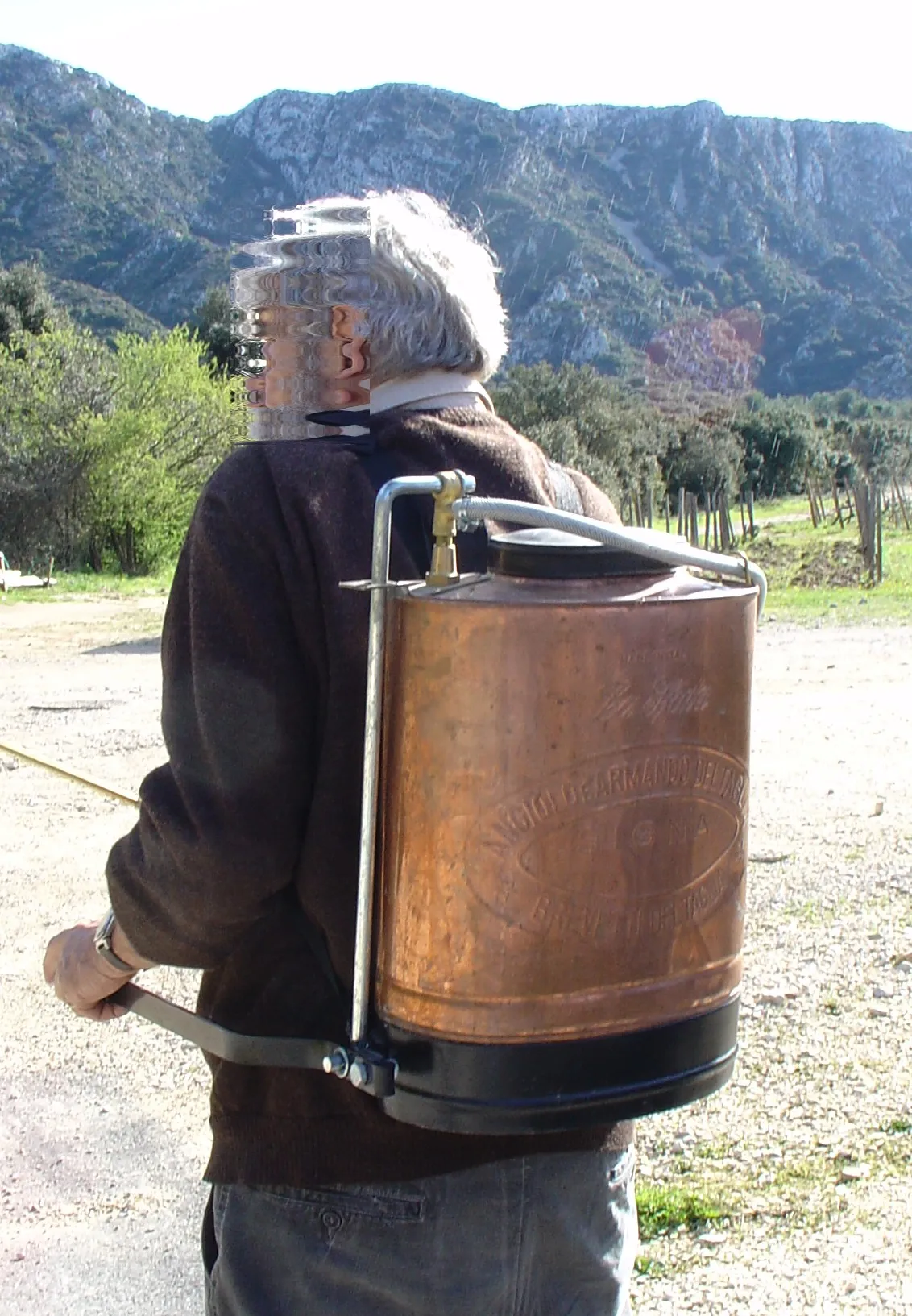
Backpack sprayers carry a larger tank on the back and use a lever pump or a battery pump. Battery models deliver steady pressure, which makes nozzle output more consistent and calibration easier. They are popular for lawns and large gardens, but the full tank is heavy.
Wheeled and cart sprayers take the weight off your back and carry large tanks, often with a longer hose and wand. They suit large flat areas but are awkward on slopes and in tight spaces.
The pressure behind the nozzle matters. Most nozzles are rated for a pressure range, and operating outside it changes the droplet size and pattern. A hand pump that drops pressure quickly will give coarser droplets at the end of each pump cycle, so keep pressure steady.
Calibrating your sprayer
Calibration means finding out how much liquid your sprayer applies over a known area, so that you can mix the product correctly. Without it, you guess, and guessing either wastes product or under-treats. It takes about ten minutes and is worth doing once for each nozzle and each sprayer.
- Mark out a test area of known size, such as a few hundred square feet, on a driveway or lawn.
- Fill the tank with plain water, and pressurise it to your normal working pressure.
- Spray the test area at your normal walking pace, with your normal overlap.
- Measure how much water you used, by refilling to the starting level and noting the amount.
- Scale that to your treatment area, and use the label's rate to work out how much product to add per tank.
Repeat for a second run to check consistency. If the numbers are very different, your pace or pressure is not steady. Recalibrate if you change the nozzle, because a different nozzle gives a different output. Always follow the product label's mixing instructions, which tell you the rate per area or per gallon.
Battery versus manual pumping
Manual pumping is simple and cheap. It has nothing to charge, and there is little to go wrong beyond seals. The downside is inconsistent pressure and arm fatigue on long jobs. If you spray a few times a year in short sessions, a manual sprayer is perfectly adequate.
Battery sprayers use an electric pump to keep pressure steady. That gives a more consistent droplet size and pattern, which makes calibration reliable and results more even. They also reduce fatigue, which matters for large lawns and regular use. The trade-offs are the weight of the battery, the need to charge, and more parts to maintain.
Think about what you will do with the sprayer. For regular weed control, feeding a big lawn or treating an orchard, a battery backpack sprayer is a real time saver. For occasional treatments in a small garden, a good manual unit costs less and does the job. Pressure consistency is the main thing a battery model buys you, and it matters more with some nozzles than others.
Wand, hose and ergonomics
The wand and the trigger are where you spend your time. A longer wand lets you reach under shrubs and across beds without bending, while a short one is easier to control for small jobs. Look for a trigger with a lock, so you can pause without releasing the grip, and a comfortable handle that does not tire your hand.
The hose matters on backpack and wheeled units. A flexible, kink-resistant hose of a sensible length keeps the wand moving freely. A short hose forces you to stand close to the tank, and a very long one drags and tangles. Check that the connections are secure, since leaks at fittings are a common failure.
Straps and harnesses make a big difference on backpack sprayers. Wide, padded straps and a chest strap spread the load, and adjustable height helps match different users. If more than one person will use the sprayer, check that it adjusts easily. An uncomfortable harness shortens the time you can work and affects your spray pattern.
Finally, check the fill opening. A wide opening with a filter basket makes filling easy and keeps debris out of the tank, while a tiny opening invites spills. Clear markings on the tank help you fill to the right level without guessing.
Maintenance and cleaning
A sprayer that is cleaned after every use lasts for years, and one that is not fails with a clogged nozzle or a perished seal. Empty the tank, rinse it with clean water, and spray clean water through the hose, wand and nozzle until it runs clear. Do this outdoors, away from drains and water sources, and dispose of rinse water as the product label advises.
Clean the nozzle with a soft brush or a wooden toothpick, not a metal pin, which enlarges the orifice. Check the filter screens in the tank or the wand and rinse them. Check the seals and the O-rings, and lubricate them with a silicone grease where the manufacturer recommends.
Release pressure before you open a pressurised tank, and store the sprayer with the lid loose and the tank empty and dry. For battery models, store the battery as the manufacturer advises. In cold climates, drain fully before freezing weather to avoid cracked parts.
Common mistakes
- Choosing a large tank without thinking about the weight when full.
- Using a fine mist nozzle for herbicide on a breezy day.
- Skipping calibration and mixing product by guesswork.
- Using the same sprayer for herbicide and for edible crop treatments without thorough cleaning, or at all.
- Poking a clogged nozzle with a metal pin.
- Letting pressure drop and then wondering why the spray pattern changes.
Frequently Asked Questions
Which nozzle is best for a garden sprayer?
It depends on the job. A flat fan suits even coverage on lawns and open ground, a cone suits dense foliage, and an adjustable tip suits spot treatment. Choose the pattern that matches the target.
How heavy is a full sprayer tank?
Water weighs about 8.3 pounds per gallon, so a one gallon tank holds a little over 8 pounds, and a four gallon tank holds more than 30 pounds before the weight of the sprayer is added.
Why does my spray pattern change as I spray?
On a hand-pump sprayer, pressure drops as you spray, which changes the droplet size and pattern. Pump regularly to keep pressure steady, or consider a battery sprayer for more consistent output.
How do I calibrate a garden sprayer?
Spray plain water over a measured area at your normal pace, measure how much you used, and scale that to your treatment area. Use the product label's rate to calculate how much to add per tank.
Can I use one sprayer for everything?
It is better to keep a separate sprayer for herbicides, since residues can harm other plants, and label it clearly. Use a different one for fertilisers and treatments on edible plants.
How do I reduce spray drift?
Spray on calm days, hold the nozzle low and close to the target, use a coarser droplet or a low-drift nozzle and a shield, and follow the label's weather restrictions.
Bottom line
Choose the nozzle for the job and the tank for the person. Flat fan for even coverage, cone for dense foliage and a fine adjustable tip for spot work. Remember that water weighs about 8.3 pounds per gallon, so a bigger tank means a heavier load, and pick the size you can carry comfortably for the whole task.
Calibrate your sprayer once, follow the product label for rates and protective equipment, spray in calm weather and clean the equipment after every use. A well-matched sprayer saves product, time and your back.