
Amazon affiliate links - we earn a commission.Affiliate disclosure

Buying guide · 12 min read · Updated 2026-11-13

Best 220V Car Power Inverters (2026)

Four 12V-to-220V car power inverters compared, from a plug-in 200W unit to heavy 3000W to 6000W boxes, with honest notes on peak versus continuous ratings.

James MillerBy James MillerLead Machine Editor4 machines comparedSpec-sheet verified
Best 220V Car Power Inverters

At a glance

Our top picks

Side by side

Spec comparison

MachineOutput voltageAC socketUSBPeak ratingDisplay
3000W 12V to 220V/240V inverter, universal outletBest Overall3000W 12V to 220V/240V inverter, universal outlet220V to 240V ACMulti-country universalDual portsn/an/a
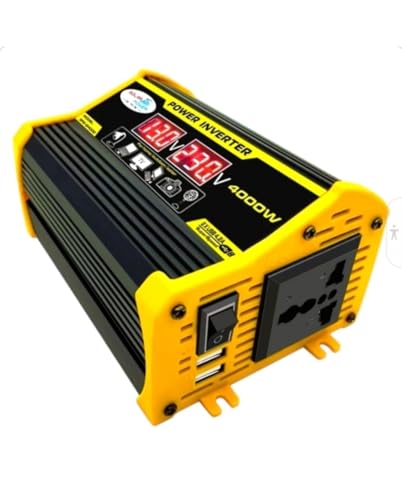
4000W peak inverter, 12V to 110V/220V, LED displayBest Display4000W peak inverter, 12V to 110V/220V, LED display110V and 220VUniversalDual fast charging4000WLED voltage, wattage, battery
6000W peak 12V to 110V/220V inverter, LCD fault codesBest High-Capacity Headline6000W peak 12V to 110V/220V inverter, LCD fault codes110V and 220VUniversalDual ports6000WLCD voltage, load, fault codes
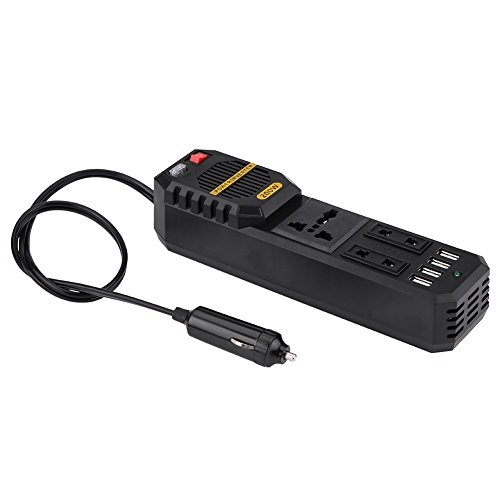
200W 12V to 220V plug-in inverter, 4 USB portsBest Value200W 12V to 220V plug-in inverter, 4 USB ports220V ACn/a4 portsn/an/a

A car inverter built for European mains voltage solves a different problem from the common North American type. It lets a vehicle battery run appliances made for the higher mains standard used across most of the world, which matters for imported tools, European camping gear and some foreign-spec gadgets.

The category is also where marketing numbers run wildest. Many listings lead with a huge headline wattage that is really a peak figure, so the careful buyer reads the continuous rating, the connection method and the protection circuit before the label.

Before you buy

6 Criteria to Look For Before Buying a 220V Car Power Inverter

  1. 01

    True 220V versus dual-voltage claims

    A unit that outputs 220V to 240V is not the same as a 110V inverter. The 3000W universal unit and the 200W plug-in state 220V output, while the 4000W and 6000W units list both 110V and 220V. Before connecting an appliance, confirm the output voltage on the manual, because feeding 220V gear with 110V or the reverse damages it.

  2. 02

    Continuous versus peak watts

    Several listings here lead with surge numbers: 3000W, 4000W and 6000W. A 12V battery cannot sustain 6000W, since that would need around 500A. Ask what the unit delivers continuously, and size against the load you will actually run. A realistic target for these boxes is about half the headline figure or less.

  3. 03

    Socket type and adapters

    A universal socket accepts US, European and other plug styles without an adapter, which is the main reason to prefer the 3000W unit, the 4000W unit and the 6000W unit. A fixed 220V socket, like the one on the 200W unit, needs the right plug. An adapter on top of a high-load outlet adds resistance, so avoid stacking them.

  4. 04

    Lighter plug limits

    A lighter socket fuse sits at 10 to 15A, so 12V supports only 120 to 180W through it. That is why the 200W plug-in unit is limited to laptops and chargers. Anything bigger must clamp straight to the battery with a fuse, and the 3000W, 4000W and 6000W units are all in that class.

  5. 05

    Battery cable and fuse

    At 12V, current is watts divided by 12 plus losses. A 1500W load pulls about 140 to 150A, so cable must be thick and short. Voltage drop in cable makes an inverter shut off on low voltage even with a healthy battery. The LCD on the 6000W unit shows fault codes that help catch this.

  6. 06

    Waveform and what it runs

    None of these listings state a pure sine wave, so assume modified sine. That is fine for heaters, lights and chargers, but a motor or a sensitive power supply may run hot. If you need to run a 220V fridge or an imported power tool, look for a unit that clearly states pure sine, which none in this lineup does.

Detailed reviews

The 4 best 220v car power inverters, explained

01
3000W 12V to 220V/240V inverter, universal outlet
12V DC to 220/240V3000W headlineUniversal outletDual USB
Check price on Amazon
Best for: Travelers and campers with 220V appliances who want one socket that takes any plug.

This is a purpose-built 220V to 240V inverter, not a 110V box with a different sticker. The listing states a 12V DC input and 220V to 240V AC output, and it adds a universal AC socket that accepts US, European and other plug styles, which saves carrying adapters. For a traveler with a European appliance, that matters more than any other single feature here.

The 3000W figure is described as surge capacity, so read it as a peak rating. The continuous rating is not given in the data, and a unit like this often delivers about half of the headline number continuously. Until you see a continuous figure, plan around roughly 1500W, which still runs a fan, a laptop, a small kettle on short bursts, or a drill. Size every purchase to what the manual lists as continuous.

Ownership is about cable and fuse discipline. At 12V, 1500W draws about 140 to 150A, so use heavy cable, keep the run short and fuse near the battery. The universal socket also loosens with plug wear, so test grip occasionally. Overall it is the most versatile 220V option here.

What works

  • Dedicated 220V to 240V output, not a 110V box
  • Universal multi-country socket avoids plug adapters
  • Dual USB ports cover phones without an AC brick
  • Heavy-duty design suits a vehicle or boat battery

Watch out for

  • 3000W figure is a surge number, not continuous
  • Waveform is not stated, so assume modified sine
  • Needs thick cable and a fuse for real loads

Spec sheet

Output voltage
220V to 240V AC
Headline rating
3000W surge
AC socket
Multi-country universal
USB
Dual ports
Input
12V DC
02
4000W peak inverter, 12V to 110V/220V, LED display
Peak 4000W110V/220V outputLED displayDual USB
Check price on Amazon
Best for: Buyers who want to watch voltage and load on a screen while running mixed gear.

This unit's selling point is information. A bright LED shows voltage, wattage and battery level, so you can see the load you are placing on the battery as you plug things in. In a car, where a voltage sag from a thin cable can masquerade as a dead inverter, that readout is the difference between a quick fix and an hour of guessing.

The listing leads with a peak rating of 4000W, which is the number of an unconfirmed startup allowance and not a running power. Continuous output is not stated, so treat it as a mid-sized unit. It also lists both 110V and 220V output, which can mean either a selectable setting or loose marketing, so read the manual before you plug in a 220V appliance. It is a larger and likely heavier box than the plug-in unit below.

For ownership, keep it ventilated and avoid burying it under cargo. Heavy loads produce heat, and a fan that is blocked will throttle output. If the display shows low battery voltage, stop and start the engine. Compared with the 3000W universal unit, you get a readout but a less clear promise about socket compatibility.

What works

  • LED shows voltage, wattage and battery level
  • Offers both 110V and 220V output on one unit
  • Universal socket reduces adapter clutter
  • Dual USB ports charge phones and tablets

Watch out for

  • Headline 4000W is a peak figure, not continuous
  • Output mode labeling is loose, so read the manual
  • Larger and heavier than plug-in alternatives

Spec sheet

Peak rating
4000W
Output voltage
110V and 220V
Display
LED voltage, wattage, battery
USB
Dual fast charging
AC socket
Universal
03
6000W peak 12V to 110V/220V inverter, LCD fault codes
Peak 6000W110V/220V outputLCD fault codesUniversal socket
Check price on Amazon
Best for: Heavy-use owners who want a large reserve and an LCD that explains faults.

The 6000W number is the biggest in this guide and the least meaningful. It is described as high power conversion with an LCD showing voltage, load power and fault codes. A realistic reading is that 6000W is the surge allowance, and the continuous rating is far lower, probably well under half. Nobody should plan to run 6000W from a 12V battery, because that would demand around 500A.

Where it helps is the diagnostic screen. Fault codes mean a shutdown tells you why, whether it was overload, over-temperature or low voltage. That turns a mystery into a checklist and helps owners learn what their vehicle can actually deliver.

The ownership caveat is honesty about size. If you need only a laptop or a lamp, a 6000W unit idles at a higher draw than a small one, so it wastes battery. The 200W plug-in unit below is the sane choice for light work, and the 3000W unit is the sane choice for heavy work. Treat this one as a convenience pick for people who prefer a large reserve and a good display.

What works

  • LCD shows voltage, load and fault codes
  • Large reserve suits short heavy loads
  • 110V and 220V output on one unit
  • Universal socket accepts many plug types

Watch out for

  • 6000W is a peak figure that no 12V system can sustain
  • Higher idle draw than a small unit
  • Continuous rating and waveform are not stated

Spec sheet

Peak rating
6000W
Output voltage
110V and 220V
Display
LCD voltage, load, fault codes
USB
Dual ports
AC socket
Universal
04
200W 12V to 220V plug-in inverter, 4 USB ports
200W12V to 220VPlug-in4 USB ports
Check price on Amazon
Best for: Drivers who need a 220V outlet for a laptop charger or a camera battery only.

This is the simple answer for a small 220V need. It plugs into the lighter socket, gives a 220V AC outlet and four USB ports, and has a cooling fan built in. It sits at a mid tier of price, below the heavy units but not the cheapest across all inverters. For a European laptop charger or a camera battery charger, it does the job without cables to the battery.

The limit is the lighter socket, which is fused at 10 to 15A. That caps real output near 120 to 180W regardless of the 200W label, so a laptop works but a heater or a drill does not. The fan is a small spinning part, and it can whine in a quiet cabin. Do not leave it plugged into a live socket when the engine is off.

Upkeep is tiny: keep the vent clear, avoid the dashboard in the sun and unplug it when you park. If it stops working, check the car's fuse first, since the socket fuse is more likely to be the culprit than the inverter. Against the 3000W unit above, it is the one to buy for light jobs and the one to leave at home when you need real power.

What works

  • Plugs into the lighter socket with no battery cables
  • Real 220V outlet plus four USB ports
  • Built-in fan keeps a small unit cool
  • Small enough to keep in a glove box

Watch out for

  • Real output is limited by the socket fuse near 120 to 180W
  • Cannot run heaters or power tools
  • Fan can whine in a quiet cabin

Spec sheet

Rating
200W
Output voltage
220V AC
Connection
Cigarette lighter
USB
4 ports
Cooling
Built-in fan

Spec sheet decoder

What the numbers on the box really mean

The specs manufacturers lead with, translated into what they tell you about real-world performance.

Output voltage

The AC voltage the inverter produces, 220V to 240V for most of the world and 110V to 120V for North America. It must match the appliance.

Watch forThe 4000W and 6000W units list both, so read the manual to find how to select.

Peak versus continuous

Peak covers a startup spike of a second or two, while continuous is the running limit. A listing with only a peak number is hiding the real rating.

Watch forThe 3000W, 4000W and 6000W figures here are surge or peak.

Universal socket

A socket with slots for several plug styles. It is a convenience feature, not a safety rating.

Watch forThe 3000W unit leads with this feature.

Fault codes

Letters or numbers on a display that identify why a shutdown occurred. They shorten troubleshooting.

Watch forThe 6000W unit lists fault codes on its LCD.

Input voltage

The DC supply the inverter expects, 12V on all four units here. A 24V truck needs a different model.

Watch forThe 3000W unit states a 12V DC input, so do not use it on a 24V system.

Methodology

How We Evaluated These 220V Car Power Inverters

Output voltage clarity

We favored listings that state 220V to 240V output plainly. The 3000W and 200W units do so directly, while the 4000W and 6000W units blur the line with a dual-voltage claim. A unit that makes you guess scores lower.

Honesty of power ratings

We looked at whether the headline number was continuous or peak. The 3000W, 4000W and 6000W units lead with surge figures. We rewarded readability and penalised inflated numbers.

Connection method

We checked whether each unit plugs in or clamps on, and whether the stated rating fits the connection. The 200W plug-in is consistent with a lighter socket, while the larger units require a battery connection.

Diagnostics and protection

Screens matter when a shutdown strands you. The 4000W unit has an LED readout and the 6000W unit has an LCD with fault codes. These made troubleshooting simpler on paper.

Ownership and storage

We looked at daily reality: fan noise, vent clearance and how likely a user is to leave a unit plugged in. The 200W unit is the lowest burden, and the 6000W unit has the highest idle draw.

Decision guide

How to Choose the Right 220V Car Power Inverters

By Load

SituationPickWhy
Laptop or camera charger200W plug-inLighter socket is enough
Fan, small kettle or drill3000W universalHeavy-duty output with a universal socket
Mixed gear with monitoring4000W peak unitLED shows voltage and wattage
Large reserve with diagnostics6000W peak unitLCD with fault codes
European appliance on a trip3000W universalMulti-country socket

By Budget

SituationPickWhy
Lowest outlay200W plug-inMid tier, but the cheapest here for a real 220V outlet
Entry heavy-duty3000W universalPurpose-built 220V at a moderate tier
Upper tier with display6000W peak unitLCD and large reserve
Highest tier with LED4000W peak unitDisplay and universal socket
Light use only200W plug-inDo not pay for capacity you cannot use

Plug-in vs Battery Clamps

Plug-in

The 200W unit sits in the lighter socket and delivers a few hundred watts at best. It suits chargers and laptops, and it is the easiest to store and remove.

Battery clamps

The 3000W, 4000W and 6000W units must connect to the battery. That unlocks real power but demands heavy cable, a fuse and a ventilated mounting spot.

Choose plug-in for small chargers, clamps for anything that heats or spins.

Display and Diagnostics

SituationPickWhy
Need fault codes6000W peak unitLCD shows voltage, load and codes
Want a simple readout4000W peak unitLED shows voltage and wattage
No display needed3000W universalFewer parts to fail
Light use with no display200W plug-inNothing to diagnose
Long cable with voltage drop6000W peak unitCode identifies low voltage

For European Appliances Specifically

Look for

A stated 220V to 240V output, a universal or matching socket, and a continuous rating above your appliance's draw. A 1000W kettle needs roughly 85A from the battery, so cable and fuse matter. Never run an appliance on the wrong voltage.

In this comparison

The 3000W universal unit is built for this use, with a multi-country socket and a 220V to 240V output. The 200W plug-in unit suits a small charger from a European laptop.

When to Spend More

Spend more if

You need a fault-code display, a larger reserve or a universal socket. The 4000W peak unit and 6000W peak unit add information, and the 3000W unit adds socket flexibility.

Save if

Your load is a laptop or a camera charger. The 200W plug-in handles that, and no heavy cable or fuse is required.

Ownership

Maintenance schedule

The upkeep that decides whether this machine lasts two seasons or ten.

TaskIntervalWhy it matters
Check clamps and cablesEvery 3 monthsLoose clamps cause heat at high current. Re-tighten and inspect the cable jacket.
Clear fan ventsEvery 3 monthsDust blocks airflow and cuts output. Use compressed air from the outside.
Test the socket gripEvery 6 monthsA universal socket loosens with wear. A loose plug arcs and heats the contacts.
Verify the output voltageOnce a yearUse a multimeter or a known-rated appliance to confirm 220V to 240V before connecting valuable gear. Cheap units sometimes drift high or low under load, which is hard on motors and chargers.
Unplug when parkedEvery stopMany lighter sockets stay live and drain the battery. Remove plug-in units after use, and never leave the larger clamp-on units connected to a battery you will not touch for weeks.

FAQ

Frequently Asked Questions

Can a 110V inverter run a 220V appliance?

No. A 110V inverter cannot supply a 220V appliance, and the appliance will not run correctly. Buy a unit that states 220V to 240V output, such as the 3000W universal unit. A step-up transformer exists for the opposite problem, but it is bulky and not a sensible add-on in a vehicle.

Why are the wattage numbers so high on these listings?

Many list the surge or peak figure, which lasts a second or two. Continuous output is the real rating and is usually well below the headline number. If a listing never gives a continuous figure, ask the seller or choose a different unit, because the missing number is the one that decides what you can run.

Do I need a transformer or adapter?

A universal socket removes most adapter needs, but a stacked adapter on a high-load outlet adds resistance. Choose a socket that matches your plug where possible. Also check that the socket grips the plug firmly, since a loose pin heats up under load and can melt the housing.

Can the 200W unit run a hair dryer?

No. A hair dryer draws far more than a lighter socket can deliver. Keep the 200W unit for chargers and laptops. A hair dryer is a heating element drawing well over 1000W, which needs a heavy battery-connected unit and a fuse sized for it.

What battery do I need?

A starter battery with the engine running is fine for short loads. A deep-cycle battery is better for long use. At 1500W the draw is about 140 to 150A, which flattens a small battery in minutes. Running the engine while the inverter works keeps the alternator supporting the load, which is the safest way to use any of the large units here.

Is pure sine available in 220V car inverters?

Yes, but none in this lineup states it. If you need to run motors or sensitive electronics, search for a 220V pure sine model and confirm the stated continuous rating. Expect to pay noticeably more for a true pure sine design, and expect the box to be physically larger because the circuit needs more heavy components.

Bottom line

The short version

Browse more 220v car power inverterson Amazon →
James Miller, Lead Machine Editor

About the author

James Miller

Lead Machine Editor, MachineFanatic

James Miller leads MachineFanatic's buying guides, turning spec sheets, manuals and owner feedback into clear verdicts on power tools, outdoor power equipment, shop machines and kitchen machines.

More from James →

Keep reading

Related guides