

Amazon affiliate links - we earn a commission.Affiliate disclosure

Buying guide · 13 min read · Updated 2026-11-13

Best 3500 Watt Solar Generators (2026)

Six 3600W class solar generators compared on real capacity, solar input, expandability and weight, for outage backup and RV use without a fuel generator.

James MillerBy James MillerLead Machine Editor6 machines comparedSpec-sheet verified
Best 3500 Watt Solar Generators

At a glance

Our top picks

Side by side

Spec comparison

MachineCapacityAC outputExpansion
Jackery HomePower 3600 Plus 3584Wh with 2x200W panelsBest OverallJackery HomePower 3600 Plus 3584Wh with 2x200W panels3584Wh LFP3600W, 7200W in parallelup to 21kWh
Jackery HomePower 3000 3072Wh with 2x200W panelsBest UPS BackupJackery HomePower 3000 3072Wh with 2x200W panels3072Wh LFP3600W, 7200W surgen/a
Pecron F3000LFP 3072Wh 3600W LiFePO4Best Value Home BackupPecron F3000LFP 3072Wh 3600W LiFePO43072Wh LiFePO43600W pure sinen/a
ABOK Ark3600 3840Wh with 400W panel, TT-30 portBest for RVsABOK Ark3600 3840Wh with 400W panel, TT-30 port3840Wh LiFePO43600W rated, 7200W peakup to 11520Wh
ECOGREAT PowerMax 3600 PE 2016Wh with 200W panelLightest 3600W PickECOGREAT PowerMax 3600 PE 2016Wh with 200W panel2016Wh LiFePO43600Wn/a
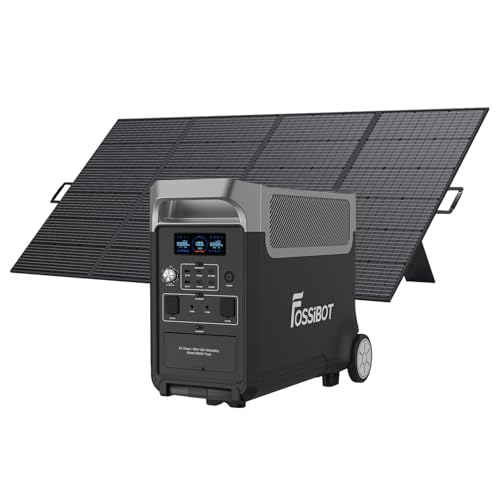
FOSSiBOT F3600 Pro 3840Wh with 420W panelBest Big Panel BundleFOSSiBOT F3600 Pro 3840Wh with 420W panel3840Wh LiFePO43600W pure sineExpandable pack

A 3,500 watt class station is the point where a battery can stand in for a small gas generator. It can start a well pump, run a fridge and freezer, a microwave and a window air conditioner at the same time, and it does so without fumes, so it can sit in a garage or a living room.

The catch is that the inverter rating is only half the story. These machines differ in how much energy they hold, how fast they refill from solar, whether they can be stacked for more capacity and how heavy they are to move. Those four things decide whether one suits an outage, an RV or a job site.

Before you buy

6 Criteria to Look For Before Buying a 3500 Watt Solar Generator

  1. 01

    Energy versus watts

    A 3600W inverter on a 2016Wh pack, like the ECOGREAT, empties in about 30 minutes at full load, while the 3840Wh ABOK and FOSSiBOT last nearly twice as long. Match the pack to your daily kilowatt hours, not the inverter. A fridge and freezer take about 1.5 to 2.5kWh a day.

  2. 02

    Surge and motor starts

    Well pumps and compressors can draw 2 to 3 times their running watts for a second. The Jackery HomePower 3000 lists 7200W surge, the ABOK 7200W peak and the Jackery 3600 Plus reaches 7200W when paralleled. If your pump label lists 3,000W starting, a 3600W inverter has little margin.

  3. 03

    Solar input capacity

    How fast panels refill depends on the controller's limit. The ABOK accepts 2000W, the ECOGREAT 1600W. A 400W bundle yields 240 to 320W, so big units still take days. If you expect to live off solar, buy extra panels and check the voltage limit.

  4. 04

    Expandability

    The Jackery 3600 Plus reaches 21kWh, the ABOK 11.5kWh and the FOSSiBOT expands too. Buying a unit with an expansion path lets you start with one pack and add more as budgets allow. Check that expansion batteries are sold in your region and not discontinued.

  5. 05

    UPS behavior

    The Jackery HomePower 3000 lists a 20ms UL certified switchover, a spec that matters for sump pumps and computers. Other picks do not state a certified time. For a home office or medical device, a listed UPS figure is a reason to pay more.

  6. 06

    Weight and portability

    3kWh class stations weigh well over 60 lb, and the ECOGREAT's lighter design is a real benefit for vans. Plan a two person lift for the 3840Wh units. If you move it often, choose by carry weight, not capacity alone.

Detailed reviews

The 6 best 3500 watt solar generators, explained

01
Jackery HomePower 3600 Plus 3584Wh with 2x200W panels
3584Wh LFP3600W AC21kWh expandable2x200W panels
Check price on Amazon
Best for: Homeowners who want an outage battery that can expand toward whole house backup.

Jackery's HomePower 3600 Plus puts the biggest pack in this class behind a 3600W inverter and wraps it in a cell design the company describes as ceramic membrane, built to tolerate high temperature. The 3584Wh pack gives roughly 3,000Wh of usable AC energy, which is a full day of fridge, router and lights for most homes. It can be paralleled to reach 7200W, and expansion packs take the system up to 21kWh.

The price is the pain point. It sits among the highest tiers in the guide and the bundled 2x200W panels give only about 240 to 320W real harvest, so a full solar refill still needs two good days. Compared with the HomePower 3000 below, you gain about 500Wh and the expansion ecosystem, but lose nothing in output.

Ownership is where the premium shows. The brand has an established service network and a clear warranty. Move it with two people since a 3.5kWh LFP unit is heavy, keep the vents unblocked, and avoid charging it below freezing. It fits owners who want an outage system that can grow, rather than a one box purchase.

What works

  • 3584Wh is the largest pack besides the ABOK and FOSSiBOT
  • Expandable to 21kWh with paralleled 7200W
  • Established brand service and warranty
  • LFP cells with high temperature design

Watch out for

  • High price tier
  • Heavy for one person
  • Included panels refill slowly

Spec sheet

Capacity
3584Wh LFP
AC output
3600W, 7200W in parallel
Expansion
up to 21kWh
Included panels
2 x 200W
Cells
Ceramic membrane LFP
02
Jackery HomePower 3000 3072Wh with 2x200W panels
3072Wh LFP3600W / 7200W surge20ms UPSUL UPS
Check price on Amazon
Best for: Home users who want a UL certified UPS and high surge for pumps and compressors.

The HomePower 3000 is the same inverter class as the 3600 Plus with a smaller 3072Wh pack, and its selling point is a UL certified UPS that switches in 20ms. For a home office, a sump pump or a router that must not drop, that rating is a documented feature rather than a marketing line. The 7200W surge gives real headroom for well pumps and compressors that draw several times their running load at start.

What you give up is size and expansion headroom. It holds about 500Wh less than its sibling, and its 20ms switchover is slower than the 10ms rating on some competitors, which may matter for sensitive desktop loads. The panels are the same 2x200W set, so solar refill time is identical.

As for ownership, the unit needs the same care as any large LFP battery: keep it in a dry room, give it airflow on all sides, and top it up every few months if it sits idle. It is a strong option if you want the Jackery name and a UPS-grade backup but do not need the highest capacity.

What works

  • UL certified 20ms UPS
  • 7200W surge for pump and compressor starts
  • LFP cells with 3072Wh capacity
  • Backed by a well known service network

Watch out for

  • 500Wh less than the 3600 Plus
  • 20ms switchover is slower than 10ms rivals
  • Premium price tier

Spec sheet

Capacity
3072Wh LFP
AC output
3600W, 7200W surge
UPS
20ms, UL certified
Included panels
2 x 200W
Use
Home backup
03
Pecron F3000LFP 3072Wh 3600W LiFePO4
3072Wh LiFePO43600W AC2 hr AC charge13 outputs
Check price on Amazon
Best for: Budget minded homeowners who want 3kWh class capacity and will supply their own panels.

Pecron's F3000LFP delivers the same 3072Wh and 3600W numbers as the HomePower 3000 at a lower price tier, which is its entire argument. The 1800W AC input fills an empty pack in about two hours, quick enough that you can recover between rolling blackouts. Thirteen outputs let you spread a fridge, router, TV and charging devices without power strips.

The compromises are in the extras. The listing does not include panels, so you must buy and match your own, and the UPS behavior is not advertised with a certified switchover time as on the Jackery. Brand reach is smaller than Jackery's, so parts and warranty claims rely on a thinner network. Against the ABOK Ark3600, it holds 768Wh less and lacks the TT-30 RV port.

Ownership is straightforward. LiFePO4 cells tolerate hundreds of deep cycles, so you can run it hard in a long outage. Give the vents room, avoid freezing temperatures during charge, and plan on two people to carry it. This is the one for budget conscious homeowners who want large capacity and will add panels from another source.

What works

  • 3072Wh LiFePO4 at a lower price tier
  • 1800W AC input charges in about 2 hours
  • 13 outputs for many devices at once
  • 3600W pure sine inverter

Watch out for

  • No panels included
  • No certified UPS switchover time listed
  • Smaller service network

Spec sheet

Capacity
3072Wh LiFePO4
AC output
3600W pure sine
AC charge
0 to 100% in about 2 hours, 1800W
Outputs
13 devices at once
Panel
Sold separately
04
ABOK Ark3600 3840Wh with 400W panel, TT-30 port
3840Wh LiFePO43600W / 7200W11.5kWh expandable2000W solar
Check price on Amazon
Best for: RV and van owners who need a TT-30 outlet and the highest solar input in the class.

ABOK's Ark3600 is the RV oriented design of the group, and its TT-30 outlet is the detail that matters: it lets a 30A shore power cord plug straight in without an adapter, which none of the Jackery or Pecron models offer. Its 3840Wh pack is the largest in the guide and the 2000W solar input is the highest, so a big array can refill it in a few hours of strong sun.

The tradeoff is that this is a newer brand with a long spec sheet and little service history. The listing bundles a 400W panel, which still gives only 240 to 320W in real light, so full solar refills need a larger array. Some listings of the same Ark3600 include different panel counts and alternator chargers, and these are one machine, not separate models.

For ownership, plan the installation: a 3.8kWh unit weighs enough that you want a fixed shelf in a van or camper, with cables run to the TT-30 outlet. Clear the vent grilles, check the alternator and solar connectors twice a year and store at partial charge in the off season. For a large battery on the road, nothing here does better.

What works

  • 3840Wh is the largest pack here
  • TT-30 RV outlet for shore power cords
  • 2000W solar input refills quickly
  • Expandable to 11.5kWh

Watch out for

  • Newer brand, limited support history
  • Heavy and needs a fixed mount
  • Bundled 400W panel is modest for the pack size

Spec sheet

Capacity
3840Wh LiFePO4
AC output
3600W rated, 7200W peak
Expansion
up to 11520Wh
Solar input
2000W
RV outlet
TT-30
05
ECOGREAT PowerMax 3600 PE 2016Wh with 200W panel
2016Wh3600W AC1500W fast charge200W panel
Check price on Amazon
Best for: Tradespeople and campers who need high watts in a lighter pack and have short runtime needs.

ECOGREAT's PowerMax 3600 PE aims to pair a 3600W inverter with a lighter pack: about 25 percent lighter than a standard unit, according to the listing, with 2016Wh of LiFePO4 energy. That makes it the easiest station here to carry from a van to a campsite, and the 1500W AC input gets it to full in about an hour and a half.

The imbalance to note is that the inverter is bigger than the battery. At 3600W the 2016Wh pack empties in under 30 minutes at full load, so it behaves like a burst power tool battery rather than a day long backup. It will start a well pump or a circular saw, but it will not run a fridge and a heater through a night. The 200W panel included gives about 120 to 160W of real power, so solar is a top up.

In ownership, this is a job site or camp tool. Shield it from heat, check the fan intake for dust and avoid sustained maximum output, which stresses the cells and the inverter. Consider it if you need peak power from a lighter box and can accept a shorter runtime than the 3kWh units.

What works

  • Lighter than the 3kWh class competitors
  • 1500W AC input fills it in about 1.5 hours
  • 3600W inverter handles big tool starts
  • 1600W solar input allows fast panel refill

Watch out for

  • 2016Wh drains in minutes at full load
  • Included 200W panel is a modest top up
  • Unproven brand history

Spec sheet

Capacity
2016Wh LiFePO4
AC output
3600W
AC charge
1500W, 1.5 hours to full
Solar input
1600W max
Included panel
200W
06
FOSSiBOT F3600 Pro 3840Wh with 420W panel
3840Wh LiFePO43600W pure sineExpandable420W panel
Check price on Amazon
Best for: Buyers who want 3.8kWh and a large 420W panel in one purchase for home or cabin backup.

FOSSiBOT's F3600 Pro stands out for the 420W panel in the bundle, the largest single panel in this guide. A 420W panel yields roughly 250 to 340W in field conditions, so a 3840Wh pack still needs two or three days of sun for a full refill, but the large panel makes the kit more usable out of the box than the 200W bundles.

It matches the ABOK Ark3600 on capacity at 3840Wh and 3600W, yet lacks the TT-30 RV outlet the ABOK provides, so RV users would need an adapter. The brand is newer, and the listing offers less detail on UPS switchover or app control than Jackery, so it is more of a raw capacity buy.

Upkeep follows the standard large LiFePO4 routine: dry storage, partial charge in winter, airflow on all sides and no use below freezing. Its large panel is awkward to store, so plan for a stand and a way to carry it. For a buyer who wants the most energy and the biggest panel in one purchase, it is a sensible choice.

What works

  • 3840Wh pack matches the largest here
  • 420W panel is the biggest bundled
  • 3600W pure sine output
  • Expandable capacity

Watch out for

  • No TT-30 RV outlet listed
  • Little detail on UPS or app features
  • New brand with limited service history

Spec sheet

Capacity
3840Wh LiFePO4
AC output
3600W pure sine
Expansion
Expandable pack
Included panel
420W
Target
Appliance and tool backup

Spec sheet decoder

What the numbers on the box really mean

The specs manufacturers lead with, translated into what they tell you about real-world performance.

3600W rated

Continuous AC output under sustained load, enough for most single 120V circuits plus a few devices.

Watch forEvery pick here lists it, so differences lie in tank and extras.

7200W surge

Brief startup allowance for motors, usually less than a second.

Watch forJackery HomePower 3000 and ABOK list 7200W; ECOGREAT does not.

Wh capacity

Stored energy with around 85 percent usable as AC.

Watch forABOK and FOSSiBOT 3840Wh, Jackery 3600 Plus 3584Wh, Pecron and HomePower 3000 3072Wh.

Solar input

The maximum solar wattage and voltage the charge controller can accept.

Watch forABOK 2000W, ECOGREAT 1600W.

UPS 20ms

Switchover time to battery when the wall fails.

Watch forOnly the HomePower 3000 lists a UL certified UPS.

Methodology

How We Evaluated These 3500 Watt Solar Generators

Usable energy

We applied an 85 percent efficiency factor to each pack and compared runtimes at a 1,500W load. The ABOK and FOSSiBOT's 3840Wh give about 2.2 hours, while the ECOGREAT's 2016Wh gives about 1.1 hours.

Surge and inverter limits

We checked stated surge ratings against common motor loads. The 7200W figures on the Jackery HomePower 3000 and ABOK were treated as stronger than a 3600W continuous only listing.

Solar and charging

We compared AC input, solar input and bundled panels. ABOK's 2000W solar and ECOGREAT's 1500W AC input rank high, while Pecron's 1800W AC charge gets it to full in about 2 hours.

Backup features

We looked for UPS claims, TT-30 outlets and app control, rating the Jackery HomePower 3000 highest for UPS and the ABOK highest for RV hookups.

Support and value

We weighed brand service reach and price tiers. Jackery ranks higher for service, Pecron for cost per Wh, and newer brands such as ABOK and FOSSiBOT were noted as less proven.

Decision guide

How to Choose the Right 3500 Watt Solar Generators

By Backup Duration

SituationPickWhy
A day of fridge, freezer and routerJackery HomePower 3600 Plus3584Wh covers about 3kWh of AC use
Overnight sump pump and lightsJackery HomePower 3000UL UPS and 7200W surge for pump starts
Multi day outage, budget consciousPecron F3000LFP3072Wh at a lower tier, fast refill
Extended with big capacityABOK Ark36003840Wh, expandable to 11.5kWh
Short tool burst workECOGREAT PowerMax 3600 PE3600W in a lighter 2016Wh pack

By Budget

TierPickWhy
Lowest in this guideECOGREAT PowerMax 3600 PELowest cost, smaller pack
Lower midPecron F3000LFPBest Wh per cost, no panel
MidFOSSiBOT F3600 Pro3840Wh with a 420W panel
Upper midABOK Ark3600Largest pack and TT-30
HighestJackery HomePower 3600 PlusExpansion and service premium

Home Backup vs RV and Mobile Use

Home backup

The Jackery HomePower 3000 and 3600 Plus add UPS function, expansion and service, and the Pecron adds low cost. These stay in one place so weight matters less and certification and UPS speed matter more.

RV and mobile

The ABOK Ark3600 offers the TT-30 outlet and 2000W solar input, and the ECOGREAT is lighter. These units move, so ports, panels and weight decide.

Pick the Jackery or Pecron for a house, the ABOK or ECOGREAT for vehicles and sites.

Solar Strategy

PreferencePickWhy
Fastest panel refillABOK Ark36002000W solar input
Largest included panelFOSSiBOT F3600 Pro420W bundled
Panels you choosePecron F3000LFPNo bundle, pick your own array
Mostly wall chargingECOGREAT PowerMax 3600 PE1500W AC input, full in 1.5 hours
Standard 2x200W kitJackery HomePower 3600 PlusPanels match the controller

For Well Pump and Sump Pump Backup Specifically

Look for

High surge, a UPS or fast switchover and a pure sine inverter. Submersible pumps can start at 2 to 3 times running watts, so a 7200W surge is safer than 3600W alone.

In this comparison

The Jackery HomePower 3000 provides 7200W surge and a UL certified 20ms UPS, and the ABOK lists 7200W peak. The Pecron has no surge figure in the listing.

When to Spend More

Spend more if

You need dependable service and expansion. The Jackery HomePower 3600 Plus costs the most but expands to 21kWh and has the strongest warranty network of the group.

Save if

You want capacity at the best cost. The Pecron F3000LFP gives 3072Wh at a lower tier, and you can add panels later from any source.

Ownership

Maintenance schedule

The upkeep that decides whether this machine lasts two seasons or ten.

TaskIntervalWhy it matters
Keep charge near 50 percent in storageCheck monthlyLarge LFP packs self discharge slowly, and storing at partial charge slows aging.
Check vents and fansEvery 3 monthsDust blocks airflow, which raises inverter temperature at high output.
Inspect solar and RV connectorsEvery 6 monthsHeavy current through a loose connector creates heat and voltage drop.
Run a load testEvery 6 monthsPowering a known load for an hour confirms the pack still delivers its rated energy.
Update firmwareWhen the app promptsUpdates often adjust battery management and inverter behavior.

FAQ

Frequently Asked Questions

Can a 3600W solar generator run a central air conditioner?

Usually not. A central unit draws 3,000 to 5,000W with a larger startup surge, and it also needs 240V. A 3600W 120V inverter may start a small window unit, but a central system needs a split phase station or two paralleled units.

How many hours will 3,072Wh run a fridge?

A modern fridge uses about 1 to 1.5kWh per day, so 3,072Wh at 85 percent efficiency gives about two days for a fridge alone. Adding a freezer and lights cuts that to about a day and a half.

Is a 3,500 watt solar generator quieter than a gas unit?

Yes. Battery stations produce only a fan hum at high load, and nothing at idle. They also run indoors, which a gas unit cannot.

Should I buy expandable?

Yes if backup needs may grow. The Jackery 3600 Plus reaches 21kWh and the ABOK 11.5kWh. If you are sure 3kWh suffices, the Pecron saves money.

How long do the panels need to recharge it?

A 400W kit gives about 240 to 320W of real output, so a 3,840Wh pack needs 12 to 16 sun hours. Plan on two or three days, or add more panels up to the input limit.

Are bundles of the same model different machines?

No. Listings with 1, 2 or 3 panels of the same ABOK Ark3600 or Jackery model share the same station. Compare panel wattage and price, not the station itself.

Bottom line

The short version

Browse more 3500 watt solar generatorson Amazon →
James Miller, Lead Machine Editor

About the author

James Miller

Lead Machine Editor, MachineFanatic

James Miller leads MachineFanatic's buying guides, turning spec sheets, manuals and owner feedback into clear verdicts on power tools, outdoor power equipment, shop machines and kitchen machines.

More from James →

Keep reading

Related guides