

Amazon affiliate links - we earn a commission.Affiliate disclosure

Buying guide · 13 min read · Updated 2026-11-13

Best 5000W Solar Generators (2026)

Six solar generators sold on a 5000W or 5kWh promise, separated by continuous output, peak claims, split phase support and real capacity.

James MillerBy James MillerLead Machine Editor5 machines comparedSpec-sheet verified
Best 5000W Solar Generators

At a glance

Our top picks

Side by side

Spec comparison

MachineCapacityRated outputVoltage
Jackery Solar Generator 5000 Plus 5040Wh 7200WBest OverallJackery Solar Generator 5000 Plus 5040Wh 7200W5040Wh LiFePO47200W, 14,400W surge120V and 240V
EcoVolt P5000 Plus 5120Wh 120V/240V 3600WBest Value 5kWh PackEcoVolt P5000 Plus 5120Wh 120V/240V 3600W5120Wh3600W, 5000W surge120V and 240V dual
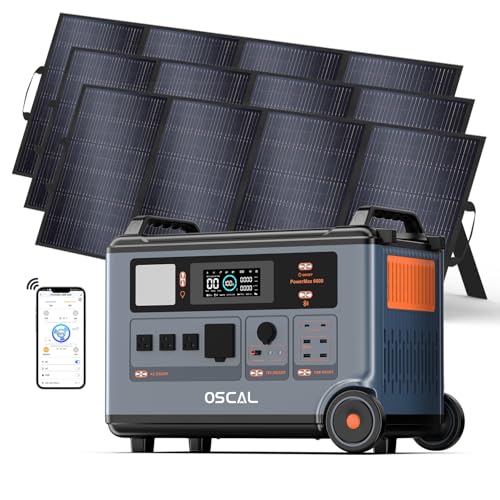
OSCAL PowerMax 6000 3600Wh with 3x400W panelsBest Surge HeadroomOSCAL PowerMax 6000 3600Wh with 3x400W panels3600Wh6000W, 9000W surge120V and 240V split phase
EcoFlow DELTA Pro 3600Wh 3600W, expandableBest Proven PlatformEcoFlow DELTA Pro 3600Wh 3600W, expandable3600Wh LFPn/an/a
ALLPOWERS R2500 V2 1920Wh 2500W, 5000W peakBest Mid Weight PickALLPOWERS R2500 V2 1920Wh 2500W, 5000W peak1920Wh LiFePO4n/an/a

A five thousand watt label on a solar generator can mean three very different things: a continuous output, a surge figure, or a battery size in watt-hours. Shoppers searching for this size usually want to run a household's essential circuits, so reading which of the three the seller means is the first job.

The honest 5kW class machines are heavy cabinet units with split phase output and a pack measured in thousands of watt-hours. Lighter boxes that borrow the number from their surge rating can still be useful, but they behave very differently when you ask them to carry a load for hours.

Before you buy

6 Criteria to Look For Before Buying a 5000W Solar Generator

  1. 01

    Continuous versus peak

    The Jackery 5000 Plus rates 7200W continuous, the OSCAL 6000W, the EcoVolt 3600W and the ALLPOWERS only 2500W with a 5000W peak. A peak figure lasts about a second, enough for a motor start and nothing else. Always compare continuous numbers, and treat any 5000W label on a 2500W inverter as marketing.

  2. 02

    Watt-hours decide outage length

    At a 2kW average load, the 5120Wh EcoVolt lasts about 2.1 hours after losses, the 3600Wh OSCAL about 1.5 hours and the 1920Wh ALLPOWERS about 50 minutes. Home essentials usually average 500 to 1,000W, which stretches these to 4 to 8 hours. Plan around your actual draw, not the maximum. A plug in watt meter on the fridge and router for a day gives you the number that matters, and it is almost always lower than the guess.

  3. 03

    Split phase 240V

    Many heavy appliances use 240V, including dryers and well pumps. The Jackery 5000 Plus, EcoVolt P5000 Plus and OSCAL PowerMax 6000 list split phase output. The ALLPOWERS and the single DELTA Pro are 120V oriented. Check your appliance label before buying.

  4. 04

    Recharge speed

    The OSCAL fills in about 1.44 hours using 2200W of AC and 2400W of solar, the EcoVolt in about three hours at 1800W, and the DELTA Pro in 2.7 hours. Fast charging matters most for repeated outages, but it needs a big circuit or a large array. A standard 15A outlet limits input to about 1,400W.

  5. 05

    Expansion path

    The Jackery 5000 Plus expands to 60kWh and the OSCAL to 57.6kWh. A cheaper unit with no expansion path is a dead end if your needs grow. Check price and availability of extra batteries before relying on a future upgrade.

  6. 06

    Weight and siting

    The ALLPOWERS weighs 24 kg and can be carried, while the 5kWh cabinets need a permanent home and two people to move them. If you plan to relocate the unit, weight should outweigh peak numbers. A cabinet needs a level floor, ventilation and a path for cords. Also measure doorways and stairs before ordering, because a 5kWh cabinet that cannot reach its intended room is a common and expensive surprise.

Detailed reviews

The 5 best 5000w solar generators, explained

01
Jackery Solar Generator 5000 Plus 5040Wh 7200W
5040Wh LiFePO47200W rated120V / 240V60kWh expandable
Check price on Amazon
Best for: Households that want a true continuous 5kW or more with a long expansion path.

Jackery's 5000 Plus is the only pick here whose big number is continuous: 7200W rated and 14,400W of surge, delivered on both 120V and 240V circuits. That puts it above a 5000W label, with enough headroom to run a well pump, a dryer and a fridge together. The 5040Wh pack gives roughly 4,300Wh of usable energy, which the company frames as around thirteen days of backup when stacked to 60kWh.

The cost is price and bulk. It is the most expensive station in the guide, and it is a floor standing unit that wants permanent siting. The bundled 2x200W panels are token for a pack this large; real harvest of 240 to 320W means a full refill takes a week of sun. Against the EcoVolt P5000 Plus it gives you stronger output and a service network, while holding about the same energy.

Ownership is about siting and wiring. Place it indoors on a hard floor with airflow, hire an electrician for a transfer switch rather than back feeding, and store at a partial charge if the house sees no outages for months. The LFP pack is rated for a decade of daily use by the maker, a claim worth treating as a target rather than a guarantee.

What works

  • 7200W continuous with 14,400W surge
  • 5040Wh LiFePO4 starting pack
  • 120V and 240V outputs
  • Expandable up to 60kWh

Watch out for

  • Highest price in the guide
  • Panels bundled are small for the pack
  • Heavy, needs permanent siting

Spec sheet

Capacity
5040Wh LiFePO4
Rated output
7200W, 14,400W surge
Voltage
120V and 240V
Expansion
up to 60kWh
Panels
2 x 200W included
02
EcoVolt P5000 Plus 5120Wh 120V/240V 3600W
5120Wh3600W / 5000W surge120V / 240V1800W AC input
Check price on Amazon
Best for: Budget minded homeowners who want 5kWh and 240V without paying for a 7kW inverter.

The P5000 Plus gets its 5000 from surge and capacity, not continuous output: the inverter is rated 3600W with a 5000W surge, backed by a 5120Wh pack. That is a useful pairing for a fridge, a well pump and lighting, which rarely exceed 3kW together. It offers dual 120V and 240V with five AC outlets, and the 1800W wall input brings an empty pack to full in about three hours.

Its limit is the 3600W cap. Anything sustained above that trips the inverter, so a dryer plus a pump will not fit. The 1000W solar input is sensible for a modest array, but the pack is large enough that a full refill from sun alone takes several days. Compared with the Jackery 5000 Plus it is a lower tier with similar energy but half the continuous output.

Upkeep is typical of big LFP cabinets. Keep it level, indoors and ventilated, and test the 240V outlet with the load you intend to run. The brand is newer than Jackery's and also sells under several names, so confirm warranty terms with the actual seller. This lands with buyers who want 5kWh storage first and a 7kW inverter second.

What works

  • 5120Wh pack at a lower price tier
  • Dual 120V and 240V outputs
  • 1800W AC input refills in about three hours
  • Five AC outlets

Watch out for

  • 3600W continuous, not 5000W
  • Newer brand sold under several names
  • Slow solar refill for the pack size

Spec sheet

Capacity
5120Wh
Rated output
3600W, 5000W surge
Voltage
120V and 240V dual
AC input
1800W
Solar input
1000W
03
OSCAL PowerMax 6000 3600Wh with 3x400W panels
3600Wh6000W / 9000W surgeSplit phase2400W solar
Check price on Amazon
Best for: Job sites and owners with big intermittent loads who can add batteries later.

OSCAL's PowerMax 6000 flips the usual balance: the inverter is rated 6000W with a 9000W surge, but the pack is only 3600Wh. That is a power tool for short jobs, such as starting a big compressor or running a well pump and a dryer for a few minutes, rather than a day long backup. With 2200W AC input and 2400W of solar, an empty pack fills in about 1.44 hours, so you can cycle it often during an outage.

The problem shows up in the math: at 5kW draw, a 3600Wh pack lasts about 40 minutes. It suits a job site or a mix of intermittent loads. For a house that needs overnight power it must be expanded, and the listing says the system expands to 57.6kWh, which changes the cost picture.

In ownership, the unit is a heavy, high power machine that needs good ventilation and clear fan intakes, and the bundled 3x400W panels (1200W) need real space. The same PowerMax 6000 is sold by several sellers under different names and panel bundles, so treat those as one machine and compare panel counts only.

What works

  • 6000W continuous with 9000W surge
  • Fast 1.44 hour full recharge
  • 2400W solar input
  • Split phase 120V and 240V

Watch out for

  • Only 3600Wh at 5kW lasts about 40 minutes
  • Same unit sold under several names
  • Expansion adds substantial cost

Spec sheet

Capacity
3600Wh
Rated output
6000W, 9000W surge
Voltage
120V and 240V split phase
Charge
0 to 100% in about 1.44 hours
Solar input
2400W
04
EcoFlow DELTA Pro 3600Wh 3600W, expandable
3600Wh LFP3600W ACExpand to 4500W2.7 hr charge
Check price on Amazon
Best for: Buyers who want a proven, well supported platform that can grow incrementally.

DELTA Pro is the oldest design on this list, and that is a feature. It has a long record of owner feedback, a mature app and a 3600W inverter that can reach 4500W when paired with an extra unit. A full charge takes about 2.7 hours, which is good for a unit with this much capacity.

What undercuts it is that its 3600Wh and 3600W do not reach the 5000W label. For buyers wanting a straight 5kW number, it falls short unless you add a second inverter or an expansion path, which increases cost. The platform is also older than the newer 240V home integrated units, so it lacks some of the newer transfer switch features.

Ownership benefits from the ecosystem: parts, accessories and service are easy to find and many owners share setups. Keep the pack between 20 and 80 percent for long storage, check the fans for dust, and use an appropriate cable gauge for 3600W loads. It suits someone who values a proven platform over the biggest number.

What works

  • Mature platform with strong service reach
  • 3600Wh LFP pack
  • 2.7 hour full recharge
  • Expandable output to 4500W

Watch out for

  • Does not reach 5000W alone
  • Older design lacks newer home features
  • Heavy at this capacity

Spec sheet

Capacity
3600Wh LFP
AC output
3600W, up to 4500W expanded
Charge
Full in about 2.7 hours
Expansion
Extra batteries available
Platform
Established ecosystem
05
ALLPOWERS R2500 V2 1920Wh 2500W, 5000W peak
1920Wh2500W / 5000W peak13 outlets24 kg
Check price on Amazon
Best for: Contractors and campers who need strong peak power in a carryable box.

ALLPOWERS earns the 5000W label only on peak, with a 2500W continuous inverter and 5000W of surge, but it does so in a 24 kg box that two hands can still carry. The 1920Wh LiFePO4 pack and 13 outlets make it a strong tailgating, tool and small backup machine. With a fridge, router and lights it will run overnight, which is a practical result few big cabinet units match at this weight.

The tradeoff is that it is a different class from the Jackery and EcoVolt. 2500W continuous cannot run a well pump plus a dryer, and the pack is about a third of the 5kWh units. Do not treat the 5000W as capability beyond brief starts. The brand also has less depth in 240V features, so it is a 120V tool.

For ownership, it is the easiest of the group to live with: plug it in, move it between rooms or a truck, and keep the vents clear. LiFePO4 handles a lot of cycles, so you can use it daily on a job site. If you want one box that you can still lift, it is the pick.

What works

  • 5000W peak in a 24 kg unit
  • 1920Wh LiFePO4 pack
  • 13 outlets including 100W USB-C
  • Easy to move between sites

Watch out for

  • 2500W continuous is far below a true 5kW
  • No 240V focus
  • Pack is small next to the big cabinets

Spec sheet

Capacity
1920Wh LiFePO4
AC output
2500W, 5000W peak
Outlets
13
Weight
24 kg
USB-C
100W output

Spec sheet decoder

What the numbers on the box really mean

The specs manufacturers lead with, translated into what they tell you about real-world performance.

7200W rated

True continuous output of the largest unit.

Watch forOnly the Jackery 5000 Plus offers it here.

5000W peak

A brief startup allowance lasting about a second.

Watch forThe ALLPOWERS pairs it with 2500W continuous.

Split phase

Two 120V legs combining to 240V for large appliances.

Watch forOSCAL, EcoVolt and Jackery list it.

Wh capacity

Total stored energy with about 85 percent usable.

Watch forEcoVolt 5120Wh, Jackery 5040Wh, OSCAL 3600Wh, DELTA Pro 3600Wh.

Solar input

Maximum panel power the charge controller accepts.

Watch forOSCAL lists 2400W, EcoVolt 1000W.

Methodology

How We Evaluated These 5000W Solar Generators

Reading the 5000W claim

We separated continuous output from peak on every listing. The Jackery 5000 Plus lists 7200W continuous, the OSCAL 6000W, the EcoVolt 3600W and the ALLPOWERS 2500W. This decided which products truly belong in a 5kW comparison.

Energy and runtime

We applied an 85 percent efficiency to each pack and computed runtimes at 1kW and 2kW loads. The 5kWh units last about 4.3 hours at 1kW, and the 1920Wh ALLPOWERS about 1.6.

Voltage and appliance fit

We checked 240V support and matched it to well pumps and dryers. Split phase units were rated higher for home use.

Charging and expansion

We compared AC input, solar input and expansion limits, favoring units with fast charging and a clear growth path.

Support and value

We considered brand service reach and price tier. Jackery and EcoFlow score well on support, while EcoVolt and OSCAL score on cost per kilowatt hour.

Decision guide

How to Choose the Right 5000W Solar Generators

By Real Load

SituationPickWhy
Pump, dryer and fridge togetherJackery Solar Generator 5000 Plus7200W continuous on 240V
Fridge, furnace blower, lights overnightEcoVolt P5000 Plus5120Wh with 3600W
Large compressor or saw startsOSCAL PowerMax 60006000W with 9000W surge
Mixed 120V home and tripsEcoFlow DELTA Pro3600W and proven platform
Truck, tailgate and tool useALLPOWERS R2500 V224 kg with 5000W peak

By Budget

TierPickWhy
Lowest in this guideALLPOWERS R2500 V2Smaller but capable and carryable
Lower midOSCAL PowerMax 6000High output with a smaller pack
MidEcoVolt P5000 PlusLarge pack at a modest tier
Upper midEcoFlow DELTA ProProven platform and support
HighestJackery Solar Generator 5000 PlusRated output and expansion

Big Inverter vs Big Battery

Big inverter, small pack

The OSCAL PowerMax 6000 and ALLPOWERS R2500 V2 have output beyond their pack, so they suit job site bursts and short heavy loads. They run out quickly at full draw.

Big battery, modest inverter

The EcoVolt P5000 Plus and DELTA Pro have packs that outlast their inverters, so they suit steady essential loads. They fail only if you plug in more than their continuous limit.

Pick the big inverter for tools and surge starts, and the big battery for outage coverage.

240V Needs

PreferencePickWhy
Need 240V at high powerJackery Solar Generator 5000 Plus7200W rated, 120V and 240V
240V at lower costEcoVolt P5000 PlusDual voltage at a lower tier
240V burst useOSCAL PowerMax 6000Split phase with big surge
120V only is fineALLPOWERS R2500 V2No 240V needed
Mostly 120V with option to pairEcoFlow DELTA ProExpandable to 4500W

For Power Outage Backup Specifically

Look for

Enough watt-hours for 12 to 24 hours of essentials, plus recharge speed for repeat outages. A fridge, router and lights average about 300 to 500W, so 5kWh stretches to around a day.

In this comparison

The Jackery 5000 Plus and EcoVolt P5000 Plus carry about 5kWh each. The OSCAL has only 3600Wh and the ALLPOWERS 1920Wh, so they need expansion or shorter windows.

When to Spend More

Spend more if

You need true continuous output and a long expansion path. The Jackery 5000 Plus and OSCAL cost more but carry the loads the label suggests.

Save if

Your loads are modest. The EcoVolt P5000 Plus gives 5kWh at a lower tier, and the ALLPOWERS gives a carryable unit for tools and camping.

Ownership

Maintenance schedule

The upkeep that decides whether this machine lasts two seasons or ten.

TaskIntervalWhy it matters
Check storage chargeMonthlyLarge packs self discharge slowly, so a cabinet left in a closet for a year can drift far below a safe level. Hold them around 50 to 60 percent when idle and set a calendar reminder, since a pack that is allowed to reach zero may refuse to recharge normally.
Clean fan intakesEvery 3 monthsDust blocks airflow and raises heat at high output. A soft brush or low pressure air at the intake slots is enough, and the unit should be powered down and unplugged first, because the inverter section holds charge.
Inspect high current cablesEvery 6 monthsLoose lugs and worn insulation heat up under heavy loads.
Verify 240V outlet functionEvery 6 monthsRun a known load for an hour to confirm output voltage and temperature. A kitchen appliance of known wattage, such as a 1,000W heater element on a fan setting, makes a simple repeatable check and tells you whether the unit still reaches its rated output without alarms.
Update firmwareWhen promptedUpdates adjust battery management and charging behavior.

FAQ

Frequently Asked Questions

Is a 5000W solar generator the same as a 5kWh one?

No. Watts measure output power and watt-hours measure stored energy. A 5000W inverter on a 1920Wh pack empties in under half an hour at full load, while a 5120Wh pack with a 3600W inverter lasts longer at moderate loads.

Can these run a whole house?

They can run chosen circuits such as a fridge, furnace blower, well pump and lights, but not central air plus an electric range at once. Use a transfer switch and prioritize circuits. Most homes find that a short list of eight to ten essential circuits averages well under 2kW, which is what makes a battery based backup realistic at all.

What does peak 5000W mean?

Peak is a momentary allowance for motor starts, lasting about a second. It does not mean the unit can sustain 5000W. Always check the continuous rating.

How long does a 5kWh pack last?

At about 85 percent efficiency it supplies roughly 4.3kWh. A 1kW load lasts 4.3 hours and a 500W load about 8.6 hours.

Do I need 240V?

Only for 240V appliances like dryers, well pumps and some air conditioners. Plug in loads at 120V are fine on any unit here.

Are different bundles of the same model separate machines?

No. Listings of the PowerMax 6000 or P5000 Plus with different panel counts share the same station. Compare panel wattage, not the machine.

Bottom line

The short version

Browse more 5000w solar generatorson Amazon →
James Miller, Lead Machine Editor

About the author

James Miller

Lead Machine Editor, MachineFanatic

James Miller leads MachineFanatic's buying guides, turning spec sheets, manuals and owner feedback into clear verdicts on power tools, outdoor power equipment, shop machines and kitchen machines.

More from James →

Keep reading

Related guides