
Amazon affiliate links - we earn a commission.Affiliate disclosure

Buying guide · 15 min read · Updated 2026-11-06

Best Belt Sanders Under $75 (2026)

Five handheld belt sanders under $75 compared on motor amps, belt size, speed control and dust bag, with advice on gouging and what a budget sander gives up.

James MillerBy James MillerLead Machine Editor5 machines comparedSpec-sheet verified
Best Belt Sanders Under $75

At a glance

Our top picks

Side by side

Spec comparison

A belt sander drives a loop of abrasive over two rollers at several hundred feet per minute, which makes it the fastest hand tool for flattening a board, stripping a deck rail or shaping an edge. The speed is the danger, because a belt that stays in one spot cuts a trench in seconds.

This guide explains how belt size, speed and tracking decide whether a low-priced sander is controllable, which compromises are fine for a homeowner and which are risky.

Before you buy

6 Criteria to Look For Before Buying a Belt Sander Under $75

  1. 01

    Belt size

    A 3 by 21-inch belt is the standard, and belts are sold everywhere. A 3 by 18-inch belt, as on the SKIL, is smaller and less common. A longer belt runs cooler and lasts longer. Pick a size where belts are easy to buy. A belt is a consumable, and a 3 by 21-inch aluminum oxide belt wears out in a few sanding sessions on paint or finish, so the running cost of a sander is mostly belts. A box of assorted grits from 60 to 220 is a better start than a single belt.

  2. 02

    Motor amps

    Amps set how much stock the sander removes. 7 amps, as on the BLACK+DECKER and WEN 6321, is typical, and 7.5 on the HB321V is a little stronger. A 6-amp motor like the SKIL's is gentler. More power is not always better in a tool that gouges. A 7-amp sander stripping a pine board can take off a sixteenth of an inch in a few passes, so the main skill is not removing wood but stopping in time. A weaker motor gives you a longer warning before the belt digs in.

  3. 03

    Variable speed

    Belt speed in feet per minute decides how aggressive the sander is. The WEN HB321V runs 620 to 1,200 FPM. A slow setting is for finish work, and a fast one for stock removal. A single-speed tool is fine if you only strip and flatten. A slow belt is also less likely to burn paint into a gummy film, so variable speed helps on old finishes as well as on delicate stock.

  4. 04

    Belt tracking and tension

    A belt that wanders off the roller rubs the housing. Auto-tracking, as on the SKIL, or a tracking knob keeps it centered. Quick-release tension levers speed belt changes. After you install a new belt, run the sander for a moment off the work and watch the belt: if it creeps toward the housing, turn the tracking knob a quarter turn at a time until it stays centered.

  5. 05

    Dust collection

    Belt sanders create a lot of dust. A bag collects some, and a 1-1/4-inch vacuum port collects more. Fine dust is a health concern, so wear a mask. Old paint may contain lead, so never dry sand a painted surface from a house built before 1978 without testing it first, and avoid belt sanding treated lumber without a vacuum and a respirator.

  6. 06

    Weight and handle

    A heavy sander is stable, and a light one is easier to control. A 6-pound tool is fine for most users. Check that the front handle is comfortable. A belt sander wants to pull forward as the belt grips, so a handle that you can brace against with your weight gives much better control than a tool you hold only by the rear grip.

Detailed reviews

The 5 best belt sanders under $75, explained

01
BLACK+DECKER DS321 7-Amp 3 x 21 in Belt Sander
7 amp3 x 21 in belt3-pos handleAngled belt
Check price on Amazon
Best for: Homeowners who need to flatten and strip lumber and want a tool with belts and parts everywhere.

The DS321 is a 7-amp, 3 by 21-inch belt sander with a three-position adjustable handle and an angled belt that sands closer to adjoining surfaces. A retractable hood exposes the top of the belt so you can sand in tight spaces, and a low-profile body lets you sand vertical surfaces. An on-board dust bag collects the worst of the mess.

The 3 by 21-inch belt is the standard size, which means the widest choice of replacement belts at any hardware store. Compared with the SKIL 7510-01, which takes shorter 3 by 18-inch belts, the DS321 has more belt area and runs a little cooler. The handle positions matter in practice, because the best angle for a flat tabletop is not the best for a door edge.

Ownership details: keep the belt tracking centered, watch for belt wander and clean the dust bag often. Lower the sander onto the work with the belt already spinning and lift it off the same way, because a spinning belt dropped flat is the classic source of a gouge. It is a single-speed tool, so you cannot slow it for delicate work, which is the main compromise against the variable-speed models. For a homeowner doing a few projects a year, it is the safest buy.

What works

  • Standard 3 x 21 in belt is easy to find
  • Three-position handle for comfort
  • Angled belt sands close to edges
  • Low profile for vertical surfaces

Watch out for

  • Single speed, no slow setting
  • Stamped dust bag clogs quickly

Spec sheet

Motor
7 amp corded
Belt
3 x 21 inch
Handle
3-position adjustable
Edge
Angled belt for closer sanding
Dust
On-board bag
02
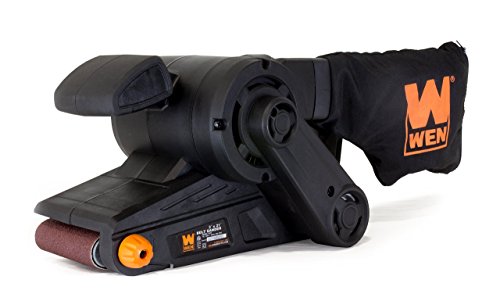
WEN HB321V 7.5-Amp 3 x 21 in Variable Speed Belt Sander
7.5 amp620-1,200 FPM6.4 lb2-yr warranty
Check price on Amazon
Best for: Woodworkers who want variable speed and a warranty.

The HB321V is a 7.5-amp belt sander with variable speed from 620 to 1,200 feet per minute. Speed control is the feature that separates a controllable sander from an aggressive one: at the low end it is gentle enough for veneer and finish work, and at the high end it removes stock quickly. A lock-on switch holds the trigger for long passes.

It weighs 6.4 pounds, which is light for the class, and includes a detachable dust bag, a 1-1/4-inch dust port, an 80-grit belt and a two-year warranty. A quick-release tension lever speeds belt changes. Compared with the BLACK+DECKER DS321 at a fixed speed, the WEN is more flexible, and it has a longer warranty than most budget tools. At the 620 FPM setting it is slow enough to take paint off a delicate trim piece without scorching it, which a fixed-speed sander cannot do.

Ownership notes: lock-on is convenient but dangerous if you drop the tool, so release it before setting the sander down. Keep the sander moving and never let it rest on the work while spinning. Use the lock-on only for long straight passes and keep your thumb near the release so you can stop in an instant. A 7.5-amp motor is the strongest in this lineup.

What works

  • Variable speed from 620 to 1,200 FPM
  • Light at 6.4 lb
  • Quick-release belt lever
  • Two-year warranty

Watch out for

  • Lock-on switch is a hazard if dropped
  • Louder than induction tools

Spec sheet

Motor
7.5 amp variable speed
Belt speed
620 to 1,200 FPM
Weight
6.4 lb
Switch
Lock-on
Warranty
Two years
03
Genesis GBS321A 3 x 21 in Variable Speed Belt Sander
3 x 21 in beltVariable speedSingle leverDust bag
Check price on Amazon
Best for: Buyers who change belts often and want variable speed.

The Genesis GBS321A is a variable-speed 3 by 21-inch belt sander with a single-lever quick-change system for belts. A flat side lets you sand flush against a surface, and an adjustable front handle gives more control. It includes a dust bag and one sanding belt, so you can start sanding immediately. Plan to buy a few more belts in other grits the same day, because one belt does not take you from rough to finished.

Tool-free belt changes are a real benefit on a project that moves from 60 grit to 120 and 220. Against the BLACK+DECKER DS321, the Genesis adds variable speed. Against the WEN HB321V, it has a similar feature set but no published amp rating or speed range, so you cannot compare the motor.

Ownership notes: a low-profile design gets into tight spots, and the flat side sands doors, jambs and cabinet faces. Use it with the grain and keep it moving. A fresh belt cuts faster than a worn one, so start with a coarse grit only when you need to remove paint or level a joint, and move up through 120 and 220 before applying finish. For a buyer who changes belts often, the single lever is the highlight.

What works

  • Single-lever belt change
  • Variable speed control
  • Flat side for flush sanding
  • Adjustable front handle

Watch out for

  • No published amp or speed range
  • Brand support is modest

Spec sheet

Belt
3 x 21 inch
Speed
Variable
Belt change
Single-lever, tool-free
Handle
Adjustable front handle
Included
Dust bag and one belt
04
SKIL 7510-01 6-Amp 3 x 18 in Belt Sander with Pressure Control
6 amp3 x 18 in beltPressure controlMicro-filter
Check price on Amazon
Best for: Beginners who want a controllable sander with built-in feedback.

The SKIL 7510-01 is a 6-amp sander with a 3 by 18-inch belt and a feature the others lack: pressure control. It warns you when you push too hard, and pushing is the usual way to burn a motor and gouge a surface. Auto track belt alignment keeps the belt centered, micro-filtration captures fine dust and flush edge sanding lets you sand right to an edge.

A 3 by 18-inch belt is shorter than the standard 3 by 21, and it is smaller and lighter. The 6-amp motor is the weakest in the lineup, which makes it more controllable and slower. Compared with the WEN HB321V at 7.5 amps, the SKIL removes material more slowly.

Ownership notes: 3 by 18-inch belts are available but less common than 3 by 21, so stock up when you buy. The vacuum compatibility, fitting a 1-1/4-inch hose, is useful, because a vacuum on the port captures far more of the fine dust than a small bag can and keeps the belt cleaner, which makes it last longer. It is a good choice for a beginner who wants a gentle sander. The pressure warning teaches a good habit quickly, and once you stop pushing you will sand flatter and extend belt life.

What works

  • Pressure control warns of excess force
  • Auto belt tracking
  • Micro-filter dust capture
  • Vacuum compatible

Watch out for

  • 6-amp motor removes stock slowly
  • 3 x 18 in belts are less common

Spec sheet

Motor
6 amp
Belt
3 x 18 inch
Feature
Pressure control warning
Dust
Micro-filtration
Tracking
Auto track
05
WEN 6321 7-Amp 3 x 21 in Corded Belt Sander
7 amp3 x 21 in belt6 lb2-yr warranty
Check price on Amazon
Best for: Occasional users who want a simple 3 x 21 sander at a low outlay.

The WEN 6321 is a 7-amp, 3 by 21-inch belt sander that runs the belt at about 13 feet per second, close to 780 feet per minute, and it weighs about 6 pounds. It has a lock-in feature for continuous sanding and a detachable dust bag, and it carries a two-year warranty.

It is a single-speed sander, so it lacks the variable range of the HB321V. At about 780 feet per minute the belt runs toward the slow end of the HB321V's range. Compared with the BLACK+DECKER DS321, the WEN is lighter and covered by a longer warranty, though it has fewer handle positions.

Ownership notes: keep the cord clear and check belt tracking. The lock-in switch should be released when you put the tool down. For a first belt sander at the lowest outlay, it is a competent choice. If you later want variable speed, the HB321V is the upgrade, and the belts are interchangeable since both use the 3 by 21-inch size.

What works

  • Light at about 6 lb
  • 7-amp motor
  • Two-year warranty
  • Standard belt size

Watch out for

  • Single speed
  • Fewer handle positions

Spec sheet

Motor
7 amp
Belt speed
About 13 ft per second
Weight
About 6 lb
Switch
Lock-in safety feature
Warranty
Two years

Spec sheet decoder

What the numbers on the box really mean

The specs manufacturers lead with, translated into what they tell you about real-world performance.

FPM (feet per minute)

How fast the belt travels. The WEN HB321V runs 620 to 1,200.

Watch forA faster belt removes stock faster and risks gouging.

Belt size

Width by length in inches. 3 by 21 is standard.

Watch forA different size means fewer belt choices.

Grit

The coarseness of the abrasive. 60 to 80 is for stock removal, 120 to 220 for finishing.

Watch forSkipping more than one step leaves scratches.

Auto tracking

A system that keeps the belt centered on the rollers.

Watch forA cheap system still needs adjusting.

Flush sanding

A design where the belt reaches the edge of the body so you can sand up to a wall.

Watch forNot every sander has a flush side.

Methodology

How We Evaluated These Belt Sanders Under $75

Motor and speed

We compared amps and belt speed, from the SKIL's 6 amps to the WEN HB321V's 7.5 amps and variable speed.

Belt size and change

We looked at belt sizes and how quickly belts change, noting the Genesis's single lever and the WEN's quick-release. Belt changes matter because a typical project runs through three grits, and a sander that takes a minute to retension is one you skip using.

Control features

We valued pressure warnings, tracking and handle positions, since belt sanders gouge when control is poor.

Dust and edge design

We checked dust bags, vacuum ports and flush edge designs.

Fit for the cap

Every sander has a live price at or below the cap. We ranked each by how much controllable power a homeowner gets for the money.

Decision guide

How to Choose the Right Belt Sanders Under $75

By Job

ScenarioPickWhy
Stripping a deck rail or doorBLACK+DECKER DS321Angled belt and handle
Fine control on veneerWEN HB321VVariable speed
Frequent belt changesGenesis GBS321ASingle lever
First-time userSKIL 7510-01Pressure control
Simple flatteningWEN 6321Lowest cost

By Budget Tier

TierPickWhy
LowestWEN 6321Basic
LowWEN HB321VVariable speed
MidGenesis GBS321ASingle lever
UpperSKIL 7510-01Pressure control
Top of the capBLACK+DECKER DS321Handle and angled belt

Fixed Speed vs Variable Speed

Fixed speed

Simple and aggressive, fine for stripping and flattening. The BLACK+DECKER DS321, SKIL and WEN 6321 fit here.

Variable speed

Lets you slow down for finishing. The WEN HB321V and Genesis GBS321A fit here.

Choose variable speed if you do finish work.

Belt Size

PreferencePickWhy
Standard beltsBLACK+DECKER DS3213 x 21
SmallerSKIL 7510-013 x 18
Quick changeGenesis GBS321ALever
Lock-onWEN HB321VLock-on switch

For Decks and Rough Lumber Specifically

Look for

A strong motor, a coarse belt and a dust bag. Keep moving and sand with the grain.

In this comparison

The WEN HB321V has the most power, and the BLACK+DECKER DS321 has the best handle. The SKIL is gentler.

When to Spend More

Spend more if

You sand weekly or need a 4 x 24 belt. A bigger sander removes stock faster.

Save if

You sand a few projects a year. The WEN 6321 is enough.

Ownership

Maintenance schedule

The upkeep that decides whether this machine lasts two seasons or ten.

TaskIntervalWhy it matters
Replace beltsWhen they clogA worn belt burns the wood.
Check belt trackingEach belt changeA belt that wanders rubs the housing.
Empty the dust bagAfter each sessionA full bag reduces cooling.
Release lock-onEvery timeA dropped tool with lock-on runs away.
Inspect the cordBefore each useA frayed cord is a shock hazard.

FAQ

Frequently Asked Questions

Why does my belt sander gouge?

Resting the sander in one spot or tilting it. Keep it moving and keep the belt flat.

Which grit should I start with?

60 to 80 for rough wood, 120 for smoothing and 220 for finishing.

Do I need variable speed?

For finish work, yes. For stripping, fixed speed is fine.

Can I sand across the grain?

Not on visible surfaces. Sand with the grain.

Should I use a dust bag or vacuum?

A vacuum collects more dust. Use one for indoor work.

Is a 3 x 18 belt enough?

For small jobs, yes. A 3 x 21 belt is easier to find.

Bottom line

The short version

Browse more belt sanders under $75on Amazon →
James Miller, Lead Machine Editor

About the author

James Miller

Lead Machine Editor, MachineFanatic

James Miller leads MachineFanatic's buying guides, turning spec sheets, manuals and owner feedback into clear verdicts on power tools, outdoor power equipment, shop machines and kitchen machines.

More from James →

Keep reading

Related guides