
Amazon affiliate links - we earn a commission.Affiliate disclosure

Buying guide · 15 min read · Updated 2026-11-09

Best Detail Sanders Under $50 (2026)

Five detail sanders under $50, from mouse-style palm sanders to a belt file sander, compared on orbit speed, pad shape, dust collection and corner reach.

James MillerBy James MillerLead Machine Editor5 machines comparedSpec-sheet verified
Best Detail Sanders Under $50

At a glance

Our top picks

Side by side

Spec comparison

MachineMotorOrbit speedDust collectionPaper
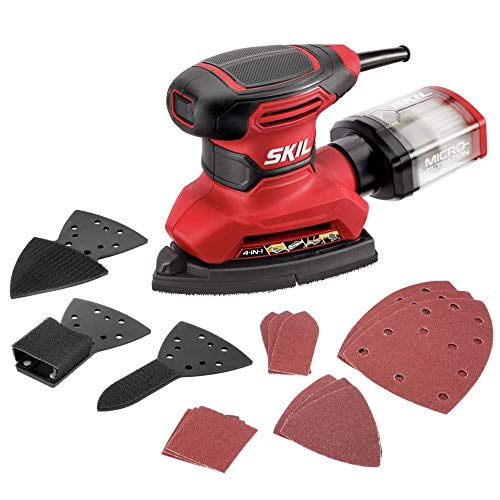
SKIL Corded Multi-Function Detail Sander with Micro-Filter Dust BoxBest OverallSKIL Corded Multi-Function Detail Sander with Micro-Filter Dust Box1.2 amp corded13,500 OPMMicro-filter box, 1-1/4 inch port12 sheets included
WEN 6301 Electric Detailing Palm Sander, 13,500 OPMBest Value Palm SanderWEN 6301 Electric Detailing Palm Sander, 13,500 OPM1 amp corded13,500 OPMn/an/a
HYCHIKA 14,000 OPM Detail Sander with Dust Bag and 12 SheetsFastest OrbitHYCHIKA 14,000 OPM Detail Sander with Dust Bag and 12 Sheets1.6 amp corded14,000 OPMBag with 6-hole system12 sheets, P80, P120, P240
DEKOPRO 1.5 Amp Mouse Sander, 13,000 OPM, 15 SheetsBest Paper AssortmentDEKOPRO 1.5 Amp Mouse Sander, 13,000 OPM, 15 Sheets1.5 amp corded13,000 OPMBuilt-in vacuum attachment, 11-hole pad15 sheets, P60 to P1000
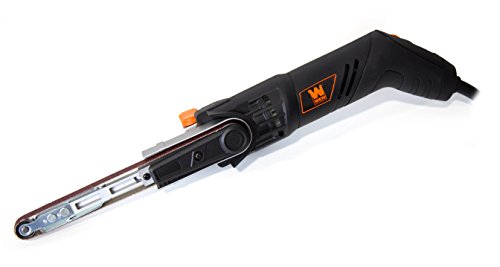
WEN 6307 Variable Speed Detailing File Sander, 1/2 x 18 in BeltBest Belt DetailerWEN 6307 Variable Speed Detailing File Sander, 1/2 x 18 in Beltn/an/an/an/a

A detail sander puts a small, usually triangular pad on a fast, short-stroke motor so it can reach corners, spindles and tight trim where a round pad cannot go. The orbit speed on the box tells you little, because the real differences are the shape of the pad, how easily you swap paper and how well the dust is caught.

This guide explains what a spending cap of $50 buys, what you give up against a full-size random orbital, and which specs predict clean corner work. Our top picks are above, with full reviews below. Prices move, and the cap reflects listing prices when this guide was updated.

Before you buy

6 Criteria to Look For Before Buying a Detail Sander Under $50

  1. 01

    Pad shape and reach

    A triangular pad reaches 90 degree corners, a pointed mouse pad reaches narrow rails, and a narrow belt reaches curves. The SKIL's extra attachments cover profiles the others cannot, and the WEN 6307 belt reaches inside tight recesses. Pick by the shape of the surfaces you sand, not by the motor amps. Measure the narrowest gap you sand, such as the space between slats, and compare it with the pad width before you buy.

  2. 02

    Motor power and orbit speed

    A bigger motor holds speed under pressure, and a higher orbit rate cuts faster. The HYCHIKA at 1.6 amps and 14,000 OPM leads, the DEKOPRO at 1.5 amps follows, the SKIL at 1.2 amps and the WEN at 1 amp trail. For paint stripping, favor the stronger motors, and for delicate trim, the gentler ones are safer. A faster orbit is not always better, since high speed on fine paper polishes the wood and closes the grain, which hurts stain absorption.

  3. 03

    Dust collection

    Dust in the grit clogs paper and scratches the surface. The SKIL's micro-filter box and 1-1/4 inch port, the DEKOPRO's built-in vacuum attachment and the HYCHIKA's six-hole bag all help. A shop vacuum on the port beats an onboard bag for both paper life and lung safety. A transparent dust box also shows you when it is full, which prevents clogs mid-job.

  4. 04

    Paper supply and attachment

    Hook and loop paper changes in seconds, and a mixed pack covers rough to fine work. The DEKOPRO ships 15 sheets, the SKIL and HYCHIKA 12 and the WEN 6301 none listed. Check that replacement paper in the same pad shape is easy to buy. Aluminum oxide paper lasts longer on hardwood than cheap garnet paper, so check what the pack is made of.

  5. 05

    Weight and comfort

    A detail sander is held in one hand, often overhead or vertical, so weight matters. The WEN 6301 weighs two pounds, and the others are similar. A tool that vibrates less is easier to hold through a long session. Hold a detail sander with a loose grip, because squeezing it increases the transmitted vibration.

  6. 06

    Palm sander or file sander

    A palm detail sander finishes small flat areas and corners, while a file sander shapes curves and recesses. The WEN 6307 is a file sander, and the other four are palm sanders. Many people buy one of each as a pair of tools for different jobs. Do not use a file sander on a flat panel, because its narrow belt cuts a groove instead of a plane.

Detailed reviews

The 5 best detail sanders under $50, explained

01
SKIL Corded Multi-Function Detail Sander with Micro-Filter Dust Box
1.2 amp motor13,500 OPM4-in-1 attachmentsMicro-filter box
Check price on Amazon
Best for: General refinishing where reach into corners and slats matters.

The SKIL is a four-in-one sander: a triangular pad plus three extra detail attachments that snap on for narrow slots, flat edges and rounded profiles. A 1.2 amp motor drives the pad at 13,500 orbits per minute, which is fast enough to cut paint and varnish but gentle enough on soft pine. Extra attachments matter because the stock triangle cannot reach the inside of a louver or the face of a narrow rail.

Dust control is the other strength. A micro-filter box captures fine particles, and a 1-1/4 inch port lets you connect a shop vacuum for better extraction. Dust that stays in the room settles on your wet paint and clogs the grit, so a connected hose pays off in a cleaner finish. Compared with the WEN 6301, the SKIL is a step up in accessories but gives up nothing in pad size.

A triangular pad wears fastest at the tip, so rotate the paper to use all three corners before discarding it. Empty the box often, and replace the pad when the hooks flatten. Work with the grain on wood and keep the pad flat, because tilting a small triangular pad concentrates pressure on one tip and digs a groove. A shop vacuum with a small adapter turns this into a nearly dust-free tool, which matters indoors.

What works

  • Three extra attachments reach louvers, slots and edges
  • Micro-filter box and 1-1/4 inch vacuum port control dust
  • 13,500 OPM cuts paint and varnish quickly
  • Twelve sheets of sandpaper included to start

Watch out for

  • 1.2 amp motor is too small for flat panels
  • Small box fills quickly under heavy sanding
  • Attachments are small and easy to misplace

Spec sheet

Motor
1.2 amp corded
Orbit speed
13,500 OPM
Attachments
Pad plus 3 detail attachments
Dust collection
Micro-filter box, 1-1/4 inch port
Paper
12 sheets included
Design
4-in-1 multi-function
02
WEN 6301 Electric Detailing Palm Sander, 13,500 OPM
1 amp motor13,500 OPM3.75 x 5.5 in pad2 lb body
Check price on Amazon
Best for: Buyers who want a simple palm sander for corners and trim.

The WEN 6301 is a plain mouse-style detail sander, a 1 amp motor spinning a 3.75 by 5.5 inch pad at 13,500 orbits per minute. The pad has an angled tip so it fits into a corner, and the whole tool weighs two pounds, which keeps wrist fatigue low during overhead or vertical work. A larger pad than most mouse sanders also means it covers flat areas faster.

It has no extras, so there is no dust box listed and no attachment set. Against the SKIL, you lose the filter and the profile pieces, but you keep the same orbit speed in a simpler tool. Compared with the HYCHIKA, the WEN has a one-amp motor against 1.6 amps, so it is gentler but slower on paint.

WEN parts and paper are easy to find, and the pad is a standard size. Keep the sander cool by not pressing hard, and replace the pad when the hooks no longer grip. Because the pad is bigger than most mouse sanders, a small tabletop or a cabinet door is within reach, though it will not match the speed of a full-size sander. Buy extra paper in 120 and 220 grit, since replacements are the main running cost.

What works

  • Angled pad tip reaches into corners cleanly
  • Two pound body keeps fatigue low on vertical work
  • Large pad covers more flat area than most mouse sanders
  • 13,500 OPM matches the SKIL for speed

Watch out for

  • No attachments or dust box listed
  • 1 amp motor is the weakest here
  • Basic design lacks dust collection features

Spec sheet

Motor
1 amp corded
Orbit speed
13,500 OPM
Pad size
3.75 x 5.5 inches
Pad tip
Angled for corners
Weight
2 lb
Type
Palm detailing sander
03
HYCHIKA 14,000 OPM Detail Sander with Dust Bag and 12 Sheets
1.6 amp motor14,000 OPM6-hole dust path12 sheets
Check price on Amazon
Best for: Paint stripping and smoothing on wood, metal and plastic in tight spots.

HYCHIKA offers the strongest motor and the fastest orbit in the group: 1.6 amps at 14,000 orbits per minute. The maker pitches it for polishing metal and plastic as well as sanding wood, which makes sense because a high orbit rate with fine paper gives a smooth finish on hard surfaces. A 1.6 amp motor also means it slows less when you press.

A dust bag and a six-hole collection pattern keep chips off the work, though a bag fills quickly. The tradeoff is that the listing publishes fewer details on attachments, and the brand has less support than SKIL or WEN. Against the SKIL, it has a stronger motor, but no extra attachments.

Start with the P80 sheet for paint removal and move to P120 and P240 for smoothing. Let the pad do the cutting, because pressing harder only clogs the paper. Metal and plastic polishing needs very fine paper in the P400 to P1000 range, so buy a separate assortment, as the three included sheets stop at P240. Keep the sander moving, since lingering on plastic melts the surface.

What works

  • 1.6 amp motor is the strongest in this roundup
  • 14,000 OPM gives the fastest orbit speed here
  • Six-hole dust path with a bag controls chips
  • Includes P80, P120 and P240 sheets

Watch out for

  • No extra attachments for narrow profiles
  • Bag fills quickly in heavy sanding
  • Less brand support than SKIL or WEN

Spec sheet

Motor
1.6 amp corded
Orbit speed
14,000 OPM
Paper
12 sheets, P80, P120, P240
Dust collection
Bag with 6-hole system
Attachment
Hook and loop
Use
Wood, metal and plastic
04
DEKOPRO 1.5 Amp Mouse Sander, 13,000 OPM, 15 Sheets
1.5 amp motor13,000 OPM11-hole dust path15 sheets
Check price on Amazon
Best for: Beginners who want a full paper range included.

DEKOPRO ships 15 sheets from P60 to P1000, the widest paper assortment in the group, with a 1.5 amp motor at 13,000 orbits per minute. The grit range covers rough stripping at P60 and fine finishing at P400 and above, and a P1000 sheet is for polishing finishes between coats. Starting with a mixed assortment avoids a trip to buy paper.

An 11-hole pad pattern and a built-in vacuum attachment give good dust pickup when a hose is connected. The tradeoff is power and refinement: at 1.5 amps it sits between the WEN and the HYCHIKA, and the listing does not mention attachments. Against the SKIL, it gives up the extra pieces but has more paper.

Use the high grits only for finishing coats, and store unused sheets flat. Replace the pad when the hooks wear, and clean the vacuum port after use. Store the paper flat in a zip bag, because the high-grit sheets curl in a humid garage and then fail to seat on the pad. The vacuum port accepts a small shop-vac hose, which does more for finish quality than the box does.

What works

  • 15 sheets from P60 to P1000 cover rough and fine work
  • 11-hole pad with a vacuum attachment improves dust pickup
  • 1.5 amp motor sits between the WEN and HYCHIKA
  • Hook and loop paper changes are fast

Watch out for

  • No extra detail attachments listed
  • Lesser known brand with limited parts support
  • P1000 sheets are for polishing, not wood

Spec sheet

Motor
1.5 amp corded
Orbit speed
13,000 OPM
Paper
15 sheets, P60 to P1000
Dust collection
Built-in vacuum attachment, 11-hole pad
Attachment
Hook and loop
Type
Mouse sander
05
WEN 6307 Variable Speed Detailing File Sander, 1/2 x 18 in Belt
1/2 x 18 in belt1080-1800 FPMPivots 50 degreesAuto-tracking
Check price on Amazon
Best for: Shaping curves, cleaning tight recesses and removing rust in narrow spaces.

The WEN 6307 is not a pad sander at all but a file sander, a narrow 1/2 by 18 inch belt running over a pivoting arm. A belt this narrow reaches the inside of tight curves, spindles and recesses where a pad cannot go, which is why woodworkers and metal workers use file sanders for shaping. A variable dial sets belt speed from 1080 to 1800 feet per minute, so you can slow down for metal or plastic.

The auto-tracking belt system needs no tensioning and the head pivots up to 55 degrees, so you can set the angle for a job without moving the work. The tradeoff is that it is a shaping tool, not a surface finishing tool, and a fresh belt removes material fast. Against the pad sanders in this roundup, it reaches places they cannot, but it cannot smooth a flat panel.

Belts are small and cheap, but they wear quickly on metal. Keep a few grits on hand and clear dust from the arm after each job. A file sander also doubles as a paint and rust scraper on small metal parts, where a 120 grit belt at low speed removes corrosion without taking much base metal. Wear gloves and eye protection, since the belt throws sparks on steel.

What works

  • Narrow belt reaches tight curves and recesses
  • Variable speed from 1080 to 1800 feet per minute
  • Auto-tracking belt needs no tensioning
  • Head pivots up to 55 degrees for angled work

Watch out for

  • A shaping tool, not a flat finishing sander
  • Belt removes material fast and can gouge
  • Belts wear out quickly on metal

Spec sheet

Belt size
1/2 by 18 inch
Belt speed
1080 to 1800 FPM
Head pivot
Up to 55 degrees
Range of motion
50 degrees
Tracking
Auto-tracking, no adjustment
Speed control
Variable dial

Spec sheet decoder

What the numbers on the box really mean

The specs manufacturers lead with, translated into what they tell you about real-world performance.

OPM (orbits per minute)

How many times the pad orbits each minute. Higher OPM cuts faster but leaves a coarser scratch, so a variable speed dial would help, though none of these has one.

Watch forThe HYCHIKA's 14,000 and the SKIL's 13,500 differ by only about 4 percent.

Amps

Current draw indicates motor size. A bigger motor holds speed under pressure, which matters when you press into paint or varnish.

Watch forThe WEN's 1 amp and the HYCHIKA's 1.6 amps are a big gap in a small tool.

FPM

Feet per minute is belt speed for a file sander. Slower speeds suit metal and plastic.

Watch forThe WEN 6307's 1080 to 1800 FPM range is wide for a small tool.

Grit

The size of abrasive particles, with lower numbers cutting rougher and faster.

Watch forThe DEKOPRO's P1000 sheets are for polishing finishes, not wood.

Hole pattern

The holes in the pad that pull dust through. The pattern must match the paper, or the holes are blocked and suction drops.

Watch forThe DEKOPRO's 11-hole pad and the HYCHIKA's 6-hole pad need matching paper.

Methodology

How We Evaluated These Detail Sanders Under $50

Reach and pad shape

We began with how well each tool reaches corners. The SKIL's attachments and the WEN 6307's belt led. We treated the ability to reach inside narrow slots as the single most useful trait.

Motor and speed

We compared amps and orbit rate. The HYCHIKA at 1.6 amps and 14,000 OPM led.

Dust collection

We looked at boxes, bags and ports. The SKIL and DEKOPRO stood out.

Paper supply

We considered what ships in the box. The DEKOPRO's 15 sheets led. We also noted whether replacement paper in the same pad shape was easy to find.

Owner feedback patterns

We noted recurring themes such as pad wear and paper fly-off. Lesser known labels were scored cautiously for parts support.

Decision guide

How to Choose the Right Detail Sanders Under $50

By Primary Use

Start from the shape of the surfaces you sand, because pad shape decides reach more than any other spec.

SituationPickWhy
Louvers, slats and spindlesSKIL Multi-FunctionExtra attachments
Simple corner sandingWEN 6301Angled pad tip
Paint stripping in tight spotsHYCHIKA 14,000 OPMStrongest motor
Beginners wanting paperDEKOPRO 1.5 Amp15 sheets included
Shaping curves and recessesWEN 6307 File SanderNarrow belt

By Budget

Budget tiers here are relative and include the paper in the box.

Budget tierPickWhy
LowestWEN 6301Simple palm sander
LowDEKOPRO 1.5 AmpMost paper
Low to midHYCHIKA 14,000 OPMStrongest motor
MidSKIL Multi-FunctionAttachments and dust box
HighestWEN 6307 File SanderSpecialist shaping tool

Palm Sander vs File Sander

Palm sander

The SKIL, WEN 6301, HYCHIKA and DEKOPRO finish small flat areas and corners with a pad.

File sander

The WEN 6307 shapes curves and recesses with a narrow belt but cannot finish a flat panel.

Pick a palm sander for refinishing trim. Pick a file sander for shaping.

Dust Collection

Dust control affects both the finish and your lungs, so it is worth a closer look.

PreferencePickWhy
Filter box and portSKIL Multi-FunctionMicro-filter and 1-1/4 inch port
Built-in vacuum attachmentDEKOPRO 1.5 Amp11-hole pad
Bag collectionHYCHIKA 14,000 OPMSix-hole bag
Simple, no collectionWEN 6301Add a hose if needed
Dust from beltWEN 6307Keep clear by hand

For Refinishing Furniture Specifically

Look for

A small triangular pad, a dust port and a mix of grits. Work with the grain and keep the pad flat.

In this comparison

The SKIL is the best fit for chairs and louvers, and the DEKOPRO covers grit variety.

When to Spend More

Spend more if

You sand daily. A pro detail sander with oscillating pads and better dust extraction outlasts these.

Save if

You refinish a piece or two a year. The WEN 6301 covers that.

Ownership

Maintenance schedule

The upkeep that decides whether this machine lasts two seasons or ten.

TaskIntervalWhy it matters
Replace the paperWhen it clogs or tearsClogged paper burns the finish and loads the pad with heat. Fresh paper cuts cooler, so swap sheets before they glaze.
Empty the dust box or bagEvery few minutesA full box blocks airflow and leaves dust on the work. Empty it often, and tap out the filter.
Clean the padEvery few jobsDust in the hooks reduces grip. Brush it clean.
Check the cordBefore each useA nicked cord is a hazard. Replace damaged cords.
Replace belts (file sander)When they glazeA glazed belt burns metal and plastic. Fresh belts cut cooler.

FAQ

Frequently Asked Questions

Do I need a detail sander or a random orbital?

A detail sander reaches corners and trim, and a random orbital finishes flat surfaces faster. Many shops own both, since each handles what the other cannot.

What does $50 buy in a detail sander?

A corded 1 to 1.6 amp palm sander with some paper. You give up brushless motors and large dust systems. The cap reflects listing prices when this guide was updated.

Why does the paper fly off?

Usually the hooks are worn or the pad is clogged with dust. Replace the pad and brush it clean, and make sure the paper hole pattern matches the pad.

Which grit should I use?

Start at P80 for paint and P120 for smoothing. Finish at P240 or above.

Can a detail sander strip paint?

Yes, on small areas with a coarse grit such as P60 or P80. Large areas need a bigger tool, and old paint may contain lead, so wear a respirator.

Do I need a dust mask?

Yes. Wear a mask and eye protection, especially on old paint that may contain lead. Fine wood dust is also a health hazard, so connect a vacuum where possible.

Bottom line

The short version

Browse more detail sanders under $50on Amazon →
James Miller, Lead Machine Editor

About the author

James Miller

Lead Machine Editor, MachineFanatic

James Miller leads MachineFanatic's buying guides, turning spec sheets, manuals and owner feedback into clear verdicts on power tools, outdoor power equipment, shop machines and kitchen machines.

More from James →

Keep reading

Related guides