
Amazon affiliate links - we earn a commission.Affiliate disclosure

Buying guide · 13 min read · Updated 2026-11-07

Best Oscillating Spindle Sanders (2026)

Six oscillating spindle sanders compared by motor power, stroke, spindle sizes and table tilt: WEN, JET, Laguna and Woodskil models for curved edge work.

James MillerBy James MillerLead Machine Editor6 machines comparedSpec-sheet verified
Best Oscillating Spindle Sanders

At a glance

Our top picks

Side by side

Spec comparison

MachineMotorSpindle speedUseType
JET JOSS-S 1 HP oscillating spindle sanderBest OverallJET JOSS-S 1 HP oscillating spindle sander1 HP, 115V single phase1,720 RPMn/an/a
Laguna 1 HP oscillating spindle sander, 45 degree tiltBest Tilting SpindleLaguna 1 HP oscillating spindle sander, 45 degree tilt1 HP, 110V, 10 amp1,725 RPMCurves and contoursn/a
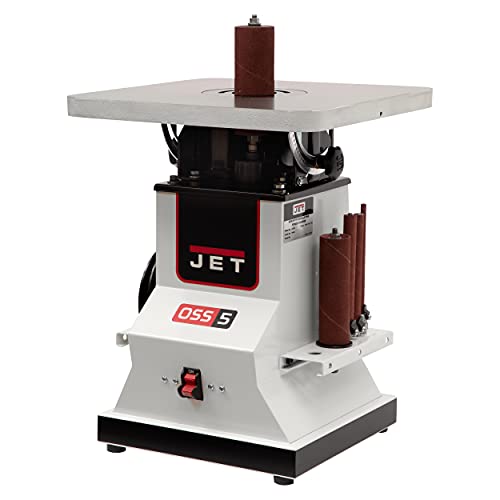
JET JBOS-5 benchtop oscillating spindle sanderBest Benchtop PremiumJET JBOS-5 benchtop oscillating spindle sander1/2 HP, 115V, 7.5 ampn/aTight curves and broad arcsBenchtop
Woodskil 2/3 HP variable speed oscillating spindle sanderBest Variable SpeedWoodskil 2/3 HP variable speed oscillating spindle sander2/3 HP, 4 amp1,000 to 1,800 RPMWood curvesBenchtop, compact
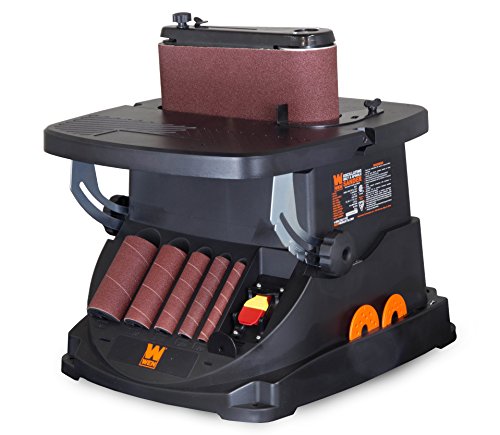
WEN 6524 oscillating belt and spindle sanderBest Belt and Spindle ComboWEN 6524 oscillating belt and spindle sandern/aUp to 2,000 RPMn/aBenchtop combo
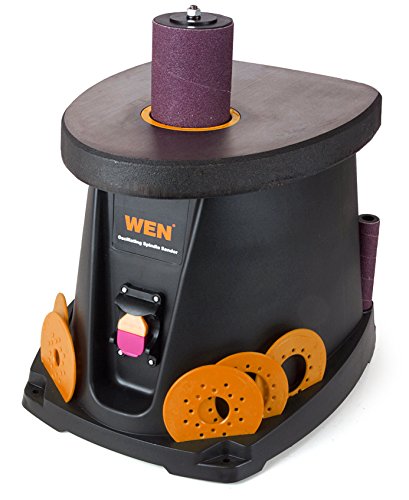
WEN 6510T 3.5 amp oscillating spindle sanderBest ValueWEN 6510T 3.5 amp oscillating spindle sander1/2 HP, 3.5 amp2,000 RPMn/an/a

An oscillating spindle sander spins a sanding sleeve on a vertical spindle while the spindle also moves up and down. That vertical stroke spreads wear across the sleeve and keeps heat from burning the wood, which is why it is the standard tool for smoothing curved edges and cutouts.

Choose by motor power and spindle range first, then look at table size, tilt and dust collection. A machine with a single drum size is more limiting than it sounds, because tight inside curves need a small spindle while long arcs prefer a large one.

Before you buy

6 Criteria to Look For Before Buying an Oscillating Spindle Sander

  1. 01

    Motor power and torque

    The 1 HP JET JOSS-S and Laguna hold their speed through heavy sanding, while the 1/2 HP WEN 6510T and JET JBOS-5 slow under load. Sustained torque matters more than peak numbers. If you remove a lot of stock, buy the stronger motor. A quick check is to press a mid-size drum against a hardwood edge with moderate force; if the spindle slows noticeably, the motor is undersized for your work.

  2. 02

    Oscillation stroke

    The vertical stroke spreads wear along the sleeve and keeps heat from building. The JET JOSS-S uses a 1.5 inch stroke, and the WEN 6510T oscillates 58 times per minute. A longer stroke makes sleeves last longer and burns less.

  3. 03

    Spindle sizes included

    Small spindles reach tight inside curves and large ones sand long arcs. The JET JBOS-5 includes five from 1/4 to 2 inch and the WEN 6524 includes five from 1/2 to 2 inch. A machine with only two sizes will leave you hunting for accessories. Remember that a larger drum reaches fewer curves, so a tight inside radius needs a drum no wider than the curve itself.

  4. 04

    Table size and tilt

    A big table supports large pieces, and tilt lets you sand bevels. The JOSS-S tilts 45 degrees front and 15 degrees back on a 24.5 inch table, while the Laguna tilts the spindle instead. Choose the approach that suits your workpieces. Whichever style you choose, set the table square to the spindle with a try square before every precise job.

  5. 05

    Speed control

    Variable speed, as on the Woodskil's 1,000 to 1,800 RPM, lets you slow down for resinous woods and plastics. Fixed speed machines run near 1,700 to 2,000 RPM. If you sand mixed materials, speed control saves burned edges. A slower spindle also extends sleeve life when you sand sticky or oily species.

  6. 06

    Dust collection

    Spindle sanders make fine airborne dust that settles everywhere. A dust port on the table and a shop extractor catch most of it, but you should still wear a mask. A machine without a port makes more mess than you expect. A downdraft slot around the spindle opening catches more dust than a port at the rear.

Detailed reviews

The 6 best oscillating spindle sanders, explained

01
JET JOSS-S 1 HP oscillating spindle sander
1 HP, 1,720 RPM1.5 inch stroke24.5 inch tableTilting table
Check price on Amazon
Best for: A working shop that sands curves and bevels every week.

The JOSS-S is a floor-standing sander with a 1 horsepower motor and a 24.5 by 24.5 inch table, and the spec that matters most is its 1.5 inch oscillation. A longer stroke spreads wear along more of the sleeve, so heat stays low, burn marks are rare and sleeves last longer. The table tilts 45 degrees forward and 15 degrees back with a quick 90 degree positioning, which lets you sand bevels and compound edges.

The tradeoff is size and cost. It needs floor space and a dedicated outlet, and it is the more expensive of the two JET machines, so a hobby shop that sands an edge a week will rarely use its capacity. Against the JET JBOS-5 benchtop unit, it offers a larger table and a stronger motor but takes more room. Compared with the Laguna, it has a similar motor but a simpler tilt arrangement, since Laguna tilts the spindle instead of the table.

Ownership is easy. Change sleeves before they glaze, empty the dust port often because fine dust packs quickly, and keep the table wiped so wood slides freely. Check belt tension periodically and wear a dust mask even with collection, because spindle sanding makes more airborne dust than most people expect.

What works

  • 1 HP motor holds speed under heavy sanding
  • 1.5 inch oscillation keeps heat low and sleeves lasting
  • Large 24.5 inch table tilts 45 degrees front
  • Quick 90 degree table positioning

Watch out for

  • Floor-standing with a larger footprint
  • Costs more than benchtop sanders

Spec sheet

Motor
1 HP, 115V single phase
Spindle speed
1,720 RPM
Oscillation
1.5 inch stroke
Table
24.5 by 24.5 inches
Tilt
45 degrees front, 15 degrees back
02
Laguna 1 HP oscillating spindle sander, 45 degree tilt
1 HP, 1,725 RPM45 degree spindle tiltTilt readout10 amp
Check price on Amazon
Best for: Woodworkers who sand bevels on large or heavy workpieces.

The Laguna keeps the table flat and tilts the spindle itself up to 45 degrees forward, with a readout that shows the angle. That design is the better approach for bevels on large pieces because the workpiece stays flat on the table instead of tipping on a tilted surface. A 1 horsepower, 10 amp motor turns at 1,725 RPM for smooth sanding of curves and contours.

The cost is complexity and price. A tilting spindle mechanism adds parts that need alignment, and it sits at the top of the price range. Compared with the JET JOSS-S, you give up a tilting table for a tilting spindle, and compared with the benchtop WEN units you gain far more motor and stability.

Keep the tilt mechanism clean and lightly lubricated, check the readout calibration against a square and empty the dust port often. Replace sleeves as soon as they glaze, because a worn sleeve burns wood and loads quickly. Calibrating the angle readout against a digital angle gauge once is worth the five minutes.

What works

  • Spindle tilts 45 degrees while the table stays flat
  • Readout displays the forward tilt angle
  • 1 HP, 10 amp motor at 1,725 RPM
  • Smooth sanding of tight curves and contours

Watch out for

  • Tilting mechanism adds parts to maintain
  • Top of the price range

Spec sheet

Motor
1 HP, 110V, 10 amp
Spindle speed
1,725 RPM
Tilt
45 degree spindle tilt
Readout
Forward tilt angle display
Use
Curves and contours
03
JET JBOS-5 benchtop oscillating spindle sander
1/2 HP, 7.5A5 spindles1/4 to 2 inchBenchtop
Check price on Amazon
Best for: A small shop that wants a well-built benchtop sander with a full spindle set.

The JBOS-5 is a benchtop sander that ships with five threaded spindles from 1/4 inch to 2 inch diameter, so tight inside radii and broad arcs are both covered without buying extras. A 1/2 horsepower, 7.5 amp motor provides enough torque for ordinary hardwood edges, and the brand's build quality means the table stays flat and the spindle stays true.

Its limit is power and size. A half horsepower motor bogs on heavy stock removal, and a benchtop table is smaller than a floor model's. Compared with the WEN units, it is the sturdier and more precise tool, but it costs more, and against the JOSS-S, it is the compact alternative for a shop with limited room.

In ownership terms, keep the spindle clean, store the unused spindles together and replace sleeves before they glaze. Bolt or clamp the machine to the bench so it does not walk when sanding.

What works

  • Five spindles from 1/4 to 2 inch are included
  • Sturdy build keeps the table flat and spindle true
  • Benchtop size suits small shops
  • 1/2 HP motor handles most hardwood edges

Watch out for

  • Half horsepower bogs on heavy stock removal
  • Smaller table than floor models

Spec sheet

Motor
1/2 HP, 115V, 7.5 amp
Spindles
Five, 1/4 inch to 2 inch
Type
Benchtop
Use
Tight curves and broad arcs
Model
JBOS-5
04
Woodskil 2/3 HP variable speed oscillating spindle sander
2/3 HP, 4A1,000 to 1,800 RPM6 sleevesCompact
Check price on Amazon
Best for: A hobbyist who sands mixed materials and wants speed control.

The Woodskil gives you a 2/3 horsepower, 4 amp motor and variable spindle speed from 1,000 to 1,800 RPM, a combination that stands out in the benchtop class. Variable speed matters because resinous woods and plastics prefer a slower spindle to avoid burning, while hardwoods tolerate higher speed. Six sleeves are included, so you can start sanding without a separate purchase.

The tradeoff is brand maturity and published detail. Compared with the JET and Laguna machines, the Woodskil has less proven long-term support and a lighter structure, and the stroke and table details are less documented. Against the WEN 6510T, it offers more power and variable speed at a modest increase in cost.

Check bolts after the first few hours, keep the dust port clear and replace sleeves promptly. Clamp it to the bench and slow the spindle for plastics or sticky resin.

What works

  • Variable speed from 1,000 to 1,800 RPM
  • 2/3 HP motor is stronger than the WEN benchtops
  • Six sleeves come in the box
  • Compact benchtop footprint

Watch out for

  • Less long-term support than established brands
  • Lighter structure than the JET machines

Spec sheet

Motor
2/3 HP, 4 amp
Spindle speed
1,000 to 1,800 RPM
Sleeves
6 included
Type
Benchtop, compact
Use
Wood curves
05
WEN 6524 oscillating belt and spindle sander
Belt plus spindle4 x 24 inch belt5 drum sizes2,000 RPM
Check price on Amazon
Best for: A small shop that needs both edge belt sanding and curve work.

The 6524 combines an oscillating spindle with a 4 by 24 inch belt, so one machine handles inside curves and flat or outside edges. Five drum sizes from 1/2 inch to 2 inch cover typical radii, and the belt runs up to 1,575 feet per minute while the spindle reaches 2,000 RPM. For a small shop, that versatility replaces two tools.

The compromise is that a combo machine is a compromise in each mode. The belt is short and the spindle motor is modest, so it will not match a dedicated floor sander for volume. Against the WEN 6510T it adds the belt, and against the JET JBOS-5 it trades some build quality for versatility at a lower tier.

Keep the belt tracked and tensioned, store spare belts flat and replace sleeves as they glaze. Clamp the base to the bench because belt sanding pushes the machine sideways. A short belt also means you must use the full width of the belt to avoid grooving it.

What works

  • Belt and spindle in one machine
  • Five drum sizes from 1/2 to 2 inch
  • Belt speed up to 1,575 FPM
  • Lower cost than two separate tools

Watch out for

  • Short belt and modest motor limit volume
  • Not as sturdy as the JET benchtop

Spec sheet

Drum sizes
1/2, 3/4, 1, 1-1/2 and 2 inch
Belt
4 by 24 inch
Belt speed
Up to 1,575 FPM
Spindle speed
Up to 2,000 RPM
Type
Benchtop combo
06
WEN 6510T 3.5 amp oscillating spindle sander
1/2 HP, 3.5A58 OPM2,000 RPMOnboard storage
Check price on Amazon
Best for: Hobbyists who sand small curved parts occasionally.

The 6510T is the entry-level oscillating spindle sander in this guide, built around a 1/2 horsepower, 3.5 amp motor that spins the spindle at 2,000 RPM and oscillates it 58 times per minute. It stores its accessories on board and includes a dust port for a dust extractor, which helps keep a small shop clean.

The tradeoff is power and finish. A 3.5 amp motor will bog on thick hardwood, and the benchtop structure is lighter than the JET models. Compared with the Woodskil, it has less motor and no speed control, and against the JET JBOS-5 it is the lower-cost option for light duty.

Upkeep is minimal. Change sleeves when they glaze, keep the dust port clear and clamp the base to the bench. A mask is important because this style of sander throws a lot of fine dust.

What works

  • Lowest cost sander here
  • Onboard storage for sleeves and accessories
  • Dust collection port for an extractor
  • Compact benchtop size

Watch out for

  • 3.5 amp motor bogs on thick hardwood
  • Lighter build than the premium machines

Spec sheet

Motor
1/2 HP, 3.5 amp
Oscillation
58 per minute
Spindle speed
2,000 RPM
Storage
Onboard accessory storage
Dust
Dust collection port

Spec sheet decoder

What the numbers on the box really mean

The specs manufacturers lead with, translated into what they tell you about real-world performance.

OPM (oscillations per minute)

How many times the spindle moves up and down each minute. Oscillation spreads wear and heat along the sleeve. A lower number is not a flaw; it just means the stroke is slower.

Watch forThe WEN 6510T lists 58 OPM and the Woodskil lists 29 to 58 OPM.

Stroke length

The vertical distance the spindle travels. A longer stroke uses more of the sleeve. A long stroke needs a taller sleeve to take advantage of it.

Watch forThe JET JOSS-S has a 1.5 inch stroke.

Spindle RPM

How fast the spindle turns. Faster removes stock quicker but heats wood. Faster spindles remove more stock but demand lighter pressure.

Watch forThe Laguna runs 1,725 RPM, the JOSS-S 1,720 RPM, the WEN 2,000 RPM.

Table tilt

The table can lean to sand bevels. Some machines tilt the spindle instead.

Watch forThe JOSS-S tilts 45 degrees front and 15 back, and the Laguna's spindle tilts 45 degrees.

Amp rating

Current draw reflects motor size. More amps usually means more torque but needs a stronger circuit. Check that your outlet circuit can supply the draw without tripping.

Watch forThe Laguna draws 10 amps, the JBOS-5 7.5 amps and the WEN 6510T 3.5 amps.

Methodology

How We Evaluated These Oscillating Spindle Sanders

Motor and torque

We compared motor horsepower and amp rating. The JOSS-S and Laguna have 1 HP while the WEN 6510T has 3.5 amps. Stronger motors scored higher for heavy stock removal. We also compared how the spindle behaves when side pressure rises.

Oscillation and speed

We looked at stroke, OPM and RPM. The JOSS-S offers 1.5 inch stroke and the Woodskil adds speed control. Better heat control scored higher. We noted which models show a speed range.

Spindle set and table

We checked included spindles and table size. The JBOS-5 includes five spindles and the JOSS-S has a 24.5 inch table. Versatility scored higher. We counted included sleeves as a small bonus.

Dust control

We considered dust ports and storage. The WEN 6510T has a port and onboard storage. Cleaner operation scored higher. We also noted which machines have a dust shroud around the spindle.

Ownership

We weighed build quality, footprint and owner feedback patterns. Sturdy tables and simple mechanisms scored higher. Tilting spindle designs got a small penalty for added complexity. We looked at how simple it is to change a sleeve.

Decision guide

How to Choose the Right Oscillating Spindle Sanders

By Shop Size

SituationPickWhy
Busy shop with floor spaceJET JOSS-S1 HP and a large tilting table
Bevels on large piecesLaguna 1 HPSpindle tilts while the table stays flat
Compact benchJET JBOS-5Benchtop with five spindles
Mixed materialsWoodskil variable speed1,000 to 1,800 RPM control
Edges and curves in one toolWEN 6524Belt and spindle combo

By Budget

SituationPickWhy
Lowest tierWEN 6510TBasic 3.5 amp benchtop
Entry comboWEN 6524Belt plus spindle
Mid tier variable speedWoodskil2/3 HP with speed control
Upper tier benchtopJET JBOS-5Sturdy build and five spindles
Premium floorJET JOSS-S1 HP with 1.5 inch stroke

Tilting Table vs Tilting Spindle

Tilting table

The JOSS-S tilts its table 45 degrees front and 15 degrees back. It is simple and rigid, but large workpieces can slide on a tilted surface.

Tilting spindle

The Laguna keeps the table flat and tilts the spindle with an angle readout. It suits big or heavy parts, but adds mechanism complexity.

Small parts suit a tilting table, and large parts suit a tilting spindle.

Machine Type

SituationPickWhy
Spindle only, benchtopWEN 6510TSimple and light
Belt and spindle comboWEN 65244 by 24 inch belt
Spindle with variable speedWoodskilSpeed control for plastics
Floor standingJET JOSS-SLarge table

For Curved Furniture Parts Specifically

Look for

Look for a motor that holds speed, a long stroke and a spindle that matches your tightest curve. A sleeve that heats and burns ruins the part.

In this comparison

The JET JOSS-S and Laguna lead on power and stroke, the JBOS-5 covers the widest spindle range, and the WEN units suit light work.

When to Spend More

Spend more if

Spend more if you sand every day or need bevels. The JOSS-S and Laguna save time and sleeves.

Save if

Save if you only sand a few curves a year. The WEN 6510T covers light duty.

Ownership

Maintenance schedule

The upkeep that decides whether this machine lasts two seasons or ten.

TaskIntervalWhy it matters
Replace glazed sleevesAs neededA glazed sleeve burns wood and loads quickly. Swapping is cheap and keeps sanding fast. Store spare sleeves flat and dry so they keep their shape.
Empty the dust portEach sessionFine dust packs the port and reduces suction, so more settles in the shop.
Clamp the baseEach setupBenchtop units walk under load, which ruins consistency and is a safety risk. A drop of oil on a clamp screw prevents rust.
Check belt tension and trackingMonthly on combosA loose belt slips and a mistracked belt wanders off the rollers.
Lubricate the tilt mechanismTwice a yearDust stiffens tilt screws and pivots. A light lubricant keeps them moving. Wipe tilt screws clean of dust before lubricating.

FAQ

Frequently Asked Questions

What does oscillating mean on a spindle sander?

The spindle moves up and down as it spins. This spreads wear across the sleeve and keeps heat from burning the wood. The movement also means one spot on the sleeve is not doing all the work.

Is a benchtop or floor model better?

A benchtop is fine for light work and small shops. A floor model has a stronger motor and bigger table for daily use.

What size spindles do I need?

Small spindles for tight inside curves and large ones for long arcs. A set from 1/4 or 1/2 inch up to 2 inches covers most work. A couple of extra drum sizes are cheap and worth buying early.

Can I sand plastic or resinous wood?

Yes with a slower spindle. Variable speed, as on the Woodskil, helps avoid melting or burning. Always test on scrap first when changing material.

Do I need dust collection?

Yes. Spindle sanders make fine dust, so use a shop extractor on the port and wear a mask.

How long do these sanders last?

The motors last many years. Sleeves, belts and tilt mechanisms are the wear items, and the JET models are the sturdiest. Replace belts and sleeves as consumables and plan on a spare of each.

Bottom line

The short version

Browse more oscillating spindle sanderson Amazon →
James Miller, Lead Machine Editor

About the author

James Miller

Lead Machine Editor, MachineFanatic

James Miller leads MachineFanatic's buying guides, turning spec sheets, manuals and owner feedback into clear verdicts on power tools, outdoor power equipment, shop machines and kitchen machines.

More from James →

Keep reading

Related guides