

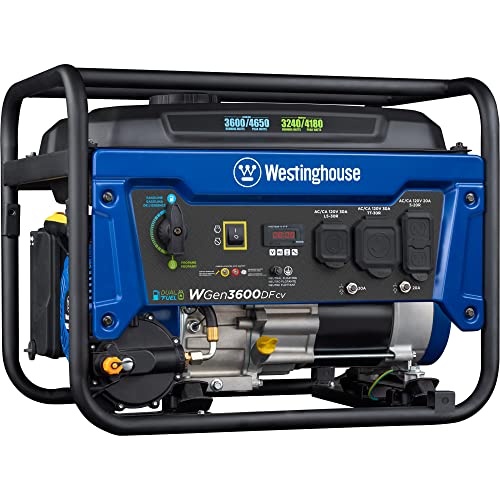


The headline here is that the rated watts do not move: 4,000 on gasoline and 4,000 on propane, with only the surge number falling from 4,800 to 4,320. For a propane-first owner, that means the full continuous capacity is available from the bottle, so an air conditioner and a microwave do not force a switch to gasoline.
The 224cc dual fuel engine and electric start suit a coach with a large propane supply. Electric start matters on propane, since cold propane vaporizes poorly and a hard pull on a recoil is a real nuisance in cold weather. It is an inverter, so the output is clean and the engine throttles with load.
Ownership is about the regulator and the hose. Check the hose for cracks before every trip, run on propane every couple of months so the regulator diaphragm stays supple, and keep the starter battery charged. It adds inverter quiet and 760 more rated watts on propane over the Westinghouse 4650, which is the difference between running the air conditioner and the microwave together or not. If you boondock a week at a time, that margin is why owners keep this machine over a cheaper one.
What works
- 4,000 rated watts on both fuels
- Electric start helps cold propane starts
- 224cc engine works below its limit
- Inverter output is clean and quieter
Watch out for
- Heavier than the 3,000 watt class
- Surge drops on propane, so hard starts need care
Spec sheet
- Gas output
- 4,800 surge, 4,000 rated
- Propane output
- 4,320 surge, 4,000 rated
- Engine
- 224cc dual fuel
- Start
- Electric
- Class
- RV ready inverter