
Amazon affiliate links - we earn a commission.Affiliate disclosure

Buying guide · 13 min read · Updated 2026-11-15

Best Tent Heaters for Winter Camping (2026)

Seven winter camping tent heaters compared, from radiant propane units to hot tent stoves, with the safety and fuel tradeoffs that matter in deep cold.

James MillerBy James MillerLead Machine Editor7 machines comparedSpec-sheet verified
Best Tent Heaters for Winter Camping

At a glance

Our top picks

Winter camping heat comes in two families. Propane radiant heaters sit on the floor and warm quickly, while log-burning stoves use fuel you find or carry and vent smoke through a chimney. Each family answers a different kind of trip, from a short overnight to a week in a base camp.

Cold changes the rules for both. Propane pressure behaves differently, damp logs demand more attention, and every closed tent hides the same invisible hazard, so the decision is less about warmth and more about how you vent it.

Before you buy

6 Criteria to Look For Before Buying a Tent Heater for Winter Camping

  1. 01

    Propane or wood

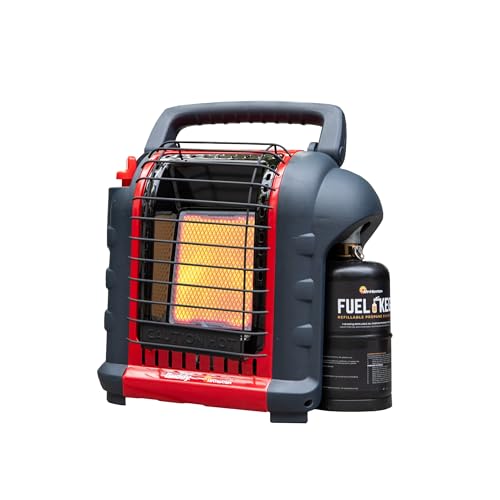
    Propane heaters like the Portable Buddy light instantly and shut off cleanly, but add moisture. Wood stoves like the unho and the six-pipe model give dry heat that dries gear, but need a stove jack, attention and ash handling. Match the fuel to your tent and your time. A stove makes sense when you stay put for several nights, and a propane unit makes sense for a quick overnight where setup time is a cost.

  2. 02

    Stove jack and chimney

    A hot tent stove must vent through a heat-safe stove jack. The six-pipe stove reaches up to 73.23 inches, which matters for snow load and roof clearance. Cutting fabric to fit a stove is not safe. The inflatable hot tent style with a built-in stove jack removes that risk, but check that the jack is rated for the stove you buy.

  3. 03

    Propane pressure in cold

    Propane vaporizes in deep cold while butane fades. The Mr. Heater units and the Pasamic run on propane, which is why they suit winter. Keep a spare cylinder warm in a jacket. A cylinder that has sat all night in a pack at deep cold will deliver weak pressure until it warms, which is a common cause of a heater that seems broken.

  4. 04

    Heat steps and tent volume

    The Little Buddy at 3,800 BTU suits a solo tent, the Portable Buddy at 9,000 suits a group tent and the TAIMIGOO at 15,000 BTU suits a large shelter. Too much output makes you open vents. A low step also saves fuel. Choose the heater for the tent you own, not the one you hope to buy later.

  5. 05

    Carbon monoxide control

    Closed winter tents trap combustion gases. Use a battery CO alarm, crack a high and a low vent and never sleep with a flame running. Wood stoves with a proper chimney carry exhaust out, which is a real safety edge. Even so, leave the alarm in place, since a leaking joint or a downdraft can push smoke back in.

  6. 06

    Tip stability on snow

    Tall umbrella heaters tip more easily on snow than low radiant units. Put any heater on a firm board or a packed pad. A tip-over switch is a minimum. Snow also melts under a hot heater base, so a board that spreads the load keeps the unit level through the night.

Detailed reviews

The 7 best tent heaters for winter camping, explained

01
Mr. Heater Portable Buddy 4,000 or 9,000 BTU radiant
4,000/9,000 BTU225 sq ftRadiantODS
Check price on Amazon
Best for: Family and group winter tents that need heat on tap.

For winter use the Portable Buddy covers the most ground with the fewest surprises. It has two steps, 4,000 and 9,000 BTU per hour, and the listing gives about 225 square feet of heating area. Propane keeps vaporizing in deep cold, which is the single biggest reason to choose it over a butane-fed unit when the thermometer drops.

The oxygen depletion sensor and tip switch are the safety backbone, but they do not remove carbon monoxide or moisture from the tent. Winter tents are sealed tighter than summer ones, so the vent discipline matters more. A 1 lb cylinder lasts a little over two hours on high, which is why serious winter campers move to a hose and a 20 lb tank stored outside.

Next to the Little Buddy it offers more than twice the heat on its high step, which is the extra headroom for a cold-soaked tent. Parts are common, and a clean tile face is the main upkeep item.

What works

  • Propane keeps working in deep cold
  • Two steps for a fast warm-up and an idle
  • Oxygen sensor and tip switch
  • Parts and support are easy to find

Watch out for

  • Moisture and carbon monoxide still require venting
  • High step empties a 1 lb cylinder fast

Spec sheet

Output steps
4,000 or 9,000 BTU/hr
Rated area
About 225 sq ft
Fuel
Propane, cylinder or hose
Heat type
Radiant
Approval
Indoor and outdoor
02
Portable wood-burning hot tent stove with 6 chimney pipes
Wood burning6 chimney pipes73 in maxSpark arrestor
Check price on Amazon
Best for: Hot tents with a stove jack and a sled or truck for hauling.

This is a wood-burning stove that heats a tent and doubles as a cooking surface. It ships with six detachable chimney pipes that extend to 73.23 inches, plus a spark arrestor, ash scraper, fire grate net and gloves according to the listing. The longer pipe reach matters because the chimney must clear the tent roof and any snow load.

Wood heat is dry, which is the opposite of propane's moisture, and it can dry wet gear. The price is attention: a stove needs feeding, an ash plan and a stove jack in the tent wall, and an unattended fire is a hazard. The first burn should be done outdoors in an open space, as the listing itself notes, to cure the paint.

It competes with the unho stove at the heavier end, which usually means more weight in the sled or truck bed. Pipe sections and the spark arrestor are the parts you should check for soot before each trip.

What works

  • Six pipe sections reach up to 73.23 inches
  • Spark arrestor included for safer burning
  • Heats and cooks from one firebox
  • Dry wood heat dries wet gear

Watch out for

  • Needs a tent with a stove jack
  • Requires constant attention and an ash plan

Spec sheet

Fuel
Wood
Chimney
6 pipes, up to 73.23 in
Included
Ash scraper, grate, spark arrestor
Use
Heating and cooking
Gloves
Included
03
unho stainless hot tent stove with glass window
Stainless steelGlass windowWood burningPortable
Check price on Amazon
Best for: Base-camp hot tents where you want to watch the fire.

The unho is a stainless-steel wood stove with a ceramic glass window that the listing calls crack-resistant. The window lets you watch the fire without opening the door, which saves heat and keeps smoke out of the tent. Stainless construction handles repeated heat cycles and resists rust better than painted steel.

As with all hot tent stoves, the stove only works well in a tent that has a stove jack or a heat-safe port. Without one you are cutting fabric, which is not advisable. The window also lets you judge when to add wood, so you avoid the draft that comes with opening the door.

Against the Portable Buddy, a wood stove demands more setup and gives more heat for long trips. It weighs more than any propane unit here, so it suits base camps. Clean the glass with a damp cloth when it cools, never while hot.

What works

  • Stainless body resists rust and heat cycling
  • Ceramic glass window shows the fire
  • Wood fuel is renewable and found on site
  • Dry heat suits cold, damp weather

Watch out for

  • Heavy to haul without a sled
  • Window and stove body must cool before cleaning

Spec sheet

Body
Stainless steel
Window
Crack-resistant ceramic glass
Fuel
Wood
Chimney
Included pipes
Use
Tent heating
04
Wood stove for hot tent with view window and chimney pipes
Wood burningView windowChimney pipesSteel body
Check price on Amazon
Best for: Campers who want a viewing window and complete pipe kit.

This stove stands out for a view window and a promise of kits that include the chimney sections, the item many campers forget at home. The listing emphasizes smoke control, so a stove that does not leak smoke into the tent is the pitch. It is built from heavy steel and aims at tents with a stove jack.

The window is useful because winter fire tending is a nuisance, and being able to see coals saves opening the door. Unlike a propane heater, the stove produces dry heat and a surface to melt snow or cook on. The firebox size is the practical limit on burn time, so check it against the length of your nights.

It sits between the other two stoves in features. Weight is the cost, and so is the setup time. Keep a metal bucket for ash and never store it with a warm firebox. Dry the unit after each trip, because wet ash and snow melt eat steel quickly.

What works

  • View window lets you watch the fire
  • Pipes are included in the kit
  • Dry heat from a heavy steel body
  • Surface for melting snow or cooking

Watch out for

  • Setup takes longer than propane
  • Heavy for a long carry

Spec sheet

Fuel
Wood
Window
Heat-resistant view window
Chimney
Pipes included
Build
Heavy-gauge steel
Use
Hot tent heating
05
Pasamic 2-in-1 propane heater and stove, 9,000 BTU with hose
9,000 BTUHose2-in-1Adjustable flame
Check price on Amazon
Best for: Winter base camps that want heat and a cook flame.

The Pasamic outputs 9,000 BTU and includes a hose, so the cylinder can sit outside while the heater stays in. It also doubles as a stove, which is useful on winter trips where hot meals are as important as warmth. The adjustable flame helps you back off once the tent is warm.

It runs mainly on propane, so cold weather does not weaken it as it would a butane unit. The combined stove function is a convenience, but an open burner in a tent needs ventilation and fabric clearance.

Compared with the Portable Buddy it has the same top output but less documented safety, so treat it as a base-camp tool and check markings on arrival. Inspect the hose for cracks, a common failure after a few winters.

What works

  • 9,000 BTU with an adjustable flame
  • Hose keeps the cylinder outside the tent
  • Doubles as a stove
  • Runs on propane that works in cold

Watch out for

  • Less documented safety than the Mr. Heater
  • Open burner needs extra ventilation

Spec sheet

Output
9,000 BTU (listing)
Hose
Included
Function
Heater and stove
Flame
Adjustable
Fuel
Propane
06
TAIMIGOO 15,000 BTU propane heater with umbrella reflector
15,000 BTU360 degreesReflectorShutoff
Check price on Amazon
Best for: Large group shelters and open-front tents.

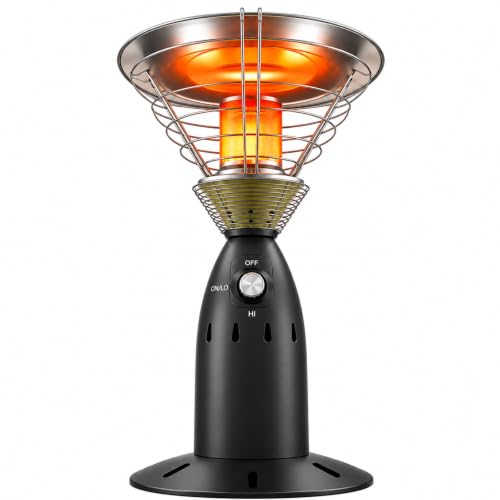
The TAIMIGOO produces 15,000 BTU with an umbrella reflector that spreads radiant warmth through 360 degrees. It has a safety shutoff, six-step assembly and dual connection options. In a large tent or shelter the umbrella layout covers a seating area instead of one corner.

It is sold as a patio heater, so it is best treated as a camp utility unit rather than a sleeping-tent heater. A radiant umbrella is also a tall structure, which makes tipping a bigger concern on snow or uneven ground.

For a gathering tent or an ice shelter it makes sense. For a small sleeping tent it is too much. Keep the base on firm ground or a board and check the shutoff each trip.

What works

  • 15,000 BTU covers a large shelter
  • Umbrella reflector spreads heat 360 degrees
  • Safety shutoff is named in the listing
  • Six-step assembly is quick

Watch out for

  • Too much output for a sleeping tent
  • Tall body is less stable on snow

Spec sheet

Output
15,000 BTU (listing)
Reflector
Umbrella, 360 degrees
Safety
Safety shutoff
Assembly
6 steps
Connection
Dual options
07
Mr. Heater Little Buddy Midnight 3,800 BTU radiant
3,800 BTU95 sq ft5.6 hr per lbIndoor rated
Check price on Amazon
Best for: One or two person winter tents.

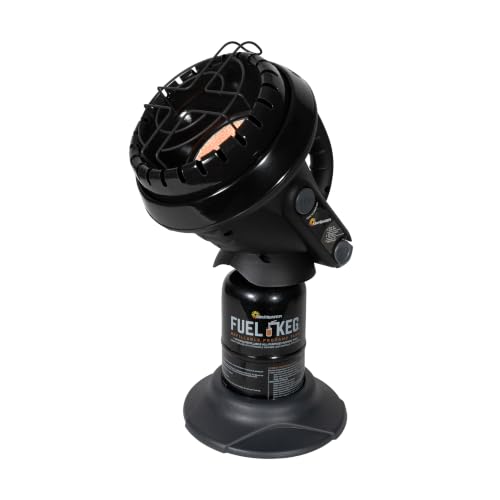
The Little Buddy gives 3,800 BTU per hour and up to 5.6 hours from a 1 lb cylinder, and the listing rates it for about 95 square feet. In a cold small tent it makes the difference between a hard start and a livable evening.

It shares the oxygen sensor and tip switch of its siblings, with the same indoor approval caveats for Canada and Massachusetts. A single heat setting means no way to boost, so it cannot save a tent below freezing in a big wind.

Against the Portable Buddy it uses less than half the fuel per hour. That makes it the practical choice for a solo winter tent. Keep it out of the sleeping bag zone. It is also the easiest heater here to store, since it fits in a small bin beside the stove and cook kit. A spare 1 lb cylinder or two covers a weekend.

What works

  • Up to 5.6 hours per 1 lb cylinder
  • Oxygen sensor and tip protection
  • Low output will not overheat a small tent
  • Propane works in cold

Watch out for

  • Single setting with no boost
  • Rated area is about 95 sq ft

Spec sheet

Output
3,800 BTU/hr
Rated area
Up to 95 sq ft
Runtime
Up to 5.6 hr per 1 lb
Fuel
1 lb propane
Approval
Indoor and outdoor

Spec sheet decoder

What the numbers on the box really mean

The specs manufacturers lead with, translated into what they tell you about real-world performance.

BTU per hour

Heat the burner releases each hour. In a tent more is not always better.

Watch forLittle Buddy 3,800, Portable Buddy up to 9,000, TAIMIGOO 15,000.

Chimney length

The height of the pipe above the stove. It affects draft and clears snow load.

Watch forThe six-pipe stove reaches up to 73.23 inches.

Spark arrestor

A mesh at the chimney top that stops embers burning a tent.

Watch forNamed in the six-pipe stove listing.

Oxygen depletion sensor

Pilot shutoff when oxygen falls.

Watch forPresent on the Mr. Heater units.

Window glass

Heat-resistant glass that lets you see the fire.

Watch forThe unho lists ceramic glass.

Methodology

How We Evaluated These Tent Heaters for Winter Camping

Cold performance

We prioritised fuels that keep working in deep cold. Propane and wood stoves ranked above butane-only designs. A heater that struggles at freezing temperatures has little use in a winter guide.

Safety design

We checked for oxygen sensors, tip protection, spark arrestors and proper chimney paths. The Mr. Heater models led documented approvals.

Heat fit

We matched BTU to tent size, from the 3,800 BTU Little Buddy to the 15,000 BTU TAIMIGOO.

Setup and attention

We weighed how much work each heater needs. Propane starts quickly while wood stoves demand a stove jack and tending.

Ownership

We looked at parts, glass and hoses, which age first. Stainless and branded units scored higher. Glass windows and rubber hoses lost points when their listings said little about heat or cold tolerance.

Decision guide

How to Choose the Right Tent Heaters for Winter Camping

By Tent Setup

SituationPickWhy
Solo dome in snowMr. Heater Little Buddy3,800 BTU, 5.6 hours per cylinder
Family tent without a stove jackMr. Heater Portable BuddyTwo steps with oxygen sensor
Hot tent with a stove jackunho stainless stoveCeramic glass window
Large gathering shelterTAIMIGOO 15,000 BTU360 degree umbrella reflector

By Budget

SituationPickWhy
Lowest outlayMr. Heater Little BuddySingle cylinder and simple
Mid-range valueunho stainless stoveStainless build for wood heat
Kit with pipesWood stove with view windowPipes included
Higher spend for campsMr. Heater Portable BuddySupport and approvals

Propane vs Wood

Propane

The Portable Buddy, Little Buddy and Pasamic light fast and need no tending. They add moisture and need venting.

Wood

The unho, the six-pipe stove and the window stove give dry heat for long trips. They need a stove jack, wood and constant attention.

Groups with a hot tent pick wood; solo or small tents pick propane.

By Hauling Method

SituationPickWhy
Pulk or sledWood stove with view windowWeight is manageable on a sled
Truck accessSix-pipe hot tent stoveLong chimney and cooking surface
Short carryMr. Heater Little BuddyLight and small
Hose and tank base campPasamic 9,000 BTUHose keeps fuel outside

For Sub-Zero Nights Specifically

Look for

Propane or wood fuel, a heater with headroom, and a vent plan. A CO alarm is mandatory.

In this comparison

The Portable Buddy with a 9,000 BTU step and the unho stove give real headroom for deep cold.

When to Spend More

Spend more if

You camp in a hot tent every winter: a stainless stove such as the unho lasts.

Save if

You camp a few weekends: the Little Buddy is enough.

Ownership

Maintenance schedule

The upkeep that decides whether this machine lasts two seasons or ten.

TaskIntervalWhy it matters
Inspect chimney sectionsBefore each tripSoot and dents hurt draft. Check each pipe and the spark arrestor.
Clean the glassAfter coolingSoot blocks the view. Use a damp cloth on a cool window.
Check hose and fittingsBefore each tripCold makes rubber brittle. Test with soapy water.
Empty the ashAfter every fireHot ash can burn fabric. Use a metal bucket away from the tent.
Test a CO alarmEach tripAlarms fail quietly. Press test before you light anything.

FAQ

Frequently Asked Questions

Is a wood stove better than a propane heater?

A wood stove gives dry heat and vents smoke outside, but needs a stove jack and attention. Propane is simpler and starts instantly. Many winter campers carry a small propane unit as a backup even when they run a stove.

Which propane heater suits deep cold?

Propane vaporizes in deep cold, so the Mr. Heater models and the Pasamic are the best fit. Butane units weaken near freezing.

Can I use a propane heater without venting?

No. Even units with an oxygen sensor release carbon monoxide and moisture. Vent the tent and use a CO alarm. Winter tents are sealed against wind, which means any combustion gas lingers longer than you would expect.

How long does a cylinder last?

A 1 lb cylinder holds roughly 21,000 BTU. The Little Buddy gets up to 5.6 hours, while the Portable Buddy on high runs a little over two hours.

Do I need a stove jack?

Yes for a wood stove. A stove jack is a heat-safe port that carries the chimney through the tent wall.

Can I sleep with the heater running?

No. Warm the tent, then shut the flame off before sleeping.

Bottom line

The short version

Browse more tent heaters for winter campingon Amazon →
James Miller, Lead Machine Editor

About the author

James Miller

Lead Machine Editor, MachineFanatic

James Miller leads MachineFanatic's buying guides, turning spec sheets, manuals and owner feedback into clear verdicts on power tools, outdoor power equipment, shop machines and kitchen machines.

More from James →

Keep reading

Related guides